
 Преглед в реален мащаб
 Изпрати
 Сподели
 Детайли
 Ръководство

 Изтегляне
 Подобни артикули
 Рентгенова снимка
 Слайдшоу
 Q&A
Q&A Статистика
Bacchus und Ariadne

- 72.0 x 95.0 cm


 Прочети повече
Жикле / Художествен принт
Giclée печат или принт върху платно с музейно качество, бързо производство и гъвкави опции за завършен вид. ( Купете ръчно рисувана картина Превключване към дигитално изображение)




P118B €10

P118H €10

P118W €10

P438Z €10

P508JH €12

P508YH €12

P805H €10

P805Z €10

P919BZ €10

P919G €10

P919XJ €10

P959ZH €10

P968JZ €12

W106C €8

W218G €10

W218JH €8

W218Y €10

W307PJ €10

W316G €10

W316PJ €8

W316Y €10

W398PJ €8

W4111J €10

W500HY €15

W500JH €15

W692G €12

W849H €8

W940BG €15

W953PJ €8




Изберете от нашите предварително зададени размери, които съответстват на оригиналните пропорции на произведението.

Въведете необходимата ширина и височина, за да паснат на вашата рамка или стена. Принтовете могат само да се изрязват, но никога не могат да бъдат по-големи от оригиналната картина, така че при размер с различен формат част от изображението ще бъде загубена. Преди да започнем печат, ще ви изпратим дигитален мок업 за одобрение. Изображението, показано на тази страница, не показва реалното изрязване — само мок업ът го показва.
Доставка по целия свят () в рамките на 2 седмици вместо стандартните 4/5 седмици. (1 Ноември)

Безплатна експресна доставка по целия свят

Висококачествено ленено платно

Пълно застраховане на доставката

Гаранция за възстановяване на митнически такси

Гаранция за пълно съответствие на цветовете

Политика за връщане в рамките на 100 дни (само при дефекти)

100% Гаранция за връщане на сумата

Оферта за отстъпка при поръчка на повече бройки
 Опцията със стъкло е налична само за размери под 110 см

Bacchus und Ariadne
Жикле / Художествен принт
Размер на репродукцията
-


Обща цена
€ 71
A Baroque Rhapsody: Cazes’s “Bacchus und Ariadne”
Pierre-Jacques Cazes's "Bacchus und Ariadne," painted around 1740, is more than just a depiction of a classical myth; it’s a vibrant explosion of color and movement, a testament to the flourishing Baroque style in 18th-century France. The painting transports us to the sun-drenched shores of Naxos, where the god Bacchus, pursued by Cupid's fateful arrow, dramatically claims the abandoned Ariadne. Cazes masterfully captures the intoxicating energy of this pivotal moment, weaving together elements of drama, sensuality, and divine intervention into a single, unforgettable scene.
The composition itself is a carefully orchestrated dance of figures. Ariadne, positioned on the left, gestures towards the departing ship of Theseus, a poignant reminder of her abandonment and a subtle foreshadowing of the tragic romance to come. Bacchus, resplendent in flowing robes and a confident stride, dominates the center, his hand outstretched as if inviting her into his ecstatic world. The backdrop—a stylized seascape hinting at the island’s rugged coastline—provides a dramatic stage for this mythological encounter. Beyond the immediate narrative, Cazes employs a dynamic diagonal thrust that pulls the viewer's eye through the crowded scene, creating a sense of perpetual motion and heightened emotion.
A Masterclass in Baroque Technique
Cazes’s skill as a painter is immediately evident in his masterful use of oil paint on canvas. The texture is rich and layered, achieved through impasto techniques – visible brushstrokes that build up the forms and create a palpable sense of volume. The colors are intensely saturated, particularly the reds and golds used to depict Bacchus’s garments and the shimmering light reflecting off the sea. Notice how he expertly blends warm hues with cooler blues in the background, establishing depth and creating an atmospheric perspective that draws us into the scene.
Furthermore, Cazes demonstrates a keen understanding of chiaroscuro – the dramatic interplay of light and shadow. Strong contrasts highlight key figures like Bacchus and Ariadne, while softer lighting envelops the surrounding revelers, contributing to the painting’s overall sense of drama and theatricality. The meticulous detail evident in each figure's drapery, facial expression, and even the expressions on the faces of the Bacchantin adds a remarkable level of realism and engagement.
Symbolism Woven into Myth
“Bacchus und Ariadne” is replete with symbolic elements that enrich its narrative beyond a simple retelling of the myth. The laurel tree, prominently featured in the background, represents Daphne’s transformation – a crucial element of the story where she becomes immortalized as the constellation Corona Borealis after being pursued by Apollo. The presence of Hymenaios, the god of marriage, descending with his torch signifies the union between Bacchus and Ariadne, promising a future filled with abundance and celebration. Even the drunken Silen on the donkey, a symbol of excess and revelry, underscores the intoxicating nature of Bacchus’s world.
The inclusion of numerous figures – Bacchantins dancing wildly, playful Genies, and a slumbering tiger – further amplifies the painting's themes of fertility, intoxication, and the wildness of the divine. These elements contribute to a vibrant tapestry of imagery that speaks to the core values of the Baroque period: exuberance, emotion, and an embrace of the sensual.
A Legacy of Artistic Influence
Originally commissioned by King Friedrich II of Prussia, “Bacchus und Ariadne” reflects the artistic tastes of the European elite. The painting’s opulent style and dramatic composition were highly valued during this era, serving as a symbol of royal power and refined taste. Cazes's work exemplifies the academic tradition of French art, emphasizing historical and mythological subjects rendered with meticulous detail and a strong sense of realism. His influence can be seen in the works of subsequent generations of artists, cementing his place as a pivotal figure in the development of French Baroque painting.
Today, reproductions of “Bacchus und Ariadne” continue to captivate audiences with their vibrant colors, dynamic composition, and evocative storytelling. It remains a powerful example of Baroque artistry—a timeless celebration of myth, passion, and the intoxicating allure of the divine.
Въпроси и отговори
Какъв размер и ориентация се препоръчват за печат на „Bacchus und Ariadne“ на Pierre Jacques Cazes?
Размер Medium, ориентация Landscape: това е препоръчителната конфигурация за печат на „Bacchus und Ariadne“ на Pierre Jacques Cazes.
Какво настроение изразява „Bacchus und Ariadne“ на Pierre Jacques Cazes в рамките на Baroque?
Dramatic емоцията на „Bacchus und Ariadne“ допълва нейния Baroque стил.
Какви сюжети се появяват в „Bacchus und Ariadne“ на Pierre Jacques Cazes?
Темите, представени в „Bacchus und Ariadne“ на Pierre Jacques Cazes, включват mythological scene, classical mythology, bacchus and ariadne, greek gods, naxos island, baroque drama, ecstatic figures. Заедно те обобщават съдържанието на произведението.
Свързани статии

The Dramatic Flourish: Exploring the Baroque Movement's Enduring Legacy in Art History
Explore the dramatic world of Baroque art! Discover iconic artists like Caravaggio & Rubens, defining techniques, and its lasting impact on art history. Expert insights for collectors & enthusiasts at OriginalUniqueArt.

Топ 25 шедьовъра на Ренуар: Красота, светлина и импресионизъм за вашия дом
Разгледайте топ 25 шедьовъра на Ренуар – импресионизъм, светлина и красота във всяка картина! Историята зад творбите, техниките и емоциите. Купете висококачествени репродукции на картини от Ренуар за вашия дом в OriginalUniqueArt.com.

Барокова Драма: Изкуството, Което Внася Величие в Дома
Открийте великолепието на бароковия стил! Разгледайте историята, изкуството и интериорните решения, вдъхновени от епохата. Съвети за създаване на разкошен дом.
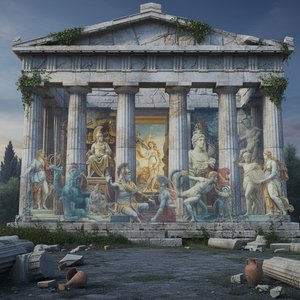
Echoes of Olympus: Mythological Narratives in Western Art Through the Ages
Explore the captivating history of mythological narratives in Western art! From ancient Greece to modern masterpieces, discover iconic artworks & symbolism. Expert analysis and high-quality reproductions at OriginalUniqueArt.

Топ 10 шедьоври на Барока: История, артисти и великолепие за вашия дом
Разгледайте 10 шедьовъра на Барока от Караваджо, Рембрандт и Рубенс! Открийте историите зад тези емблематични картини и скулптури. Вдъхновете се за вашия интериор с OriginalUniqueArt.com – луксозни репродукции и изкуство за дома.