

 Преглед в реален мащаб
 Сподели
 Сподели
 Подробности
 Ръководство

 Изтегляне
 Подобни артикули
 Рентгенова снимка
 Слайдшоу
 Статистика
Cello


 Разгърни целия текст
Изкуството, представено на тази страница, е защитено от законите за авторско право, което означава, че не можем законно да създаваме или продаваме идентични репродукции. Тази защита се прилага съгласно международни споразумения като Бернска конвенция и от националното законодателство, включително разпоредбите на Закон за авторското право на САЩ – Раздел 17.
Този метод е напълно съвместим с законите за авторско право, тъй като не включва копиране или дублиране на защитеното произведение. Вместо това става въпрос за творческа реинтерпретация – нова картина, която е вдъхновена от оригинала, но не е идентична с него.
Жикле / Художествен принт
Giclée печат или принт върху платно с музейно качество, бързо производство и гъвкави опции за завършен вид. ( Поръчайте ръчно рисувано репродукция на този колекционерски предмет Превключване към дигитално изображение)




P118B €10

P118H €10

P118W €10

P438Z €10

P508JH €12

P508YH €12

P805H €10

P805Z €10

P919BZ €10

P919G €10

P919XJ €10

P959ZH €10

P968JZ €12

W106C €8

W218G €10

W218JH €8

W218Y €10

W307PJ €10

W316G €10

W316PJ €8

W316Y €10

W398PJ €8

W4111J €10

W500HY €15

W500JH €15

W692G €12

W849H €8

W940BG €15

W953PJ €8




Изберете от нашите предварително зададени размери, които съответстват на оригиналните пропорции на произведението.

Въведете необходимата ширина и височина, за да паснат на вашата рамка или стена. Принтовете могат само да се изрязват, но никога не могат да бъдат по-големи от оригиналната картина, така че при размер с различен формат част от изображението ще бъде загубена. Преди да започнем печат, ще ви изпратим дигитален мок업 за одобрение. Изображението, показано на тази страница, не показва реалното изрязване — само мок업ът го показва.
Доставка по целия свят () в рамките на 2 седмици вместо стандартните 4/5 седмици. (21 Октомври)

Безплатна експресна доставка по целия свят

Висококачествено ленено платно

Пълно застраховане на доставката

Гаранция за възстановяване на митнически такси

Гаранция за пълно съответствие на цветовете

Политика за връщане в рамките на 100 дни (само при дефекти)

100% Гаранция за връщане на сумата

Отстъпка при поръчка на повече произведения
 Опцията със стъкло е налична само за размери под 110 см

Cello
Жикле / Художествен принт
Размер на репродукцията
-


Крайна цена
€ 70
A Testament to Craftsmanship: Piero Parravicini’s Cello – A Reflection of Italian Violin Making Tradition
The cello, an instrument steeped in history and revered for its soulful resonance, stands as a testament to the enduring legacy of Italian violin making. This particular cello, crafted by Piero Parravicini in 1922, embodies the meticulous artistry that flourished during the early 20th century – a period marked by both artistic innovation and unwavering adherence to established techniques. Examining its construction reveals not only exceptional craftsmanship but also a profound connection to the traditions of Cremona, Italy, where violin making has been practiced for centuries.- Material Composition: The instrument’s body is constructed primarily from maple, chosen for its density and tonal qualities. Complementing this core material are spruce boards – two carefully selected pieces – forming the soundboard. Spruce, renowned for its stiffness and ability to transmit vibrations efficiently, remains a cornerstone of violin construction globally.
- Purfling & Decoration: Adding visual elegance and structural integrity is white maple and black walnut purfling—thin strips inlaid around the edges of the cello’s body and neck. Purfling serves not only as decorative embellishment but also protects the wood from cracking during handling and contributes to the instrument's overall acoustic performance.
- Historical Context: Piero Parravicini operated within a vibrant artistic milieu, influenced by figures like Romeo Antoniazzi, who himself studied under Giuseppe Stradivari—the undisputed master of violin making. This lineage underscores the importance of preserving traditional methods and honoring the legacy of legendary craftsmen.
Artist Biography: Piero Parravicini – A Maestro Rooted in Tradition
Born in Bovisa, Italy, in 1889, Piero Parravicini was more than just a violin maker; he was an educator and innovator who championed the revival of classical violin making. He honed his skills at Monzino, Milan, absorbing knowledge from Romeo Antoniazzi (1862-1925), whose own approach to instrument construction drew inspiration from Stradivari’s groundbreaking methods.
Parravicini's dedication extended beyond production; he established a workshop where he imparted his expertise to aspiring artisans. His instruments garnered recognition at prestigious competitions—the National Lute-Making Competition in Rome (1925 & 1929), the International Contemporary Lute-Making Competition in Cremona (1949), and the National Exhibition in Florence (1951)—demonstrating his commitment to upholding the highest standards of craftsmanship.
The Instrument’s Aesthetic Appeal: Visual Elements & Sonic Character
The cello's appearance speaks volumes about its maker’s vision. Its maple body exudes warmth and stability, while the spruce soundboard radiates luminosity—a characteristic achieved through meticulous polishing and varnish application. The white maple and black walnut purfling adds subtle textural contrast, enhancing both visual beauty and acoustic projection.
Beyond its physical form, the cello possesses a distinctive sonic character – a rich, resonant timbre capable of conveying profound emotion. This quality is attributable to Parravicini’s careful selection of materials and his meticulous attention to detail during construction—a testament to the enduring power of tradition in shaping artistic expression.
Symbolism & Emotional Resonance
Like all great instruments, the cello transcends mere functionality; it embodies a deeper symbolic significance. Its elongated shape evokes contemplation and introspection – qualities that align perfectly with its expressive capabilities. When played skillfully, it can evoke feelings of melancholy, joy, and spiritual transcendence—connecting musicians and listeners alike to universal human experiences.
Concluding Remarks: A Legacy Preserved
Piero Parravicini’s cello stands as a beacon of Italian violin making tradition – a symbol of unwavering dedication to craftsmanship and artistic excellence. Its enduring beauty and sonic power continue to inspire musicians and collectors worldwide, ensuring that the legacy of this remarkable instrument—and its maker—will endure for generations to come.
Въпроси и отговори
Към кое художествено направление принадлежи „Cello“ на Piero Parravicini?
Творческото направление, свързано с „Cello“ на Piero Parravicini, е Contemporary Realism. Тази класификация поставя произведението сред съответните автори и художествени творби.
Има ли информационен лист за „Cello“ на Piero Parravicini, предназначен за ученици?
Налична е страница с Ръководство за „Cello“ на Piero Parravicini: предназначен за печат информация за произведението, създадена за ученици и учебни цели.
Колко хармонични са цветовете на „Cello“ на Piero Parravicini?
Цветовете на „Cello“ на Piero Parravicini показват Strong Color Unity хармония. Хармонията описва начина, по който цветовете се съотнасят един спрямо друг.
Свързани статии

10 Iconic Masterpieces That Capture the Soul of Italy
Journey through Italy's soul with 10 iconic masterpieces. From Renaissance legends to romantic landscapes, explore the stories behind these timeless works. Find museum-quality art reproductions and curated decor inspiration at OriginalUniqueArt.com. Discover all masterpieces online.

10 Iconic Artworks That Capture the Magic of Italy
Journey through Italy via its most iconic masterpieces. From Renaissance classics to romantic landscapes, explore the stories behind these timeless works. Find museum-quality art reproductions and curated decor inspiration at OriginalUniqueArt.com. Discover all masterpieces online.
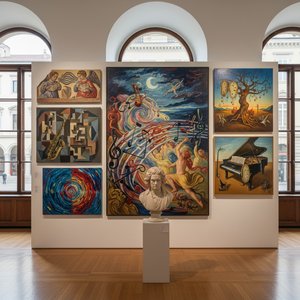
Harmonies on Canvas: Exploring the Visual Representation of Music in Art History
Explore the fascinating history of music's visual representation in art! From ancient symbolism to modern abstraction, discover how artists have captured sound and emotion on canvas. Expert insights & stunning examples.

The Symphony of Canvas: Capturing the Timeless Resonance of Musical Instruments in Fine Art Masterpieces
Explore the profound connection between music and fine art. From ancient iconography to Impressionist masterpieces, discover how legendary instruments are captured on canvas with unparalleled artistry and historical depth for the discerning collector.

10 Iconic Masterpieces That Capture the Magic of Italy
Journey through Italy's soul with 10 iconic masterpieces. From Renaissance classics to romantic landscapes, explore the stories behind these timeless works and find museum-quality art reproductions for your decor. Discover all masterpieces on OriginalUniqueArt.com.