Представи си го
 Изпрати
 Сподели
 Детайли

 Изтегляне
 Подобни
 Рентгенова снимка
 Слайдшоу
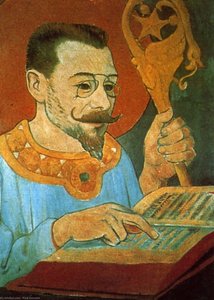
The Breton land
 Acrylic On Canvas
- WallArt
- Nabis
 1893
1893 23.0 x 21.0 cm
 Musée de Pont-Aven
 Прочетете повече
Жикле / Художествен принт
Giclée печат или принт върху платно с музейно качество, бързо производство и гъвкави опции за завършен вид. ( Купете ръчно рисувана картина Купете изображение)




P118B $10

P118H $10

P118W $10

P438Z $10

P508JH $12

P508YH $12

P805H $10

P805Z $10

P919BZ $10

P919G $10

P919XJ $10

P959ZH $10

P968JZ $12

W106C $8

W218G $10

W218JH $8

W218Y $10

W307PJ $10

W316G $10

W316PJ $8

W316Y $10

W398PJ $8

W4111J $10

W500HY $15

W500JH $15

W692G $12

W849H $8

W940BG $15

W953PJ $8




Изберете от предварително зададените размери, които съответстват на оригиналните пропорции на произведението.

Можете да въведете собствени размери, за да паснат на конкретна рамка или пространство. Ако избраният от Вас размер не съвпада с пропорциите на оригиналното изображение, ние ще изрежем произведението или ще разширим изображението с огледален или едноцветен ръб. Дигитален макет ще бъде изпратен за Ваше одобрение преди започването на производството.
Моля, имайте предвид, че предпрегледът на екрана не отразява реалното изрязване или разширяване. Само макетът ще покаже точно финалната композиция.
Въпреки че са налични персонализирани размери, препоръчваме да изберете размер от предварително дефинирания списък, за да запазите оригиналните пропорции.
Доставка по целия свят () в рамките на 2 седмици вместо стандартните 4/5 седмици. (22 Август)

Безплатна експресна доставка по целия свят

Висококачествено ленено платно

Пълно застраховане при доставка

Гаранция за възстановяване на митнически такси

Гаранция за цветова точност

60-Дневен период за връщане (Само при дефекти)

100% Гаранция за връщане на парите

Предложение за отстъпка при поръчка на едро
 Стъклото е налично само в размери под 110 см

The Breton land
Жикле / Художествен принт
Размер на репродукцията
-


Обща цена
$ 80
Описание на колекционерския предмет
Paul Sérusier’s “The Breton Land”: A Pioneering Vision of Abstract Impressionism
Paul Sérusier’s “The Breton Land,” painted in 1892 during his formative years at Pont-Aven, stands as a cornerstone of French Impressionism and arguably the genesis of abstract art. More than just a depiction of a rural landscape—the rugged coastline of Brittany—it embodies a radical departure from traditional artistic conventions, marking Sérusier’s embrace of Cézanne’s influence and his unwavering commitment to exploring the expressive potential of color and form.
- Subject Matter: The painting captures a panoramic view of Pont-Aven Bay, featuring rolling hills dotted with trees and punctuated by the shimmering expanse of the sea. Sérusier meticulously rendered the scene, prioritizing atmosphere over precise topographical accuracy—a hallmark of Cézanne’s approach to landscape painting.
- Style: “The Breton Land” exemplifies Synthetism, a movement spearheaded by Gauguin and Denis, which sought to distill visual experience into simplified geometric shapes and flattened planes. Unlike Impressionists who aimed to capture fleeting moments of light and color, Sérusier prioritized conveying the essence of the environment through abstracted forms.
- Technique: Sérusier employed a technique known as Cloisonnism—inspired by medieval enamelwork—where he applied pigment in small, rectangular blocks or “cloison d’œil” cells. This method created a textured surface and emphasized color separation, resulting in an image that feels both luminous and subtly enigmatic.
- Historical Context: Painted during the Belle Époque, “The Breton Land” reflects the intellectual ferment of its time—the burgeoning interest in psychology and symbolism—and aligns with the broader artistic quest for new expressive languages. It’s considered a pivotal moment in the transition from Impressionism to Expressionism.
The painting's emotional impact is profound. The muted palette—dominated by greens, blues, and browns—evokes a sense of tranquility and solitude, mirroring the artist’s own contemplative spirit. Yet, beneath the surface calmness lies an underlying tension, conveyed through the angular contours of the hills and the rhythmic repetition of color blocks. This juxtaposition speaks to Sérusier's desire to capture not merely what he saw but how he *felt*—a core principle of Expressionist art.
“The Breton Land” continues to resonate with viewers today because it represents a courageous assertion of artistic freedom and an unwavering belief in the transformative power of abstraction. It serves as a testament to Sérusier’s visionary genius and his enduring legacy as one of the most influential figures in modern art.
Биография на художника
Paul Sérusier: Pioneer of Abstraction and the Nabis Movement
Paul Sérusier, born in Paris on November 9th, 1864, and passing away on October 7th, 1927, remains a pivotal figure in the history of modern art. More than just a painter, he was a visionary who profoundly influenced the development of abstract art and played a crucial role in establishing the Nabis movement – a group dedicated to exploring new forms of expression and challenging traditional artistic conventions. His journey began with formal training at the Académie Julian, where he honed his skills alongside contemporaries like Maurice Denis and Édouard Vuillard, absorbing their innovative approaches while simultaneously forging his own distinctive style.
Sérusier’s early works are characterized by a quiet introspection and a deep connection to the landscapes of Brittany. He spent summers in Pont-Aven, a region renowned for its artistic community, where he encountered Paul Gauguin, whose influence was particularly significant. It was during this period that Sérusier developed his signature technique – Cloisonnism – a method inspired by medieval stained glass windows. This involved applying flat areas of color to the canvas, separated by bold outlines, creating an effect reminiscent of distinct panels or cells, as if painting with colored tape. This approach moved away from traditional perspective and representation, prioritizing sensation and emotional impact over meticulous detail.
The Birth of Abstraction and the Nabis
Sérusier’s most celebrated work, *La Forêt à Pont-Aven* (also known as *Le Talisman*), exemplifies this revolutionary approach. Painted in 1888, it's considered a foundational piece for both Cloisonnism and the broader development of abstract art. The painting isn’t a literal depiction of the forest; instead, it’s an exploration of color, form, and feeling – a distillation of Sérusier’s perception of the scene. Gauguin encouraged him to move beyond imitation and embrace a more symbolic and expressive language, leading to this groundbreaking work.
Sérusier's association with Paul Gauguin and Maurice Denis formed the core of the Nabis movement. The name “Nabis” itself derives from the Hebrew word for “prophet,” reflecting the group’s ambition to create art that transcended mere representation, aiming instead to convey spiritual truths and evoke profound emotions. Alongside Pierre Bonnard, Édouard Vuillard, and Maurice Denis, Sérusier sought a synthesis between decoration and fine art – a concept deeply rooted in the Arts and Crafts movement. They experimented with flattened forms, bold colors, and decorative patterns, rejecting academic realism in favor of a more subjective and expressive approach.
Notable Works and Artistic Legacy
Beyond *La Forêt à Pont-Aven*, Sérusier’s oeuvre includes numerous significant paintings that showcase his evolving style. *L'aversée* (1893), now housed in the Musée d'Orsay, exemplifies his exploration of color and form, while *Portrait de Paul Ranson* (1890) reveals a more intimate and psychologically charged approach. His later works, such as *Le Serpent Écailleux* (1894), displayed at the National Museum in Warsaw, continued to push the boundaries of abstraction, demonstrating his commitment to distilling essence from observation.
Sérusier’s influence extended beyond his own paintings. He played a crucial role in shaping the artistic landscape of early 20th-century France, particularly through his teaching at the École Ranson, founded by Paul Ranson – another key figure in the Nabis movement. This institution became a breeding ground for future modernist artists, and Sérusier’s emphasis on abstraction and expressive color profoundly impacted their work. His legacy is undeniable; he was not merely a follower of trends but a true innovator who helped to pave the way for abstract art and inspired generations of artists to explore new ways of seeing and representing the world.
Artistic Movement and Influence
Sérusier’s artistic journey was deeply intertwined with several key movements. His early work demonstrates an influence from Post-Impressionism, particularly in his use of color and light. However, he quickly moved beyond these influences to develop a unique style rooted in Cloisonnism – a technique that anticipates later developments in abstract art. The Nabis movement itself represents a significant artistic shift, rejecting the conventions of academic painting and embracing a more subjective and symbolic approach. Sérusier’s work is considered a cornerstone of this movement, demonstrating its core principles of color, form, and emotional expression.
Further exploration into Cloisonnism reveals its roots in medieval stained glass windows, where individual colored panels are separated by black outlines. This technique provided Sérusier with a powerful visual language for expressing his ideas – a way to create images that were both decorative and emotionally resonant. His work also reflects the influence of Theosophy, a philosophical movement that emphasized spiritual truths and sought to connect art with broader human experience.

Пол Сезан
1864 - 1927 , Франция
Бързи факти
- Artistic Movement Or Style: Постимпрерианизъм
- Artists Or Movements Influenced By This Artist: ['Ла Набиз']
- Artists Who Influenced This Artist:
- Пол Gauguin
- Морис Денс
- Date Of Birth: 9 ноември 1864
- Date Of Death: 7 октомври 1927
- Full Name: Louis-Paul-Henri Sérusier
- Nationality: Френски
- Notable Artworks:
- Л’аверс (1893)
- Портрет на Пол Рансон (1890)
- Меланхолия (1890)
- Змиите ядат (1894)
- Place Of Birth: Париж, Франция
Всички статии

Топ 25 шедьовъра на Пол Сезан: Открийте вечния гений в изкуството и декора
Открийте 25 шедьовъра на Пол Сезан – импресионизъм, постимпресионизъм и революционен стил! Разгледайте историите зад картините, техниките и вдъхновението. Купете висококачествени репродукции за вашия дом на OriginalUniqueArt.com.

Топ 25 шедьовъра на Пол Клее: Изкуство за вашия дом от OriginalUniqueArt.com
Разгледайте топ 25 шедьовъра на Пол Клее – абстрактни картини, изпълнени с експресионизъм и кубистични форми. Вдъхновете се за вашия интериор с OriginalUniqueArt.com! Открийте всички произведения онлайн.
Paul Sérusier: Pioneering Synthetism & The Nabis’ Symbolic Revolution
Discover Paul Sérusier's pivotal role in the Nabis movement & the birth of Synthetism. Explore 'The Talisman,' his influence on modern art, and a deeper understanding of this symbolic revolution. Expert analysis & insights.

Топ 10 шедьоври на импресионизма: История, артисти и красота за вашия дом
Потопете се в света на импресионизма с нашия списък от 10 шедьовъра! От Моне до Реноар, разкрийте историите зад най-емблематичните картини. Вдъхновете дома си с изкуство – купете репродукции на високо качество на OriginalUniqueArt.com

Beyond Impressionism: Exploring the Emotional Depth of Post-Impressionist Painting
Explore the profound emotional depth & innovative techniques of Post-Impressionism with OriginalUniqueArt. Discover Cézanne, Van Gogh, Gauguin & more – and their lasting impact on modern art.