Меню
Представи си го AR преглед Превключване към принт Превключване към дигитално изображение Изпрати
Детайли Добавяне към любими Изтегляне Подобни Рентгенова снимка Слайдшоу Статистика

La lutte bretonne

Paul Sérusier (1864-1927) emerged as a key figure in the Symbolist movement, profoundly impacting the development of Synthetism and cloisonnism. His collaboration with Gauguin at Pont-Aven solidified his reputation as an innovator, establishing him as one of France’s foremost artists.

Паул Серусий е френски художник, пионер на абстрактното изкуство и вдъхновение за движението „Наби“. Известен с техниките си на cloisonnism и влиянието си върху развитието на модерното изкуство, особено творби като "The Talisman".

Ръчно изработена маслена репродукция

Ръчно рисувана маслена картина върху платно във вашия размер и рамка, изработена по поръчка от нашите художници. ( Превключване към принт Превключване към дигитално изображение)

P118B $10
P118H $10
P118W $10
P438Z $10
P508JH $12
P508YH $12
P805H $10
P805Z $10
P919BZ $10
P919G $10
P919XJ $10
P959ZH $10
P968JZ $12
W106C $8
W218G $10
W218JH $8
W218Y $10
W307PJ $10
W316G $10
W316PJ $8
W316Y $10
W398PJ $8
W4111J $10
W500HY $15
W500JH $15
W692G $12
W849H $8
W940BG $15
W953PJ $8

Стандартен
по поръчка
CM
INCH

Изберете от предварително зададените размери, които съответстват на оригиналните пропорции на произведението.

ширина
височина

Можете да въведете свои собствени размери, за да пасне на конкретна рамка или пространство. Ако избраният от вас размер не съответства на пропорциите на оригиналното изображение, ние ще изрежем произведението или ще удължим картината с допълнителни ръчно рисувани елементи. Дигитален макет ще бъде изпратен за ваше одобрение преди започване на производството.
Моля, обърнете внимание, че прегледът на екрана не отразява действителното изрязване или разширяване. Само макетът ще покаже точно финалния състав.
Въпреки че са налични персонализирани размери, препоръчваме да изберете размер от предварително дефинирания списък, за да запазите оригиналните пропорции.

Примери за това какво може да се промени: Заменете лице с клиентска снимка; Добавете домашен любимец (например заменете котка с куче); Включете скрито послание на фона; Променете пейзажа или елементите на фона.
След поръчка, екипът на OriginalUniqueArt.com ще изпрати имейл на клиента за инструкции и ще предостави преглед на макет.

Доставка по целия свят () в рамките на 3/4 седмици вместо стандартните 5 седмици. (16 Септември). Без компромис с качеството.

why_choose_icon
Безплатна експресна доставка по целия свят
why_choose_icon
Висококачествено ленено платно
why_choose_icon
Пълно застраховане при доставка
why_choose_icon
Гаранция за възстановяване на митнически такси
why_choose_icon
Гаранция за цветова точност
why_choose_icon
Политика за връщане в рамките на 100 дни (само при дефекти)
why_choose_icon
100% Гаранция за връщане на парите
why_choose_icon
Предложение за отстъпка при поръчка на едро

Обща цена

$ 300

reproduction

La lutte bretonne

Репродукционен метод

Размер на репродукцията

-

Обща цена

$ 300

Бързи факти

  • Artistic style: Naive
  • Movement: Nabis
  • Influences: Paul Gauguin
  • Notable elements or techniques: Cloissonism, Flat space
  • Title: La lutte bretonne
  • Year: 1890
  • Location: Musée d'Orsay

Тест за изкуство

Има само един верен отговор за всеки въпрос.

Въпрос 1:
What artistic movement is Paul Sérusier primarily associated with?
Въпрос 2:
The painting depicts a scene of wrestling. Where did Sérusier find inspiration for this subject?
Въпрос 3:
What technique is prominently featured in 'La Lutte bretonne', as exemplified by Sérusier's masterpiece?
Въпрос 4:
Who mentored Paul Sérusier during his artistic development, influencing his style and approach to painting?
Въпрос 5:
What was the significance of Pont-Aven for Sérusier and the Nabis artists?

A Primal Encounter in Breton Color

In the vibrant tapestry of late nineteenth-century French art, few works capture the raw, unbridled energy of folk tradition quite like Paul Sérusier's La Lutte bretonne. Completed in 1890, this masterpiece serves as a profound window into the soul of Brittany, moving far beyond a mere depiction of a wrestling match to become an evocative exploration of human struggle and cultural identity. The scene unfolds with an immediate, visceral intensity, placing the viewer directly within a circle of onlookers gathered to witness a physical altercation between two men. As they grapple in the center of the frame, the surrounding crowd—composed largely of women adorned in the iconic, intricate white coifs of Breton tradition—stands as a silent, watchful collective, their presence grounding the chaotic movement of the fighters in a sense of communal ritual.

The painting is a triumph of Cloisonnism, a bold stylistic departure from the soft, atmospheric nuances of traditional Impressionism. Heavily influenced by the mentorship of Paul Gauguin, Sérusier utilized thick, dark outlines to encase patches of saturated color, much like the leaded glass of a cathedral window. This technique strips away unnecessary anatomical detail in favor of a powerful, flattened graphic impact. The artist’s palette is particularly striking; he employs energetic bursts of reds and yellows that seem to pulse against the canvas, mirroring the heat and exertion of the wrestling match itself. For the discerning collector or interior designer, this use of pigment offers a dynamic focal point, capable of injecting a sense of rhythmic vitality and warmth into any sophisticated space.

Symbolism and the Spirit of the Nabis

Beyond its surface-level action, La Lutte bretonne is steeped in the symbolic preoccupations of the Nabis movement. During this era, artists sought to reject the polished, artificial perfection of the Parisian salons, turning instead toward what they perceived as the "primitive" and authentic beauty of rural life. The wrestling match serves as a potent metaphor for opposing forces—the tension between strength and vulnerability, or perhaps the struggle of tradition against the encroaching modernity of the Belle Époque. Every brushstroke is an intentional step away from realism and toward Synthetism, where the goal is to synthesize the external observation of nature with the internal emotional response of the artist.

To possess a reproduction of this work is to invite a piece of art history into one's home that celebrates the beauty of the unadorned and the profound depth of folk heritage. The painting does not merely decorate a wall; it commands attention through its structural boldness and its ability to evoke a sense of timelessness. Whether placed in a contemporary gallery setting or a classic study, Sérusier’s work continues to resonate with anyone moved by the intersection of raw human emotion and the deliberate, masterful application of color and form.


Биография на художника

Paul Sérusier: Pioneer of Abstraction and the Nabis Movement

Paul Sérusier, born in Paris on November 9th, 1864, and passing away on October 7th, 1927, remains a pivotal figure in the history of modern art. More than just a painter, he was a visionary who profoundly influenced the development of abstract art and played a crucial role in establishing the Nabis movement – a group dedicated to exploring new forms of expression and challenging traditional artistic conventions. His journey began with formal training at the Académie Julian, where he honed his skills alongside contemporaries like Maurice Denis and Édouard Vuillard, absorbing their innovative approaches while simultaneously forging his own distinctive style.

Sérusier’s early works are characterized by a quiet introspection and a deep connection to the landscapes of Brittany. He spent summers in Pont-Aven, a region renowned for its artistic community, where he encountered Paul Gauguin, whose influence was particularly significant. It was during this period that Sérusier developed his signature technique – Cloisonnism – a method inspired by medieval stained glass windows. This involved applying flat areas of color to the canvas, separated by bold outlines, creating an effect reminiscent of distinct panels or cells, as if painting with colored tape. This approach moved away from traditional perspective and representation, prioritizing sensation and emotional impact over meticulous detail.

The Birth of Abstraction and the Nabis

Sérusier’s most celebrated work, *La Forêt à Pont-Aven* (also known as *Le Talisman*), exemplifies this revolutionary approach. Painted in 1888, it's considered a foundational piece for both Cloisonnism and the broader development of abstract art. The painting isn’t a literal depiction of the forest; instead, it’s an exploration of color, form, and feeling – a distillation of Sérusier’s perception of the scene. Gauguin encouraged him to move beyond imitation and embrace a more symbolic and expressive language, leading to this groundbreaking work.

Sérusier's association with Paul Gauguin and Maurice Denis formed the core of the Nabis movement. The name “Nabis” itself derives from the Hebrew word for “prophet,” reflecting the group’s ambition to create art that transcended mere representation, aiming instead to convey spiritual truths and evoke profound emotions. Alongside Pierre Bonnard, Édouard Vuillard, and Maurice Denis, Sérusier sought a synthesis between decoration and fine art – a concept deeply rooted in the Arts and Crafts movement. They experimented with flattened forms, bold colors, and decorative patterns, rejecting academic realism in favor of a more subjective and expressive approach.

Notable Works and Artistic Legacy

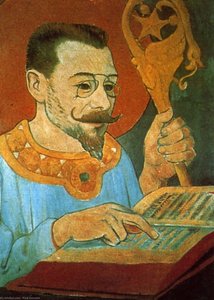
Beyond *La Forêt à Pont-Aven*, Sérusier’s oeuvre includes numerous significant paintings that showcase his evolving style. *L'aversée* (1893), now housed in the Musée d'Orsay, exemplifies his exploration of color and form, while *Portrait de Paul Ranson* (1890) reveals a more intimate and psychologically charged approach. His later works, such as *Le Serpent Écailleux* (1894), displayed at the National Museum in Warsaw, continued to push the boundaries of abstraction, demonstrating his commitment to distilling essence from observation.

Sérusier’s influence extended beyond his own paintings. He played a crucial role in shaping the artistic landscape of early 20th-century France, particularly through his teaching at the École Ranson, founded by Paul Ranson – another key figure in the Nabis movement. This institution became a breeding ground for future modernist artists, and Sérusier’s emphasis on abstraction and expressive color profoundly impacted their work. His legacy is undeniable; he was not merely a follower of trends but a true innovator who helped to pave the way for abstract art and inspired generations of artists to explore new ways of seeing and representing the world.

Artistic Movement and Influence

Sérusier’s artistic journey was deeply intertwined with several key movements. His early work demonstrates an influence from Post-Impressionism, particularly in his use of color and light. However, he quickly moved beyond these influences to develop a unique style rooted in Cloisonnism – a technique that anticipates later developments in abstract art. The Nabis movement itself represents a significant artistic shift, rejecting the conventions of academic painting and embracing a more subjective and symbolic approach. Sérusier’s work is considered a cornerstone of this movement, demonstrating its core principles of color, form, and emotional expression.

Further exploration into Cloisonnism reveals its roots in medieval stained glass windows, where individual colored panels are separated by black outlines. This technique provided Sérusier with a powerful visual language for expressing his ideas – a way to create images that were both decorative and emotionally resonant. His work also reflects the influence of Theosophy, a philosophical movement that emphasized spiritual truths and sought to connect art with broader human experience.

Пол Сезан

Пол Сезан

1864 - 1927 , Франция

Бързи факти

  • Artistic Movement Or Style: Постимпрерианизъм
  • Artists Or Movements Influenced By This Artist: ['Ла Набиз']
  • Artists Who Influenced This Artist:
    • Пол Gauguin
    • Морис Денс
  • Date Of Birth: 9 ноември 1864
  • Date Of Death: 7 октомври 1927
  • Full Name: Louis-Paul-Henri Sérusier
  • Nationality: Френски
  • Notable Artworks:
    • Л’аверс (1893)
    • Портрет на Пол Рансон (1890)
    • Меланхолия (1890)
    • Змиите ядат (1894)
  • Place Of Birth: Париж, Франция
Разгледайте произведения на изкуството, организирани по теми, стилове и характеристики.