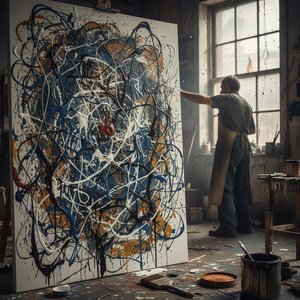
Untitled (Composition with Pouring I)
Ръчно изработена маслена репродукция
Ръчно рисувана маслена картина върху платно във вашия размер и рамка, изработена по поръчка от нашите художници. ( Купете принт
Купете изображение)
P118B $10
P118H $10
P118W $10
P438Z $10
P508JH $12
P508YH $12
P805H $10
P805Z $10
P919BZ $10
P919G $10
P919XJ $10
P959ZH $10
P968JZ $12
W106C $8
W218G $10
W218JH $8
W218Y $10
W307PJ $10
W316G $10
W316PJ $8
W316Y $10
W398PJ $8
W4111J $10
W500HY $15
W500JH $15
W692G $12
W849H $8
W940BG $15
W953PJ $8
Изберете от предварително зададените размери, които съответстват на оригиналните пропорции на произведението.
Можете да въведете свои собствени размери, за да пасне на конкретна рамка или пространство. Ако избраният от вас размер не съответства на пропорциите на оригиналното изображение, ние ще изрежем произведението или ще удължим картината с допълнителни ръчно рисувани елементи. Дигитален макет ще бъде изпратен за ваше одобрение преди започване на производството.
Моля, обърнете внимание, че прегледът на екрана не отразява действителното изрязване или разширяване. Само макетът ще покаже точно финалния състав.
Въпреки че са налични персонализирани размери, препоръчваме да изберете размер от предварително дефинирания списък, за да запазите оригиналните пропорции.
След поръчка, екипът на OriginalUniqueArt.com ще изпрати имейл на клиента за инструкции и ще предостави преглед на макет.
Доставка по целия свят () в рамките на 3/4 седмици вместо стандартните 5 седмици. (16 Август). Без компромис с качеството.
Безплатна експресна доставка по целия свят
Висококачествено ленено платно
Пълно застраховане при доставка
Гаранция за възстановяване на митнически такси
Гаранция за цветова точност
60-Дневен период за връщане (Само при дефекти)
100% Гаранция за връщане на парите
Предложение за отстъпка при поръчка на едро
Untitled (Composition with Pouring I)
Репродукционен метод
Размер на репродукцията
-
Обща цена
$ 300
Описание на произведението
A Revolution in Paint: Exploring Jackson Pollock’s “Untitled (Composition with Pouring I)”
This captivating work embodies the raw energy and groundbreaking innovation that defined Jackson Pollock's contribution to Abstract Expressionism. Created during a pivotal period in his artistic development, "Untitled (Composition with Pouring I)" is not merely a painting; it’s an *event* captured on canvas – a visual record of the artist’s physical and emotional engagement with the creative process.Deconstructing the Abstract: Subject & Style
Rejecting traditional representation, Pollock plunges viewers into a world of pure abstraction. There are no recognizable figures or landscapes here; instead, we encounter a dynamic interplay of color, line, and texture. The painting’s power lies in its deliberate *lack* of subject matter, forcing the viewer to confront their own emotional responses and interpretations. This work is firmly rooted in Abstract Expressionism, specifically the “drip” technique Pollock pioneered. It shares stylistic kinship with works like "Number 25," showcasing a similar all-over composition and energetic application of paint.The Dance of Creation: Technique & Materials
Pollock’s revolutionary technique involved placing his canvas on the floor and applying paint – often industrial house paints thinned with turpentine – through pouring, dripping, and flinging. This method allowed him to approach the canvas from all sides, creating a complex network of interwoven lines and shapes. The thick impasto, built up layer upon layer, adds a tactile dimension, inviting close inspection. The use of oil-based paint contributes to the richness and depth of color, while also allowing for unique textural effects. This wasn’t simply painting; it was *action* painting – a physical performance translated onto canvas.A Historical Turning Point: Context & Influence
Emerging in the post-World War II era, Abstract Expressionism represented a radical departure from established artistic conventions. It reflected a broader cultural shift towards individualism and emotional honesty. Pollock’s work, in particular, challenged traditional notions of authorship and control. He was influenced by Surrealist automatism – the idea of accessing the subconscious through spontaneous creation – as well as Native American sand painting traditions. His innovations paved the way for subsequent artistic movements, influencing generations of artists to explore new forms of expression.Unlocking Meaning: Symbolism & Emotional Impact
While devoid of explicit symbolism, "Untitled (Composition with Pouring I)" resonates with powerful emotional undertones. The chaotic yet controlled energy suggests a struggle between order and disorder, creation and destruction. The vibrant color palette – yellows, reds, blues, blacks, and whites – evokes a range of feelings, from exhilaration to anxiety. Ultimately, the painting’s meaning is subjective, shaped by the individual viewer's experiences and perceptions. It can be interpreted as a representation of inner turmoil, a celebration of creative freedom, or simply an exploration of the pure aesthetic potential of paint.Interior Design & Collectibility
A reproduction of this iconic work would serve as a striking focal point in any modern or contemporary interior. Its bold colors and dynamic composition add energy and sophistication to a space. The painting’s historical significance and enduring appeal make it a valuable addition to any art collection, representing a pivotal moment in the history of American art. Its ability to spark conversation and inspire contemplation ensures its continued relevance for years to come.Биография на художника
Early Life and the Seeds of Innovation
Paul Jackson Pollock, born in Cody, Wyoming, in 1912, was a restless spirit from the outset. His early life was marked by frequent relocation as his father pursued work as a land surveyor across the vast landscapes of the American West. This itinerant existence instilled in young Pollock a deep connection to the natural world and an exposure to diverse cultures, particularly through encounters with Native American art during those surveying trips – impressions that would subtly permeate his artistic vision later in life. Though he never explicitly imitated Indigenous styles, the raw energy and spiritual resonance of these early experiences undoubtedly left their mark. Pollock’s formal artistic training began at the Manual Arts High School in Los Angeles, followed by studies at the Art Students League of New York under the tutelage of Thomas Hart Benton. Benton, a prominent figure in the Regionalist movement, emphasized rhythmic composition and narrative themes rooted in American life. While Pollock initially absorbed these lessons, his inherent inclination leaned toward more abstract explorations. He was also profoundly impacted by Mexican muralists like José Clemente Orozco, whose powerful depictions of social struggle resonated deeply with him. These early influences laid a foundation, but it was the burgeoning world of Surrealism that truly unlocked Pollock’s artistic potential.The Birth of Action Painting and a Revolutionary Technique
The 1930s saw Pollock experimenting with various techniques, seeking alternatives to traditional brushwork. He began pouring paint, exploring its fluidity and unpredictable nature. However, it was around 1947 that his artistic trajectory underwent a radical transformation. Abandoning the easel altogether, Pollock laid canvases directly on the floor, initiating what would become known as his “drip technique.” He then proceeded to drip, splash, and fling paint onto the canvas from above, orchestrating a dynamic dance between artist, medium, and surface. This wasn’t merely about applying paint; it was about embodying the act of creation itself. Pollock's canvases became arenas for physical expression, capturing the immediacy of his gestures and emotions. The resulting paintings are characterized by their “all-over” composition – a lack of central focus that invites the viewer to explore the entire surface as a unified field of energy. Intricate networks of lines and colors intertwine, creating a visual complexity that is both captivating and challenging. He employed unconventional tools—sticks, knives, even syringes—to manipulate the paint in unpredictable ways, further emphasizing the spontaneous nature of his process.- This technique was revolutionary because it rejected traditional brushwork.
- It emphasized the physical act of painting as a performance.
Influences and Artistic Development
Pollock’s artistic development wasn't solely driven by experimentation. He drew inspiration from diverse sources, including the works of European masters like Picasso and Braque, as well as the vibrant murals of Mexican artists such as Diego Rivera. The influence of Surrealism, with its exploration of the subconscious and dreamlike imagery, also played a significant role in shaping his artistic vision. His exposure to Native American art during his father’s surveying trips instilled a deep appreciation for patterns, rhythms, and symbolic language – elements that subtly informed his abstract compositions. Key Influences:- Thomas Hart Benton (Regionalism)
- José Clemente Orozco (Mexican Muralism)
- Surrealism
- Native American Art
Iconic Works and Lasting Legacy
Pollock’s most celebrated works—such as Number 1, 1950 (Lavender Mist), One: Number 31, 1950, Blue Poles: Number 11, 1952, and Convergence—are testaments to his revolutionary technique. These paintings are not simply images; they are records of a performance, imbued with the artist’s physical presence and emotional intensity. The dynamic energy that emanates from these canvases is palpable, drawing viewers into a world of pure abstraction. Notable Works:- Number 1, 1950 (Lavender Mist)
- One: Number 31, 1950
- Blue Poles: Number 11, 1952
- Convergence
A Complex Figure and Enduring Influence
Despite initial skepticism, Pollock’s work eventually gained widespread recognition and acclaim. He was a complex figure—a brilliant artist grappling with personal demons, including alcoholism. His untimely death in 1956 at the age of 44 only served to heighten his mystique and solidify his place as one of the most important artists of the 20th century. His legacy continues to inspire artists today, demonstrating the power of experimentation, emotional expression, and a willingness to challenge conventional artistic boundaries. His innovative techniques and expressive style ensure his enduring influence for generations to come.Пол Джаксън Полк
1912 - 1956 , Съединени американски щати
Бързи факти
- Artistic Movement Or Style: Абстрактен експресионизъм
- Artists Or Movements Influenced By This Artist:
- Цветно поле
- Абстрактен експресионизъм
- Artists Who Influenced This Artist:
- Бентън
- Орозко
- Массон
- Date Of Birth: 28 януари 1912
- Date Of Death: 11 август 1956
- Full Name: Paul Jackson Pollock
- Nationality: Американски
- Notable Artworks:
- Lavender Mist
- One: 31
- Blue Poles
- Convergence
- Place Of Birth: Коди, САЩ


Стъклото е налично само в размери под 110 см