
 Представи си го
 Изпрати
 Сподели
 Детайли

 Изтегляне
 Подобни
 Рентгенова снимка
 Слайдшоу
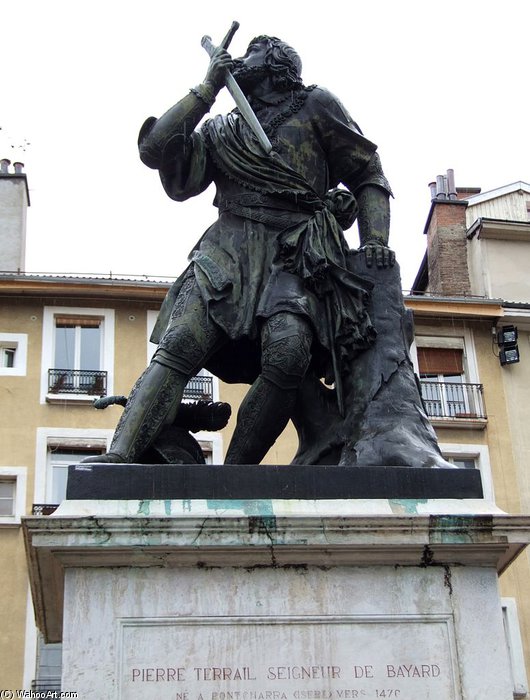
Statue Du Chevalier Bayard
 Прочетете повече
Ръчно изработена маслена репродукция
Ръчно рисувана маслена картина върху платно във вашия размер и рамка, изработена по поръчка от нашите художници. ( Купете принт Купете изображение)




































Изберете от предварително зададените размери, които съответстват на оригиналните пропорции на произведението.

Можете да въведете свои собствени размери, за да пасне на конкретна рамка или пространство. Ако избраният от вас размер не съответства на пропорциите на оригиналното изображение, ние ще изрежем произведението или ще удължим картината с допълнителни ръчно рисувани елементи. Дигитален макет ще бъде изпратен за ваше одобрение преди започване на производството.
Моля, обърнете внимание, че прегледът на екрана не отразява действителното изрязване или разширяване. Само макетът ще покаже точно финалния състав.
Въпреки че са налични персонализирани размери, препоръчваме да изберете размер от предварително дефинирания списък, за да запазите оригиналните пропорции.
След поръчка, екипът на OriginalUniqueArt.com ще изпрати имейл на клиента за инструкции и ще предостави преглед на макет.
Доставка по целия свят () в рамките на 3/4 седмици вместо стандартните 5 седмици. (20 Август). Без компромис с качеството.

Безплатна експресна доставка по целия свят

Висококачествено ленено платно

Пълно застраховане при доставка

Гаранция за възстановяване на митнически такси

Гаранция за цветова точност

60-Дневен период за връщане (Само при дефекти)

100% Гаранция за връщане на парите

Предложение за отстъпка при поръчка на едро
 Стъклото е налично само в размери под 110 см

Statue Du Chevalier Bayard
Репродукционен метод
Размер на репродукцията
-


Обща цена
$ 300
Биография на художника
The Marble Legacy of Nicolas Bernard Raggi
In the heart of Carrara, Italy, where the mountains yield their purest white stone, the destiny of Nicolas Bernard Raggi was etched into the very landscape of his birth. Born in 1790, Raggi emerged from a lineage of craftsmanship, the son of a sculptor who provided him with more than just an education; he provided a direct connection to the soul of the marble. This early immersion in the tactile reality of stone allowed Raggi to develop a profound intimacy with his medium, a skill that would later allow him to transform cold, unyielding blocks into breathing monuments of French history. His formative years were defined by the pursuit of classical perfection, heavily influenced by the shadows of masters like Antonio Canova, whose principles of idealized beauty and anatomical grace became the cornerstone of Raggi’s artistic language.
As his career migrated from the quarries of Italy to the imperial splendor of France, Raggi’s talent found its true purpose: the immortalization of greatness. During the reign of Napoleon III, he ascended to the heights of the sculptural hierarchy, becoming the preferred hand for commissions that required both monumental scale and psychological depth. His work was not merely about capturing a likeness, but about projecting an aura of stability, nobility, and historical continuity for the French nation. Through his mastery of Carrara marble, Raggi achieved a rare feat in neoclassical sculpture—the ability to imbue stone with a palpable vitality, where the subtle gradations of light across a carved drapery or the soft tension in a hero's gaze suggested a life caught in a moment of eternal stillness.
Monuments of Chivalry and Crown
The true significance of Raggi’s oeuvre lies in his ability to personify the legends of France. He did not merely sculpt men; he sculpted the very essence of French identity. His most celebrated achievements are found in the colossal figures that continue to grace the urban landscape of Paris and beyond, serving as silent sentin's of a bygone era of chivalry and monarchy.
- The Spirit of Chivalry: In his depictions of Bayard, the legendary knight, Raggi captured the rugged nobility of the "knight without fear and beyond reproach." His ability to render the weight of armor and the resolute expression of a warrior created a symbol of courage that resonated deeply with the romantic ideals of his time.
- The Majesty of Monarchy: Through his monumental portraits of Henri IV, Raggi utilized the pristine clarity of Carrara marble to evoke the grandeur of the Bourbon era. These works served as powerful political instruments, using the permanence of stone to reinforce the legitimacy and historical weight of the French crown.
- Historical Continuity: His versatility extended to figures such as Hugues Capet, demonstrating a capacity to traverse different eras of French history, weaving together the threads of the Carolingian past with the imperial present through a unified neoclassical aesthetic.
Raggi’s technical prowess was characterized by an extraordinary command over texture and form. He possessed the rare ability to manipulate marble so that it mimicked the softness of skin or the heavy folds of royal velvet, creating a sensory experience for the viewer. This meticulous approach ensured that his sculptures were not merely static objects of veneration but dynamic narratives in stone. Even as the political tides of France shifted, Raggi’s works remained steadfast, providing a sense of permanence and dignity. His legacy remains etched in the public squares of Europe, where his marble heroes continue to stand as testament to an era when art was the ultimate vessel for national memory and the pursuit of classical perfection.

nicolas bernard raggi
1790 - 1862 , Italy
Бързи факти
- Artistic Movement Or Style: Neoclassical Sculpture
- Artists Or Movements Influenced By This Artist: ['Classical Art']
- Artists Who Influenced This Artist: ['Antonio Canova']
- Date Of Birth: Carrara, Italy (1790)
- Date Of Death: 1862
- Full Name: Nicolas Bernard Raggi
- Nationality: Italian
- Notable Artworks:
- Henri IV
- Monument To Comte Frochot
- Hugues Capet
- Place Of Birth: Carrara

