

 Преглед в реален мащаб
 Сподели
 Сподели
 Подробности
 Ръководство

 Изтегляне
 Подобни артикули
 Рентгенова снимка
 Слайдшоу
 Статистика
The student


 Разгърни целия текст
Изкуството, представено на тази страница, е защитено от законите за авторско право, което означава, че не можем законно да създаваме или продаваме идентични репродукции. Тази защита се прилага съгласно международни споразумения като Бернска конвенция и от националното законодателство, включително разпоредбите на Закон за авторското право на САЩ – Раздел 17.
Този метод е напълно съвместим с законите за авторско право, тъй като не включва копиране или дублиране на защитеното произведение. Вместо това става въпрос за творческа реинтерпретация – нова картина, която е вдъхновена от оригинала, но не е идентична с него.
Жикле / Художествен принт
Giclée печат или принт върху платно с музейно качество, бързо производство и гъвкави опции за завършен вид. ( Поръчайте ръчно рисувано репродукция на този колекционерски предмет Превключване към дигитално изображение)




P118B €10

P118H €10

P118W €10

P438Z €10

P508JH €12

P508YH €12

P805H €10

P805Z €10

P919BZ €10

P919G €10

P919XJ €10

P959ZH €10

P968JZ €12

W106C €8

W218G €10

W218JH €8

W218Y €10

W307PJ €10

W316G €10

W316PJ €8

W316Y €10

W398PJ €8

W4111J €10

W500HY €15

W500JH €15

W692G €12

W849H €8

W940BG €15

W953PJ €8




Изберете от нашите предварително зададени размери, които съответстват на оригиналните пропорции на произведението.

Въведете необходимата ширина и височина, за да паснат на вашата рамка или стена. Принтовете могат само да се изрязват, но никога не могат да бъдат по-големи от оригиналната картина, така че при размер с различен формат част от изображението ще бъде загубена. Преди да започнем печат, ще ви изпратим дигитален мок업 за одобрение. Изображението, показано на тази страница, не показва реалното изрязване — само мок업ът го показва.
Доставка по целия свят () в рамките на 2 седмици вместо стандартните 4/5 седмици. (25 Октомври)

Безплатна експресна доставка по целия свят

Висококачествено ленено платно

Пълно застраховане на доставката

Гаранция за възстановяване на митнически такси

Гаранция за пълно съответствие на цветовете

Политика за връщане в рамките на 100 дни (само при дефекти)

100% Гаранция за връщане на сумата

Отстъпка при поръчка на повече произведения
 Опцията със стъкло е налична само за размери под 110 см

The student
Жикле / Художествен принт
Размер на репродукцията
-


Крайна цена
€ 70
A Quiet Introspection: The Soul of Mario Sironi’s The Student
In the quiet corners of art history, certain works possess the power to halt time, inviting the viewer into a sanctuary of thought and stillness. The Student, a masterful creation by the Italian maestro Mario Sironi, is one such masterpiece. This evocative portrait captures a woman lost in a moment of profound introspection, seated at a table that serves as an altar to intellect and solitude. Clad in somber black attire, her dark hair framing a face of contemplative depth, she sits before a mirror—a classic symbol of self-reflection and the duality of identity. The scene is not merely a depiction of a person, but an invitation into a private, cerebral world where the boundaries between the physical room and the internal mind begin to blur.
The composition is rich with an atmosphere of scholarly elegance. Surrounding the central figure is a curated landscape of artistic and intellectual artifacts: statues that stand like silent sentin Riens, vases that anchor the space with classical grace, and a single book resting near her hand, suggesting a life dedicated to the pursuit of knowledge. The presence of these objects transforms the setting from a simple room into an atelier of the soul. For the discerning collector or interior designer, this painting offers more than just visual beauty; it provides a focal point of sophisticated gravity, making it an ideal centerpiece for spaces dedicated to study, libraries, or refined living areas where conversation and thought are encouraged.
Technique and the Luminosity of Divisionism
To understand the emotional weight of The Student, one must look closely at Sironi’s early mastery of Divisionism. Before his later shifts toward more monumental and architectural styles, Sironi utilized this technique to breathe life into his subjects through a delicate interplay of light. Rather than blending colors on the palette, he applied small, distinct strokes of pigment that, when viewed from a distance, coalesce in the eye of the beholder to create a shimmering, luminous effect. This method allows the shadows in the woman's black clothing to feel deep and velvety, while simultaneously capturing the subtle glints of light reflecting off the porcelain vases and the smooth surfaces of the surrounding sculptures.
This meticulous approach to color and light creates a sense of vibrating stillness. The technique lends a dreamlike quality to the scene, where the air itself feels heavy with the scent of old paper and the quiet dust of a sunlit studio. For those seeking a high-quality reproduction, this complexity of texture is what makes a hand-painted version so captivating; the physical layering of paint recreates the rhythmic energy of Sironi’s brushwork, ensuring that the light seems to dance across the canvas just as it does in the original work.
A Legacy of Intellectual Elegance
Mario Sironi’s journey from a student of engineering to a titan of modern Italian art is reflected in the structural integrity of this piece. There is an architectural precision to how he places the statues and objects within the frame, creating a balanced, harmonious environment that feels both grounded and ethereal. The Student serves as a bridge between the classical traditions of his heritage and the burgeoning modernism of the early 20th century. It captures a moment of transition—much like the subject herself—between the external world of objects and the internal world of ideas.
Integrating a reproduction of this caliber into a contemporary interior allows for a profound connection to the history of European modernism. It is a piece that speaks to the timelessness of human curiosity and the beauty found in solitude. Whether placed in a sun-drenched gallery or a moody, dark-toned study, The Student brings with it an aura of prestige and a deep, resonant emotional intelligence that continues to inspire art lovers and decorators across the globe.
Въпроси и отговори
Цветовете на „The student“ на Марио Сирони ярки или приглушени са?
Цветовете на „The student“ на Марио Сирони показват Muted наситен цвят с Monochromatic интензивност.
Как да изтегля изображението на „The student“ на Марио Сирони?
За "The student" е налично сваляне: страницата за Изтегляне на произведението предлага дигитално изтегляне на изображение с висока резолюция.
Каква сюжетна линия и атмосфера съчетава „The student“ на Марио Сирони?
"The student" изобразява woman, black clothing, mirror, statues, vases, book, table, а уловеното настроение е Classic.
Биография на художника
Марио Сирони: Живот в модерното италианско изкуство
Ранен живот и образование
- Роден на 12 май 1885 г. в Сасари, Сардиния, Италия.
- Баща му е бил инженер, а неговият дядо по майчина линия, Игнацио Вила, е бил уважаван архитекст и скулптор – което му осигурява ранно докосване до света на изкуството.
- Първоначално изучава инженерство в Римския университет, но го изоставя през 1903 г. след нервен срив. Този момент бе повратната точка, която го насочва необратимо към изкуството.
- Започва своето официално художествено обучение в Scuola Libera del Nudo при Римската академия по изкуства (Accademia di Belle Arti di Roma), където среща своя първи значим учител – Джакомо Бала.
Художествено развитие и влияния
- Ранните му творби са силно повлияни от дивионизма – техника, която акцентира върху разделянето на цветовете за постигане на светлинност, което се вижда в произведения като „Ученикът“.
- Около 1914 г. той експериментира кратко с футуризма, излагайки свои творби в Galleria Sprovieri в Рим. Въпреки това, той бързо надхвърля фокуса на движението върху скоростта и динамизма.
- Критична промяна настъпва след Първата световна война, когато развива стил, характеризиращ се с масивни, неподвижни форми и геометрични фигури. Това е резултат от неговия военен опит и нарастващото чувство за изолация.
- Ключовите му влияния включват Джакомо Бала (ранното обучение), Джорджо де Кирико и Карло Карра (влиянието на метафизичното рисуване върху формата), както и елементи от неокласицизма и примитивистичния класицизъм.
Novecento Italiano и зрял стил
- През 1922 г. Сирони става основател на движението Novecento Italiano – стремеж към „завръщане към реда“ в европейското изкуство след войната, който акцентира върху яснотата и традицията.
- Неговият зрял стил е белязан от:
- Акцент върху геометричните форми и опростените силуети.
- Нарочно несъвършена и груба естетика в по-късните му творби.
- Теми за самотата, отчуждението и човешкото съществуване.
- Изследване на индустриалните пейзажи и живота на работническия клас.
- Забележителни произведения от този период включват „Венера“ (1921-1923) и „Самота“ (Solitudine, 1925).
Политически привържености и по-късен живот
- Сирони е подкрепял Бенито Мусолини и е допринесъл значително за фашистките публикации с над 1700 карикатури.
- Той вярва в интеграцията на изкуството и архитектурата, стремейки се да създаде монументални произведения за обществени пространства – отразявайки идеалите на фашисткия режим.
- След Втората световна война неговата връзка с фашизма води до спад в популярността и критичното му признание.
- Той се оттегля предимно от обществения живот, продължавайки да рисува в относителна изолация до смъртта си.
Големи постижения и историческа значимост
- Творчеството на Сирони представлява значителен принос към италианския модернизъм, изграждайки мост между футуризма и по-късните художествени развития.
- Неговото изследване на теми като самота и отчуждение резонира с тревожностите на 20-и век.
- Въпреки противоречията около неговите политически привържености, неговото изкуство е представяно на големи международни изложби, включително в Центъра „Жорж Помпиду“ (1981) и Кралската академия в Лондон (1989).
- Починал на 13 август 1961 г. в Милан.
- Неговото наследство се състои в уникатния му стилистичен синтез и мощните му изображения на човешката съдба в един бързо променящ се свят.

Марио Сирони
1885 - 1961 , Италия
Бързи факти
- Artistic Movement Or Style: Новеченто Италиано, Модернизъм
- Artists Or Movements Influenced By This Artist: ['Футуризъм']
- Artists Who Influenced This Artist: ['Джакомо Бала']
- Date Of Birth: 12 май 1885 г.
- Date Of Death: 13 август 1961 г.
- Full Name: Mario Sironi
- Nationality: Италиански
- Notable Artworks:
- Венера
- Одиночество
- Place Of Birth: Сасари, Италия
Свързани статии
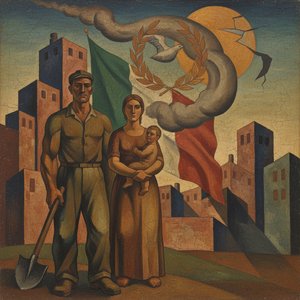
Mario Sironi: A Poetic of Modern Italian Identity Through Symbolism & Social Commentary
Explore the profound works of Mario Sironi, a key figure in Italian Modernism. Discover his evolution from Futurism to Metaphysical painting and his powerful social commentary. Learn about his legacy at OriginalUniqueArt.
Reflections of Reality: Exploring the Metaphysical Power of Mirror Images in Fine Art
Explore the profound symbolism of mirror images in fine art. From Surrealist distortions to classical self-portraits, discover how masters use reflections to explore reality, identity, and the infinite through a sophisticated art-historical lens.
Reflections of Reality: The Metaphysical Power of Mirrors in Fine Art History
Explore the profound symbolism of mirrors in fine art history. From Surrealist distortions to Vanitas themes, discover how masters use reflections to capture reality and the metaphysical soul.
The Mirror Stage of Art History: Exploring Reflection & Identity in Painting
Explore the captivating history of reflection in art! Discover symbolism, technique & psychological depth in masterpieces from Renaissance self-portraits to modern works. Expert insights for discerning collectors.

Mirroring the Soul: A Curated Exploration of Reflection and Self-Perception in Art History
Embark on a sophisticated journey through art history's most captivating masterpieces of reflection. Explore how legendary artists used mirrors to explore identity, surrealism, and the soul through expert art historical analysis.
