

 Представи си го
 Изпрати
 Сподели
 Детайли

 Изтегляне
 Подобни
 Рентгенова снимка
 Слайдшоу
Matrix for printing textiles
 Acrylic On Canvas
- WallArt
- Modernism
 1910
1910 69.0 x 42.0 cm
 Palazzo Fortuny
 Прочетете повече
Ръчно изработена маслена репродукция
Ръчно рисувана маслена картина върху платно във вашия размер и рамка, изработена по поръчка от нашите художници. ( Купете принт Купете изображение)




P118B $10

P118H $10

P118W $10

P438Z $10

P508JH $12

P508YH $12

P805H $10

P805Z $10

P919BZ $10

P919G $10

P919XJ $10

P959ZH $10

P968JZ $12

W106C $8

W218G $10

W218JH $8

W218Y $10

W307PJ $10

W316G $10

W316PJ $8

W316Y $10

W398PJ $8

W4111J $10

W500HY $15

W500JH $15

W692G $12

W849H $8

W940BG $15

W953PJ $8




Изберете от предварително зададените размери, които съответстват на оригиналните пропорции на произведението.

Можете да въведете свои собствени размери, за да пасне на конкретна рамка или пространство. Ако избраният от вас размер не съответства на пропорциите на оригиналното изображение, ние ще изрежем произведението или ще удължим картината с допълнителни ръчно рисувани елементи. Дигитален макет ще бъде изпратен за ваше одобрение преди започване на производството.
Моля, обърнете внимание, че прегледът на екрана не отразява действителното изрязване или разширяване. Само макетът ще покаже точно финалния състав.
Въпреки че са налични персонализирани размери, препоръчваме да изберете размер от предварително дефинирания списък, за да запазите оригиналните пропорции.
След поръчка, екипът на OriginalUniqueArt.com ще изпрати имейл на клиента за инструкции и ще предостави преглед на макет.
Доставка по целия свят () в рамките на 3/4 седмици вместо стандартните 5 седмици. (21 Август). Без компромис с качеството.

Безплатна експресна доставка по целия свят

Висококачествено ленено платно

Пълно застраховане при доставка

Гаранция за възстановяване на митнически такси

Гаранция за цветова точност

60-Дневен период за връщане (Само при дефекти)

100% Гаранция за връщане на парите

Предложение за отстъпка при поръчка на едро
 Стъклото е налично само в размери под 110 см

Matrix for printing textiles
Репродукционен метод
Размер на репродукцията
-


Обща цена
$ 300
Описание на произведението
Mariano Fortuny’s Textile Vision: Decoding “Matrix for Printing Textiles”
Mariano Fortuny y Madrazo (1871-1949), a Spanish artist and designer whose influence extended far beyond the realm of fashion, remains an icon of Art Nouveau and early Modernism. His oeuvre is characterized by a masterful blend of artistic innovation and meticulous craftsmanship—a combination perfectly embodied in “Matrix for Printing Textiles,” created in 1910.
This striking monochrome pencil drawing delves into the decorative potential of geometric forms, specifically circles and undulating waves, reflecting Fortuny’s fascination with natural motifs filtered through an aesthetic sensibility rooted in scientific observation. The piece isn't merely a visual pattern; it represents a pivotal moment in textile design history—a testament to Fortuny’s pioneering approach to illumination and his dedication to elevating the craft of printing.
Composition & Technique: A Symphony of Line
- Vertically oriented, the composition prioritizes visual flow from top to bottom, emphasizing the rhythmic repetition of geometric shapes.
- Fortuny’s technique is defined by painstaking pencil drawing—a deliberate choice that allows for exceptional control over line weight and shading density. The extensive use of hatching and cross-hatching contributes significantly to creating tonal variations and simulating texture.
- Detailed observation informs every stroke, resulting in a surface imbued with palpable depth and form – an illusion achieved through layering patterns and manipulating light.
Historical Context & Artistic Influences: Embracing Art Nouveau’s Organic Spirit
“Matrix for Printing Textiles” firmly establishes Fortuny within the broader context of Art Nouveau, a movement that championed organic forms inspired by botanical studies and sought to fuse art and craftsmanship. His groundbreaking work on stage lighting—particularly his invention of the fortuny cyclorama dome—demonstrated an unwavering commitment to pushing artistic boundaries and redefining theatrical presentation.
Fortuny’s meticulous attention to detail reflects a broader intellectual curiosity, mirroring the scientific advancements of the era. He meticulously documented his experiments with reflected light, anticipating developments in illumination technology that would transform the visual experience of audiences worldwide.
Symbolism & Emotional Resonance: Order Amidst Complexity
Beyond its functional purpose as a textile design template, “Matrix for Printing Textiles” speaks to deeper themes of order and precision—values central to Fortuny’s artistic vision. The repetition of circular forms evokes notions of cyclical time and harmonious balance, while the undulating waves symbolize fluidity and dynamism.
Ultimately, this artwork transcends mere decoration; it embodies a celebration of craftsmanship and an aspiration for beauty rooted in scientific understanding. It serves as a poignant reminder of Fortuny’s enduring legacy—a testament to his ability to transform observation into artistic expression and elevate the art of printing to new heights.
Биография на художника
Early Life and Inspiration
Mariano Fortuny, a name synonymous with theatrical innovation and opulent textiles, was born in Granada, Spain, on May 11, 1871. His early life was marked by profound loss – his father, Mariano Fortuny y Marsal, a respected genre painter, tragically died when the young boy was just three years old. This event profoundly shaped his family’s trajectory, leading them to relocate to Paris, France, where his mother, Cecilia de Madrazo, sought solace and opportunity for her son. It was in this vibrant Parisian environment that Mariano's artistic talents began to blossom, nurtured by exposure to diverse fabrics and materials – a crucial element that would later deeply influence his creative vision. From a young age, he demonstrated remarkable skill across various mediums: painting, photography, sculpting, architecture, etching, and even theatrical stage lighting design. His family’s own collection of textiles, amassed through travels and trade, served as an invaluable source of inspiration, fueling his fascination with color, texture, and the transformative power of fabric. The legacy of his father, a genre painter known for capturing everyday life, also played a significant role in shaping Mariano's artistic sensibilities.Artistic Talents and Revolutionary Inventions
Mariano Fortuny quickly established himself as a multifaceted artist, showcasing an extraordinary range of skills that defied conventional categorization. He wasn’t simply a painter; he was a visionary inventor, a meticulous designer, and a master of illusion. His early years in Paris were dedicated to honing his artistic abilities, but it was during this period that he began experimenting with innovative techniques aimed at revolutionizing the world of theatrical design. Fortuny's most celebrated achievement is undoubtedly the *fortuny cyclorama dome*, a groundbreaking invention that fundamentally altered stage lighting and set design. This ingenious structure, constructed from plaster or cloth, utilized indirect lighting to create seamless transitions between scenes, eliminating harsh shadows and fostering a sense of depth and realism previously unattainable on stage. His treatise, “Eclairage Scenique” (1904), meticulously documented his discoveries regarding the manipulation of reflected light – how changing the surface it bounced off could alter its color, intensity, and overall effect. Fortuny’s inventive spirit didn't stop there; he patented over twenty inventions between 1901 and 1934, demonstrating a relentless pursuit of innovation across various fields, including stage machinery, lighting systems, and even specialized paints and dyes.Collaborations and Recognition
Fortuny’s work gained widespread recognition in the 1920s, largely thanks to his collaborations with prominent figures who recognized his unique vision. He forged a particularly close relationship with Richard Wagner, the German composer, whose operas deeply inspired him. Fortuny meticulously recreated scenes from Wagner's grand operas for the famous opera house, La Scala of Milan, adapting his dome system to accommodate the theater’s vast scale and even inventing a sophisticated suction fan mechanism to maintain the dome’s taut structure – a testament to his engineering prowess. His work was also celebrated by Marcel Proust, the renowned French novelist, who found in Fortuny's creations an embodiment of the elusive beauty and atmosphere of Venice. The Countesse de Bearn commissioned him for lavish sets for her private theatre, further solidifying his reputation as a leading designer. Fortuny’s influence extended beyond the stage; he was also involved in designing costumes for opera singers like Eleonora Duse and Isadora Duncan, showcasing his versatility and artistic sensibility.Legacy and Venetian Influence
Mariano Fortuny passed away on May 3, 1949, in Venice, Italy, leaving behind a legacy that continues to resonate today. His work profoundly influenced French novelist Marcel Proust, who described Fortuny’s creations as capturing the essence of Venice itself. His life and artistic endeavors were depicted in Pere Gimferrer's novel "Fortuny," offering a literary exploration of his complex personality and creative process. Fortuny’s innovations in theatrical lighting revolutionized the stagecraft industry, while his textiles – particularly the iconic “Knossos” design – became highly sought after by fashion designers and collectors alike. His studio in Venice, Palazzo Pesaro degli Orfei, remains a testament to his artistic vision, now housing the Museo Mariano Fortuny y Madrazo, where visitors can explore his extraordinary creations and delve deeper into his remarkable life. Fortuny’s enduring influence is evident not only in the world of art and design but also in the continued fascination with Venice as a source of inspiration – a city that he so profoundly captured through his unique artistic lens.
Мариано Фортуни
1871 - 1949 , Испания
Бързи факти
- Artistic Movement Or Style: Ориентализъм
- Artists Or Movements Influenced By This Artist: ['Марсел Пруст']
- Artists Who Influenced This Artist: ['Ричард Вагнер']
- Date Of Birth: 11 май 1871
- Date Of Death: 3 май 1949
- Full Name: Mariano Fortuny y Marsal
- Nationality: Испанец
- Notable Artworks:
- Теагвон
- Портрет на Енерите Фортуни
- Place Of Birth: Гранада, Испания
Всички статии

Mariano Fortuny: A Fusion of Art, Fashion & Design – Exploring a Venetian Innovator's Legacy
Explore the captivating world of Mariano Fortuny – artist, designer & innovator. Discover his revolutionary textiles, iconic Delphos gown, and lasting influence on art, fashion & interiors. A collector's guide to a Venetian master.

Топ 10 шедьовъра в черно: Изкуство и емоция от OriginalUniqueArt.com
Разгледайте топ 10 шедьовъра в черно – от Ван Гог до Мунк! Открийте историите зад картините, техниките и емоциите. Репродукции с музейно качество на OriginalUniqueArt.com. Разгледайте пълната колекция онлайн!
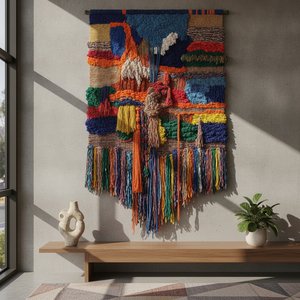
Bold Threads: The Ultimate Trend Forecast for High-Impact Textile Art in Modern Interiors
Level up your space with the texture revolution. Explore our trend forecast on high-impact textile art—from bold geometric patterns to woven narratives. Discover how to move beyond flat canvas and create a high-energy, 3D aesthetic for modern, design-conscious interiors.

The Enduring Appeal of Geometric Patterns in Art: A Historical & Contemporary Exploration
Explore the captivating history of geometric abstraction in art, from ancient roots to contemporary masters. Expert insights for collectors & enthusiasts. Discover key artists, movements & investment potential.

Топ 10 шедьовъра на геометричната абстракция за Вашия дом | OriginalUniqueArt.com
Разгледайте топ 10 шедьовъра на геометричната абстракция – Кандински, Мондриан и други! Открийте историите зад тези емблематични картини и добавете елегантност към дома си с репродукции от OriginalUniqueArt.com. Разгледайте пълната колекция онлайн!


