

 Сподели
 Сподели
 Подробности
 Ръководство

 Изтегляне
 Подобни артикули
 Слайдшоу
 Статистика
Gertrude Stein


 Разгърни целия текст
Изкуството, представено на тази страница, е защитено от законите за авторско право, което означава, че не можем законно да създаваме или продаваме идентични репродукции. Тази защита се прилага съгласно международни споразумения като Бернска конвенция и от националното законодателство, включително разпоредбите на Закон за авторското право на САЩ – Раздел 17.
Този метод е напълно съвместим с законите за авторско право, тъй като не включва копиране или дублиране на защитеното произведение. Вместо това става въпрос за творческа реинтерпретация – нова картина, която е вдъхновена от оригинала, но не е идентична с него.
Жикле / Художествен принт
Giclée печат или принт върху платно с музейно качество, бързо производство и гъвкави опции за завършен вид. ( Поръчайте ръчно рисувано репродукция на този колекционерски предмет Превключване към дигитално изображение)




































Изберете от нашите предварително зададени размери, които съответстват на оригиналните пропорции на произведението.

Въведете необходимата ширина и височина, за да паснат на вашата рамка или стена. Принтовете могат само да се изрязват, но никога не могат да бъдат по-големи от оригиналната картина, така че при размер с различен формат част от изображението ще бъде загубена. Преди да започнем печат, ще ви изпратим дигитален мок업 за одобрение. Изображението, показано на тази страница, не показва реалното изрязване — само мок업ът го показва.
Доставка по целия свят () в рамките на 2 седмици вместо стандартните 4/5 седмици. (23 Октомври)

Безплатна експресна доставка по целия свят

Висококачествено ленено платно

Пълно застраховане на доставката

Гаранция за възстановяване на митнически такси

Гаранция за пълно съответствие на цветовете

Политика за връщане в рамките на 100 дни (само при дефекти)

100% Гаранция за връщане на сумата

Отстъпка при поръчка на повече произведения
 Опцията със стъкло е налична само за размери под 110 см

Gertrude Stein
Жикле / Художествен принт
Размер на репродукцията
-


Крайна цена
€ 70
A Gaze Through Time: The Enigmatic Presence of Gertrude Stein
In the quiet, monochromatic depths of Man Ray’s portrait of Gertrude Stein, we encounter more than just a photographic likeness; we enter a profound dialogue between light and shadow. The image captures the legendary American writer, a titan of modernist literature, seated with a resolute and unyielding presence. Her gaze, directed firmly toward the lens, establishes an immediate, almost haunting connection with the viewer, inviting us to contemplate the complexities of identity and the weight of intellectual legacy. There is a stillness in her posture that suggests a deep, contemplative interiority, as if she is peering through the camera's eye into the very soul of the twentieth century. The soft textures of her patterned dress and the subtle interplay of light across her features create a sense of tactile reality, yet the black and white medium lends the portrait an ethereal, timeless quality that transcends the moment it was captured.
The composition is masterfully balanced, utilizing the surrounding space to anchor Stein within her environment. The presence of chairs in the background—one to the left and another closer to the right—adds a layer of structural depth, framing the subject and grounding her within a domestic yet scholarly setting. This arrangement does not merely document a sitter; it constructs a stage for her persona. For the discerning collector or interior designer, this piece offers a sophisticated focal point that commands attention through its understated elegance. The lack of color forces the eye to focus on form, texture, and the raw emotional resonance of the subject's expression, making it an ideal acquisition for spaces that value intellectual depth and minimalist grandeur.
The Alchemy of Monochrome: Technique and Artistic Vision
Man Ray, a pioneer who navigated the fluid boundaries between Dadaism, Surrealism, and photography, brings his unique mastery of light to this portrait. While he was a virtuoso of the "rayograph," his approach to traditional portraiture is equally revolutionary in its ability to evoke emotion through tonal range alone. The technique employed here relies on a delicate gradation of grays, blacks, and whites to sculpt the subject's face and clothing. This monochromatic palette strips away the distractions of hue, leaving behind a raw, sculptural essence that emphasizes the contours of Stein’s face and the intricate patterns of her attire. It is a study in contrast—where the brightness of light meets the profound mystery of shadow.
The emotional impact of the work lies in this very tension. There is a certain gravity to the image, a solemnity that reflects the era of great intellectual shifts occurring in Paris during Stein's tenure there. To possess a reproduction of this work is to bring a piece of art history into one's home—a fragment of the avant-garde spirit that continues to inspire. It serves as a testament to the power of the photographic medium to capture not just what a person looks like, but how they feel and what they represent. For those seeking to curate an environment of sophistication and historical resonance, this portrait stands as a monumental achievement in the art of visual storytelling.
Въпроси и отговори
Каква е възприеманата светлост на „Gertrude Stein“ на Ман Рей?
По отношение на възприеманата яркост, „Gertrude Stein“ на Ман Рей е balanced.
Как се преплитат движението и епохата в „Gertrude Stein“ на Ман Рей?
"Gertrude Stein" принадлежи към направлението Cubism, а неговият създател е творил в епохата на Модерно изкуство.
Как "Gertrude Stein" балансира светлината и тъмнината?
За „Gertrude Stein“ на Ман Рей е записана яркост от balanced при светлост на ниво Gentle Luminance.
Биография на художника
A Life Illuminated by Shadows
Emmanuel Radnitzky, a name forever intertwined with the enigmatic “Man Ray,” was born in Philadelphia in 1890 into a family of Russian Jewish immigrants. His early life, steeped in the vibrant energy of New York City, proved to be a crucible for his artistic development – a melting pot of European modernism and the raw grit of American urban life. This formative period instilled within him a lifelong fascination with experimentation and a profound desire to break free from conventional artistic boundaries. Initially drawn to painting, Ray soon discovered photography as a medium capable of capturing not just appearances but also the very essence of perception and reality. His shift wasn’t merely a change in technique; it represented a fundamental transformation in his artistic vision – a willingness to challenge established norms and explore uncharted territories.Dada, Surrealism, and the Alchemy of Light
Man Ray's artistic trajectory took an extraordinary turn with his encounter with Marcel Duchamp in New York around 1915. This meeting ignited a shared rebellion against traditional art values, propelling him headfirst into the heart of the Dada movement – a chaotic, anti-art protest born from the disillusionment following World War I. Dada artists sought to dismantle established conventions and expose the absurdity of societal norms through provocative displays and radical experimentation. Ray embraced this spirit wholeheartedly, collaborating with Duchamp on “ready-mades” – ordinary manufactured objects elevated to the status of art by simply declaring them so. This act of defiance challenged the very definition of what constituted a work of art, questioning the role of skill, intention, and traditional materials. His involvement in Dada extended beyond mere participation; he actively contributed to the movement’s dissemination through publications and exhibitions, solidifying his position as a key figure in this revolutionary artistic current. Subsequently, Ray found himself drawn into the burgeoning Surrealist movement, captivated by its exploration of the unconscious mind, dreams, and the irrational. He embraced the Surrealists' emphasis on liberating the imagination and challenging rational thought, incorporating these principles into his own work. His experiments during this period were characterized by a dreamlike quality – often unsettling yet undeniably captivating. Ray wasn’t interested in depicting reality as it *is*, but rather as it *feels* – fragmented, distorted, and imbued with hidden meanings. This embrace of the subconscious allowed him to move beyond mere representation towards an exploration of psychological states and emotional resonance within his art.Rayographs: Capturing the Essence Without a Lens
Perhaps Man Ray is most renowned for his invention of the “rayograph,” a groundbreaking technique that fundamentally altered the possibilities of photography. This innovative process, developed almost serendipitously in 1922, involved placing objects directly onto light-sensitive paper and exposing them to light – all without using a traditional camera lens. The resulting images were ethereal, ghostly, and utterly unlike conventional photographs. Ray’s genius lay not just in the technical execution but also in his philosophical approach. He recognized that photography wasn't simply about capturing an image; it was about revealing the *essence* of an object or subject through light and shadow. By eliminating the camera lens, he stripped away the illusion of objectivity, exposing the inherent subjectivity of the medium itself. These weren’t representations *of* things, but rather direct imprints *from* them – imbued with a sense of mystery and otherworldliness. Beyond rayographs, Ray's photographic portraits—particularly those of artists like Lee Miller—are celebrated for their striking compositions and psychological depth. He relentlessly experimented with solarization, multiple exposures, and darkroom manipulation, pushing the boundaries of what photography could achieve. Solarization, in particular, became a signature technique, creating dramatic reversals of tone that added an element of the uncanny to his portraits.Beyond Stillness: Film and a Lasting Legacy
Man Ray’s artistic curiosity extended far beyond still images into the realm of filmmaking. His experimental films—such as *Le Retour à la Raison* (1923) and *L'Étoile de Mer* (1928)—were characterized by their surreal imagery, unconventional editing techniques, and a deliberate rejection of traditional narrative structures. These weren’t stories told in a linear fashion; they were visual poems— explorations of form, rhythm, and the subconscious. Ray employed innovative techniques like stop-motion animation and superimposition to create disorienting and dreamlike effects. Though his film work remained relatively modest in volume, it was profoundly influential on subsequent generations of avant-garde filmmakers. Throughout his long career, Man Ray continued to challenge artistic norms, refusing to be confined by labels or expectations. He died in Paris in 1976, leaving behind a body of work that continues to inspire and provoke. His legacy lies not only in his technical innovations but also in his unwavering commitment to artistic freedom and his relentless pursuit of the impossible—a true pioneer who forever altered our perception of art and reality. His influence can be seen across various disciplines, from contemporary photography and film to fashion and design, demonstrating the enduring power of his vision.A Continuing Influence
- Photography: Man Ray’s techniques, particularly rayography and solarization, continue to be explored by contemporary photographers seeking innovative ways to capture light and shadow.
- Surrealism: His contributions solidified the movement's visual language and inspired countless artists across disciplines to embrace the irrational and explore the subconscious.
- Experimental Film: His pioneering work in film laid the groundwork for future generations of avant-garde filmmakers, demonstrating that cinema could be a vehicle for pure artistic expression.
- Fashion Photography: Ray’s innovative approach to portraiture and composition influenced the development of modern fashion photography, emphasizing mood, atmosphere, and psychological impact.

Ман Рей
1890 - 1976 , Съединени Американски Щати
Бързи факти
- Artistic Movement Or Style: Дада, Сюрреализъм
- Artists Or Movements Influenced By This Artist: ['Сюрреализм']
- Artists Who Influenced This Artist: ['Marcel Duchamp']
- Date Of Birth: 27 Август 1890
- Date Of Death: 18 Ноември 1976
- Full Name: Emmanuel Radnitzky
- Nationality: Американски
- Notable Artworks:
- Rayographs
- Le Retour à la Raison
- L'Étoile de Mer
- Place Of Birth: Филаделфия, САЩ
Свързани статии

Топ 10 шедьовъра в бяло: Изкуство и елегантност за вашия дом | OriginalUniqueArt.com
Разгледайте Топ 10 шедьовъра в бяло – Моне, Ренуар и други велики художници! Открийте историите зад импресионизма, минимализма и красотата на бялата цветова палитра. Купете висококачествени репродукции на картини онлайн на OriginalUniqueArt.com.

Giclée Prints: Archival Quality & Aesthetic Nuances for the Discerning Collector
Explore the world of giclée prints with OriginalUniqueArt. Learn about archival quality, aesthetic nuances & investment potential. Expert guidance for discerning art collectors seeking museum-quality reproductions and lasting value.
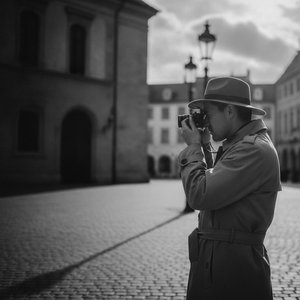
Beyond Color: The Timeless Power and Artistry of Black and White Photography
Explore the profound artistry of black and white photography. From the chemistry of gelatin silver to the chiaroscuro of the Old Masters, discover how monochrome captures the eternal essence of light, form, and emotion for the discerning art collector.

Топ 10 шедьовъра в черно: Изкуство и емоция от OriginalUniqueArt.com
Разгледайте топ 10 шедьовъра в черно – от Ван Гог до Мунк! Открийте историите зад картините, техниките и емоциите. Репродукции с музейно качество на OriginalUniqueArt.com. Разгледайте пълната колекция онлайн!

Monochrome Visions: Exploring the Aesthetic & Historical Significance of Black & White Photography
Explore the rich history & artistic power of black and white photography. From early techniques to iconic masters like Ansel Adams, discover why monochrome continues to captivate art lovers today. Expert insights for collectors.
