

 Представи си го
 Изпрати
 Сподели
 Детайли

 Изтегляне
 Подобни
 Рентгенова снимка
 Слайдшоу
 Статистика
Concetto spaziale. Attese
 Acrylic On Canvas
- WallArt
- Spatial Minimalism
 81.0 x 100.0 cm
 Прочетете повече
Ръчно изработена маслена репродукция
Ръчно рисувана маслена картина върху платно във вашия размер и рамка, изработена по поръчка от нашите художници. ( Превключване към принт Превключване към дигитално изображение)




P118B $10

P118H $10

P118W $10

P438Z $10

P508JH $12

P508YH $12

P805H $10

P805Z $10

P919BZ $10

P919G $10

P919XJ $10

P959ZH $10

P968JZ $12

W106C $8

W218G $10

W218JH $8

W218Y $10

W307PJ $10

W316G $10

W316PJ $8

W316Y $10

W398PJ $8

W4111J $10

W500HY $15

W500JH $15

W692G $12

W849H $8

W940BG $15

W953PJ $8




Изберете от предварително зададените размери, които съответстват на оригиналните пропорции на произведението.

Можете да въведете свои собствени размери, за да пасне на конкретна рамка или пространство. Ако избраният от вас размер не съответства на пропорциите на оригиналното изображение, ние ще изрежем произведението или ще удължим картината с допълнителни ръчно рисувани елементи. Дигитален макет ще бъде изпратен за ваше одобрение преди започване на производството.
Моля, обърнете внимание, че прегледът на екрана не отразява действителното изрязване или разширяване. Само макетът ще покаже точно финалния състав.
Въпреки че са налични персонализирани размери, препоръчваме да изберете размер от предварително дефинирания списък, за да запазите оригиналните пропорции.
След поръчка, екипът на OriginalUniqueArt.com ще изпрати имейл на клиента за инструкции и ще предостави преглед на макет.
Доставка по целия свят () в рамките на 3/4 седмици вместо стандартните 5 седмици. (17 Септември). Без компромис с качеството.

Безплатна експресна доставка по целия свят

Висококачествено ленено платно

Пълно застраховане при доставка

Гаранция за възстановяване на митнически такси

Гаранция за цветова точност

Политика за връщане в рамките на 100 дни (само при дефекти)

100% Гаранция за връщане на парите

Предложение за отстъпка при поръчка на едро
 Стъклото е налично само в размери под 110 см

Concetto spaziale. Attese
Репродукционен метод
Размер на репродукцията
-


Обща цена
$ 300
Concetto Spaziale. Attese – A Pioneering Exploration of Dimensionality
The artwork "Concetto Spazionale. Attese" (Conceptual Space. Anticipations) by Lucio Fontana stands as a testament to the audacious spirit of Spatialism, an artistic movement that fundamentally questioned the limits of painting and ushered in a new era of visual experimentation. Executed sometime between 1960 and 1968 – though its precise date remains elusive – this deceptively simple canvas embodies Fontana’s revolutionary approach to representation. Measuring 81 x 100 cm, it presents a stark white expanse punctuated by three meticulously executed incisions that disrupt the surface of the canvas in ways previously unimaginable.The Style and Technique: Breaking Boundaries
Fontana's technique is characterized by an almost obsessive precision. He employed a hammer and chisel to create these perforations—not merely scratches but deliberate punctures that extend through the entire thickness of the canvas, transforming it into a sculptural element. This method wasn’t simply about creating holes; it was about actively engaging with the materiality of the artwork itself. Fontana believed that painting should transcend its traditional role as illusionistic depiction and instead invite viewers to contemplate the very nature of space and perception. The resulting surface is remarkably smooth, reflecting light in subtle ways that heighten the visual impact of the cuts—a deliberate choice designed to emphasize their dimensionality and provoke contemplation about what lies “beyond” the visible plane.Historical Context: Spatialism’s Radical Vision
Spatialism emerged from the burgeoning postwar artistic landscape, reacting against the dominance of Surrealism and Cubism. Artists like Fontana sought to liberate painting from representational constraints by exploring concepts of emptiness, infinity, and the relationship between two-dimensional and three-dimensional space. Influenced by mathematicians such as Alfred Jules Ayer and Hermann Weyl, Spatialists wrestled with philosophical questions about epistemology – how we know what we see – arguing that perception itself is an active process shaping our understanding of reality. Fontana’s work directly confronted these ideas, asserting that painting could represent not just objects but also the potential for expansion beyond established boundaries.Symbolism and Conceptual Depth: Beyond Representation
The incisions in "Concetto Spaziale. Attese" are more than mere holes; they symbolize an invitation to consider the infinite—a visual metaphor for the boundless expanse of space and the possibility of venturing into uncharted territories. Fontana’s intention wasn't to depict a specific scene or object but rather to express a profound philosophical statement about the nature of existence. The white background serves as a crucial element in this conceptual framework, representing purity and emptiness – conditions necessary for perceiving the transformative potential inherent within these perforations. It encourages viewers to step outside their preconceived notions of art and engage with its underlying ideas.Emotional Impact: A Moment of Reflection
Ultimately, “Concetto Spazionale. Attese” compels us to confront our own assumptions about visual experience. The artwork’s understated elegance belies its intellectual ambition, fostering a contemplative mood that invites viewers to ponder the mysteries of space and time. Like many Spatialist masterpieces, it transcends mere decoration; it prompts introspection and stimulates dialogue about art's capacity to challenge conventional perspectives. Its enduring appeal lies in its ability to capture a fleeting moment of anticipation—the “attese”—a feeling of openness and readiness for encountering something new and profound.Биография на художника
A Life Forged in Spatialism
Lucio Fontana, a name synonymous with radical innovation in 20th-century art, was born into a world poised between tradition and modernity. His journey began not in Italy, the nation he would come to define within the artistic landscape, but in Rosario, Argentina, in 1899. The son of an Italian sculptor, Luigi Fontana, young Lucio inherited a craftsman’s sensibility alongside a burgeoning artistic vision. This early exposure to form and material proved foundational, even as his life became a series of geographical and stylistic explorations. Returning to Italy with his family, he absorbed the rich cultural heritage of Europe, studying at the Brera Academy in Milan and immersing himself in the avant-garde movements that were beginning to challenge established norms. However, the pull of his origins remained strong; multiple returns to Argentina punctuated his career, shaping his perspective and fueling a desire to transcend conventional artistic boundaries. Fontana’s early work reflected this duality – initially rooted in figurative sculpture and painting, it gradually evolved towards abstraction, hinting at the revolutionary path he was destined to forge.Early Years and Artistic Training
Fontana's childhood in Rosario instilled within him a deep appreciation for craftsmanship and the tangible qualities of materials. His father, Luigi Fontana, was a respected sculptor who had established a prominent workshop producing monuments and funerary art. This environment fostered Lucio’s early interest in three-dimensional form and technique. He initially pursued studies in Italy, attending the Collegio Torquato Tasso in Biumo Inferiore near Varese and later enrolling at the School of Master Builders of the “Carlo Cattaneo” Technical Institute in Milan. These formative years provided him with a solid technical foundation, encompassing surveying skills – earning him a diploma as a building surveyor – alongside artistic training at the Brera Academy under Adolfo Wildt. The devastation of World War I interrupted his studies, leading to military service where he was wounded and awarded a silver medal for valor. This experience profoundly impacted his worldview, contributing to a sense of urgency and a desire to create art that addressed the profound changes occurring in the world.Breaking the Canvas: The Birth of Spatialism
The horrors witnessed during World War II served as a catalyst for Fontana’s most groundbreaking artistic endeavor. He felt compelled to redefine art's purpose in a world irrevocably altered by violence and destruction. This led to the formulation of *Spatialism*, a movement that sought not merely to represent space but to incorporate it as an integral element of the artwork itself. Fontana believed traditional painting was limited by its two-dimensionality, confining art within a static plane. He envisioned a new form of expression that would break down these barriers, acknowledging the infinite depth and potential of space beyond the canvas. This wasn’t simply about creating illusions of depth; it was about physically opening up the artwork to reveal what lay *beyond*. Beginning in the late 1940s, Fontana embarked on his now-iconic series of slashed and punctured canvases – the *Concetti Spaziali* (Spatial Concepts). These weren't acts of destruction but rather deliberate interventions, revealing a void that symbolized the vastness of the cosmos. The slashes, often executed with a razor blade, were precise and purposeful, transforming the canvas into a window onto another dimension. He wasn’t destroying the painting; he was liberating it from its limitations.Influences and Artistic Kinship
Fontana's artistic development wasn’t born in isolation. He engaged with a diverse range of influences, absorbing and transforming them into his unique visual language. The expressive power of Vincent van Gogh resonated deeply within him, particularly the emotional intensity conveyed through brushwork. He also admired the satirical edge of Pieter Bruegel the Elder, finding inspiration in the older master’s ability to critique societal flaws. However, a pivotal encounter with the work of Polish artist Jan Grzegorz Stanisławski proved particularly transformative. Stanisławski's exploration of light and color within his 'Mullein' series profoundly impacted Fontana’s approach to abstraction and spatial representation. Furthermore, his participation in groups like *Abstraction-Création* in Paris exposed him to a broader network of avant-garde artists, fostering an exchange of ideas that fueled his experimentation. While distinctively original, Fontana’s work also shares affinities with other post-war movements such as Zero and Nouveau Réalisme, all striving to redefine the boundaries of art and challenge conventional perceptions.The Legacy of Spatialism
Lucio Fontana's death in Comabbio, Italy, in 1968, marked the end of a remarkable career but not the end of his influence. His *Concetti Spaziali* series, with their radical interventions and exploration of spatiality, fundamentally altered the course of modern art. He inspired generations of artists to question traditional boundaries between painting, sculpture, and architecture, encouraging them to embrace new materials and techniques. Fontana’s emphasis on process and conceptual intent also anticipated aspects of Arte Povera, which embraced unconventional materials and challenged traditional notions of artistic value. Today, his works are held in prestigious museum collections worldwide – from The Metropolitan Museum of Art to the Ballarat Fine Art Gallery in Australia – testament to his enduring legacy. He remains a pivotal figure in post-war abstract art, celebrated for his courage to challenge conventions and redefine the very essence of artistic expression. *His legacy is not merely a collection of slashed canvases but a profound invitation to perceive reality in new and expansive ways.* **He demonstrated that art could be more than representation—it could be an exploration of existence itself.**
Лучио Фонтана
1899 - 1968 , Аржентина
Бързи факти
- Artistic Movement Or Style: Спонциализъм
- Artists Or Movements Influenced By This Artist:
- Нуво Реализъм
- Зиро
- Artists Who Influenced This Artist:
- Ян Штефански
- Винсент ван Гог
- Питер Брюгел
- Date Of Birth: 1899
- Full Name: Лусио Фонтана
- Nationality: Италианец-Аргентинец
- Notable Artworks:
- Концепт Спонциали
- Разрезан платън
- Софито Спонциали
- Place Of Birth: Розарио, Аржентина
Всички статии

Топ 10 шедьовъра на геометричната абстракция за Вашия дом | OriginalUniqueArt.com
Разгледайте топ 10 шедьовъра на геометричната абстракция – Кандински, Мондриан и други! Открийте историите зад тези емблематични картини и добавете елегантност към дома си с репродукции от OriginalUniqueArt.com. Разгледайте пълната колекция онлайн!
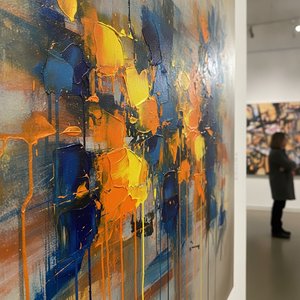
Beyond the Lines: Mastering the High-Impact World of Contemporary Abstraction
Master the high-impact world of contemporary abstraction. Discover how bold colors, textures, and modern movements like Abstract Expressionism can transform your space with premium, high-energy art curated for the design-conscious professional.
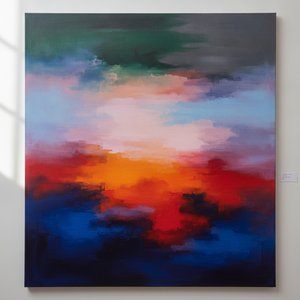
Color Field Painting: The Emotional Power of Pure Abstraction and Chromatic Depth
Explore the profound emotional depth of Color Field painting. Discover the history of mid-century abstraction, from Rothko to Newman, and learn how pure color transforms the viewer's experience through our expert art history guide.

Топ 25 шедьоври на Василий Кандински: Абстрактно изкуство за вашия дом | OriginalUniqueArt.com
Разгледайте топ 25 шедьоври на Василий Кандински – пионер на абстрактното изкуство и експресионизма. Открийте историите зад цветните композиции, техниките и вдъхновението му. Купете висококачествени репродукции на картини Кандински за вашия дом на OriginalUniqueArt.com!

Топ 10 шедьовъра на абстрактния експресионизъм – изкуство за вашия дом от OriginalUniqueArt.com
Разгледайте топ 10 шедьовъра на абстрактния експресионизъм – Полък, Ротко, де Кунинг и други. Открийте историите зад тези емблематични картини и преобразете дома си с изкуство от OriginalUniqueArt.com! Разгледайте пълната колекция онлайн.

