Berlin Secession · 1900
Salome, Second Version (Ловис Корит, 1900)
Ловис Корит (1858–1925) създаде Salome, Second Version. Датира от 1900. Това произведение принадлежи към движението Berlin Secession. Изработено от Acrylic On Canvas. Съхранява се в Museum der bildenden Künste в Лайпциг, Германия. Размерите са 127 × 148 cm.
- 1900
- Acrylic On Canvas
- 127 × 148 cm
- Museum der bildenden Künste, Лайпциг

 Преглед в реален мащаб

 Ръчно изработена маслена картина
 Изпрати
 Сподели
 Информационен лист


 Изтегляне
 Подобни артикули
 Рентгенова снимка
 Слайдшоу
 Въпроси и отговори

 Статистика
Salome, Second Version накратко
- Заглавие
- Salome, Second Version
- Художник
- Ловис Корит (1858–1925)
- Роден в
- Гвардейск, Русия
- Дата
- 1900
- Материал
- Acrylic On Canvas
- Размери
- 127 × 148 cm
- Къде може да се види
- Museum der bildenden Künste, Лайпциг, Германия
- Движение
- Berlin Secession
- Епоха
- 19th Century
- Обект
- salome, herodias, dance, tragedy, execution, biblical
Какво е изобразено в Salome, Second Version?
A Descent into Shadow and Desire: Lovis Corinth’s ‘Salome, Second Version’
Lovis Corinth's “Salome, Second Version,” painted in 1900, isn’t merely a depiction of the biblical tale; it’s a visceral exploration of power, betrayal, and the unsettling allure of darkness. This arresting canvas, currently residing within the Museum der Bildenden Künste in Leipzig, immediately commands attention with its dramatic composition and intensely expressive palette. Corinth, a pivotal figure bridging Impressionism and Expressionism, masterfully eschews traditional romanticism, instead presenting a Salome far removed from the idealized figures of earlier portrayals. Instead of a passive object of desire, she emerges as a complex, almost defiant presence – a woman caught in the throes of her own ambition and haunted by the consequences of her actions.
The painting’s genesis lies within the turbulent artistic landscape of early 20th-century Berlin. Corinth, having moved there from Munich, found himself at the heart of a vibrant, often contentious, art scene. The Secession group, with its emphasis on freedom and innovation, provided a fertile ground for his evolving style. “Salome” reflects this period’s fascination with psychological depth and emotional intensity – a departure from the polished surfaces of academic painting. Corinth deliberately chose to revisit the legend, not as a straightforward narrative illustration, but as an opportunity to delve into the character's inner turmoil and the moral ambiguity at the heart of the story.
The Dance and its Discontents: Technique and Composition
Corinth’s technique is immediately striking. He employs a bold, almost frenetic brushstroke – thick impasto applied with visible energy – that imbues the canvas with a sense of movement and urgency. The colors are rich and saturated, dominated by deep reds, purples, and blacks, creating an atmosphere of dramatic intensity. The composition itself is carefully constructed to draw the viewer into the scene. Salome, positioned centrally, dominates the foreground, her body tilted forward in a pose that suggests both vulnerability and calculated seduction. The figures surrounding her – the servant bearing the head, the watchful woman with the fan, and the shadowy men – are rendered with varying degrees of detail, contributing to the painting’s overall sense of unease and disorientation.
- Brushwork: Thick, expressive strokes create a dynamic and unsettling effect.
- Color Palette: Dominated by deep reds, purples, and blacks, evoking drama and shadow.
- Composition: Salome is centrally positioned, drawing the viewer's eye and emphasizing her role as the focal point of the scene.
Symbolism and Interpretation: A Portrait of Moral Ambiguity
Beyond the literal depiction of the biblical story, “Salome” is laden with symbolic meaning. The dance itself represents a dangerous allure – a seductive invitation to transgression. The severed head on the platter isn’t simply a gruesome trophy; it's a potent symbol of ambition and the destructive consequences of unchecked desire. Corinth deliberately avoids offering a clear moral judgment, instead presenting a complex portrait of a woman driven by both her own desires and the manipulative influence of her mother. The inclusion of the fan-bearing woman, often interpreted as Herodias, adds another layer of intrigue, suggesting a conspiracy at play – a deliberate orchestration of events that leads to John the Baptist’s demise.
Furthermore, the painting can be viewed through the lens of the burgeoning feminist movement of the time. Salome's defiant gaze and her unapologetic embrace of her sexuality challenged traditional notions of female virtue and presented a powerful image of female agency – albeit one ultimately consumed by tragedy. Corinth’s decision to portray her as a figure of both beauty and menace reflects the complex and often contradictory attitudes towards women in early 20th-century society.
Emotional Resonance: A Timeless Exploration of Human Darkness
“Salome, Second Version” continues to resonate with viewers today because it taps into fundamental human emotions – desire, betrayal, guilt, and the haunting awareness of our own mortality. Corinth’s masterful use of color, composition, and symbolism creates a painting that is both visually arresting and psychologically profound. It's not a comfortable image; it confronts us with the darker aspects of human nature and reminds us that even in moments of apparent beauty and pleasure, there can be a lurking sense of unease and impending doom. Reproductions of this powerful work offer a glimpse into Corinth’s artistic genius and provide an opportunity to contemplate the timeless themes explored within its shadowed depths.
В кой музей се намира Salome, Second Version?
Museum der bildenden Künste
Лайпциг, Германия
Наследство, изковано във времето: Душата на художественото сърце на Лайпциг В пулсиращия културен пейзаж на Саксония, Германия, стои институция, която служи за много повече от просто хранилище за шедьоври; тя е живо свидетелство за човешката устойчивост и непреходната сила на творчеството. Museum der bildenden Künste (MdbK) в Лайпциг капсулира седем века от художески усилия, тъкайки повествование, което обхваща периода от късното Средноверие до най-съвременните практики. Основан през 1837 г.


Изображения с висока резолюция на Salome, Second Version
Обществено достояние: художникът е починал през 1925 г.
Ловис Корит, Salome, Second Version (1900), Museum der bildenden Künste. Обществено достояние
Отговори на въпроси относно Salome, Second Version
Къде може да бъде видяно „Salome, Second Version“ на Ловис Корит днес?
Оригиналът на „Salome, Second Version“ може да бъде видян в Museum der bildenden Künste, Лайпциг, Германия.
В коя година е създадено „Salome, Second Version“ на Ловис Корит?
„Salome, Second Version“ на Ловис Корит е създадена през 1900.
С какви материали е създадено "Salome, Second Version"?
Ловис Корит е използвал/а техниката Acrylic On Canvas за „Salome, Second Version“. Тази техника определя материалната природа на оригиналното произведение.
Какви са размерите на оригиналната творба "Salome, Second Version"?
Размерите на оригиналната творба „Salome, Second Version“ на Ловис Корит са 127 x 148 cm.
Какви сюжети се появяват в „Salome, Second Version“ на Ловис Корит?
Темите, представени в „Salome, Second Version“ на Ловис Корит, включват salome, herodias, dance, tragedy, execution, biblical, figures. Заедно те обобщават съдържанието на произведението.
Свободен ли е от авторско право "Salome, Second Version"?
„Salome, Second Version“ на Ловис Корит е в в обществено достояние – авторското право е изтекло. Този статус определя как може да бъде репродуцирано изображението на произведението.
Кой е художникът зад "Salome, Second Version"?
„Salome, Second Version“ се приписва на Ловис Корит.
Към кое художествено направление принадлежи „Salome, Second Version“ на Ловис Корит?
Творческото направление, свързано с „Salome, Second Version“ на Ловис Корит, е Berlin Secession. Тази класификация поставя произведението сред съответните автори и художествени творби.
Към кой период от кариерата на Ловис Корит принадлежи „Salome, Second Version“?
В рамките на кариерата на Ловис Корит, „Salome, Second Version“ принадлежи към периода Berlin Secession Era. Тази фаза позволява да се направи сравнение с другите творби на художника.
За художника Ловис Корит

1858–1925, Русия
Ловис Корит
A Life Forged in Paint: The World of Lovis Corinth Lovis Corinth, роден Франц Хенрих Луис на 21 юли 1858 г. в провинция Източна Прусия, е фигура, която съчетава прехода от 19-ти към началото на 20-ти век в изкуството. Неговата пътека не беше на моментална слава, а по-скоро постепенна еволюция, подхранвана от неуморно изучаване, разнообразни влияния и, в крайна сметка, лична трагедия. Ранните му години бяха залегнали в селските пейзажи на неговия роден град Тапиау, където баща му работеше като ковач.
Други творби на Ловис Корит
 В клане1893
 Вилеммина с топка1915
 Portrait of the Painter Paul Eugène Gorge1908
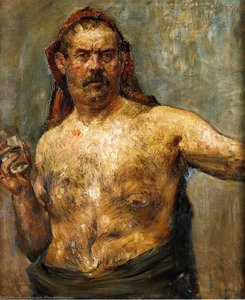 Self Portrait with a Glass1907
Есеи по темата Salome, Second Version
 Lovis Corinth: Bridging Impressionism & Expressionism – A Study of Artistic EvolutionExplore the fascinating artistic journey of Lovis Corinth, a pivotal figure bridging Impressionism & Expressionism. Discover his evolution,…
 The Soul of the Brushstroke: Why Textured Impasto Defines the Magic of Impressionist MasterpiecesDiscover the tactile magic of Impressionism. Explore how the impasto technique breathes life into masterpieces through texture and light. E…
 Unveiling the Dreamer: The 25 Most Iconic Masterpieces by Gustave MoreauStep into the dreamlike world of Gustave Moreau. Explore 25 iconic Symbolist masterpieces, from mythic legends to opulent textures. Find in…