

 Преглед в реален мащаб
 Сподели
 Сподели
 Подробности
 Ръководство

 Изтегляне
 Подобни артикули
 Рентгенова снимка
 Слайдшоу
 Статистика
Last Supper
 Early Renaissance
 1403
1403 39.0 x 39.0 cm
 Баптистерия на Сан Джовани
 Разгърни целия текст
Жикле / Художествен принт
Giclée печат или принт върху платно с музейно качество, бързо производство и гъвкави опции за завършен вид. ( Поръчайте ръчно рисувано репродукция на този колекционерски предмет Превключване към дигитално изображение)




P118B €10

P118H €10

P118W €10

P438Z €10

P508JH €12

P508YH €12

P805H €10

P805Z €10

P919BZ €10

P919G €10

P919XJ €10

P959ZH €10

P968JZ €12

W106C €8

W218G €10

W218JH €8

W218Y €10

W307PJ €10

W316G €10

W316PJ €8

W316Y €10

W398PJ €8

W4111J €10

W500HY €15

W500JH €15

W692G €12

W849H €8

W940BG €15

W953PJ €8




Изберете от нашите предварително зададени размери, които съответстват на оригиналните пропорции на произведението.

Въведете необходимата ширина и височина, за да паснат на вашата рамка или стена. Принтовете могат само да се изрязват, но никога не могат да бъдат по-големи от оригиналната картина, така че при размер с различен формат част от изображението ще бъде загубена. Преди да започнем печат, ще ви изпратим дигитален мок업 за одобрение. Изображението, показано на тази страница, не показва реалното изрязване — само мок업ът го показва.
Доставка по целия свят () в рамките на 2 седмици вместо стандартните 4/5 седмици. (23 Октомври)

Безплатна експресна доставка по целия свят

Висококачествено ленено платно

Пълно застраховане на доставката

Гаранция за възстановяване на митнически такси

Гаранция за пълно съответствие на цветовете

Политика за връщане в рамките на 100 дни (само при дефекти)

100% Гаранция за връщане на сумата

Отстъпка при поръчка на повече произведения
 Опцията със стъкло е налична само за размери под 110 см

Last Supper
Жикле / Художествен принт
Размер на репродукцията
-


Крайна цена
€ 70
The Last Supper: A Florentine Masterpiece of Emotion and Perspective
Lorenzo Ghiberti’s “Last Supper,” painted between 1403 and 1424 for the north doors of the Florence Baptistery, isn't merely a depiction of a biblical event; it’s a profound exploration of human emotion, a revolutionary leap in artistic perspective, and a testament to the burgeoning spirit of the Early Renaissance. Far from a static representation, Ghiberti captures the very moment of revelation – Jesus announcing his impending betrayal – imbuing the scene with an intensity rarely seen in religious art of its time. The painting’s enduring power lies not just in its technical brilliance but also in its ability to evoke a visceral response from the viewer, drawing us into the drama unfolding within the confines of the Florentine Baptistery.
Ghiberti's mastery is immediately evident in his innovative use of linear perspective. Unlike earlier depictions which often presented the scene as a flattened tableau, Ghiberti employs a sophisticated system to create an illusion of depth and space. The vanishing point, subtly placed within Jesus’s figure, draws our eye directly to him, while the receding lines of the table and the figures themselves converge towards that central focus. This technique, groundbreaking for its time, was not only visually compelling but also demonstrated Ghiberti's deep understanding of mathematical principles – a hallmark of Renaissance humanism. The careful attention to detail in rendering each apostle’s face, their gestures, and their clothing further enhances this sense of realism and immediacy.
The Symbolism of Gesture and Expression
Beyond the technical innovations, “The Last Supper” is rich with symbolic meaning. Ghiberti doesn't simply record the event; he captures the emotional responses of each apostle to Jesus’s shocking announcement. The expressions range from disbelief and confusion to anger, denial, and sorrow – a carefully orchestrated tableau of human reaction. Judas Iscariot, often depicted as isolated and shadowed, is rendered with a subtle but unmistakable air of treachery, his face partially obscured by darkness. Conversely, figures like Peter, consumed by anguish, and John, radiating concern, powerfully convey the weight of the impending tragedy. Ghiberti’s ability to translate complex theological concepts into tangible emotional states elevates the painting beyond a historical record and transforms it into a universal meditation on betrayal, faith, and human nature.
A Renaissance Vision: Bronze Doors and Artistic Legacy
“The Last Supper” was conceived as part of a larger commission for two pairs of bronze doors that adorned the Florence Baptistery. These doors, known as the “Gates of Paradise,” represented the pinnacle of Ghiberti’s career and established him as one of the leading sculptors of his generation. The bronze panels were designed to depict scenes from the Old Testament, offering a visual narrative of salvation and redemption. The choice of bronze itself was significant; it symbolized durability, permanence, and divine authority – qualities highly valued by the Florentine elite. Ghiberti’s work on these doors profoundly influenced subsequent generations of artists, shaping the course of Renaissance sculpture and solidifying Florence's reputation as a center of artistic innovation.
A Timeless Masterpiece: Reproduction and Artistic Inspiration
Today, “The Last Supper” remains one of the most celebrated works of art in history. Its influence can be seen in countless paintings, sculptures, and other artworks across centuries. Reproductions, such as this meticulously crafted hand-painted version, offer a remarkable opportunity to experience the power and beauty of Ghiberti’s masterpiece firsthand. The careful attention to detail, the masterful use of perspective, and the profound emotional depth of the scene are all faithfully recreated, allowing viewers to connect with this iconic work on a deeply personal level. Whether displayed in a grand salon or a smaller study, a reproduction of “The Last Supper” serves as a constant reminder of the enduring legacy of Lorenzo Ghiberti and the transformative power of Renaissance art.
Въпроси и отговори
Цветовете на „Last Supper“ на Лорънцо Гибети ярки или приглушени са?
Цветовете на „Last Supper“ на Лорънцо Гибети показват Muted наситен цвят с Monochromatic интензивност.
Колко наситени са цветовете в „Last Supper“ на Лорънцо Гибети?
Цветовете в „Last Supper“ на Лорънцо Гибети имат Monochromatic интензивност.
Кой е създал "Last Supper" и през коя година?
Лорънцо Гибети създава "Last Supper" през 1403 г.
Биография на художника
A Florentine Renaissance Forged in Bronze: The Life and Legacy of Lorenzo Ghiberti
Lorenzo di Bartolo – a name destined to become synonymous with artistic innovation as Lorenzo Ghiberti – was born near Florence in 1378, into a world brimming with both opportunity and challenge. His early life was deeply rooted in the practical artistry of goldsmithing, nurtured under the watchful eye of his stepfather, Bartolo di Michele. This foundational training instilled within him an unparalleled mastery of metalwork, a skill he would later transform into breathtaking sculptures that captivated Florence and beyond. Ghiberti’s ambitions, however, extended far beyond the confines of the workshop; formal painting lessons from Gherardo Starnina broadened his artistic horizons, laying the groundwork for a multifaceted talent that would soon propel him to international acclaim. A brief but formative period spent assisting Carlo I Malatesta in Rimini during the devastating plague of 1400 exposed him to diverse artistic currents and honed his observational skills – experiences that unknowingly prepared him for the monumental competition that would define his career.The Baptistery Doors: A Triumph of Skill and Vision
In 1401, Florence held a contest of unparalleled significance: the selection of an artist to create new bronze doors for the city’s magnificent Baptistery – a commission considered the most prestigious in the entire region. This was not merely a job; it represented the pinnacle of artistic achievement, a chance to immortalize oneself within the heart of Florentine society. Lorenzo Ghiberti, at just twenty-one years old, entered this arena alongside some of the era’s most formidable minds, including the renowned Filippo Brunelleschi. The challenge was audacious: to depict the *Sacrifice of Isaac* in relief – a biblical narrative brimming with symbolism and theological weight. Ghiberti's panel wasn’t simply a demonstration of technical prowess; it was a revelation. His innovative approach, characterized by graceful figures imbued with an almost ethereal quality, coupled with a sophisticated understanding of perspective, secured his victory against all odds. This triumph wasn’t merely about winning a commission; it was a declaration of a new artistic sensibility – a bold assertion that Florence was on the cusp of a revolutionary era in sculpture. He swiftly embarked on the monumental task of creating the North Doors, a project that would consume over two decades and fundamentally transform the Baptistery into a breathtaking showcase of Renaissance artistry.The “Gates of Paradise”: A Masterpiece Unveiled
Following the resounding success of the North Doors, Ghiberti was entrusted with an even more ambitious undertaking: the creation of a second set for the Baptistery’s east entrance – a commission that would ultimately earn him the enduring nickname "Il Dorate" – “The Golden One.” Completed in 1452, these doors, known as the *Gates of Paradise*, represent the zenith of Ghiberti's artistic genius. Each panel depicts scenes from the Old Testament with an unprecedented level of realism, detail, and emotional depth. The figures aren’t merely representations; they are imbued with a palpable sense of life, movement, and drama. Ghiberti’s mastery of bronze casting and relief sculpture reached its absolute peak in these works – a testament to his unwavering dedication and unparalleled skill. He pioneered the use of perspective to create a profound sense of depth and realism that was revolutionary for his time, drawing inspiration from classical antiquity while simultaneously forging a distinctly Renaissance style. The *Gates of Paradise* are not simply doors; they are immersive narratives brought to life through meticulous attention to anatomy, drapery, and spatial relationships – a true masterpiece of Western art.Style, Influences, and Lasting Impact
Ghiberti’s artistic style represents a beautiful synthesis of Gothic elegance and the burgeoning principles of Renaissance humanism. While firmly rooted in the traditions of medieval craftsmanship, he embraced classical antiquity, incorporating elements of Roman art and sculpture into his work with remarkable sensitivity. This fusion created a unique aesthetic that was both refined and profoundly emotive. He wasn’t simply imitating the past; he was reinterpreting it through a distinctly Renaissance lens – breathing new life into ancient forms while imbuing them with contemporary sensibilities. Beyond his technical brilliance, Ghiberti possessed an exceptional understanding of composition, color, and light, all contributing to the captivating beauty of his sculptures. His work wasn't confined to sculpture alone; he also excelled as a painter, demonstrating versatility and a deep appreciation for the visual arts.A Legacy Cast in Bronze
The historical significance of Lorenzo Ghiberti extends far beyond his technical brilliance and artistic achievements. He embodied the spirit of the Early Renaissance – a period marked by intellectual curiosity, artistic innovation, and a renewed fascination with classical learning. His work not only transformed the aesthetic landscape of Florence but also helped to define the humanist ideals that would shape Western culture for centuries to come. Ghiberti’s meticulous attention to detail, his mastery of perspective, and his ability to imbue his sculptures with emotional depth set a new standard for artistic excellence. He was more than just a sculptor; he was a visionary who profoundly influenced generations of artists. His legacy continues to inspire artists and art lovers alike, reminding us of the power of human creativity and the enduring beauty of Renaissance artistry. Ghiberti’s innovations paved the way for masters like Leonardo da Vinci and Michelangelo, solidifying his place as a pivotal figure in Western art history.- Major Works: North Doors & East Doors (Gates of Paradise) – Florence Baptistery, Bronze Statues for Orsanmichele.
- Key Influences: Gothic Art, Classical Antiquity, Renaissance Humanism.
- Artistic Style: Blending Gothic elegance with emerging Renaissance principles; naturalistic depictions, innovative use of perspective.
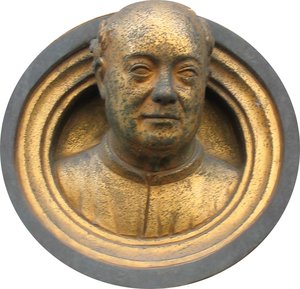
Лорънцо Гибети
1378 - 1455 , Италия
Бързи факти
- Artistic Movement Or Style: Ранен Ренесанс
- Artists Or Movements Influenced By This Artist:
- Донателло
- Мазолино
- Artists Who Influenced This Artist:
- Герхард Станина
- Бартоло ди Микеле
- Date Of Birth: 1378
- Full Name: Lorenzo Ghiberti
- Nationality: Италианец
- Notable Artworks:
- Врати на Рая
- Положение на Исаак
- Place Of Birth: Флоренция, Италия
Свързани статии

Топ 10 легендарни бронзови шедьоври, променили изкуството завинаги | OriginalUniqueArt.com
Разгледайте топ 10 легендарни бронзови шедьоври, променили изкуството! От скулптурите на Роден до Микеланджело – историите зад вечните произведения. Висококачествени репродукции и идеи за интериор в OriginalUniqueArt.com.

Timeless Strength: The Ultimate Guide to Bronze Art and Sculpture for the Discerning Collector
Discover the enduring elegance of bronze sculpture. Our expert guide explores lost-wax casting, patina mastery, and professional tips for collecting and commissioning museum-quality bronze art to create a lasting legacy in your private collection.

The Eternal Glow of Bronze: A Guide to Sculpting with Light, Strength, and Timeless Artistry
Explore the profound beauty of bronze sculpture. From the ancient lost-wax technique to the interplay of light and patina, discover how this enduring alloy captures human emotion and history through masterful artistry and strength.
The Enduring Legacy of Bronze: History, Technique & Artistic Expression for the Collector
Explore the rich history & enduring appeal of bronze sculpture with expert insights for collectors at OriginalUniqueArt. Learn about casting techniques, iconic artists, and collecting tips.

The Enduring Legacy of Bronze: A Historical & Artistic Exploration for the Collector
Explore the rich history & enduring appeal of bronze sculpture with expert insights for collectors at OriginalUniqueArt. Learn about casting techniques, iconic artists, collecting tips & contemporary interpretations.