- Начало

- Принт върху платно
- Хуан Грис
- Harlequin

 Купи картина Купи изображение
 Изпрати
 Сподели
 Детайли
 Добавяне към любими

 Изтегляне
 Подобни
 Рентгенова снимка
 Слайдшоу
Harlequin


 Прочетете повече
Жикле / Художествен принт
Giclée печат или принт върху платно с музейно качество, бързо производство и гъвкави опции за завършен вид.




































Изберете от предварително зададените размери, които съответстват на оригиналните пропорции на произведението.

Можете да въведете собствени размери, за да паснат на конкретна рамка или пространство. Ако избраният от Вас размер не съвпада с пропорциите на оригиналното изображение, ние ще изрежем произведението или ще разширим изображението с огледален или едноцветен ръб. Дигитален макет ще бъде изпратен за Ваше одобрение преди започването на производството.
Моля, имайте предвид, че предпрегледът на екрана не отразява реалното изрязване или разширяване. Само макетът ще покаже точно финалната композиция.
Въпреки че са налични персонализирани размери, препоръчваме да изберете размер от предварително дефинирания списък, за да запазите оригиналните пропорции.
Доставка по целия свят () в рамките на 2 седмици вместо стандартните 4/5 седмици. (20 Юли)

Безплатна експресна доставка по целия свят

Висококачествено ленено платно

Пълно застраховане при доставка

Гаранция за възстановяване на митнически такси

Гаранция за цветова точност

60-Дневен период за връщане (Само при дефекти)

100% Гаранция за връщане на парите

Предложение за отстъпка при поръчка на едро
 Стъклото е налично само в размери под 110 см

Harlequin
Жикле / Художествен принт
Размер на репродукцията
-


Обща цена
-
Описание на колекционерския предмет
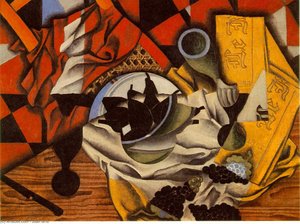
Juan Gris’ “Harlequin”: A Fragmented Portrait of Modern Anxiety
Juan Gris’ “Harlequin,” completed in 1918, stands as a cornerstone of Cubist art and embodies the anxieties inherent within the burgeoning modernist movement. More than just a depiction of a theatrical character—a nod to the enduring traditions of Commedia dell’arte—the sculpture delves into profound questions about perception, representation, and the disintegration of traditional artistic conventions.
The Visual Language of Fragmentation
Gris’ masterful manipulation of geometric forms is immediately striking. The figure isn't rendered in a conventional manner; instead, it’s constructed from interlocking planes—primarily rectangular blocks—that overlap and intersect to suggest volume without resorting to realistic shading. This technique, pioneered by Picasso and Cézanne before him, deliberately rejects illusionistic depth, prioritizing intellectual analysis over visual accuracy. Lines are crisp and angular, defining the edges of these planes with unwavering precision – a characteristic that reflects the Cubist preoccupation with dissecting objects into their constituent parts.
Color Palette and Texture: Earthy Restraint
The color palette is deliberately muted, dominated by shades of grey, brown, and green. These earthy tones contribute to an atmosphere of solemn contemplation and subtly convey a sense of isolation. Hints of blue and gold appear sparingly, adding visual interest without disrupting the overall tonal harmony. The surface texture appears smooth due to photographic reproduction; however, Gris’ original bronze sculpture would have possessed a matte finish—a deliberate choice that reinforces the artwork's textural ambiguity.
Historical Context: Embracing Uncertainty
"Harlequin with a Guitar" emerged during a period of intense intellectual ferment in Europe. The aftermath of World War I instilled a pervasive feeling of disillusionment and uncertainty, prompting artists to question established norms and explore new modes of expression. Cubism responded directly to this zeitgeist by rejecting academic idealism and embracing the fragmented perspective—a visual metaphor for the fractured realities experienced during the postwar era. As noted in Wikipedia, “Like many European artists before them, Cubists often depicted Harlequin, a stock character in the Italian commedia dell’arte…”
Symbolic Resonance: Beyond Representation
The sculpture's symbolism transcends mere visual depiction. The figure embodies the Cubist ethos of dismantling preconceived notions and challenging viewers to reconsider their understanding of form and space. It evokes a feeling of alienation—a characteristic theme within modernist art—and invites contemplation on the complexities of human experience. Gris’ deliberate abstraction serves as a powerful reminder that art can communicate emotion and intellect without relying solely on visual realism.
Recommended Reproduction
A high-quality reproduction of “Harlequin” captures the essence of Gris’ groundbreaking vision. Offered by The Metropolitan Museum of Art and National Gallery of Art, this artwork exemplifies the enduring appeal of Cubist art—its intellectual rigor combined with its evocative aesthetic qualities. Explore the beauty and depth of this iconic piece.
Биография на художника
A Spanish Visionary of Cubism: The Life and Art of Juan Gris
Born José Victoriano González-Pérez in Madrid in 1887, the artist who would become known as Juan Gris embarked on a journey that profoundly shaped the course of early 20th-century art. His initial path wasn’t immediately aligned with canvas and brush; he pursued engineering at the Madrid School of Arts and Sciences, revealing an analytical mind – one that would later deeply inform his artistic approach. Even during these formative years, a creative spark flickered, evidenced by his contributions to local periodicals through drawings, hinting at a burgeoning visual talent waiting to be unleashed. It was in 1905 that he adopted the pseudonym Juan Gris, a name resonating with newfound identity and purpose as he began formal painting studies under José Moreno Carbonero – a pivotal shift that set him firmly on a trajectory toward artistic innovation.Parisian Awakening and the Embrace of Cubism
The year 1906 marked a transformative relocation to Paris, a city then brimming with unparalleled artistic energy. Gris immersed himself completely in this vibrant milieu, forging enduring friendships with luminaries such as Henri Matisse, Georges Braque, and Fernand Léger. Initially, he honed his observational skills and developed a keen sense of visual wit through satirical illustration for publications like *L'Assiette au Beurre*, skillfully capturing the nuances of Parisian life. However, the magnetic pull of Pablo Picasso proved particularly influential, sparking a period of intense study and emulation. Around 1910, Gris began to dedicate himself wholeheartedly to painting, deliberately moving away from caricature and embracing the burgeoning language of Cubism – not merely imitating its style, but actively seeking a new visual order based on deconstruction and reconstruction. His early explorations were characterized by a deliberate departure from traditional representation, prioritizing abstraction as a means of capturing reality’s underlying structure and essence.The Geometry of Perception: Style and Key Works
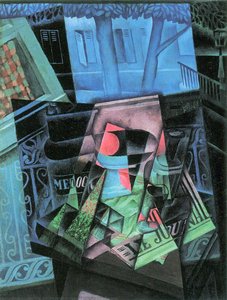
Juan Gris's artistic output is distinguished by an exceptional clarity and intellectual rigor. He didn’t simply break down objects; he meticulously rebuilt them, emphasizing geometric forms and employing a carefully considered palette. This approach led to what became known as his “crystal period,” exemplified in masterpieces such as *Still Life Before an Open Window* (1912) and *Place Ravignan* (1915). These works showcase a remarkable interplay of planes and angles, creating a sense of depth and solidity while simultaneously challenging conventional notions of perspective. The use of overlapping forms and fragmented viewpoints allowed him to represent multiple perspectives within a single image, reflecting the complexities of modern perception. After 1913, Gris wholeheartedly embraced Synthetic Cubism, pioneering the innovative use of *papier collé* – collage – incorporating real-world materials like newspaper clippings, fabric scraps, and wood grain into his compositions. This technique added another layer of complexity and tactile richness to his work, blurring the boundaries between painting and sculpture and inviting viewers to engage with the artwork on a more visceral level. Notable examples include *Guitar in front of the sea* (1925), a testament to his simplified forms and adherence to cubist principles, and *Homage à Pablo Picasso* (1912), which signaled his growing recognition within the avant-garde art world as he paid tribute to his influential mentor.The Influence of Color and Form
Gris’s artistic development was profoundly shaped by both visual and intellectual influences. He studied the works of Cézanne, whose emphasis on geometric forms and spatial relationships served as a foundational influence. The principles of mathematics, particularly those explored by Jean Metzinger, also played a significant role in his approach to composition, guiding him toward a more structured and rational representation of reality. Furthermore, he was deeply inspired by the vibrant colors and expressive brushwork of Henri Matisse, incorporating bold hues and dynamic contrasts into his paintings. This synthesis of influences – Cézanne’s geometry, Metzinger's mathematics, and Matisse’s color palette – resulted in a uniquely innovative style characterized by clarity, precision, and emotional resonance.Legacy and Lasting Influence
Juan Gris’s contribution to Cubism extends far beyond mere stylistic innovation; he brought an unparalleled intellectual depth and structural clarity to the movement. He moved past the analytical phase, transitioning towards a more organized and synthetic approach, emphasizing order and precision. His work profoundly influenced the Purist style championed by Amédée Ozenfant and Charles Edouard Jeanneret (Le Corbusier), advocating for a return to classical principles of form and composition. Gris’s emphasis on geometric forms, harmonious color palettes, and the integration of everyday objects into his art established him as a pivotal figure in 20th-century art. His legacy continues to inspire artists today, demonstrating the enduring power of Cubism and the visionary genius of Juan Gris – a Spanish master who reshaped our understanding of perception and representation.
Хуан Грис
1887 - 1927 , Испания
Бързи факти
- Artistic Movement Or Style: Кубизъм, Синтетичен кубизъм
- Artists Or Movements Influenced By This Artist:
- Пуризъм
- Озенфан
- Ле Корбюзье
- Artists Who Influenced This Artist:
- Пикасо
- Матис
- Брак
- Date Of Birth: 23 март 1887
- Date Of Death: 11 май 1927
- Full Name: José Victoriano González-Pérez
- Nationality: Испанец
- Notable Artworks:
- Guitar in front of the sea
- Homage à Pablo Picasso
- The Miller
- Place Of Birth: Мадрид, Испания
Всички статии
Топ 10 шедьовъра на Кубизма: История, артисти и вдъхновение за дома ви | OriginalUniqueArt.com
Разгледайте топ 10 шедьовъра на кубизма – Пикасо, Браке и други! Историята зад картините, техниките и вдъхновението им. Музейно качество репродукции за вашия дом от OriginalUniqueArt.com. Открийте пълната колекция онлайн!

Фрагментирани перспективи, обединени пространства: Интегрирането на кубистко вдъхновено изкуство в дизайна на модерни вили – ръководство за естетическа иновация и правни аспекти
Открийте как да интегрирате кубистко изкуство в дизайна на вашата вила! Ръководство за естетика, правни аспекти и повишаване стойността на имота. Експертни съвети от OriginalUniqueArt.
Топ 10 шедьовъра на Кубизма: Изкуство, което промени визията ни за света | OriginalUniqueArt.com
Разгледайте топ 10 шедьовъра на кубизма – Пикасо, Брак и други! Открийте историите зад тези емблематични картини и вдъхнете нов живот на вашия интериор с висококачествени репродукции от OriginalUniqueArt.com. Разгледайте пълната колекция онлайн!
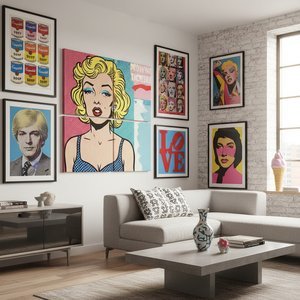
Топ 10 шедьовъра на Поп Арта: Художници, История и Декор с OriginalUniqueArt.com
Разгледайте топ 10 шедьовъра на Поп Арта с OriginalUniqueArt.com! От Анди Уорхол до Рой Лихтенщайн – истории, техники и вдъхновение за вашия дом. Купете висококачествени репродукции и декорирайте с изкуство!
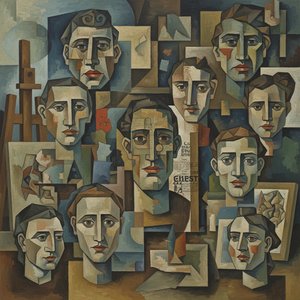
Топ 10 шедьовъра на Кубизма: Портрети, променили изкуството | OriginalUniqueArt.bg
Разгледайте топ 10 шедьовъра на кубизма и революцията в портретната живопис! Открийте историите зад Пикасо, Браке и други велики художници. Купете висококачествени репродукции за вашия дом на OriginalUniqueArt.com.