
 Преглед в реален мащаб
 Изпрати
 Сподели
 Детайли
 Ръководство

 Изтегляне
 Подобни артикули
 Рентгенова снимка
 Слайдшоу
 Q&A
Q&A Статистика
Casa Amatller


 Прочети повече
Жикле / Художествен принт
Giclée печат или принт върху платно с музейно качество, бързо производство и гъвкави опции за завършен вид. ( Купете ръчно рисувана картина Превключване към дигитално изображение)




P118B €10

P118H €10

P118W €10

P438Z €10

P508JH €12

P508YH €12

P805H €10

P805Z €10

P919BZ €10

P919G €10

P919XJ €10

P959ZH €10

P968JZ €12

W106C €8

W218G €10

W218JH €8

W218Y €10

W307PJ €10

W316G €10

W316PJ €8

W316Y €10

W398PJ €8

W4111J €10

W500HY €15

W500JH €15

W692G €12

W849H €8

W940BG €15

W953PJ €8




Изберете от нашите предварително зададени размери, които съответстват на оригиналните пропорции на произведението.

Въведете необходимата ширина и височина, за да паснат на вашата рамка или стена. Принтовете могат само да се изрязват, но никога не могат да бъдат по-големи от оригиналната картина, така че при размер с различен формат част от изображението ще бъде загубена. Преди да започнем печат, ще ви изпратим дигитален мок업 за одобрение. Изображението, показано на тази страница, не показва реалното изрязване — само мок업ът го показва.
Доставка по целия свят () в рамките на 2 седмици вместо стандартните 4/5 седмици. (2 Ноември)

Безплатна експресна доставка по целия свят

Висококачествено ленено платно

Пълно застраховане на доставката

Гаранция за възстановяване на митнически такси

Гаранция за пълно съответствие на цветовете

Политика за връщане в рамките на 100 дни (само при дефекти)

100% Гаранция за връщане на сумата

Оферта за отстъпка при поръчка на повече бройки
 Опцията със стъкло е налична само за размери под 110 см

Casa Amatller
Жикле / Художествен принт
Размер на репродукцията
-


Обща цена
€ 71
Casa Amatller: Gaudí’s Bold Experiment in Catalan Modernisme
Josep Puig i Cadafalch's Casa Amatller stands as an emblem of Barcelona and the broader Catalan Modernista movement—a testament to Antoni Gaudí’s audacious vision for architecture. Constructed between 1898 and 1900, this building isn’t merely a residence; it’s a meticulously crafted dialogue between organic forms and geometric precision, reflecting Gaudí's revolutionary approach to design.
- Architectural Style: Catalan Modernisme – Gaudí seamlessly blends Gothic influences with Art Nouveau aesthetics, creating a distinctive visual language.
- Innovative Technique: The façade utilizes ceramic tiles arranged in a complex geometric pattern—a technique pioneered by Gaudí and pushing the boundaries of conventional construction methods.
- Location & Context: Situated within Barcelona’s “Block of Discord,” Casa Amatller is juxtaposed with other groundbreaking buildings designed by Domènech i Montaner, highlighting the movement's ambition to redefine urban space.
A Symphony of Geometry and Organic Inspiration
Puig i Cadafalch’s genius lies in his ability to translate Gaudí’s conceptual framework into tangible architectural form. The building’s stepped pyramid structure isn’t simply a structural element; it embodies the movement's fascination with natural forms—specifically, medieval castles—drawing inspiration from European Gothic traditions.
- Geometric Patterns: Triangular and square tiles dominate the façade, creating a mesmerizing interplay of lines and shapes that convey order and dynamism simultaneously.
- Material Palette: The use of terracotta tiles contributes to the building’s earthy texture and reinforces its connection to Catalan landscape—a deliberate choice reflecting Gaudí's desire to integrate nature into architectural design.
Symbolism Beyond Aesthetics
Casa Amatller transcends mere visual beauty; it carries symbolic weight, representing Gaudí’s unwavering belief in the transformative power of art. The building’s façade serves as a canvas for geometric abstraction—a deliberate rejection of academic conventions and an affirmation of modernist principles.
- Representation of Catalan Identity: The building embodies Catalonia's spirit of innovation and artistic expression, celebrating its cultural heritage while embracing new aesthetic horizons.
- Emotional Impact: Viewing Casa Amatller evokes a sense of wonder—a recognition of Gaudí’s unparalleled mastery of form and technique—inspiring contemplation on the relationship between art and architecture.
Casa Amatller Today
Today, Casa Amatller continues to captivate visitors with its architectural grandeur and artistic legacy. Its interior, preserved in remarkable condition, offers a glimpse into the opulent lifestyle of Antoni Amatller and his family—a reminder that Casa Amatller is more than just a building; it’s a living embodiment of Catalan Modernisme's enduring influence on art and culture.
Въпроси и отговори
Как да открия произведения, подобни на „Casa Amatller“ на Josep Puig i Cadafalch?
Произведения, подобни на „Casa Amatller“, са изброени в страницата Подобни произведения на произведението.
Каква цветова хармония демонстрира „Casa Amatller“ на Josep Puig i Cadafalch?
Цветовият хармонизъм на „Casa Amatller“ е описан като Единна палитра.
Откъде мога да изтегля „Casa Amatller“ на Josep Puig i Cadafalch?
„Casa Amatller“ на Josep Puig i Cadafalch може да бъде изтеглен от страницата за Изтегляне на дигитален файл на произведението, като дигитално изтегляне на изображение с висока резолюция.
Биография на художника
Josep Puig i Cadafalch: Life and Legacy
Early Life and Education
- Born in Mataró, Spain on October 17, 1867, Josep Puig i Cadafalch was a pivotal figure in the Catalan Modernista movement.
- He received his initial architectural training at the Provincial School of Architecture in Barcelona, demonstrating an early aptitude for design and innovation.
- His education extended beyond technical skills; he possessed a strong interest in history, law, and politics, which would profoundly influence his work throughout his life.
Architectural Development and Influences
- Puig i Cadafalch’s architectural style was deeply rooted in the Modernisme movement, characterized by organic forms, intricate ornamentation, and a revival of Catalan Gothic traditions.
- He drew inspiration from diverse sources including medieval architecture, particularly Gothic and Arabic styles, as well as contemporary movements like Art Nouveau.
- His early works demonstrate a blend of historical references with innovative structural solutions, setting him apart from his contemporaries.
Major Architectural Achievements
- Casa Martí (Els Quatre Gats): Perhaps his most iconic creation, Casa Martí served as a meeting place for artists, writers, and intellectuals, becoming the epicenter of Catalan Modernism.
- Casa Amatller: Located next to Antoni Gaudí’s Casa Batlló on Passeig de Gràcia, Casa Amatller is a stunning example of Puig i Cadafalch's mastery of ornamentation and detail. It showcases his unique blend of Gothic and Modernista elements.
- Other notable works include the Casa Terrades (Casa de les Punxes), the Palau del Baró de Quadras, and various renovations of historical buildings.
Political Career and Cultural Advocacy
- Puig i Cadafalch was not only a celebrated architect but also an active politician deeply committed to Catalan identity and autonomy.
- He served as a Barcelona City Councillor (1901-1903), a member of the Spanish Parliament (1907-1910), and the second President of the Commonwealth of Catalonia (1917-1924).
- From 1942 until his death, he presided over the Institut d'Estudis Catalans, dedicating himself to preserving and promoting Catalan language, culture, and history.
Historical Significance and Legacy
- Puig i Cadafalch played a crucial role in shaping Barcelona’s architectural landscape during its golden age of Modernisme.
- His buildings are not merely structures but cultural landmarks that embody the spirit of Catalan identity and artistic innovation.
- He was a tireless advocate for Catalan culture, actively documenting historical sites and promoting linguistic preservation.
- His work continues to inspire architects and designers today, solidifying his place as one of Catalonia’s most important figures.
Later Life and Death
- Puig i Cadafalch continued his scholarly pursuits and cultural advocacy until his death in Barcelona on December 21, 1956.
- His contributions to architecture, politics, and Catalan culture left an indelible mark on the region’s history and identity.
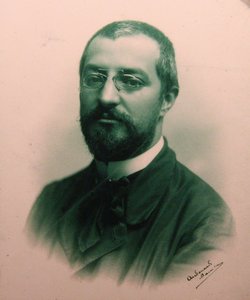
Josep Puig i Cadafalch
1867 - 1956 , Spain
Бърза информация
- Birth Date: 1867-10-17
- Death Date: 1956-12-21
- Influenced: None, 'influenced by': None, 'movement': 'Modernisme (Catalan Modernism)', 'name': 'Josep Puig i Cadafalch', 'nationality': 'Spanish', 'notable works':
- Birth Place: Mataró, Spain
- Date Of Birth: 1867
- Date Of Death: 1956
- Place Of Birth: Mataró, Spain
- Els Quatre Gats: Casa Amatller
Свързани статии

Modernist Art for Commercial Interiors: A Strategic Guide to Transforming Hospitality Spaces with Bold, Scalable Style
Optimize hospitality design with professional Modernist art procurement. APS provides high-volume, hand-painted oil reproductions in scalable sizes for hotels and corporate projects. Benefit from reliable global shipping, bulk ordering, and custom sizing to meet large-scale project demands.
Josep Mompou Dencausse: Exploring Intimacy & Catalan Identity Through Minimalist Expression
Explore the captivating world of Josep Mompou Dencausse, a master of Post-Impressionism whose intimate paintings reflect Catalan identity and minimalist beauty. Discover his life, style & legacy.
Joaquim Mir: A Catalan Visionary – Exploring Symbolism, Landscape & Modernist Aesthetic
Explore the captivating world of Joaquim Mir, a pivotal Catalan Modernisme painter. Discover his vibrant landscapes, symbolic depth & lasting influence on Spanish art history. Learn more at OriginalUniqueArt.

Josep Cusachs i: Exploring Catalan Modernism Through Social Commentary & Artistic Innovation
Explore the captivating world of Josep Cusachs i, a key figure in Catalan Modernism. Discover his realist paintings, social commentary, and influence on 19th-century Spanish art. Hand-painted reproductions available at OriginalUniqueArt.

Charles Sheeler Jr.: Precisionism, Industrial Aesthetics & the American Modernist Vision
Explore the groundbreaking work of Charles Sheeler Jr., a pivotal figure in American Precisionism. Discover his iconic industrial landscapes, photographic studies & lasting influence on modernist art. Expert insights for collectors.
