

 Преглед в реален мащаб
 Сподели
 Сподели
 Подробности
 Ръководство

 Изтегляне
 Подобни артикули
 Рентгенова снимка
 Слайдшоу
 Статистика
Flowers


 Разгърни целия текст
Жикле / Художествен принт
Giclée печат или принт върху платно с музейно качество, бързо производство и гъвкави опции за завършен вид. ( Поръчайте ръчно рисувано репродукция на този колекционерски предмет Превключване към дигитално изображение)




P118B $10

P118H $10

P118W $10

P438Z $10

P508JH $12

P508YH $12

P805H $10

P805Z $10

P919BZ $10

P919G $10

P919XJ $10

P959ZH $10

P968JZ $12

W106C $8

W218G $10

W218JH $8

W218Y $10

W307PJ $10

W316G $10

W316PJ $8

W316Y $10

W398PJ $8

W4111J $10

W500HY $15

W500JH $15

W692G $12

W849H $8

W940BG $15

W953PJ $8




Изберете от нашите предварително зададени размери, които съответстват на оригиналните пропорции на произведението.

Можете да въведете собствени размери, за да паснат на конкретна рамка или пространство. Ако избраният от Вас размер не съвпада с пропорциите на оригиналното изображение, ние ще изрежем произведението или ще разширим изображението с огледален или едноцветен ръб. Дигитален макет ще бъде изпратен за Ваше одобрение преди започването на производството.
Моля, имайте предвид, че предпрегледът на екрана не отразява реалното изрязване или разширяване. Само макетът ще покаже точно финалната композиция.
Въпреки че са налични персонализирани размери, препоръчваме да изберете размер от предварително дефинирания списък, за да запазите оригиналните пропорции.
Доставка по целия свят () в рамките на 2 седмици вместо стандартните 4/5 седмици. (25 Септември)

Безплатна експресна доставка по целия свят

Висококачествено ленено платно

Пълно застраховане на доставката

Гаранция за възстановяване на митнически такси

Гаранция за пълно съответствие на цветовете

Политика за връщане в рамките на 100 дни (само при дефекти)

100% Гаранция за връщане на сумата

Отстъпка при поръчка на повече произведения
 Опцията със стъкло е налична само за размери под 110 см

Flowers
Жикле / Художествен принт
Размер на репродукцията
-


Крайна цена
$ 80
A Symphony of Blue and White: The Ethereal Essence of Twachtman’s Flowers
In the delicate dance of light and shadow captured within Flowers, we encounter one of the most profound expressions of American Impressionism. Painted in 1889, this masterpiece by John Henry Twachtman transcends a mere botanical study, offering instead a window into a dreamlike atmosphere where nature and spirit converge. The composition is a masterclass in balance; blossoms in varying shades of cerulean, cobalt, and crisp white are scattered across the canvas like fallen stars. Some clusters drift near the upper periphery, while others anchor the lower reaches, creating a rhythmic movement that guides the eye through a landscape of profound tranquility. It is an artwork that does not merely depict flowers, but rather captures the very breath of a summer breeze passing through a garden.
The technique employed by Twachtman reveals his restless pursuit of capturing the ephemeral. Eschewing the rigid lines of academic tradition, he utilizes soft, impressionistic brushstrokes that blur the boundaries between the floral subjects and their environment. The background is not a static void but a living, breathing expanse of clouds that weave through the scene from corner to corner. These nebulous forms provide a sense of dynamism and depth, suggesting a sky in constant motion. This interplay between the grounded beauty of the flowers and the celestial movement of the clouds creates a tension between the earthly and the infinite, making the piece feel both intimate and expansive.
A Legacy of Light and Emotion for the Modern Collector
For the discerning collector or interior designer, Flowers offers much more than aesthetic beauty; it provides an emotional anchor for any space. The palette—dominated by soothing blues and luminous whites—is inherently calming, making it an ideal centerpiece for a sanctuary-like setting such as a bedroom, a quiet study, or a sophisticated lounge. The painting’s ability to evoke a sense of peace and nostalgia allows it to integrate seamlessly into contemporary decor while providing a timeless connection to the late 19th-century American landscape tradition.
To possess a high-quality reproduction of this work is to invite the quiet brilliance of Twachtman’s vision into one's home. The way the light seems to emanate from within the white petals, contrasted against the deep, moody blues, creates a luminous effect that changes with the ambient lighting of a room. It serves as a testament to the power of Impressionism to transform a physical space into an emotional experience, reminding us of the fleeting, beautiful moments of nature that define our existence. Whether viewed as a study in color theory or a poetic tribute to the natural world, this artwork remains a captivating jewel of American art history.
Биография на художника
A Pioneer of American Impressionism: The Life and Art of John Henry Twachtman
John Henry Twachtman, born in Cincinnati, Ohio, on August 4th, 1853, stands as a pivotal figure in the development of American Impressionism. His journey from academic training to a uniquely personal style reflects not only his artistic evolution but also the broader shifts occurring within the American art world during the late 19th and early 20th centuries. Twachtman’s story is one of constant exploration, a restless pursuit of capturing atmosphere and emotion through color and light, ultimately leaving an indelible mark on the landscape tradition. His initial artistic grounding came under the tutelage of Frank Duveneck in his hometown, a formative experience that instilled within him a dedication to direct observation and a rejection of overly idealized representations. This early training laid the foundation for his later embrace of more progressive techniques.European Influences and the Embrace of Tonalism
Driven by an ambition to refine his skills and broaden his artistic horizons, Twachtman embarked on a period of study in Europe that proved transformative. Between 1875 and 1877, he attended the Academy of Fine Arts in Munich, where he absorbed the principles of a loosely brushed, shadowy technique prevalent at the time – a style often associated with the German Barbizon school. He was particularly influenced by Ludwig von Loefftz’s approach to landscape painting, which emphasized capturing the effects of light and atmosphere through subtle tonal variations. A subsequent visit to Venice with William Merritt Chase further ignited his passion for capturing the nuances of light and atmosphere. These European experiences were crucial in shaping his artistic vision, yet Twachtman never simply replicated what he encountered abroad; instead, he synthesized these influences into something distinctly his own. The period between 1883 and 1885 found him at the Académie Julian in Paris, a turning point where his style began to coalesce towards a softer, more atmospheric approach – a move that would define his signature aesthetic. It was during this Parisian interlude that he fully embraced Tonalism, characterized by muted color palettes, subtle gradations of tone, and an emphasis on creating mood and atmosphere. He experimented with techniques like dry brushwork and layering washes to achieve these effects, producing works that evoke a sense of quiet contemplation and introspection. Works like *Arques-la-Bataille*, now residing in the Metropolitan Museum of Art, exemplify this period, showcasing his mastery of tonal harmonies and evocative landscapes.The Cos Cob Colony and a Personal Impressionist Style
Upon returning to America, Twachtman settled in Connecticut, purchasing a farm in Greenwich that would become both home and artistic studio. His presence at the burgeoning Cos Cob art colony proved instrumental, fostering a vibrant creative community where ideas were exchanged freely and experimentation was encouraged. He wasn’t merely a resident artist; he became a catalyst, inspiring his friends and students with his innovative techniques and philosophical approach to painting. This period saw Twachtman move beyond strict Tonalism towards a highly personal form of Impressionism. While retaining the emphasis on atmosphere and light, his later works demonstrate a bolder use of color and a more dynamic brushstroke. He frequently depicted snow-covered landscapes of his farm and garden, transforming familiar scenes into poetic meditations on nature’s beauty. His series of vibrant scenes in Gloucester, Massachusetts, foreshadowed a more modernist sensibility in American art, anticipating the abstract explorations that would follow. The influence of J. Alden Weir was particularly strong during this time, as they often exhibited together and shared a similar interest in capturing the subtle nuances of light and color.A Master of Light and Atmosphere
Twachtman’s artistic genius lay in his ability to capture fleeting moments of light and atmosphere with remarkable sensitivity. He wasn't interested in creating photographic representations of landscapes; instead, he sought to convey the *feeling* of a place – its mood, its temperature, its sense of time. His paintings are characterized by their quiet intensity and understated beauty. The use of color is often subtle and restrained, but it’s precisely this restraint that allows his compositions to resonate with such power. He was particularly adept at depicting winter landscapes, transforming snow-covered fields and forests into shimmering realms of light and shadow. His work reflects a deep appreciation for the natural world and a profound understanding of its complexities.Legacy and Lasting Impact
John Henry Twachtman's untimely death in 1902 at the age of forty-nine cut short a promising career, but his influence continued to resonate through subsequent generations of American artists. He left behind a body of work that is celebrated for its poetic sensibility, technical mastery, and innovative approach to landscape painting. His paintings are not merely representations of places; they are evocations of mood, atmosphere, and the emotional connection between humanity and nature. Twachtman’s contribution extends beyond his individual canvases; he played a vital role in establishing American Impressionism as a distinct artistic movement. He was a founding member of “The Ten,” a group of artists who sought to break away from the constraints of traditional art institutions and forge their own path. Landscape 3, with its serene depiction of nature, exemplifies his tonalist approach, while works like *Reflections* demonstrate his ability to capture fleeting moments of light and atmosphere. His legacy is further cemented through pieces such as *Brook among the Trees*, a captivating pastel that showcases the beauty and serenity of the natural world. Twachtman’s innovative spirit continues to inspire artists today, solidifying his place as a true pioneer of American Impressionism and a master of tonal landscape painting.
Йоан Хенри Твактман
1853 - 1902 , Съединени Американски Щати
Бързи факти
- Artistic Movement Or Style: Импресионизъм, Тонализъм
- Artists Or Movements Influenced By This Artist: ['Американски импресионизъм']
- Artists Who Influenced This Artist:
- Франк Дувенек
- Уилям Мъррит Чейс
- Date Of Birth: 4 август 1853 г.
- Date Of Death: 8 август 1902 г.
- Full Name: John Henry Twachtman
- Nationality: Американски
- Notable Artworks:
- Пейзаж 3
- Аркес-ла-Батайл
- Отражения
- Бряг между дърветата
- Place Of Birth: Цинцинтат, САЩ
Свързани статии
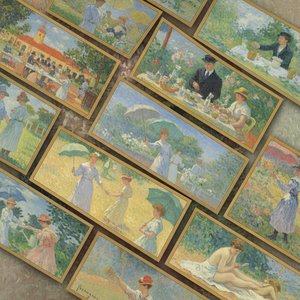
Топ 25 шедьовъра на Ренуар: Красота, светлина и импресионизъм за вашия дом
Разгледайте топ 25 шедьовъра на Ренуар – импресионизъм, светлина и красота във всяка картина! Историята зад творбите, техниките и емоциите. Купете висококачествени репродукции на картини от Ренуар за вашия дом в OriginalUniqueArt.com.
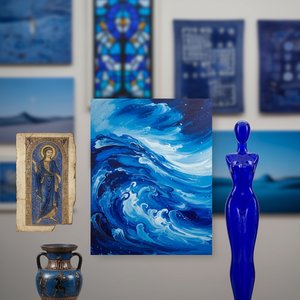
The Allure of Azure: Exploring the Symbolic & Aesthetic Depths of Blue in Art History
Explore the rich history of blue in art! Discover its symbolism, from ancient pigments to modern masterpieces by Kandinsky & Seurat. Uncover the psychological impact and cultural meanings behind this captivating hue.

Топ 10 шедьовъра в бяло: Изкуство и елегантност за вашия дом | OriginalUniqueArt.com
Разгледайте Топ 10 шедьовъра в бяло – Моне, Ренуар и други велики художници! Открийте историите зад импресионизма, минимализма и красотата на бялата цветова палитра. Купете висококачествени репродукции на картини онлайн на OriginalUniqueArt.com.

Топ 10 шедьовъра в нюансите на синьото: Изкуство за вашия дом от OriginalUniqueArt.com
Разгледайте топ 10 шедьовъра в нюансите на синьото – от Моне до Ван Гог! Открийте историите зад картините, техниките и значението им. Купете висококачествени репродукции на OriginalUniqueArt.com и превърнете дома си в галерия.
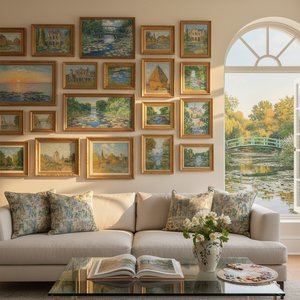
Топ 25 шедьовъра на Клод Моне: Вдъхновение за вашия дом | OriginalUniqueArt.bg
Разгледайте топ 25 шедьовъра на Клод Моне – импресионистични пейзажи, водни лилии и светлина в картините. Вдъхновете се за вашия декор с висококачествени репродукции на OriginalUniqueArt.bg! Открийте цялата колекция онлайн.


