

 Преглед в реален мащаб
 Изпрати
 Сподели
 Детайли
 Ръководство

 Изтегляне
 Подобни артикули
 Рентгенова снимка
 Слайдшоу
 Статистика
Sewing the Sail


 Прочети повече
Жикле / Художествен принт
Giclée печат или принт върху платно с музейно качество, бързо производство и гъвкави опции за завършен вид. ( Купете ръчно рисувана картина Превключване към дигитално изображение)




P118B €10

P118H €10

P118W €10

P438Z €10

P508JH €12

P508YH €12

P805H €10

P805Z €10

P919BZ €10

P919G €10

P919XJ €10

P959ZH €10

P968JZ €12

W106C €8

W218G €10

W218JH €8

W218Y €10

W307PJ €10

W316G €10

W316PJ €8

W316Y €10

W398PJ €8

W4111J €10

W500HY €15

W500JH €15

W692G €12

W849H €8

W940BG €15

W953PJ €8




Изберете от нашите предварително зададени размери, които съответстват на оригиналните пропорции на произведението.

Въведете необходимата ширина и височина, за да паснат на вашата рамка или стена. Принтовете могат само да се изрязват, но никога не могат да бъдат по-големи от оригиналната картина, така че при размер с различен формат част от изображението ще бъде загубена. Преди да започнем печат, ще ви изпратим дигитален мок업 за одобрение. Изображението, показано на тази страница, не показва реалното изрязване — само мок업ът го показва.
Доставка по целия свят () в рамките на 2 седмици вместо стандартните 4/5 седмици. (28 Октомври)

Безплатна експресна доставка по целия свят

Висококачествено ленено платно

Пълно застраховане на доставката

Гаранция за възстановяване на митнически такси

Гаранция за пълно съответствие на цветовете

Политика за връщане в рамките на 100 дни (само при дефекти)

100% Гаранция за връщане на сумата

Оферта за отстъпка при поръчка на повече бройки
 Опцията със стъкло е налична само за размери под 110 см

Sewing the Sail
Жикле / Художествен принт
Размер на репродукцията
-


Обща цена
€ 71
A Glimpse into the Life of a Spanish Master
Joaquín Sorolla y Bastida, renowned for his captivating depictions of light and everyday life, created one of his most celebrated works, Sewing the Sail, in 1896. This painting is a testament to his skill in capturing the essence of Valencian culture and the beauty of natural light.The Painting's Significance
Sewing the Sail is part of Sorolla's series of large-scale works that focus on social and religious themes, designed for international exhibitions. The painting showcases the lives of fishermen's wives in the Grao, the port of Valencia, as they meticulously repair a sail in a sunlit patio surrounded by lush greenery. The scene is bathed in warm light, which pours in through an open door at the back, offering a glimpse of the landscape beyond.Artistic Influences and Style
Sorolla's work was influenced by his time in Rome and Paris, where he was exposed to Impressionist painting. His style is characterized by a dexterous representation of people and landscapes under the bright sunlight of Spain. Sewing the Sail exemplifies this style, with its vivid depiction of light and color.Exhibition and Acquisition
The painting was exhibited at the 1905 Venice Biennale, where it garnered significant attention and acclaim. It was subsequently purchased by the Municipality of Venice for Ca' Pesaro, one of the highest-priced acquisitions made by the municipality during that period.Legacy and Impact
Joaquín Sorolla y Bastida is celebrated as one of the most important Spanish Impressionist painters. His works, including Sewing the Sail, have been recognized for their social and historical significance, offering a glimpse into the lives of ordinary people in late 19th-century Spain.Reproductions Available at OriginalUniqueArt.com
For art enthusiasts who wish to own a piece of this masterpiece, OriginalUniqueArt.com offers high-quality, handmade oil painting reproductions of Sewing the Sail. These reproductions capture the essence and beauty of Sorolla's original work, making it possible for anyone to appreciate this masterpiece in their own home.Conclusion
Sewing the Sail by Joaquín Sorolla y Bastida is a remarkable piece of art that not only showcases the artist's skill but also provides a window into the lives of people in late 19th-century Valencia. Its significance extends beyond its artistic value, as it represents a moment in history and culture.- Sewing the Sail by Joaquín Sorolla y Bastida on OriginalUniqueArt.com
- Joaquín Sorolla y Bastida on Wikipedia
Въпроси и отговори
В коя година е създадено „Sewing the Sail“ на Жоан Сорола?
Създаването на „Sewing the Sail“ на Жоан Сорола датира от 1896.
Известен ли е Жоан Сорола, създателят на "Sewing the Sail", под други имена?
Жоан Сорола се появява и под алтернативните имена Joaquín Sorolla y Bastida.
Мога ли да поръчам маслена репродукция на "Sewing the Sail"?
Ръчно рисувани копия на „Sewing the Sail“ на Жоан Сорола се предлагат в ето този уебсайт: ръчно рисувана маслена репродукция върху ленен холст, чрез неговата страница Ръчно рисувана репродукция.
Биография на художника
A Life Bathed in Light: The World of Joaquín Sorolla
Joaquín Sorolla y Bastida, a name synonymous with the radiant light and vibrant energy of Spain, was more than just a painter; he was a chronicler of his nation’s soul. Born in Valencia in 1863, Sorolla's early life was marked by tragedy. Orphaned at the tender age of two following a cholera epidemic that claimed both parents, young Joaquín and his sister were raised by their maternal aunt and uncle. This early experience with loss perhaps instilled within him a profound appreciation for the fleeting beauty of life – a sentiment that would permeate his art. Though hardship shadowed his beginnings, it did not dim the spark of artistic talent that quickly became apparent. He received initial instruction in Valencia, demonstrating an aptitude that led to studies under established artists like Cayetano Capuz and José Benlliure, eventually culminating in a four-year grant to study in Rome. It was there, amidst the classical grandeur of Italy, that Sorolla began to forge his unique artistic path, absorbing influences while simultaneously developing a style distinctly his own.From Historical Narratives to Sun-Drenched Realism
Sorolla’s early work reflected the prevailing academic trends of the time – large-scale historical and mythological scenes. He was initially drawn to grand narratives, producing works like *The Return from Fishing* (1893), a technically impressive depiction of fishermen hauling their boat ashore. However, a pivotal shift occurred as he returned to Spain and began to truly observe the world around him. He found himself captivated by the everyday lives of his countrymen, particularly those along the Valencian coast. The intense Mediterranean sunlight, the shimmering sea, and the vibrant energy of the people became his primary subjects. This transition wasn’t immediate; Sorolla continued to explore social realism with works like *Sad Inheritance* (1899), a powerful depiction of children afflicted by polio bathing in the sea – a painting that garnered significant acclaim but also revealed a darker, more compassionate side to his artistic vision. *Sad Inheritance*, exhibited at the Universal Exhibition in Paris, brought him widespread recognition and cemented his position as a leading figure in Spanish art. Yet, it was his increasingly focused exploration of light and color, inspired by Impressionism though never fully embracing its tenets, that would define his legacy. He wasn’t merely *depicting* light; he was attempting to *capture* its very essence, the way it danced on water, illuminated skin, and transformed ordinary moments into scenes of extraordinary beauty.Master of Luminism: A Unique Artistic Voice
Sorolla's technique became instantly recognizable – a bravura display of brushwork, characterized by loose, energetic strokes that conveyed movement and atmosphere. He worked *en plein air* whenever possible, directly confronting the challenges of capturing fleeting light conditions. This dedication to painting outdoors resulted in canvases brimming with life and immediacy. His beach scenes, perhaps his most iconic works, are not simply picturesque representations of leisure; they are studies in luminosity, reflections, and the joyful interaction between people and their environment. Paintings like *Children on the Seashore* and *Sewing the Sail* exemplify this mastery – figures bathed in golden light, rendered with a remarkable sense of spontaneity and vitality. He wasn’t interested in meticulous detail; rather, he sought to convey the *impression* of reality, prioritizing atmosphere and emotion over precise representation. This approach earned him comparisons to Impressionists like Monet and Renoir, but Sorolla's work possessed a unique Spanish character – a warmth, intensity, and emotional depth that set it apart.The Influence of Spain and Personal Life
Sorolla’s connection to Valencia was profound, both artistically and personally. He returned to his hometown annually, finding inspiration in the light, the atmosphere, and the people. This deep-seated love for his homeland is evident throughout his oeuvre – from the vibrant colors of the coastal scenes to the portrayal of everyday Valencian life. His marriage to Clotilde García del Castillo in 1890 was a significant influence on his work, providing him with a loving partner and muse. Their family life, filled with joy and companionship, is reflected in many of his portraits, particularly those depicting his children. The warmth and intimacy he captured in these familial scenes are rare among artists of his time. Sorolla’s personal tragedies – the loss of his parents at such a young age and later, the debilitating stroke that curtailed his artistic career – undoubtedly shaped his perspective and informed the emotional depth of his work.Legacy and Enduring Influence
By the early 20th century, Joaquín Sorolla was internationally renowned. He exhibited extensively throughout Europe and the United States, receiving numerous accolades and commissions. His most ambitious undertaking, *Vision of Spain* (1912-1928), a series of fourteen monumental murals commissioned by the Hispanic Society of America, remains a testament to his artistic vision and technical skill. Though he suffered a stroke in 1920 that curtailed his painting activity, Sorolla’s influence continued to grow after his death in 1923. His work inspired generations of artists, not only in Spain but around the world. Today, his paintings are held in major museums worldwide, including the Museo Sorolla in Madrid – a former home transformed into a dedicated space for showcasing his art. Sorolla’s legacy extends beyond his technical brilliance; he captured a specific moment in Spanish history and culture, immortalizing the beauty of its landscapes and the spirit of its people. He remains a master of light, color, and emotion—a painter whose work continues to resonate with audiences today, reminding us of the power of art to illuminate our world.Key Achievements & Recognition
- 1892: Gold medal at the National Exhibition in Madrid for *Another Marguerite*.
- 1894: Acclaimed for *The Return from Fishing*, acquired by the Musée du Luxembourg.
- 1899: Grand Prix and medal of honor at the Universal Exhibition in Paris for *Sad Inheritance*.
- 1900-1923: Extensive exhibitions throughout Europe and the United States, establishing international recognition.
- 1912-1928: Commissioned to create *Vision of Spain* for the Hispanic Society of America (completed posthumously).
- Present Day: Works held in major museums worldwide, including the Museo Sorolla in Madrid.

Жоан Сорола
1863 - 1923 , Испания
Бърза информация
- Artistic Movement Or Style: Луменеризъм, Импресионизъм
- Artists Or Movements Influenced By This Artist: ['Импресионизъм']
- Artists Who Influenced This Artist:
- Франсиско Прадилла
- Жуле Бастиен-Лепаж
- Date Of Birth: 27 февруари 1863
- Date Of Death: 10 август 1923
- Full Name: Joaquín Sorolla y Bastida
- Nationality: Испанец
- Notable Artworks:
- Друга Маргарита
- Време за баняне
- Бял трафик
- Place Of Birth: Валенсия, Испания
Свързани статии

Capturing Sunlight: The Radiant Magic and Impressionist Brilliance of Joaquín Sorolla's Masterpieces
Embark on a visual journey through the radiant sunlight of Joaquín Sorolla's masterpieces. Discover the brilliance of Spanish Impressionism and learn how to bring this luminous legacy into your home with museum-quality, hand-painted oil reproductions from OriginalUniqueArt.

Manuel Benedito Vives: A Study of Light, Color & Emotional Resonance in Contemporary Spanish Painting
Explore the captivating world of Manuel Benedito Vives, a celebrated Spanish painter influenced by Sorolla. Discover his masterful portraits, luminous landscapes & enduring legacy – a favorite of the Spanish Royal Family. Art collectors will appreciate this in-depth study.

Топ 10 шедьоври на импресионизма: История, артисти и красота за вашия дом
Потопете се в света на импресионизма с нашия списък от 10 шедьовъра! От Моне до Реноар, разкрийте историите зад най-емблематичните картини. Вдъхновете дома си с изкуство – купете репродукции на високо качество на OriginalUniqueArt.com

Отвъд светлината и цвета: Импресионизъм срещу Постимпресионизъм за взискателния колекционер
Разберете разликите между импресионизъм и постимпресионизъм с нашия експертен анализ. Съвети за колекционери, инвестиционен потенциал и ключови артисти.
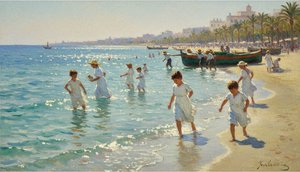
Joaquín Sorolla: Capturing Spanish Light & Life – A Legacy of Impressionism
Explore the luminous world of Joaquín Sorolla, Spanish master of Impressionism. Discover his life, techniques & legacy – a guide for art collectors and enthusiasts. Invest in timeless beauty.


