

 Преглед в реален мащаб
 Сподели
 Сподели
 Подробности
 Ръководство

 Изтегляне
 Подобни артикули
 Рентгенова снимка
 Слайдшоу
 Статистика
The Broken Mirror
 Acrylic On Canvas
- WallArt
- Rococo Sentimentality
 1763
1763 56.0 x 46.0 cm
 Уеллс Колежция
 Разгърни целия текст
Ръчно изработена маслена репродукция
Ръчно рисувана маслена картина върху платно във вашия размер и рамка, изработена по поръчка от нашите художници. ( Избор на принт Превключване към дигитално изображение)




P118B €10

P118H €10

P118W €10

P438Z €10

P508JH €12

P508YH €12

P805H €10

P805Z €10

P919BZ €10

P919G €10

P919XJ €10

P959ZH €10

P968JZ €12

W106C €8

W218G €10

W218JH €8

W218Y €10

W307PJ €10

W316G €10

W316PJ €8

W316Y €10

W398PJ €8

W4111J €10

W500HY €15

W500JH €15

W692G €12

W849H €8

W940BG €15

W953PJ €8




Изберете от нашите предварително зададени размери, които съответстват на оригиналните пропорции на произведението.

Въведете необходимата ширина и височина, за да паснат на вашата рамка или стена. Тъй като това е ръчна работа, при избор на размер с различен формат, художникът може да нарисува малко повече около картината или да отреже малко от периферията — вие избирате. Преди да започне рисуването, ще ви изпратим дигитален мок업 за одобрение. Картината, показана на тази страница, не е реалният резултат — само мок업ът го показва.
След получаване на поръчка, екипът на OriginalUniqueArt.com ще изпрати имейл до клиента с инструкции и ще предостави примерен макет за преглед.
Доставка по целия свят () в рамките на 3-4 седмици вместо стандартните 5 седмици. (26 Октомври). Без компромис с качеството.

Безплатна експресна доставка по целия свят

Висококачествено ленено платно

Пълно застраховане на доставката

Гаранция за възстановяване на митнически такси

Гаранция за пълно съответствие на цветовете

Политика за връщане в рамките на 100 дни (само при дефекти)

100% Гаранция за връщане на сумата

Отстъпка при поръчка на повече произведения
 Опцията със стъкло е налична само за размери под 110 см

The Broken Mirror
Техника на репродукция
Размер на репродукцията
-


Крайна цена
€ 263
Jean-Baptiste Greuze’s “The Broken Mirror”: A Window into Sentiment and Rupture
Jean-Baptiste Greuze's "The Broken Mirror," painted around 1763, is not merely a depiction of shattered glass; it’s a profound exploration of moral consequence, societal expectations, and the devastating impact of transgression. This intimate genre scene, now residing within The Wallace Collection in London, offers a glimpse into the burgeoning sentimentalism that defined late 18th-century French art – an era obsessed with capturing raw emotion and exposing the vulnerabilities of human nature. Greuze, a master of eliciting pathos, doesn’t simply show us a broken mirror; he forces us to confront the shattered reputation and emotional wreckage it represents.
A Portrait of Moral Decay
The painting immediately draws the viewer in with its intensely focused composition. A young woman, dressed in a simple yet elegant gown, kneels before a large, ornate mirror. The reflection is fractured – not by an external force, but by her own actions. Her posture conveys profound regret and shame; her hands are clasped tightly together as if attempting to contain the damage she has wrought. The details surrounding her—a discarded shawl, a partially opened door—suggest a hasty departure and a desperate attempt to conceal her guilt. Greuze’s masterful use of light and shadow further emphasizes this sense of concealment and vulnerability, highlighting the woman's face and drawing attention to the broken reflection.
Technique and Sentiment: The Language of Emotion
Greuze’s technique is characterized by its remarkable realism combined with an almost theatrical intensity. He employed a direct painting method, working directly from life – a practice uncommon for artists of his time. This approach allowed him to capture the subtle nuances of human expression with astonishing accuracy. His brushstrokes are visible and deliberate, contributing to the overall sense of immediacy and emotional weight. The palette is muted, dominated by browns, grays, and creams, reflecting the somber mood of the scene. Crucially, Greuze’s skill lay not just in depicting reality but in imbuing it with a potent emotional charge – a hallmark of the sentimental style he championed.
Symbolism and the Shattered Ideal
The broken mirror itself is laden with symbolic meaning. Mirrors, throughout Western art history, have often represented vanity, self-reflection, and the illusion of perfection. In “The Broken Mirror,” however, this symbolism takes on a darker hue. The shattered reflection signifies not just a physical breakage but also the destruction of innocence, reputation, and perhaps even a future. The woman’s act – implied but not explicitly stated – likely involved a breach of societal norms or a betrayal of trust. It's a potent reminder that actions have consequences, and that even seemingly small transgressions can lead to irreversible damage.
A Legacy of Emotional Resonance
“The Broken Mirror” remains a powerful testament to Greuze’s ability to capture the complexities of human emotion. It's a scene that lingers in the mind long after viewing, prompting reflection on themes of morality, shame, and the fragility of reputation. Reproductions of this work continue to resonate with audiences today, offering a poignant reminder of the enduring power of art to explore the darker corners of the human experience. Its placement within The Wallace Collection underscores its significance as a pivotal piece in the development of French genre painting and a window into the sensibilities of a transformative era.
Въпроси и отговори
Кога е създадена и от кой стил е „The Broken Mirror“ на Жан-Баптист Груе?
"The Broken Mirror" е създадена през 1763 като произведение на течението Rococo Sentimentality. Датата и художественото направление поставят творбата в контекста на историята на изкуството.
Каква е възприеманата светлост на „The Broken Mirror“ на Жан-Баптист Груе?
Възприеманата яркост на „The Broken Mirror“ на Жан-Баптист Груе е shadow. Тя може да бъде съобразена със светлината в предназначеното за нея пространство.
Мога ли да гледам "The Broken Mirror" като слайдшоу на цял екран?
„The Broken Mirror“ на Жан-Баптист Груе може да бъде разгледано като слайдшоу на страницата Слайдшоу на произведението.
Биография на художника
Jean-Baptiste Greuze: A Master of Sentiment and the Soul of Rococo
Born in the tranquil Burgundian town of Tournus in 1725, Jean-Baptiste Greuze’s life was a testament to both extraordinary talent and persistent struggle. His early years were marked by modest circumstances – his father a roofer, his mother a seamstress – yet within him burned an undeniable passion for art, a spark that defied the limitations imposed upon him. It was through the guidance of Grandon, a Lyon artist who recognized Greuze’s innate gift, that this nascent talent began to blossom, leading to formative studies in Lyon and ultimately, the prestigious Royal Academy in Paris under Charles-Joseph Natoire. This Parisian sojourn proved pivotal, shaping his artistic vision while simultaneously pushing him towards a path of independent exploration, diverging from the prevailing academic focus on grand historical narratives.The Dawn of a New Genre: Painting the Everyday
Greuze’s breakthrough arrived in 1755 with *Le Père de famille expliquant la Bible à ses enfants* (The Father Explaining the Bible to His Children). This wasn't merely a depiction of domestic life; it was an embodiment of the Enlightenment’s core values, a poignant portrayal of familial piety and moral instruction. The painting resonated profoundly with the contemporary public, capturing a spirit of bourgeois virtue – a burgeoning sense of morality and social responsibility – that was rapidly gaining traction within French society. The discerning collector Ange-Laurent de La Live de Jully immediately recognized its significance, acquiring it and catapulting Greuze to instant fame. He swiftly followed this success with a series of genre scenes—intimate glimpses into the lives of ordinary people, imbued with an extraordinary depth of emotional resonance and subtle moral undertones. A journey to Italy in 1755, undertaken alongside Abbé Louis Gougenot, broadened his artistic horizons, exposing him to classical influences while simultaneously reinforcing his commitment to depicting the realities of French life rather than idealized historical settings. This period saw a refinement of his technique, a deepening understanding of composition and light, but crucially, a firm establishment of his unique style—one characterized by an unparalleled ability to evoke genuine feeling: joy, sorrow, remorse, and everything in between.The Language of Emotion: Techniques and Symbolism
Greuze’s genius lay not simply in his technical skill, but in his profound understanding of human psychology and his masterful manipulation of visual language. He was a meticulous observer of everyday life, capturing the subtle gestures, fleeting expressions, and unspoken emotions that defined the experiences of ordinary people. His compositions were often carefully staged—a bare timbered room, strategically lit to draw attention to key figures; a simple arrangement of objects—each carrying symbolic weight. He employed a distinctive palette, favoring muted tones and soft pastels, creating an atmosphere of intimacy and vulnerability. The use of dramatic lighting – pools of light illuminating faces and hands – heightened the emotional impact of his scenes, drawing the viewer into the heart of the narrative. Greuze’s ability to convey inner turmoil through facial expressions alone was legendary; a single glance could reveal a lifetime of sorrow or a fleeting moment of joy. His work wasn't merely representational; it was an exploration of the human condition—a meditation on morality, faith, and the complexities of family relationships.The Academy’s Resistance: A Struggle for Recognition
Despite his burgeoning fame and critical acclaim, Greuze faced persistent resistance from the Académie Royale de Peinture et de Sculpture. Initially denied full membership, he was relegated to the status of a genre painter—a category considered less prestigious than history painting, which encompassed mythological and religious subjects. This rejection fueled his ambition and intensified his determination to be recognized as a serious artist. He attempted a bold transition into historical painting with *Septimius Severus Reproaching Caracalla* (1769), a monumental work that showcased his technical prowess but ultimately failed to impress the Academy’s conservative judges. The composition, while ambitious in scale, lacked the clarity and emotional depth expected of a history painting, and it was met with harsh criticism. This setback further solidified his position as a genre painter—a label he initially resisted, yet one that ultimately defined his career.Later Years and a Legacy of Sentiment
The rejection by the Academy marked a turning point in Greuze’s life, leading to a period of isolation and disillusionment. He withdrew from exhibiting at the Salon for many years, becoming increasingly reclusive and embittered. His later works often explored darker themes—the allure of seduction, the consequences of moral transgression, and the vulnerability of youth. While technically proficient, these paintings lacked the emotional resonance and moral clarity that characterized his earlier masterpieces. He died in poverty within the Louvre itself in 1805, a poignant reminder of the challenges he faced throughout his career. Despite this decline, Jean-Baptiste Greuze’s influence on French art remains profound. He pioneered a new form of genre painting—one focused on contemporary life and exploring universal human emotions—and paved the way for later artists who sought to depict the realities of everyday existence with honesty and sensitivity. His legacy endures as a testament to the power of sentiment, the beauty of the ordinary, and the enduring appeal of a master storyteller.Key Works & Their Significance
- Le Père de famille expliquant la Bible à ses enfants (1755): A cornerstone of his early success, embodying Enlightenment ideals of familial piety.
- La Jeune Fille qui pleure son oiseau mort (c. 1765): Demonstrates Greuze’s mastery of emotional expression and poignant storytelling.
- Savoyard with a Dancing Doll (c. 1763): Captures the spirit and vulnerability of childhood, showcasing his skill in portraiture.
- Septimius Severus Reproaching Caracalla (1769): A failed attempt at historical painting that highlighted his strengths lay elsewhere.
- The Broken Pitcher (c. 1770s): Represents a shift towards more sensual and morally ambiguous themes in his later work.

Жан-Баптист Груе
1725 - 1805 , Франция
Бързи факти
- Artistic Movement Or Style: Рококо, Жанров пейзаж
- Artists Or Movements Influenced By This Artist: ['Николай Пусин']
- Artists Who Influenced This Artist: ['Grandon (или Grondom)']
- Date Of Birth: 1725
- Date Of Death: 1805
- Full Name: Jean-Baptiste Greuze
- Nationality: Френски
- Notable Artworks:
- Le Père de famille...
- Малка момичка...
- Савойар с танцуваща кукла
- Place Of Birth: Tournus, Франция
Свързани статии

The Rococo Aesthetic: Opulence, Rebellion & the Pursuit of Pleasure in 18th-Century Art
Explore the opulent world of Rococo art! Discover its origins, key artists like Watteau & Boucher, and lasting influence on design. Expert insights for collectors & enthusiasts.

The Allure of Elegance in Art: A Historical & Aesthetic Exploration of Refinement & Grace
Explore the exquisite world of Rococo art! Discover its history, masters (Watteau, Boucher & more), and defining elegance. Expert insights for collectors seeking museum-quality reproductions & custom portraits.

Топ 10 шедьоври на Рококото: Изкуство за вашия дом от OriginalUniqueArt.com
Разгледайте топ 10 шедьоври на Рококото – Вато, Буше, Фрагонар и други! Открийте историите зад тези емблематични картини и вдъхнете елегантност във вашия дом с репродукции от OriginalUniqueArt.com. Разгледайте пълната колекция онлайн.
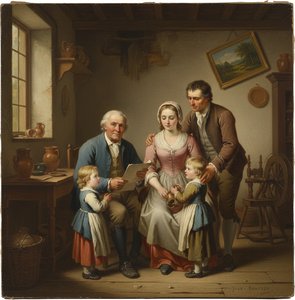
Jean-Baptiste Greuze: Morality, Sentiment & the Rise of Genre Painting
Explore the life & art of Jean-Baptiste Greuze, a pivotal French Rococo painter renowned for his emotionally resonant genre scenes and moral lessons. Discover his legacy & impact on 18th-century art history.

The Elegance of Rococo: A Journey Through Pastel Dreams and Ornate Splendor
Embark on an elegant journey through the Rococo era. Discover the delicate beauty of pastel masterpieces, the intricate artistry of 18th-century French masters, and how this era of ornate splendor continues to inspire timeless luxury in fine art collecting.