
 Представи си го
 Изпрати
 Сподели
 Детайли

 Изтегляне
 Подобни
 Рентгенова снимка
 Слайдшоу
Study for
 Drawing
- WallArt
- Neoclassicism
 1800
1800- 19th Century
 50.0 x 39.0 cm
 Прочетете повече
Закупете дигитално изображение с висока резолюция и подобрени характеристики, значително по-добро от онлайн прегледа.
Всеки файл е щателно подготвен от нашите специалисти с помощта на съвременни инструменти и експертна ръчна ретуш. Гарантираме, че всяко изображение има изключителна яснота, прецизна цветова точност и фини детайли.
Окончателният файл се доставя по имейл в рамките на 72 часа, оптимизиран за незабавна употреба в професионални, редакционни и печатни среди. Това е същото качество, на което се доверяват водещи дизайнерски студия, издатели и галерии.
Дигитално изображение
Изтеглете файл с висока резолюция за лично показване, принтиране и творчески проекти. ( Купете принт Купете ръчно рисувана картина)
Включено във всяка поръчка за дигитални изображения
Експресна дигитална доставка, гарантирана
Когато изберете OriginalUniqueArt.com, вие не получавате само изображение – вие получавате професионално подобрена дигитална творба, създадена с прецизност и подкрепена от гаранция за удовлетворение. Ето всичко, което автоматично се включва в вашата поръчка:

Бърза доставка по имейл
Вашето дигитално изображение с висока резолюция ще ви бъде изпратено по имейл в рамките на 72 часа от поръчката - готово за незабавно използване.

Дигитален файл с подобрено качество чрез изкуствен интелект
Вашата картина е професионално оптимизирана с помощта на усъвършенствани инструменти за изкуствен интелект и ръчна редакция, осигурявайки максимална детайлност, яснота и точност на цветовете.

Безплатна доживотна повторна доставка
Изгубили сте или сте премахнали файла си по погрешка? Не се притежнявайте – ще го изпратим отново на Вас по всяко време, безплатно.

Без такки за мито - никога
Всредите си веднага без мита, данъци или такси по доставка - дигителните приложения винаги са без данъчно освободени.

Гаранция за точност на цветовете
Гарантираме, че вашето дигитално изображение отразява оригиналните цветове възможно най-точно, използвайки професионални инструменти и управление на цветовете.

Гаранция за удовлетвореност от 60 дни
Ако не сте доволни от вашето дигилно изображение, ще го коригираме или ще възмедим 100% в рамките на 60 дни – без никакви въпроси.

100% Гаранция за връщане на пари.
Не сте удовлетворени? Получавате пълно възстановяване на сумата в рамките на 60 дни след получаването на вашия цифров файл – без никакви въпроси.

Отстъпки за големи поръчки
Купете 3 изображения, спестете 10% - Купете 5, спестете 15% - Купете 10+, спестете 20%. Отлично за творчески проекти, галерии и агенства.
Описание на колекционерския предмет
The Allure of Myth and Line: An Encounter with Ingres' Study
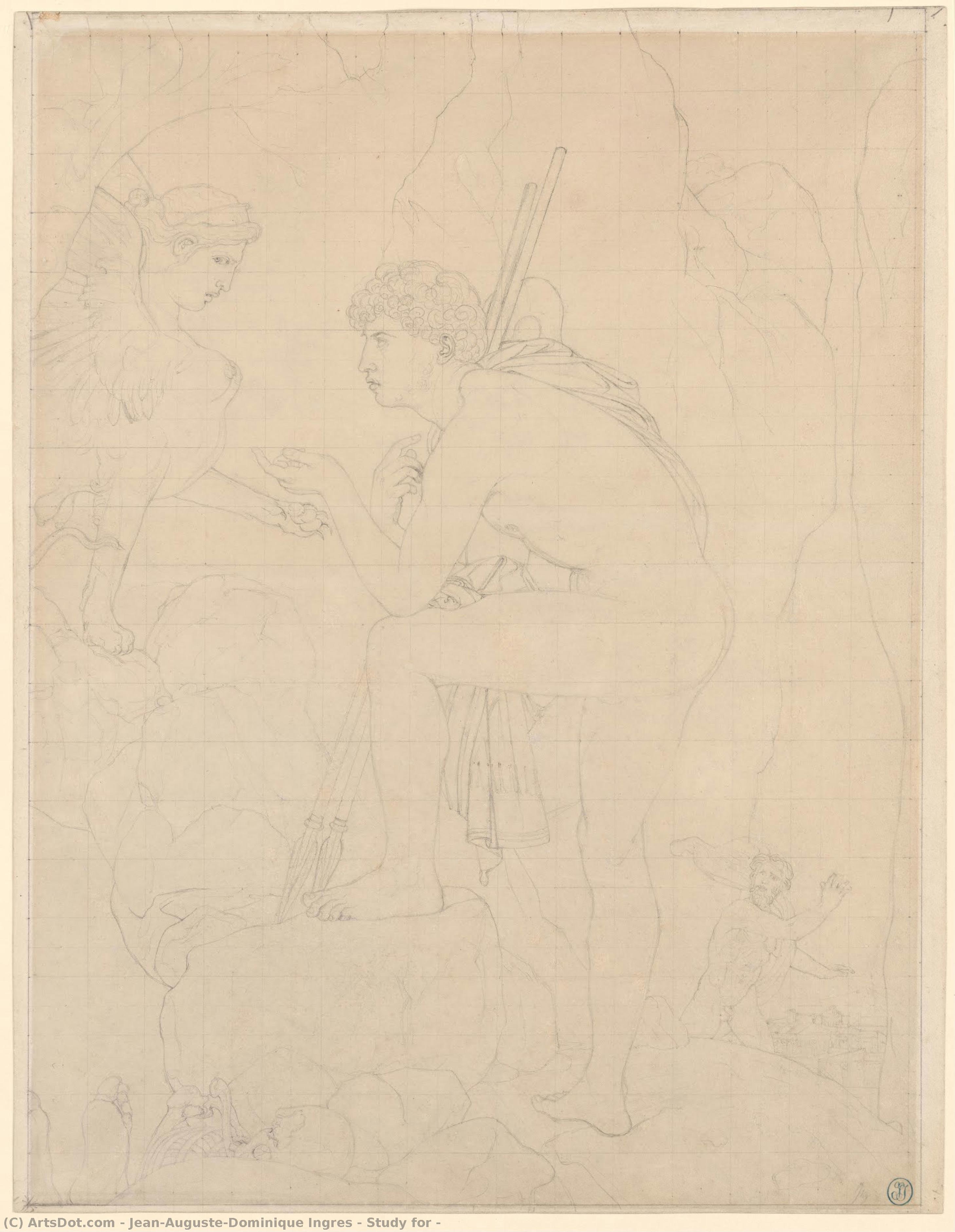
To gaze upon this study for Study for is to step directly into the meticulous, emotionally charged world of Jean-Auguste-Dominique Ingres. This drawing, dating from the turn of the 19th century, captures a moment suspended between classical narrative and burgeoning romantic tension. The composition itself—a pairing of figures poised upon rugged rocks—immediately draws the eye into a scene steeped in allegory. We see a man, armed with the potent symbolism of the bow and arrow, directing his gaze and perhaps his intent toward a woman who embodies ethereal grace; she is rendered with the delicate idealism of a cherub or angel. The very act of drawing suggests an intellectual pursuit, a moment captured before its final, perfect execution, allowing us, the viewer, a privileged glimpse into the master's creative process.
Neoclassical Precision Meets Ethereal Form
Ingres’ signature style, deeply rooted in Neoclassicism, is palpable here. His dedication to line—that exquisite, unwavering contour—is what gives this work its enduring power. While the subject matter hints at folklore or perhaps a mythological encounter, the execution speaks of rigorous academic training. The musculature, the drapery, and the delicate features are all delineated with an almost sculptural precision. Yet, this technical mastery never feels cold. Instead, it serves to elevate the emotional core of the piece. The contrast between the man’s poised readiness and the woman’s serene, angelic bearing creates a beautiful tension, a dialogue rendered purely through line and posture.
Symbolism in Stone and Shaft
The elements within this drawing are rich with potential meaning. The rocks upon which they stand ground the ethereal figures to a tangible reality, suggesting that even divine or mythical encounters must take place within a defined space. Most striking is the bow and arrow; these objects carry the weight of narrative—of desire, warning, or destined connection. Coupled with the angelic figure, the piece whispers tales of Cupid’s arrows, pastoral romance, or perhaps the classical tension between earthly passion and divine purity. It invites contemplation: what story unfolds when intention (the arrow) meets innocence (the cherub)?
A Timeless Aesthetic for Modern Spaces
For the collector or designer seeking art that speaks of enduring beauty and intellectual depth, this reproduction offers unparalleled sophistication. The vintage quality inherent in the drawing lends it an immediate sense of history, while Ingres’ flawless draughtsmanship ensures its timeless appeal. Imagine this piece gracing a salon wall or adorning a study—it acts not merely as decoration, but as a conversation starter. It speaks to an appreciation for classical ideals filtered through the lens of romantic yearning. Owning this work is acquiring a fragment of artistic genius, a testament to the enduring power of line and narrative.
Биография на художника
A Legacy of Line and Form: The World of Jean-Auguste-Dominique Ingres
Jean-Auguste-Dominique Ingres, a name synonymous with Neoclassical precision and an almost sculptural approach to painting, occupies a unique position in the history of art. Born in Montauban, France, in 1780, his artistic journey was one of unwavering dedication to classical ideals, tempered by a burgeoning sensuality and a willingness to challenge convention. Ingres wasn’t merely replicating the past; he was engaging in a profound dialogue with it, forging a style that would both define an era and anticipate the revolutions to come. His work remains a testament to his meticulous observation, masterful draftsmanship, and a deep-seated belief in the power of line to convey emotion and form.His early life provided a solid foundation for his future artistic pursuits. His father, Jean-Marie-Joseph Ingres, was himself a painter and sculptor, instilling in young Dominique a love for form and technique from a tender age. This initial training was followed by studies at the Académie Royale de Peinture, Sculpture et Architecture in Toulouse, where he honed his skills under Guillaume-Joseph Roques. However, it was his move to Paris in 1797 and subsequent apprenticeship with Jacques-Louis David that truly set him on his path. David, the leading figure of Neoclassicism, imparted a rigorous discipline and an emphasis on line, form, and historical subject matter – principles that would remain central to Ingres’s work throughout his career.
The Pursuit of Ideal Beauty
Ingres' artistic philosophy was deeply rooted in admiration for the Italian Renaissance masters—Raphael, in particular, served as a constant source of inspiration. He believed in the power of line to define form and convey emotion, striving for an idealized beauty that transcended mere representation. This pursuit is evident in his early works, such as The Ambassadors of Agamemnon in the Tent of Achilles (1801), which earned him the prestigious Prix de Rome. The painting showcases his meticulous attention to detail, precise draftsmanship, and a clear narrative focus—hallmarks of Neoclassical style. Ingres sought to capture not just the likeness of his subjects but also their essence, imbuing them with an aura of timeless grace and dignity. He meticulously studied anatomy and perspective, striving for perfect harmony between form and space.
However, Ingres wasn’t simply a copyist of classical models. He gradually developed a distinctive voice, infusing classical principles with a unique blend of sensuality and psychological insight. His portraits, in particular, demonstrate this evolution. While maintaining the formal elegance characteristic of Neoclassicism, he began to subtly distort forms and spaces, creating an unsettling yet captivating effect that foreshadowed the expressive distortions of later movements like Cubism. Portrait of Monsieur Bertin (1833-1834), with its elongated hands and intense gaze, is a prime example of this innovative approach – a study in controlled tension and psychological depth.
Beyond History: Orientalism and Late Masterpieces
While celebrated for his historical and mythological paintings—like The Vow of Louis XIII (1827)—Ingres also explored other genres, most notably Orientalism. His depictions of exotic scenes and female nudes, such as The Turkish Bath (1862), completed when he was an astonishing 83 years old, reveal a fascination with the sensual and the mysterious. These works, though sometimes criticized for their idealized representations, demonstrate his continued willingness to experiment and push boundaries. He often employed rich colors and dramatic lighting to evoke a sense of atmosphere and intrigue, drawing inspiration from both classical art and his own imaginative vision. Grande Odalisque (1814) is perhaps the most famous example of this period, capturing a moment of languid beauty with remarkable skill and sensitivity.
Ingres’s later career saw him navigate a changing artistic landscape. The rise of Romanticism challenged the dominance of Neoclassicism, but Ingres remained steadfast in his commitment to classical ideals while simultaneously incorporating elements of Romantic sensibility into his work. He became a highly influential teacher, shaping the next generation of artists and solidifying his position as a bridge between tradition and modernity. His influence extended beyond painting, impacting drawing, printmaking, and even architecture.
A Lasting Influence
Jean-Auguste-Dominique Ingres died in Paris in 1867, leaving behind a legacy that continues to resonate today. His emphasis on line, form, and idealized beauty profoundly influenced artists across generations. Remarkably, his work captivated even those who championed radically different styles—artists like Henri Matisse and Pablo Picasso admired his innovative approach to composition and his ability to imbue classical forms with a sense of vitality and emotion. Ingres’s paintings are now housed in major museums around the world, serving as testaments to his enduring artistic vision. He remains a pivotal figure in art history—a master who not only preserved the traditions of the past but also paved the way for the future.
Notable Works
- The Ambassadors of Agamemnon in the Tent of Achilles (1801)
- The Vow of Louis XIII (1827)
- Portrait of Monsieur Bertin (1833-1834)
- The Turkish Bath (1862)
- Grande Odalisque (1814)

Жан-АUGUST Дьомѝнѝк Ингрѐ
1780 - 1867 , Франция
Бързи факти
- Artistic Movement Or Style: Неокласицизъм
- Artists Or Movements Influenced By This Artist:
- Хенри Матис
- Пабло Пикасо
- Artists Who Influenced This Artist:
- Рафаел
- Николай Пусин
- Жак-Луи Давид
- Date Of Birth: 29 август 1780
- Date Of Death: 14 януари 1867
- Full Name: Jean-Auguste-Dominique Ingres
- Nationality: Френски
- Notable Artworks:
- Посланици на Агамемнон
- Клятвата на Луи XIII
- Портрет на господин Бертън
- Турската баня
- Place Of Birth: Монтабуан, Франция

