
 Представи си го
 Изпрати
 Сподели
 Детайли

 Изтегляне
 Подобни
 Рентгенова снимка
 Слайдшоу
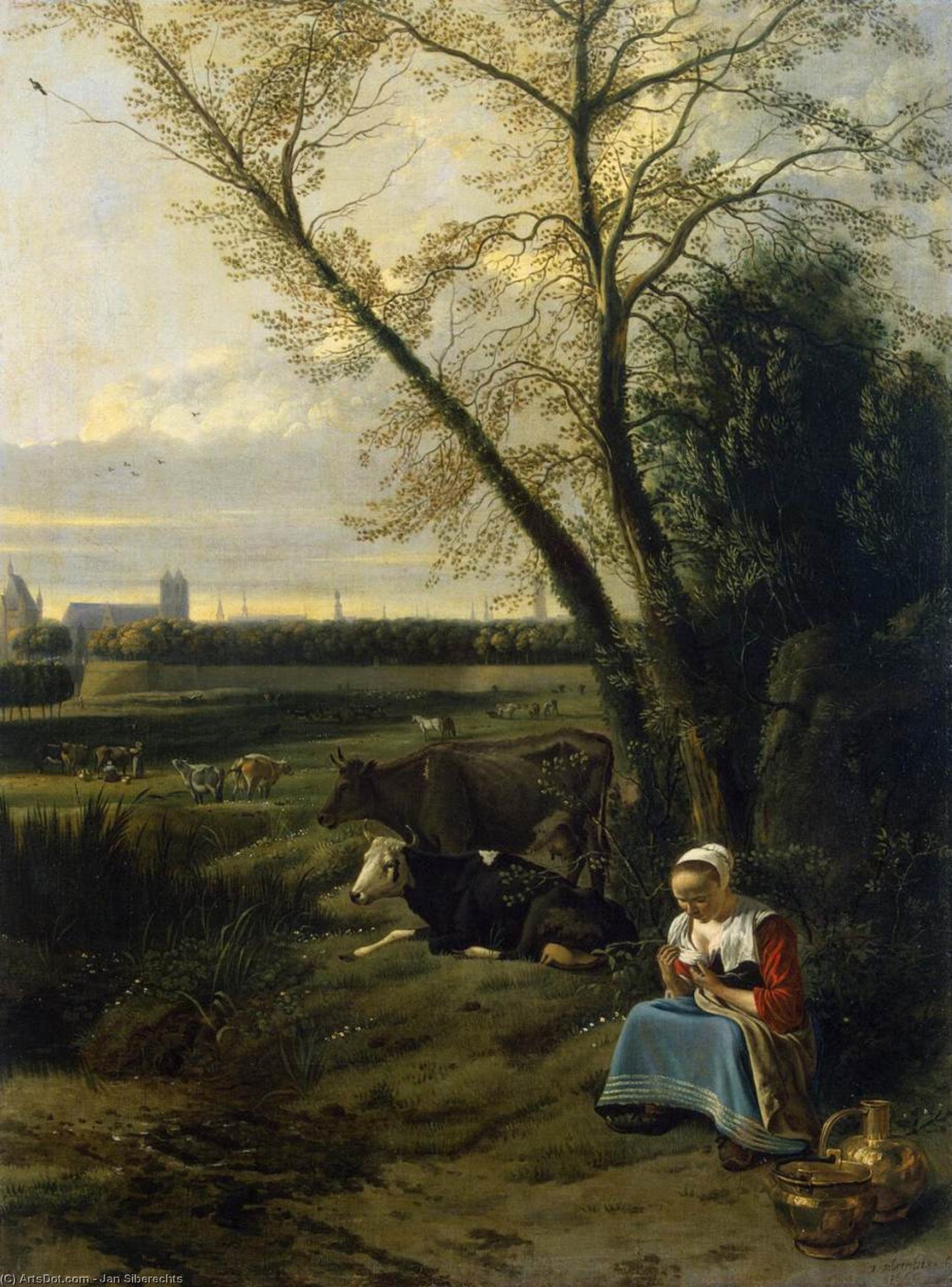
Shepherdess
 Oil On Canvas
- WallArt
- Baroque Landscape
 1660
1660 104.0 x 78.0 cm
 Ермитаж
 Прочетете повече
Закупете дигитално изображение с висока резолюция и подобрени характеристики, значително по-добро от онлайн прегледа.
Всеки файл е щателно подготвен от нашите специалисти с помощта на съвременни инструменти и експертна ръчна ретуш. Гарантираме, че всяко изображение има изключителна яснота, прецизна цветова точност и фини детайли.
Окончателният файл се доставя по имейл в рамките на 72 часа, оптимизиран за незабавна употреба в професионални, редакционни и печатни среди. Това е същото качество, на което се доверяват водещи дизайнерски студия, издатели и галерии.
Дигитално изображение
Изтеглете файл с висока резолюция за лично показване, принтиране и творчески проекти. ( Купете принт Купете ръчно рисувана картина)
Включено във всяка поръчка за дигитални изображения
Експресна дигитална доставка, гарантирана
Когато изберете OriginalUniqueArt.com, вие не получавате само изображение – вие получавате професионално подобрена дигитална творба, създадена с прецизност и подкрепена от гаранция за удовлетворение. Ето всичко, което автоматично се включва в вашата поръчка:

Бърза доставка по имейл
Вашето дигитално изображение с висока резолюция ще ви бъде изпратено по имейл в рамките на 72 часа от поръчката - готово за незабавно използване.

Дигитален файл с подобрено качество чрез изкуствен интелект
Вашата картина е професионално оптимизирана с помощта на усъвършенствани инструменти за изкуствен интелект и ръчна редакция, осигурявайки максимална детайлност, яснота и точност на цветовете.

Безплатна доживотна повторна доставка
Изгубили сте или сте премахнали файла си по погрешка? Не се притежнявайте – ще го изпратим отново на Вас по всяко време, безплатно.

Без такки за мито - никога
Всредите си веднага без мита, данъци или такси по доставка - дигителните приложения винаги са без данъчно освободени.

Гаранция за точност на цветовете
Гарантираме, че вашето дигитално изображение отразява оригиналните цветове възможно най-точно, използвайки професионални инструменти и управление на цветовете.

Гаранция за удовлетвореност от 60 дни
Ако не сте доволни от вашето дигилно изображение, ще го коригираме или ще възмедим 100% в рамките на 60 дни – без никакви въпроси.

100% Гаранция за връщане на пари.
Не сте удовлетворени? Получавате пълно възстановяване на сумата в рамките на 60 дни след получаването на вашия цифров файл – без никакви въпроси.

Отстъпки за големи поръчки
Купете 3 изображения, спестете 10% - Купете 5, спестете 15% - Купете 10+, спестете 20%. Отлично за творчески проекти, галерии и агенства.
Описание на колекционерския предмет
A Pastoral Vision: Jan Siberechts’ “Shepherdess”
Jan Siberechts' "Shepherdess," painted around 1660, isn’t merely a depiction of rural life; it’s a carefully constructed tableau brimming with quiet dignity and an almost palpable sense of serenity. This oil on canvas, currently residing in the Hermitage Museum in St. Petersburg, Russia, offers a glimpse into a world where humanity exists in harmonious balance with nature – a rare and profoundly affecting vision for its time. The painting immediately draws the eye to the central figure, a young shepherdess seated beneath a gnarled, skeletal tree, her posture relaxed yet imbued with an understated grace. She’s not actively engaged in labor; instead, she seems lost in contemplation, holding a small bird – a symbol of innocence and connection to the natural world – gently in her hands.
Siberechts, a Flemish artist working during a period of transition between the Dutch Golden Age and the rise of English landscape painting, skillfully blends influences. His early works, like this one, reveal a clear debt to the Dutch Italianates—artists who had embraced the idealized landscapes of Italy—noting their emphasis on golden light and tranquil scenes. However, Siberechts quickly developed his own distinct style, characterized by meticulous detail and an almost photographic realism, particularly evident in the rendering of textures – from the rough bark of the tree to the soft fur of the cow grazing nearby.
The Language of Light and Color
The painting’s power lies not just in its subject matter but also in Siberechts' masterful use of light and color. The palette is dominated by earthy tones—ochres, browns, and greens—creating a sense of groundedness and connection to the land. Yet, these muted hues are punctuated by vibrant accents – the red bodice of the shepherdess, the blue of her skirt, and the yellow of the bird – which draw the eye and inject a subtle energy into the scene. The light filtering through the branches of the tree casts dappled shadows across the landscape, adding depth and dimension to the composition.
Notably, Siberechts employed a technique known as *chiaroscuro*, skillfully contrasting areas of light and shadow to create a dramatic effect. This is particularly evident in the way he illuminates the shepherdess’s face, highlighting her features and drawing attention to her serene expression. The use of atmospheric perspective—where distant objects appear paler and less distinct—further enhances the sense of depth and space.
Symbolism and Context
Beyond its aesthetic beauty, “Shepherdess” is rich in symbolic meaning. The shepherdess herself represents innocence, purity, and a connection to the natural world – values highly prized during the 17th century. The bird she holds symbolizes hope, freedom, and the fleeting nature of life. The presence of the cow reinforces this pastoral theme, evoking images of abundance and fertility. Considering Siberechts’ later work in England, it's fascinating to note how he retained these core Flemish elements while adapting his style to suit a new audience.
Painted during a period of significant social and political upheaval in Europe, “Shepherdess” offers a respite from the turmoil of the time. It’s a reminder of a simpler way of life—a world where humans lived in harmony with nature and found contentment in the rhythms of rural existence. The painting's enduring appeal lies in its ability to transport us to this idyllic realm, inviting us to pause and reflect on our own relationship with the natural world.
A Legacy of Landscape Painting
Jan Siberechts’ “Shepherdess” holds a significant place in art history as one of the earliest examples of English landscape painting. His meticulous attention to detail, his masterful use of light and color, and his ability to capture the essence of rural life paved the way for future generations of British artists. His work influenced figures like William-Adolphe Bouguereau, whose own depictions of shepherdesses—such as “The Little Shepherdess”—demonstrate a clear debt to Siberechts’ pioneering vision.
Today, "Shepherdess" continues to captivate viewers with its timeless beauty and profound emotional resonance. It stands as a testament to the enduring power of art to transport us to other worlds and remind us of the values that matter most—peace, harmony, and connection to nature.
Биография на художника
Jan Siberechts (1627–1703): A Flemish Pioneer of English Landscape Painting
Jan Siberechts, born in Antwerp in 1627, stands as a remarkable confluence of artistic currents—a pivotal link between the rich heritage of Flemish painting and the burgeoning landscape tradition blossoming across England. His life story is one interwoven with talent, patronage, and ultimately, an indelible mark on British art history. The son of a sculptor also named Jan Siberechts, he absorbed foundational skills and aesthetic sensibilities within his father’s workshop—a formative experience that would shape his artistic trajectory. By 1648, he achieved master status in the prestigious Guild of Saint Luke in Antwerp, signifying recognition for his considerable craftsmanship. While definitive evidence remains elusive regarding a possible journey to Italy during the late 1640s or early 1650s—a speculation supported by art historians—it’s undeniable that exposure to Italianate landscape painting—characterized by classical compositions and atmospheric perspective—likely influenced his evolving style, visible in his earliest works. These pieces demonstrate a harmonious blend of Flemish realism and Italianate ideals.Early Training and Influences
Siberechts’ initial artistic education unfolded within the familial workshop, fostering an appreciation for sculptural techniques alongside painting. This grounding provided him with invaluable insight into form and texture—elements that would permeate his subsequent canvases. His formative years coincided with the ascendancy of Dutch masters like Nicolaes Berchem and Karel Dujardin, whose pastoral scenes and nuanced light effects captivated Siberechts’ sensibilities. These artists skillfully conveyed emotion through subtle tonal gradations and atmospheric haze—approaches that resonated deeply with Siberechts' artistic inclinations. The influence of Berchem and Dujardin is particularly evident in Siberechts’ early landscapes—where he meticulously captures the ethereal beauty of twilight or dawn, mirroring their masterful use of light and color.From Flemish Countryside to English Estates
The 1660s marked a transformative period for Siberechts’ artistic evolution. He decisively embraced his own distinctive style, focusing intently on depictions of the Flemish countryside—a realm brimming with rural life and populated by figures imbued with vitality. Unlike purely topographical representations, Siberechts' canvases strive to immerse viewers in the atmosphere of Flanders—capturing not merely what is seen but also how it feels. His compositions frequently feature women engaged in everyday tasks—weaving, milking cows, tending gardens—presented with dignified grace and rendered in brilliant hues that punctuate the verdant landscapes. He achieved this remarkable effect through masterful manipulation of water reflections—creating visual echoes and enhancing depth—a technique honed by observing the luminaries of Dutch landscape painting. Siberechts’ meticulous attention to detail—particularly in portraying human figures—reflects a broader artistic preoccupation with conveying emotion and capturing psychological nuance.A Patronage Affair: Collaboration with George Villiers
Siberechts' artistic reputation gained considerable momentum thanks to his association with George Villiers, the Second Duke of Buckingham—a relationship that propelled him into the orbit of England’s aristocratic elite. Recognizing Siberechts’ exceptional talent, Buckingham invited him to undertake a monumental commission: decorating Cliveden House—Buckinghamshire’s opulent estate—a project that cemented Siberechts' position as a pioneer of English landscape painting. This undertaking demanded considerable artistic ingenuity and technical prowess—necessitating the creation of vast murals adorned with intricate depictions of pastoral scenes and mythological figures. The resulting artwork stands as a testament to Siberechts’ ability to synthesize disparate influences—drawing upon Flemish tradition while adapting to the stylistic conventions of his new surroundings.Legacy and Artistic Significance
Jan Siberechts' contribution to British art history is undeniable—he established a precedent for documenting English landscapes with sensitivity and artistic vision. His topographical views weren’t merely accurate representations; they were carefully constructed compositions that conveyed a profound understanding of place and atmosphere. He profoundly impacted subsequent generations of artists—Peter Tillemans, Pieter Andreas Rijsbrack, Hendrik Frans de Cort among them—who continued to explore the expressive potential of landscape painting with similar skill and conviction. Approximately one hundred paintings attributed to Siberechts survive—offering invaluable insight into his artistic development and stylistic evolution. His distinctive palette—characterized by luminous whites, vibrant reds, and yellows—served as a striking contrast against the lush greenery of his canvases—a technique that exemplifies his mastery of color theory. Siberechts’ enduring legacy resides not only in his technical virtuosity but also in his ability to evoke emotion and transport viewers into the heart of the Flemish countryside—a feat that continues to inspire admiration centuries later. His paintings are more than mere depictions; they are portals to a bygone era, encapsulating the spirit of both Flemish artistry and English grandeur.
Ян Сиберехтс
1627 - 1703 , Белгия
Бързи факти
- Artistic Movement Or Style: Барокко, Пейзаж
- Artists Or Movements Influenced By This Artist: ['Питер Тилемманс']
- Artists Who Influenced This Artist:
- Николаас Берхем
- Карел Дужардин
- Date Of Birth: 1627
- Date Of Death: 1703
- Full Name: Jan Siberechts
- Nationality: Фламандски
- Notable Artworks:
- Пейзаж с фигури
- Бълкиз Естейт
- Place Of Birth: Антверпен, Белгия

