 Представи си го
 Изпрати
 Сподели
 Детайли

 Изтегляне
 Подобни
 Рентгенова снимка
 Слайдшоу
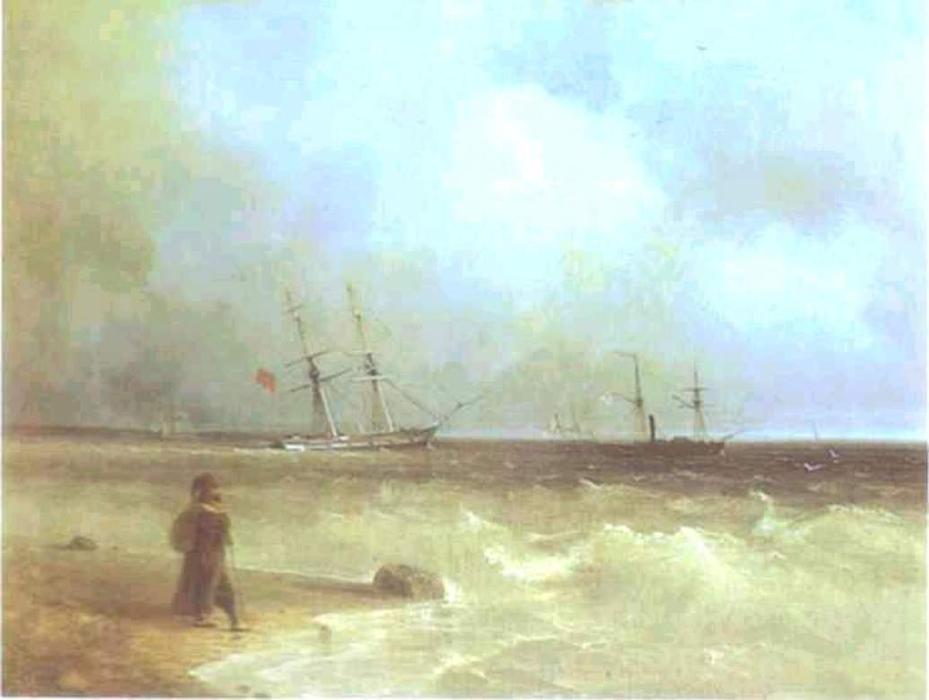
Seashore.


 Прочетете повече
Ръчно изработена маслена репродукция
Ръчно рисувана маслена картина върху платно във вашия размер и рамка, изработена по поръчка от нашите художници. ( Купете принт Купете изображение)




P118B $10

P118H $10

P118W $10

P438Z $10

P508JH $12

P508YH $12

P805H $10

P805Z $10

P919BZ $10

P919G $10

P919XJ $10

P959ZH $10

P968JZ $12

W106C $8

W218G $10

W218JH $8

W218Y $10

W307PJ $10

W316G $10

W316PJ $8

W316Y $10

W398PJ $8

W4111J $10

W500HY $15

W500JH $15

W692G $12

W849H $8

W940BG $15

W953PJ $8




Изберете от предварително зададените размери, които съответстват на оригиналните пропорции на произведението.

Можете да въведете свои собствени размери, за да пасне на конкретна рамка или пространство. Ако избраният от вас размер не съответства на пропорциите на оригиналното изображение, ние ще изрежем произведението или ще удължим картината с допълнителни ръчно рисувани елементи. Дигитален макет ще бъде изпратен за ваше одобрение преди започване на производството.
Моля, обърнете внимание, че прегледът на екрана не отразява действителното изрязване или разширяване. Само макетът ще покаже точно финалния състав.
Въпреки че са налични персонализирани размери, препоръчваме да изберете размер от предварително дефинирания списък, за да запазите оригиналните пропорции.
След поръчка, екипът на OriginalUniqueArt.com ще изпрати имейл на клиента за инструкции и ще предостави преглед на макет.
Доставка по целия свят () в рамките на 3/4 седмици вместо стандартните 5 седмици. (16 Август). Без компромис с качеството.

Безплатна експресна доставка по целия свят

Висококачествено ленено платно

Пълно застраховане при доставка

Гаранция за възстановяване на митнически такси

Гаранция за цветова точност

60-Дневен период за връщане (Само при дефекти)

100% Гаранция за връщане на парите

Предложение за отстъпка при поръчка на едро
 Стъклото е налично само в размери под 110 см

Seashore.
Репродукционен метод
Размер на репродукцията
-


Обща цена
$ 300
Описание на произведението
A Storm Unleashed: Aivazovsky’s “Seashore” – A Window into the Soul of the Sea
Ivan Konstantinovich Aivazovsky's "Seashore," painted in 1840, isn’t merely a depiction of a seascape; it’s an immersive experience, a visceral journey into the heart of the Black Sea. More than just a landscape, this work represents a pivotal moment in Russian art – a shift towards Romanticism deeply influenced by Aivazovsky's profound connection to the ocean. Born in Feodosia, Crimea, a city intrinsically linked to the sea through its maritime history and turbulent geopolitical shifts, Aivazovsky’s entire life was shaped by its moods, its power, and its relentless beauty. He didn’t simply paint what he saw; he painted what he felt – the salty spray on his face, the rumble of distant storms, the ethereal glow of twilight reflecting off the waves.
The painting itself is a masterclass in atmospheric perspective and color theory. Aivazovsky expertly utilizes a muted palette dominated by deep blues, greens, and grays, punctuated by flashes of white foam and the warm ochre of distant cliffs. The sky isn’t a uniform expanse; it's layered with swirling clouds, rendered with delicate brushstrokes that capture the dynamic movement of the atmosphere. Notice how he employs a technique known as ‘sfumato,’ blurring the edges of objects to create an illusion of depth and distance – the boats become almost spectral, swallowed by the vastness of the sea. This masterful use of light and shadow isn’t just aesthetic; it serves to evoke a sense of drama and impending change.
The Romantic Spirit: Emotion and the Sublime
“Seashore” is a quintessential example of Russian Romanticism, a movement that prioritized emotion, individualism, and the power of nature. Unlike earlier Neoclassical depictions of the sea as a symbol of order and reason, Aivazovsky presents it as an untamed force – both beautiful and terrifying. The painting embodies the concept of the ‘sublime,’ a term coined by Edmund Burke to describe experiences that inspire awe and terror simultaneously. The sheer scale of the ocean, combined with the suggestion of an approaching storm, creates a feeling of vulnerability and insignificance in the face of nature’s grandeur.
The inclusion of several sailing vessels adds another layer of complexity. These aren't heroic explorers charting new territories; they are humble boats, dwarfed by the immensity of the sea. They represent humanity’s fleeting presence within this vast and ancient realm. The placement of these small figures on the horizon subtly underscores the insignificance of human endeavors against the backdrop of nature’s enduring power.
Aivazovsky's Technique: A Revolutionary Approach
Aivazovsky revolutionized marine painting through his innovative technique, largely developed in his studio in Feodosia. He meticulously prepared his canvases with a special mixture of oil and turpentine to create a smooth, absorbent surface – crucial for achieving the luminous effects he so expertly employed. He often worked *en plein air* (outdoors) for extended periods, directly observing the sea’s changing light and color. This direct engagement informed every brushstroke, resulting in an unparalleled sense of immediacy and authenticity.
Furthermore, Aivazovsky was a pioneer in using layering techniques to build up his paintings gradually, applying thin glazes of paint over previous layers to create depth and luminosity. This painstaking process, combined with his mastery of color mixing, allowed him to capture the subtle nuances of light reflecting off the water’s surface – a feat that had previously eluded most artists.
Beyond the Surface: Symbolism and Legacy
“Seashore” is more than just a beautiful painting; it's a meditation on humanity’s relationship with nature, a reflection on the power of memory, and an exploration of the human condition. The painting’s enduring appeal lies in its ability to evoke a profound emotional response – a sense of wonder, awe, and perhaps even a touch of melancholy. It speaks to our primal connection to the sea, a force that has shaped civilizations and inspired countless artists throughout history.
Aivazovsky's influence on subsequent generations of marine painters is undeniable. His work continues to captivate viewers today, reminding us of the beauty and power of the natural world and the enduring legacy of one of Russia’s greatest artistic masters. Reproductions like this offer a remarkable opportunity to bring this iconic image into your home, allowing you to experience the magic of Aivazovsky's vision firsthand.
Биография на художника
A Life Embraced by the Waves
Ivan Konstantinovich Aivazovsky, born Hovhannes Aivazian in 1817, was more than a painter of seascapes; he was a conduit to the ocean’s soul. His very existence seemed inextricably linked to the Black Sea—a vast, unpredictable expanse that would forever dominate his artistic vision and fuel an extraordinary career spanning nearly six decades. Born in the Crimean port city of Feodosia, Aivazovsky didn't merely observe the sea; he felt it – its raw energy, sublime beauty, and inherent danger becoming the very essence of his art. From a young age, this connection was nurtured, initially by local architect Jacob Koch who recognized the boy’s talent, then blossoming within the rigorous academic environment of the Imperial Academy of Arts in Saint Petersburg. Yet, formal training alone couldn't account for the depth of Aivazovsky’s understanding; it was the constant presence of salt-laced air and the cries of gulls that truly shaped his artistic sensibility. His Armenian heritage also played a significant role, as he was baptized at the St. Sargis Armenian Church in Feodosia and maintained strong cultural ties throughout his life, occasionally incorporating Armenian themes into his expansive body of work.The Rise of a Marine Master
Aivazovsky’s artistic journey extended beyond Russia, taking him across Europe in the early 1840s. Italy proved particularly formative, immersing him in new landscapes and light, refining his skills and developing a distinctive style characterized by dramatic compositions and masterful use of color. He sought inspiration from the Italian masters, studying their techniques for capturing light and atmosphere. Upon returning to Russia, a pivotal moment arrived: his appointment as the main painter of the Russian Navy. This wasn’t merely a prestigious title; it was access—access to ships, sailors, naval battles, and firsthand observation that profoundly influenced his work. He became intimately acquainted with maritime life, lending an authenticity to his depictions that resonated deeply with both military officials and art enthusiasts alike. His prolific output – around 6,000 paintings throughout his career – testifies to his relentless dedication and extraordinary talent. Aivazovsky didn’t simply replicate scenes; he sought to evoke emotion, to transport the viewer into the heart of a storm or onto the deck of a ship battling towering waves. He wasn't interested in merely recording what was seen, but rather conveying what was felt. The artist’s ability to capture not just the visual spectacle of the sea, but its very essence—its moods, its power, and its mystery—quickly established him as a leading figure in Russian Romanticism.Capturing the Sublime: Style and Key Works
Aivazovsky’s paintings are instantly recognizable for their romantic sensibility and technical brilliance. Seascape with Full Moon, exemplifies his mastery of atmospheric perspective, creating an ethereal glow that bathes the sea in silvery light. The power of nature is palpable in works like A Ship in a Stormy Sea, where turbulent waters and dark skies convey a sense of impending doom and the fragility of human existence. He wasn’t afraid to depict chaos and destruction, but even within these dramatic scenes, there was always an underlying sense of beauty and awe. The Gondolier on Sea at Night, showcases his skill in capturing nocturnal scenes with remarkable detail and a hauntingly beautiful atmosphere. Early works like Chaos (The Creation), which garnered attention from Pope Gregory XVI, reveal a willingness to tackle ambitious themes and demonstrate his technical prowess. However, it is arguably The Ninth Wave that remains his most iconic masterpiece—a harrowing depiction of shipwreck survivors clinging desperately to wreckage, facing the relentless power of the ocean. The painting embodies Aivazovsky’s ability to blend realism with romanticism, creating a scene that is both terrifying and profoundly moving. He often worked en plein air, directly from nature, capturing fleeting light effects, and developed a unique technique of applying paint in thin layers to create luminous textures.A Painter of Nations: Influence and Legacy
Beyond Russia, Aivazovsky’s influence extended across Europe and the Ottoman Empire. His appointment as court painter for the sultans of Turkey—Abdulmecid I, Abdulaziz, and Abdulhamid—demonstrates the international recognition of his talent and artistic vision. He created a significant body of work depicting scenes from Turkish life and history, often commissioned by the Ottoman rulers. During this period, he also painted a series of powerful works addressing the Armenian massacres in Asia Minor, expressing his deep sorrow and outrage at these atrocities. These paintings, such as “The Expulsion of the Turkish Ship” and “The Armenian Massacres at Trevizond,” stand as poignant testaments to his humanitarian concerns and artistic integrity. Aivazovsky’s legacy is deeply intertwined with the cultural heritage of Crimea. He established the Feodosia art gallery (Aivazovsky National Art Gallery), which houses a vast collection of his works, ensuring that his art will continue to inspire generations of artists and viewers alike. His contributions to Russian landscape painting are undeniable, shaping the course of artistic development in Russia for decades to come.Key Facts
* Full Name: Ivan Konstantinovich Aivazovsky * Born: July 29, 1817, Feodosia, Russian Empire (modern-day Ukraine) * Died: May 5, 1900, Feodosia, Russian Empire (modern-day Ukraine) * Nationality: Russian-Armenian * Notable Works: *The Ninth Wave*, *A Ship in a Stormy Sea*, *Seascape with Full Moon*, *Chaos (The Creation)*
Иван Айвазовски
1817 - 1900 , Русия
Бързи факти
- Artistic Movement Or Style: Романтизъм, морски живопис
- Artists Or Movements Influenced By This Artist: ['Руски пейзажисти']
- Artists Who Influenced This Artist: ['Джордж Фридрик Уильям Тёрнер']
- Date Of Birth: 1817 г.
- Date Of Death: 1900 г.
- Full Name: Иван Константинович Айвазовски
- Nationality: Руско-европеец
- Notable Artworks:
- Морски пейзаж с пълнолуние
- Кораб в буйна опасност
- Place Of Birth: Феодосия, Русия
Всички статии
Ivan Aivazovsky: Mastering Light & Emotion in 19th-Century Marine Painting
Explore the captivating world of Ivan Aivazovsky, a master of 19th-century marine painting. Discover his techniques, iconic artworks & lasting legacy in this expert guide.
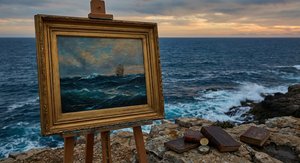
The Azure Depths: Exploring Representations of the Ocean in Art History
Explore the rich history of ocean art! Discover Romantic seascapes, renowned artists like Aivazovsky & Harris, and expert guidance for collectors at OriginalUniqueArt.com.
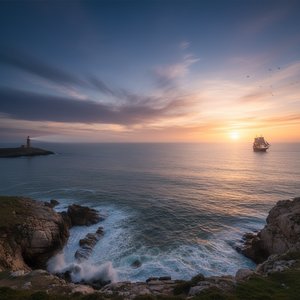
The Allure of the Horizon: A Comprehensive Exploration of Seascape Art Through History & Emotion
Explore the captivating world of seascape art! Discover its history, key artists & movements – from Dutch Masters to Impressionism. Expert insights for collectors and enthusiasts at OriginalUniqueArt.

Ivan Bilibin: A Synthesis of Folklore, Modernism & National Identity in Russian Illustration
Explore the enchanting world of Ivan Bilibin, a master Russian illustrator who synthesized folklore, Art Nouveau & national identity. Discover his iconic fairy tale illustrations and legacy with OriginalUniqueArt.
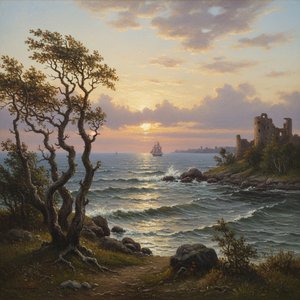
Alexei Bogolyubov: Bridging Realism & Romanticism in the Russian Landscape Tradition
Explore the captivating world of Alexei Bogolyubov, a master of Russian Realism & Romanticism. Discover his stunning landscapes, maritime scenes, and lasting influence on 19th-century art. Learn more at OriginalUniqueArt.