

 Преглед в реален мащаб
 Сподели
 Сподели
 Подробности
 Ръководство

 Изтегляне
 Подобни артикули
 Рентгенова снимка
 Слайдшоу
 Статистика
Minerva
 Oil On Panel
- WallArt
- Northern Mannerism
 1611
1611- Early Modern
 214.0 x 120.0 cm
 Frans Halsmuseum
 Разгърни целия текст
Жикле / Художествен принт
Giclée печат или принт върху платно с музейно качество, бързо производство и гъвкави опции за завършен вид. ( Поръчайте ръчно рисувано репродукция на този колекционерски предмет Превключване към дигитално изображение)




P118B €10

P118H €10

P118W €10

P438Z €10

P508JH €12

P508YH €12

P805H €10

P805Z €10

P919BZ €10

P919G €10

P919XJ €10

P959ZH €10

P968JZ €12

W106C €8

W218G €10

W218JH €8

W218Y €10

W307PJ €10

W316G €10

W316PJ €8

W316Y €10

W398PJ €8

W4111J €10

W500HY €15

W500JH €15

W692G €12

W849H €8

W940BG €15

W953PJ €8




Изберете от нашите предварително зададени размери, които съответстват на оригиналните пропорции на произведението.

Въведете необходимата ширина и височина, за да паснат на вашата рамка или стена. Принтовете могат само да се изрязват, но никога не могат да бъдат по-големи от оригиналната картина, така че при размер с различен формат част от изображението ще бъде загубена. Преди да започнем печат, ще ви изпратим дигитален мок업 за одобрение. Изображението, показано на тази страница, не показва реалното изрязване — само мок업ът го показва.
Доставка по целия свят () в рамките на 2 седмици вместо стандартните 4/5 седмици. (22 Октомври)

Безплатна експресна доставка по целия свят

Висококачествено ленено платно

Пълно застраховане на доставката

Гаранция за възстановяване на митнически такси

Гаранция за пълно съответствие на цветовете

Политика за връщане в рамките на 100 дни (само при дефекти)

100% Гаранция за връщане на сумата

Отстъпка при поръчка на повече произведения
 Опцията със стъкло е налична само за размери под 110 см

Minerva
Жикле / Художествен принт
Размер на репродукцията
-


Крайна цена
€ 70
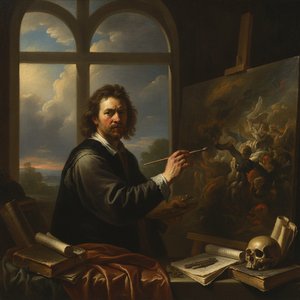
A Symphony of Wisdom and Power: The Allure of Goltzius’s Minerva
In the quiet halls of the Frans Halsmuseum in Haarlem, there exists a window into the intellectual fervor of the early seventeenth century. Hendrick Goltzius’s "Minerva," completed in 1611, is far more than a mere mythological portrait; it is a cornerstone of Dutch Baroque Mannerism that continues to command attention through its refined elegance and psychological depth. As a masterpiece of Northern Mannerism, the painting captures the Roman goddess of wisdom and warfare not as a distant deity, but as a presence that feels both monumental and intimately human. For the discerning collector or interior designer, this work offers a profound sense of gravitas, bringing an atmosphere of classical sophistication and timeless intellect to any curated space.
The composition is a masterclass in the deliberate tension characteristic of the Mannerist style. Eschewing the overly idealized forms of the High Renaissance, Golt_zius embraced a more expressive, almost unsettling realism. The goddess is depicted with a regal yet relaxed posture, her figure possessing a dynamic energy that seems to pulse beneath the surface of the oil on panel. Through the masterful application of chiaroscuro, the artist orchestrates a dramatic interplay between light and shadow; pools of luminous light wash over Minerva’s face and torso, while deep, velvety shadows retreat into the folds of her drapery. This technique does more than create volume—it imbues the goddess with an ethereal, almost supernatural glow, making her appear to emerge from the very fabric of history.
Symbolic Resonance and Technical Mastery
Every element within this monumental work serves a higher narrative purpose, weaving a complex tapestry of humanist philosophy. Perched upon Minerva’s arm, the owl—the traditional emblem of nocturnal vigilance and prophetic insight—gazes toward the viewer, acting as a silent sentinel of wisdom. The presence of the spear in her hand reminds us of her role in strategic warfare, yet it is her serene expression that dominates the emotional landscape. Goltzius utilized sophisticated glazing techniques, applying thin, translucent layers of pigment to achieve a luminous skin tone and a rich, tactile quality in the fabrics. This meticulous attention to detail ensures that even a high-quality reproduction retains the sense of luxury and historical weight found in the original.
For those seeking to infuse a room with inspiration, "Minerva" provides an unparalleled focal point. The subtle earth tones and the antique feel of the palette allow it to integrate seamlessly into both classical and contemporary interiors, acting as a conversation piece that invites deep contemplation. To possess a reproduction of this caliber is to invite the spirit of the Dutch Golden Age into one's home—a celebration of the enduring triumph of wisdom over chaos, and the breathtaking beauty of technical perfection.
Въпроси и отговори
Каква е техниката и датата на създаване на „Minerva“ на Хендрик Голтциус?
„Minerva“ е създадена през 1611 г. с Oil On Panel.
Към кой период от кариерата на Хендрик Голтциус принадлежи „Minerva“?
„Minerva“ принадлежи към Northern Mannerism от кариерата на Хендрик Голтциус. Тази класификация свързва творбата с развитието на художника.
Каква техника и стил характеризират „Minerva“ на Хендрик Голтциус?
"Minerva" е изработена в Oil On Panel, в стил Northern Mannerism.
Биография на художника
Early Life and Artistic Foundations
Hendrik Goltzius, a name synonymous with the vibrant dynamism of Northern Mannerism in Dutch art, was born in 1558 in Mulebrecht, a small village nestled within the Duchy of Jülich (now part of Germany). His lineage traced back through generations of artists – his great-grandfather and grandfather both served as painters in Venlo, while his father, Jan Goltz II, dedicated his life to the intricate craft of stained-glass artistry in Duisburg. This rich artistic heritage provided a fertile ground for young Hendrik’s burgeoning talent. Initially apprenticed to his father, he quickly demonstrated an aptitude for painting on glass, mastering its delicate techniques and developing a keen eye for detail. However, it was his encounter with Dirck Volckertszoon Coornhert, a renowned printmaker and polymath residing in Cleves, that truly shaped his artistic trajectory. Coornhert recognized Goltzius’s potential and took him under his wing, introducing him to the world of copperplate engraving – a medium that would become the cornerstone of Goltzius's illustrious career. This pivotal mentorship instilled in him not only technical proficiency but also an appreciation for the expressive possibilities inherent within the art form.The Rise of a Master Engraver
Moving to Haarlem, a thriving center of artistic and commercial activity in the Dutch Republic, in 1577, Goltzius established his own independent printmaking business. This strategic relocation proved instrumental in propelling him to international recognition. He quickly gained renown for his sophisticated technique, characterized by an exuberant dynamism and a masterful command of line. His early works were largely reproductions of prints created by esteemed masters such as Albrecht Dürer and Lucas van Leyden, demonstrating his meticulous study of their techniques and styles. However, Goltzius soon began to develop his own distinctive voice, experimenting with innovative approaches to composition and shading. His marriage in 1579 to Margaretha Jansdr., a woman of considerable wealth, provided him with the financial stability necessary to pursue his artistic ambitions without constraint. This afforded him the freedom to experiment, refine his skills, and ultimately establish himself as one of the leading printmakers of his era.Technique and Innovation: The "Swelling Line"
Hendrik Goltzius’s engraving style was revolutionary for its time, distinguished by a unique technique he dubbed the “swelling line.” This involved manipulating the burin – the tool used to cut lines into metal plates – to create varying thicknesses of line. By subtly altering the pressure and angle of the burin, he could produce lines that appeared thicker or thinner depending on their distance from the viewer, effectively simulating tonal shading without resorting to hatching or cross-hatching. This technique, combined with his pioneering use of the “dot and lozenge” method – strategically placing dots within lozenge-shaped spaces created by cross-hatching – allowed him to achieve an unprecedented level of realism and depth in his engravings. Legend has it that Goltzius’s unique physical characteristic—a malformed right hand resulting from a childhood accident—contributed significantly to the development of this technique, forcing him to develop exceptional control and precision with his dominant left hand. His command of the burin was often compared to that of Dürer, solidifying his reputation as a master craftsman.Influence and Legacy
Goltzius’s influence extended far beyond the borders of the Netherlands, impacting artists across Europe. He played a crucial role in introducing the style of Mannerist masters like Bartholomeus Spranger and Annibale Carracci to the northern Netherlands, broadening artistic horizons and fostering cross-cultural exchange. His meticulous reproductions of Roman sculptures, particularly the *Farnese Hercules*, were highly sought after by royalty and collectors alike. Furthermore, Goltzius’s own compositions—including series depicting the Story of Ruth, the History of Lucretia, and scenes from the life of Christ—demonstrated his exceptional artistic vision and technical skill. His legacy is reflected in the works of numerous subsequent engravers, who continued to build upon his innovations and refine his techniques. Today, Goltzius’s engravings are treasured possessions within major print rooms worldwide, including the Rijksmuseum in Amsterdam, the Metropolitan Museum of Art in New York, and the British Museum in London, ensuring that his contributions to art history endure for generations to come. His work stands as a testament to the power of artistic innovation, technical mastery, and enduring beauty.
Хендрик Голтциус
1558 - 1617 , Италия
Бързи факти
- Artistic Movement Or Style: Северен маниеризъм & Барок
- Artists Or Movements Influenced By This Artist: ['Жак Беланже']
- Artists Who Influenced This Artist: ['Дирк Волкертсзоон Коорнхерт']
- Date Of Birth: Януари/Февруари 1558
- Date Of Death: 1 януари 1617
- Full Name: Hendrik Goltzius
- Nationality: Нюландски
- Notable Artworks:
- Почитането на пастирите
- Аркадиански пейзаж
- Place Of Birth: Брауншвейг, Италия
Свързани статии

Топ 10 шедьоври на Барока: История, артисти и великолепие за вашия дом
Разгледайте 10 шедьовъра на Барока от Караваджо, Рембрандт и Рубенс! Открийте историите зад тези емблематични картини и скулптури. Вдъхновете се за вашия интериор с OriginalUniqueArt.com – луксозни репродукции и изкуство за дома.
Dutch Baroque Unlocked: Mastering Chiaroscuro, Epic Drama, and the High-Impact Legacy of Rembrandt
Explore the dramatic power of Dutch Baroque art. Master the secrets of Rembrandt’s chiaroscuro, discover the epic scale of the Golden Age, and learn how to bring high-impact, hand-painted historical masterpieces into your modern collection with expert precision.

Hendrick Goltzius: Master Engraver & the Flourishing of Dutch Mannerism
Explore the life & art of Hendrick Goltzius, a master engraver of Dutch Mannerism. Discover his innovative techniques, iconic engravings like 'Jahel', and lasting influence on Baroque art. Learn about collecting Goltzius today.

Golden Age Reflections: Dutch Baroque Painting & Cultural Innovation
Explore the Dutch Golden Age of painting! Discover key artists like Vermeer & ter Borch, their innovative techniques, and the rich cultural context behind these Baroque masterpieces. Learn about collecting & appreciating this iconic art period.

Топ 10 шедьоври на нидерландския барок: Изкуство за вашия дом от OriginalUniqueArt
Разгледайте топ 10 шедьоври на нидерландския барок – Рембранд, Вермеер и други. Открийте историите зад картините, техниките и влиянието им върху изкуството. Музейно качество репродукции на OriginalUniqueArt.com! Разгледайте пълната колекция онлайн.

