
 Преглед в реален мащаб
 Изпрати
 Сподели
 Детайли
 Ръководство

 Изтегляне
 Подобни артикули
 Рентгенова снимка
 Слайдшоу
 Въпроси и отговори
 Статистика
Piazza San Marco

- 115.0 x 154.0 cm


 Прочети повече
Жикле / Художествен принт
Giclée печат или принт върху платно с музейно качество, бързо производство и гъвкави опции за завършен вид. ( Купете ръчно рисувана картина Превключване към дигитално изображение)




P118B €10

P118H €10

P118W €10

P438Z €10

P508JH €12

P508YH €12

P805H €10

P805Z €10

P919BZ €10

P919G €10

P919XJ €10

P959ZH €10

P968JZ €12

W106C €8

W218G €10

W218JH €8

W218Y €10

W307PJ €10

W316G €10

W316PJ €8

W316Y €10

W398PJ €8

W4111J €10

W500HY €15

W500JH €15

W692G €12

W849H €8

W940BG €15

W953PJ €8




Изберете от нашите предварително зададени размери, които съответстват на оригиналните пропорции на произведението.

Въведете необходимата ширина и височина, за да паснат на вашата рамка или стена. Принтовете могат само да се изрязват, но никога не могат да бъдат по-големи от оригиналната картина, така че при размер с различен формат част от изображението ще бъде загубена. Преди да започнем печат, ще ви изпратим дигитален мок업 за одобрение. Изображението, показано на тази страница, не показва реалното изрязване — само мок업ът го показва.
Доставка по целия свят () в рамките на 2 седмици вместо стандартните 4/5 седмици. (7 Ноември)

Безплатна експресна доставка по целия свят

Висококачествено ленено платно

Пълно застраховане на доставката

Гаранция за възстановяване на митнически такси

Гаранция за пълно съответствие на цветовете

Политика за връщане в рамките на 100 дни (само при дефекти)

100% Гаранция за връщане на сумата

Оферта за отстъпка при поръчка на повече бройки
 Опцията със стъкло е налична само за размери под 110 см

Piazza San Marco
Жикле / Художествен принт
Размер на репродукцията
-


Обща цена
€ 72
A Window into Venetian Life: Canaletto's Piazza San Marco
Giovanni Antonio Canal, universally known as Canaletto, possessed a singular gift – the ability to freeze moments in time with breathtaking precision and an almost palpable sense of atmosphere. His ‘Piazza San Marco,’ painted in 1735, is arguably his most celebrated work, offering viewers an unparalleled glimpse into the vibrant heart of Venice during the 18th century. This meticulously rendered cityscape isn’t merely a depiction of a public square; it's a carefully constructed narrative of daily life, architectural grandeur, and the enduring spirit of a city steeped in history. The painting’s impact stems from Canaletto’s mastery of topographical art – his dedication to accurately portraying urban landscapes with an almost photographic realism. The sheer detail, from the individual cobblestones beneathfoot to the expressions on the faces of the bustling citizenry, invites the viewer to step directly into the scene and experience Venice as it was.
Technical Brilliance: Oil on Canvas – A Legacy of Observation
- Medium: Oil on canvas – a traditional combination that allowed Canaletto to build up layers of color with remarkable subtlety and depth.
- Technique: Executed with painstaking detail, the painting showcases Canaletto’s signature use of linear perspective and chiaroscuro (the dramatic contrast between light and dark). The meticulous rendering of architectural elements – the imposing clock tower, the ornate facades of the surrounding buildings – demonstrates a profound understanding of spatial relationships.
- Scale: Measuring 115 x 154 cm, the painting’s substantial size further enhances its immersive quality, allowing for an intimate appreciation of Canaletto's artistic choices.
Historical Context and Symbolic Resonance
Painted during a period of significant political and social change in Venice – a republic grappling with the rise of European powers – ‘Piazza San Marco’ serves as a valuable historical document. The square itself, the very heart of Venetian life, is depicted teeming with activity: merchants conducting business, citizens engaging in conversation, and horses pulling carriages along the cobblestone streets. The clock tower, a symbol of civic authority and temporal order, dominates the composition, anchoring the scene and reinforcing the importance of time within the city’s rhythm. The presence of figures engaged in various activities speaks to the dynamism of Venetian society – a bustling hub of commerce, culture, and social interaction. This painting is not just a record of Venice; it's a window into its soul.
Collecting a Masterpiece: Reproduction Options
Canaletto’s ‘Piazza San Marco’ remains a timeless masterpiece, admired for its historical significance and artistic merit. OriginalUniqueArt offers meticulously crafted, hand-painted oil painting reproductions of this iconic work, allowing art lovers to own a piece of Venetian history. These reproductions are created using traditional techniques, mirroring Canaletto's original approach, ensuring an authentic representation of this remarkable artwork. Whether adorning a grand salon or adding a touch of timeless elegance to a smaller space, a ‘Piazza San Marco’ reproduction is guaranteed to be a captivating focal point.
Въпроси и отговори
Каква е темата на "Piazza San Marco"?
Обектите на "Piazza San Marco" са venetian square, clock tower, canaletto style, urban landscape, baroque art, architecture detail, venetian life.
Остана ли "Piazza San Marco" в родината на своя автор?
Не – произведението се намира в чужбина. Родината на Каналетто е Италия, а оригиналът на „Piazza San Marco“ се съхранява в музей в USA.
Възможно ли е да се изтегли "Piazza San Marco"?
Цифровото изображение на „Piazza San Marco“ на Каналетто може да бъде изтеглено от страницата за изтегляне на произведението: Изтегляне на дигитален файл: дигитално изтегляне на изображение с висока резолюция.
Биография на художника
Giovanni Antonio Canal – The Master of Venetian Light
Giovanni Antonio Canal, universally known as Canaletto, was a pivotal figure in 18th-century art, a painter whose meticulous depictions of Venice and its surrounding landscapes continue to captivate viewers today. Born on October 18, 1697, in the heart of Venice, he inherited an artistic legacy from his father, Bernardo Canal, a skilled theatrical scene painter. This early exposure to visual storytelling and stagecraft undoubtedly shaped Canaletto’s later approach to capturing the dynamism and social life of his beloved city.
Canaletto's formative years were spent honing his craft under his father’s tutelage, learning the fundamentals of perspective, composition, and color. However, a significant turning point in his artistic development occurred when he traveled to Rome in 1718. There, he immersed himself in the vibrant world of Roman painting, encountering the techniques of Giovanni Paolo Pannini, a master of vedute – detailed views of urban landscapes. Pannini’s influence was profound; Canaletto adopted the veduta genre as his primary focus, dedicating his career to meticulously documenting Venice and its environs.
The Development of a Unique Style
Canaletto's signature style is instantly recognizable: a remarkable blend of precision, observation, and atmospheric quality. He was not merely a recorder of scenes; he sought to capture the *essence* of Venice – its light, its movement, its social fabric. His use of precise perspective, often achieved through painstaking preparatory drawings, combined with a masterful understanding of color and light, created images that were both accurate and deeply evocative.
A persistent debate surrounds Canaletto’s technique, particularly regarding the potential use of a camera obscura – a device that projects an image onto a surface. While some scholars believe he employed this tool to aid in achieving topographical accuracy, it's generally accepted that his primary focus remained on compositional design and capturing the overall mood of a scene. His meticulous attention to detail, combined with a keen eye for light and shadow, resulted in paintings that are remarkably realistic yet imbued with a sense of warmth and vitality.
Notable Works and Collaborations
Canaletto’s oeuvre is rich and diverse, encompassing cityscapes, portraits, and imaginary views. Among his most celebrated works are “The Stonemason’s Yard” (circa 1725), a vibrant depiction of daily life in a Venetian workshop; “Regatta on the Grand Canal” (1730s), a dynamic portrayal of a public ceremony; and “Eton College” (1746-1756), a meticulously rendered view of the prestigious English boarding school. His work in England, particularly during his collaboration with Joseph “Consul” Smith, proved exceptionally successful, bringing him widespread recognition and wealth.
A crucial element of Canaletto’s career was his close relationship with his nephew, Bernardo Bellotto. Bellotto became a talented artist in his own right, often working alongside Canaletto on large-scale projects, particularly in the years following his uncle's death. Their collaborative efforts resulted in a series of panoramic views of Venice and other cities, showcasing a shared artistic vision and technique.
Legacy and Influence
Canaletto’s legacy extends far beyond his own lifetime. His meticulous depictions of Venice profoundly influenced subsequent generations of artists, particularly the development of the “vedute” genre in Europe. His work is now housed in major museums around the world, including the National Gallery in London and the Getty Museum in Los Angeles, testament to his enduring artistic merit.
Canaletto’s paintings offer a unique window into 18th-century Venice – its bustling streets, its grand palaces, and its vibrant social life. They are not merely representations of a city; they are celebrations of light, color, and the human experience, solidifying his place as one of the most important landscape artists in European history.
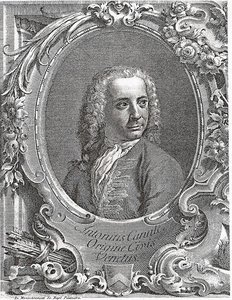
Каналетто
1697 - 1768 , Италия
Бърза информация
- Artistic Movement Or Style: Ведуте Венеция
- Artists Or Movements Influenced By This Artist: ['Джовани Паоло Панини']
- Artists Who Influenced This Artist: ['Лука Карлеварис']
- Date Of Birth: 18 октомври 1697
- Date Of Death: 19 април 1768
- Full Name: Giovanni Antonio Canal
- Nationality: Италианец
- Notable Artworks:
- Кремарият двор
- Регата в големия канал
- Етон Колеж
- Place Of Birth: Венеция, Италия
Свързани статии

Giovanni Antonio Canal (Canaletto): A Venetian Master of Light, Space & Societal Observation
Explore the life & art of Giovanni Antonio Canal (Canaletto), a Venetian master renowned for his breathtaking cityscapes. Discover his techniques, legacy, and captivating depictions of 18th-century Venice & London.

Venetian Renaissance: The Mastery of Color, Light, and the Art of Colorito
Explore the luminous mastery of the Venetian Renaissance. Discover how masters like Titian and Giorgione revolutionized art through colorito, light, and atmosphere. An expert guide to the golden age of Italian painting for collectors and enthusiasts.

Топ 25 шедьовъра на Якопо Тинторето: Драма, светлина и величие в изкуството
Разгледайте топ 25 шедьовъра на Якопо Тинторето – венециански ренесанс, драматизъм и чиароскуро. Открийте историите зад картините му и преобразете дома си с луксозни репродукции от OriginalUniqueArt.com!

Venetian Renaissance: The Golden Age of Color, Light, and Luminous Artistry
Embark on a journey through the Venetian Renaissance. Discover how masters like Giorgione and Titian revolutionized art through luminous color and light. Explore the profound legacy of the Venetian School and its enduring influence on the world of fine art.

Pietro Longhi's Venetian Scenes: A Study of Rococo Society & Domestic Life
Explore the captivating world of Pietro Longhi's Venetian scenes! Discover insightful analysis of his Rococo masterpieces & social commentary on 18th-century life. Learn about this 'Venetian Hogarth' and his lasting artistic legacy.


