
 Преглед в реален мащаб
 Изпрати
 Сподели
 Детайли
 Ръководство

 Изтегляне
 Подобни артикули
 Рентгенова снимка
 Слайдшоу
 Q&A
Q&A Статистика
Camera obscura

- 22.0 x 38.0 cm


 Прочети повече
Жикле / Художествен принт
Giclée печат или принт върху платно с музейно качество, бързо производство и гъвкави опции за завършен вид. ( Купете ръчно рисувана картина Превключване към дигитално изображение)




P118B €10

P118H €10

P118W €10

P438Z €10

P508JH €12

P508YH €12

P805H €10

P805Z €10

P919BZ €10

P919G €10

P919XJ €10

P959ZH €10

P968JZ €12

W106C €8

W218G €10

W218JH €8

W218Y €10

W307PJ €10

W316G €10

W316PJ €8

W316Y €10

W398PJ €8

W4111J €10

W500HY €15

W500JH €15

W692G €12

W849H €8

W940BG €15

W953PJ €8




Изберете от нашите предварително зададени размери, които съответстват на оригиналните пропорции на произведението.

Въведете необходимата ширина и височина, за да паснат на вашата рамка или стена. Принтовете могат само да се изрязват, но никога не могат да бъдат по-големи от оригиналната картина, така че при размер с различен формат част от изображението ще бъде загубена. Преди да започнем печат, ще ви изпратим дигитален мок업 за одобрение. Изображението, показано на тази страница, не показва реалното изрязване — само мок업ът го показва.
Доставка по целия свят () в рамките на 2 седмици вместо стандартните 4/5 седмици. (3 Ноември)

Безплатна експресна доставка по целия свят

Висококачествено ленено платно

Пълно застраховане на доставката

Гаранция за възстановяване на митнически такси

Гаранция за пълно съответствие на цветовете

Политика за връщане в рамките на 100 дни (само при дефекти)

100% Гаранция за връщане на сумата

Оферта за отстъпка при поръчка на повече бройки
 Опцията със стъкло е налична само за размери под 110 см

Camera obscura
Жикле / Художествен принт
Размер на репродукцията
-


Обща цена
€ 71
Canaletto’s Camera Obscura: A Window Into Venetian Vision
The artist Giovanni Antonio Canaletto, commonly known as Canaletto (1697 – 1768), stands as one of the most celebrated figures in eighteenth-century Venetian painting. His meticulous depictions of Venice—the canals shimmering under sunlight, the palaces adorned with opulent decoration—captivate viewers even today. But beyond their aesthetic beauty lies a fascinating secret: Canaletto’s unparalleled accuracy stems from a technique that predates photography – the camera obscura. This ingenious device, essentially a darkened room equipped with a pinhole aperture and a mirror, allowed him to capture the essence of his surroundings with remarkable precision, shaping not only his artistic output but also influencing the broader understanding of perspective and visual representation.- The Device Itself: Canaletto’s camera obscura wasn't merely a tool; it was a conceptual breakthrough. Constructed from wood and glass, it functioned by projecting an inverted image of the outside world onto a surface within—typically tracing paper or canvas—positioned opposite to the pinhole. This method ensured that the artist could faithfully reproduce architectural details and atmospheric effects without resorting to laborious sketching techniques.
- A Reflection of Scientific Curiosity: Canaletto’s embrace of the camera obscura reflects the burgeoning scientific interest in optics during his lifetime. Astronomers and mathematicians alike were experimenting with similar instruments, attempting to unravel the mysteries of light and vision. Canaletto's use of this technique wasn't simply artistic expediency; it represented a conscious engagement with contemporary intellectual debates about how we perceive reality.
- Venetian Landscape Painting: The camera obscura profoundly impacted Canaletto’s style. By allowing him to observe the scene from multiple viewpoints simultaneously, he achieved a level of realism previously unattainable. His paintings—particularly those capturing the grandeur of St Mark's Square and the Doge’s Palace—are characterized by subtle gradations of color, masterful shading, and an astonishingly accurate depiction of architectural proportions.
- Symbolism Beyond Technique: Canaletto’s camera obscura technique wasn’t just about achieving visual accuracy; it also conveyed a deeper symbolic message. The darkened room represented introspection and contemplation—a deliberate distancing from the immediate sensory experience to gain access to a more profound understanding of the world around him. This approach mirrored the philosophical currents of the Enlightenment, emphasizing reason and observation as pathways to knowledge.
- Legacy in Photography: Canaletto’s pioneering use of the camera obscura foreshadowed the invention of photography centuries later. By demonstrating that it was possible to capture an image without direct contact with the subject matter—a feat previously considered impossible—he fundamentally altered our conception of artistic representation and paved the way for a new era of visual art.
Notable Works Featuring Camera Obscura Technique
Canaletto’s mastery of perspective is evident in several iconic paintings, including “The Stonemason’s Yard” (c. 1725), where he meticulously rendered the textures and colors of the building materials with astonishing detail. Similarly, his depiction of St Mark's Square—particularly the Doge’s Palace—captures the shimmering light reflecting off the facades and windows, achieved through careful observation and skillful blending of pigments. These paintings stand as testament to Canaletto’s unwavering commitment to capturing the beauty and complexity of Venice with unparalleled accuracy – a feat made possible by his ingenious use of the camera obscura.Exploring Canaletto's Influence on Later Artists
Canaletto’s innovative approach to landscape painting resonated deeply with artists who followed him, notably Francesco Guardi and Michele Marieschi. These painters adopted similar techniques—primarily employing atmospheric perspective and meticulous detail—to convey the grandeur of Venetian vistas. Canaletto’s legacy extends beyond his own artistic achievements; he established a precedent for realistic representation that continues to inspire artists today, demonstrating that observation and careful technique can unlock profound insights into capturing the essence of visual experience.Reproductions & Inspiration
High-quality reproductions of Canaletto's paintings offer an exceptional opportunity to appreciate his artistic genius and immerse oneself in the atmosphere of eighteenth-century Venice. Consider framing a print alongside a photograph taken from one of Canaletto’s original viewpoints—a powerful gesture that honors both the artist’s pioneering technique and the enduring beauty of Venetian landscapes. Let Canaletto's Camera Obscura serve as a reminder that true artistic vision requires not only skill but also an unwavering dedication to observing and interpreting the world around us.Въпроси и отговори
Колко наситени са цветовете в „Camera obscura“ на Каналетто?
„Camera obscura“ на Каналетто демонстрира Monochromatic интензивност на цветовете.
Кой е доминиращият нюанс на „Camera obscura“ на Каналетто?
Доминиращ Amber to Saffron нюанс прелива през „Camera obscura“ на Каналетто.
В коя година и към кое художествено направление принадлежи "Camera obscura"?
„Camera obscura“ на Каналетто е датирана със 1700 г. и принадлежи към Impressionism.
Биография на художника
Giovanni Antonio Canal – The Master of Venetian Light
Giovanni Antonio Canal, universally known as Canaletto, was a pivotal figure in 18th-century art, a painter whose meticulous depictions of Venice and its surrounding landscapes continue to captivate viewers today. Born on October 18, 1697, in the heart of Venice, he inherited an artistic legacy from his father, Bernardo Canal, a skilled theatrical scene painter. This early exposure to visual storytelling and stagecraft undoubtedly shaped Canaletto’s later approach to capturing the dynamism and social life of his beloved city.
Canaletto's formative years were spent honing his craft under his father’s tutelage, learning the fundamentals of perspective, composition, and color. However, a significant turning point in his artistic development occurred when he traveled to Rome in 1718. There, he immersed himself in the vibrant world of Roman painting, encountering the techniques of Giovanni Paolo Pannini, a master of vedute – detailed views of urban landscapes. Pannini’s influence was profound; Canaletto adopted the veduta genre as his primary focus, dedicating his career to meticulously documenting Venice and its environs.
The Development of a Unique Style
Canaletto's signature style is instantly recognizable: a remarkable blend of precision, observation, and atmospheric quality. He was not merely a recorder of scenes; he sought to capture the *essence* of Venice – its light, its movement, its social fabric. His use of precise perspective, often achieved through painstaking preparatory drawings, combined with a masterful understanding of color and light, created images that were both accurate and deeply evocative.
A persistent debate surrounds Canaletto’s technique, particularly regarding the potential use of a camera obscura – a device that projects an image onto a surface. While some scholars believe he employed this tool to aid in achieving topographical accuracy, it's generally accepted that his primary focus remained on compositional design and capturing the overall mood of a scene. His meticulous attention to detail, combined with a keen eye for light and shadow, resulted in paintings that are remarkably realistic yet imbued with a sense of warmth and vitality.
Notable Works and Collaborations
Canaletto’s oeuvre is rich and diverse, encompassing cityscapes, portraits, and imaginary views. Among his most celebrated works are “The Stonemason’s Yard” (circa 1725), a vibrant depiction of daily life in a Venetian workshop; “Regatta on the Grand Canal” (1730s), a dynamic portrayal of a public ceremony; and “Eton College” (1746-1756), a meticulously rendered view of the prestigious English boarding school. His work in England, particularly during his collaboration with Joseph “Consul” Smith, proved exceptionally successful, bringing him widespread recognition and wealth.
A crucial element of Canaletto’s career was his close relationship with his nephew, Bernardo Bellotto. Bellotto became a talented artist in his own right, often working alongside Canaletto on large-scale projects, particularly in the years following his uncle's death. Their collaborative efforts resulted in a series of panoramic views of Venice and other cities, showcasing a shared artistic vision and technique.
Legacy and Influence
Canaletto’s legacy extends far beyond his own lifetime. His meticulous depictions of Venice profoundly influenced subsequent generations of artists, particularly the development of the “vedute” genre in Europe. His work is now housed in major museums around the world, including the National Gallery in London and the Getty Museum in Los Angeles, testament to his enduring artistic merit.
Canaletto’s paintings offer a unique window into 18th-century Venice – its bustling streets, its grand palaces, and its vibrant social life. They are not merely representations of a city; they are celebrations of light, color, and the human experience, solidifying his place as one of the most important landscape artists in European history.
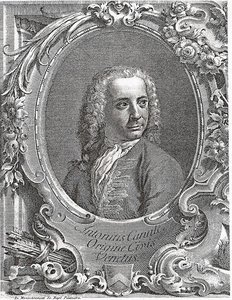
Каналетто
1697 - 1768 , Италия
Бърза информация
- Artistic Movement Or Style: Ведуте Венеция
- Artists Or Movements Influenced By This Artist: ['Джовани Паоло Панини']
- Artists Who Influenced This Artist: ['Лука Карлеварис']
- Date Of Birth: 18 октомври 1697
- Date Of Death: 19 април 1768
- Full Name: Giovanni Antonio Canal
- Nationality: Италианец
- Notable Artworks:
- Кремарият двор
- Регата в големия канал
- Етон Колеж
- Place Of Birth: Венеция, Италия
Свързани статии

Giovanni Antonio Canal (Canaletto): A Venetian Master of Light, Space & Societal Observation
Explore the life & art of Giovanni Antonio Canal (Canaletto), a Venetian master renowned for his breathtaking cityscapes. Discover his techniques, legacy, and captivating depictions of 18th-century Venice & London.

The Enduring Power of Painting: A Historical & Contemporary Exploration of Form and Emotion
Explore the rich history & enduring techniques of oil painting with OriginalUniqueArt. Discover masterpieces, learn about art collecting, and find authentic handmade reproductions crafted by skilled artists.

The Enduring Legacy of Oil on Canvas: Technique, History & Aesthetic Impact
Explore the rich history & techniques of oil painting – from Renaissance masters to Impressionism. Discover pigments, layering methods, and why this timeless medium endures. Expert insights for artists & art enthusiasts.

Барокова Драма: Изкуството, Което Внася Величие в Дома
Открийте великолепието на бароковия стил! Разгледайте историята, изкуството и интериорните решения, вдъхновени от епохата. Съвети за създаване на разкошен дом.

The Dramatic Flourish: Exploring the Baroque Movement's Enduring Legacy in Art History
Explore the dramatic world of Baroque art! Discover iconic artists like Caravaggio & Rubens, defining techniques, and its lasting impact on art history. Expert insights for collectors & enthusiasts at OriginalUniqueArt.


