- Начало

- Принт върху платно
- Герхард Рихтер
- Uncle Rudi

 Preview
 Купи картина Купи изображение
 Изпрати
 Сподели
 Детайли
 Добавяне към любими

 Изтегляне
 Подобни
 Рентгенова снимка
 Слайдшоу
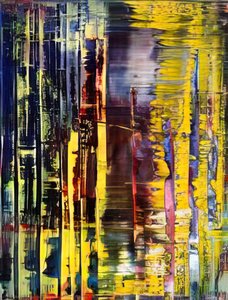
Uncle Rudi
 Acrylic On Canvas
- WallArt
- Contemporary Realism
 1965
1965 87.0 x 50.0 cm
 Прочетете повече
Жикле / Художествен принт
Giclée печат или принт върху платно с музейно качество, бързо производство и гъвкави опции за завършен вид.




P118B $10

P118H $10

P118W $10

P438Z $10

P508JH $12

P508YH $12

P805H $10

P805Z $10

P919BZ $10

P919G $10

P919XJ $10

P959ZH $10

P968JZ $12

W106C $8

W218G $10

W218JH $8

W218Y $10

W307PJ $10

W316G $10

W316PJ $8

W316Y $10

W398PJ $8

W4111J $10

W500HY $15

W500JH $15

W692G $12

W849H $8

W940BG $15

W953PJ $8




Изберете от предварително зададените размери, които съответстват на оригиналните пропорции на произведението.

Можете да въведете собствени размери, за да паснат на конкретна рамка или пространство. Ако избраният от Вас размер не съвпада с пропорциите на оригиналното изображение, ние ще изрежем произведението или ще разширим изображението с огледален или едноцветен ръб. Дигитален макет ще бъде изпратен за Ваше одобрение преди започването на производството.
Моля, имайте предвид, че предпрегледът на екрана не отразява реалното изрязване или разширяване. Само макетът ще покаже точно финалната композиция.
Въпреки че са налични персонализирани размери, препоръчваме да изберете размер от предварително дефинирания списък, за да запазите оригиналните пропорции.
Доставка по целия свят () в рамките на 2 седмици вместо стандартните 4/5 седмици. (23 Юли)

Безплатна експресна доставка по целия свят

Висококачествено ленено платно

Пълно застраховане при доставка

Гаранция за възстановяване на митнически такси

Гаранция за цветова точност

60-Дневен период за връщане (Само при дефекти)

100% Гаранция за връщане на парите

Предложение за отстъпка при поръчка на едро
 Стъклото е налично само в размери под 110 см

Uncle Rudi
Жикле / Художествен принт
Размер на репродукцията
-


Обща цена
-
Описание на колекционерския предмет
Uncle Rudi: A Meditation on Memory and Absence
Gerhard Richter’s *Uncle Rudi*, created in 1965, isn't merely a portrait; it’s an unsettling exploration of memory, loss, and the elusive nature of representation itself. This black and white photograph captures a moment frozen in time—a young man standing rigidly before a blurred backdrop—yet Richter refuses to offer easy answers about what we see or what it signifies. The image possesses a palpable stillness that belies its profound psychological depth. ### Style and Technique: Embracing Uncertainty Richter’s signature style, dubbed “Capitalist Realism,” distinguishes itself from traditional portraiture by prioritizing process over outcome. He famously employs a technique of applying thin layers of oil paint onto canvas, followed by wiping away portions of the surface until only fragments remain—a deliberate act of obfuscation that mirrors the fragmented nature of recollection. In *Uncle Rudi*, this method is evident in subtle brushstrokes and the ghostly impression of texture, hinting at an underlying instability. The artist’s manipulation isn't intended to deceive but rather to convey a fundamental truth: visual representation can never fully capture the complexities of experience. Richter deliberately avoids stylistic conventions, rejecting the polished surfaces favored by earlier generations of artists. This rejection is not merely aesthetic; it embodies a philosophical stance—a refusal to impose order onto chaos and an acknowledgement that certainty is unattainable. ### Historical Context: The Shadow of War and Trauma The photograph’s creation coincides with the turbulent years following World War II, a period marked by immense upheaval and profound psychological scars. Richter's uncle was killed in combat during the war—a personal tragedy that deeply impacted his formative years. This familial loss informs the artwork’s mood of quiet melancholy and underscores the artist’s preoccupation with confronting trauma through art. The blurred background evokes the atmosphere of wartime Dresden, where Richter witnessed the devastating bombing raids that claimed thousands of lives. This visual allusion speaks to a broader cultural anxiety—a fear of oblivion and an awareness of history's inescapable influence on human consciousness. ### Symbolism: Absence as Presence Perhaps *Uncle Rudi*'s most striking characteristic is its deliberate lack of emotional expression. The man’s face remains impassive, devoid of discernible emotion, creating a disconcerting effect that compels the viewer to confront their own assumptions about representation and feeling. Richter's use of grayscale amplifies this sense of detachment, stripping away color—a tool often employed to evoke warmth or vibrancy—and focusing instead on tonal variations that convey subtle nuances of mood. The blurred background serves as a symbolic reminder of what is lost—the certainty of past events and the immediacy of human connection. Yet, within this absence lies a powerful presence: an invitation to contemplate the enduring legacy of trauma and the difficulty of capturing subjective experience in visual form. ### Emotional Impact: A Quiet Resonance Ultimately, *Uncle Rudi* resonates with a quiet intensity that transcends its formal simplicity. It’s not a painting designed to elicit dramatic emotion but rather one that invites contemplation—a subtle meditation on memory, loss, and the inherent limitations of artistic representation. Richter's masterful technique achieves this effect by prioritizing texture and tonal subtlety over overt visual spectacle. The photograph lingers in the mind long after viewing, prompting reflection on themes of identity, familial bonds, and the inescapable influence of historical circumstance. It stands as a testament to Richter’s ability to convey profound psychological truths through deceptively understated imagery—a reminder that art can illuminate the darkest corners of human experience without resorting to sentimentality or cliché.Биография на художника
A Life Shaped by Division: The Early Years and Artistic Formation of Gerhard Richter
Gerhard Richter’s life story is inextricably woven into the complex tapestry of 20th-century Germany, a nation perpetually grappling with its past. Born in Dresden in 1932, his childhood unfolded under the looming shadow of rising National Socialism, an experience that profoundly shaped his artistic sensibility and worldview. The displacement inherent to wartime – his family’s repeated moves during those turbulent years – instilled within him a deep-seated sense of uncertainty and a questioning spirit, qualities that would consistently inform his art for decades. The idyllic landscapes he first knew in Reichenau and Waltersdorf were soon shattered by conflict, leaving an indelible mark on his psyche. His father, while not actively involved in the Nazi party, navigated the challenging realities of life under authoritarian rule as a schoolteacher, while his mother nurtured within him a love for literature and music – a counterpoint to the prevailing ideological pressures. This duality—a pragmatic acceptance of circumstance alongside a yearning for cultural expression—became a defining characteristic of Richter’s artistic approach, a tension he continually explored in his work. He began formal training at the Dresden Academy of Fine Arts in 1951, initially immersed in the rigid tradition of socialist realism mandated by the East German state. Even within this constrained environment, however, a quiet rebellion simmered beneath the surface, fueled by a growing dissatisfaction with ideological constraints and a desire to push beyond prescribed boundaries.Escaping Constraints: Düsseldorf and the Exploration of Style
A pivotal moment arrived in 1961. Alongside his wife, Marianne Eufinger, Richter made the courageous decision to flee East Germany, seeking refuge in the vibrant and experimental art scene of Düsseldorf. This move represented a radical transformation in his artistic trajectory. The West German landscape offered an environment where experimentation wasn’t merely tolerated but actively encouraged – a stark contrast to the stifling control he had experienced in the East. In Düsseldorf, Richter encountered a dynamic community of artists, each grappling with their own questions about identity, representation, and the legacy of history. He quickly began dismantling the conventions of socialist realism, embarking on a period of intense exploration that would define his early mature work. This era was characterized by a fascinating oscillation between seemingly disparate approaches: from meticulously detailed photorealism, painstakingly recreating photographic images with astonishing precision, to abstract compositions bursting with bold colors and dynamic brushstrokes. Crucially, he collaborated closely with Sigmar Polke, forging a powerful artistic partnership that resulted in the coining of the term ‘Capitalist Realism’ – a deliberately ambiguous label reflecting their shared skepticism towards established artistic norms and their fascination with imagery from advertising and mass media. This period wasn't about finding *a* style; it was about questioning the very concept of stylistic coherence, embracing contradiction as a fundamental element of artistic expression.Blurring Boundaries: Photorealism, Abstraction, and the Power of Chance
Richter’s artistic vocabulary expanded dramatically throughout the 1960s and beyond, encompassing an astonishing range of techniques and themes. His photorealistic paintings – often based on family photographs or images from newspapers – are not simply copies of reality; they are intricate investigations into the nature of perception and representation. By rendering these images with a clinical detachment, he forces viewers to confront the inherent ambiguity of photographic truth—is it a faithful record, or merely an interpretation? Simultaneously, Richter delved deeper into abstraction, creating canvases layered with vibrant colors and gestural marks. These abstract works are often produced using a unique technique involving squeegees – tools typically used for cleaning windows – which he drags across the surface of the canvas, manipulating the paint in unpredictable ways. This embrace of chance and spontaneity became central to his artistic philosophy, allowing him to relinquish control and invite unexpected outcomes. His ‘Color Charts,’ systematic arrangements of colored squares, further challenged traditional notions of artistic expression, questioning the very definition of painting itself—is it about individual aesthetic preferences, or simply about exploring the inherent properties of color? Throughout this period, Richter consistently sought to disrupt established visual conventions, pushing the boundaries of what was considered “art.”The Weight of History and the Search for Meaning
Richter’s work is profoundly shaped by his personal history and the tumultuous events that unfolded in Germany during his formative years. The war left an indelible mark on his family—his aunt and uncles perished, and his father struggled to find employment after returning from imprisonment. This experience instilled within him a deep awareness of loss, displacement, and the fragility of human existence. He frequently revisited these themes in his art, not through overt political statements, but through subtle gestures and evocative imagery. His early photographs of Dresden—often depicting the ruins of the city—are particularly poignant, capturing both the devastation and the resilience of its inhabitants. Later works, such as his ‘Self-Portraits,’ explore the complexities of identity and memory, grappling with questions about personal history and collective trauma. Richter’s art is not simply a reflection of historical events; it's an attempt to grapple with their enduring impact on the human psyche—a constant negotiation between remembrance and oblivion.A Lasting Legacy: Influence and Critical Acclaim
Gerhard Richter’s influence on contemporary art is undeniable, solidifying his position as one of the most important artists of our time. His willingness to challenge conventions, his relentless experimentation with technique, and his profound engagement with historical and political themes have established him as a towering figure in the 20th and 21st centuries. He has consistently resisted easy categorization, defying attempts to confine his work within a single stylistic framework—a testament to his intellectual rigor and artistic independence. Richter’s paintings regularly command record prices at auction, reflecting not only their aesthetic value but also their cultural significance. Beyond the market, however, lies a deeper resonance: Richter's art speaks to the complexities of modern existence, grappling with issues of memory, identity, and the search for meaning in an increasingly fragmented world. He doesn’t offer easy answers; instead, he poses challenging questions, prompting viewers to confront their own preconceptions and engage in critical dialogue. His legacy is not simply about creating beautiful objects; it's about expanding the possibilities of painting itself—a constant exploration of perception, representation, and the very nature of art.
Герхард Рихтер
1932 - , Германия
Бързи факти
- Artistic Movement Or Style:
- Фотореализъм
- Абстракция
- Artists Or Movements Influenced By This Artist: ['Съвременни художници']
- Artists Who Influenced This Artist:
- Пикасо
- Арп
- Date Of Birth: 9 февруари 1932
- Full Name: Gerhard Richter
- Nationality: Германец
- Notable Artworks:
- Abstraktes Bild
- Gilbert
- Place Of Birth: Дрезден, Германия
Всички статии

Слоеве Светлина: Трансформации на Съвременното Абстрактно Живописване Чрез Осветление и Възприятие
Разгледайте трансформацията на съвременното абстрактно живописване чрез светлината и възприятието. Експертен анализ, ключови художници и съвети за колекционери. OriginalUniqueArt.
Топ 10 шедьоври на реализма: Изкуство, което отразява живота | OriginalUniqueArt.com
Разгледайте топ 10 шедьоври на реализма – Курбе, Миле, Мане и други! Открийте историите зад картините, техниките и емоциите. Купете висококачествени репродукции за вашия дом в OriginalUniqueArt.com.

Concrete Visions: Exploring the Urban Landscape in Painting – From Realism to Contemporary Art
Explore the evolution of cityscape painting from Realism to contemporary art with OriginalUniqueArt. Discover key artists & invest in timeless urban visions. Expert guidance, museum-quality reproductions.
Gazmend Freitag: Contemporary Realism & Emotional Depth in Abstract Expressionist Veins
Explore the captivating contemporary realism of Gazmend Freitag, a Kosovo-born artist blending expressive figuration with Abstract Expressionist influences. Discover his evocative paintings and learn about investing in this rising star.

Sir Hubert von Herkomer: A Life Painted with Realism, Ambition & Victorian Art
Explore the life & art of Sir Hubert von Herkomer, a pivotal Victorian realist painter. Discover his powerful portraits, social commentary & pioneering film work. Learn about his legacy and find high-quality reproductions at OriginalUniqueArt.