- Начало

- Дигитално изображение
- Герхард Рихтер
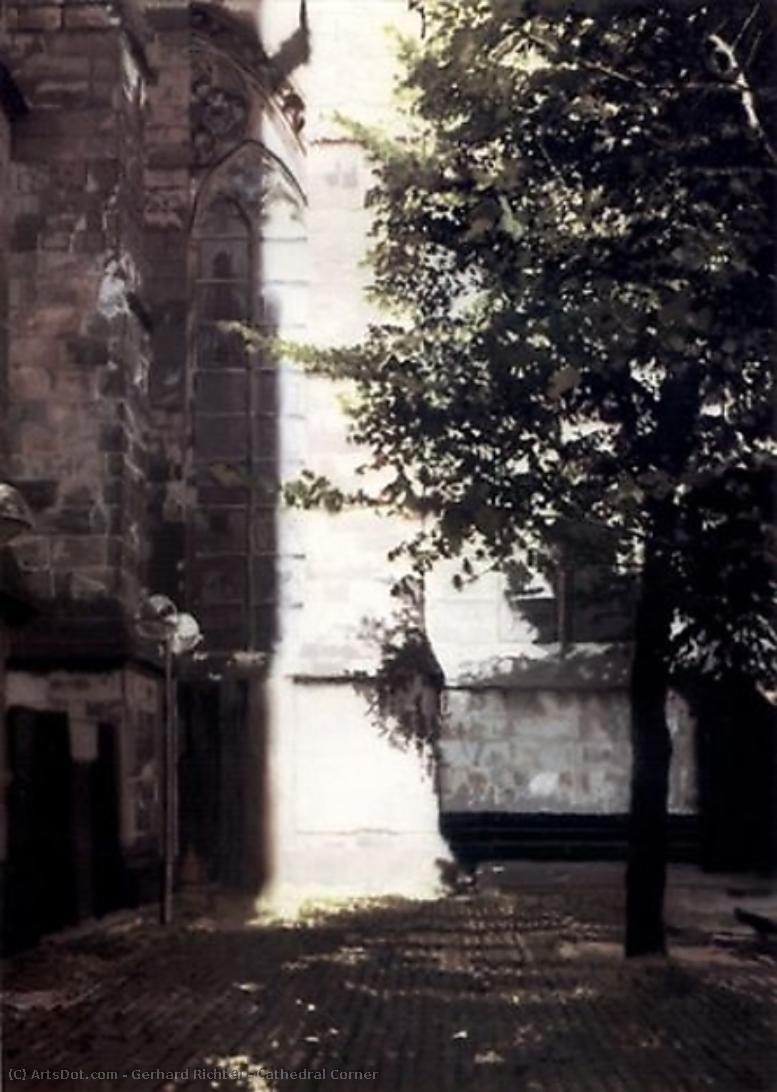
- Cathedral Corner
 Купи принт Купи картина
 Изпрати
 Сподели
 Детайли
 Добавяне към любими

 Изтегляне
 Подобни
 Рентгенова снимка
 Слайдшоу
Cathedral Corner
 Oil On Canvas
- WallArt
- Contemporary Realism
 1987
1987 122.0 x 87.0 cm
 Прочетете повече
Закупете дигитално изображение с висока резолюция и подобрени характеристики, значително по-добро от онлайн прегледа.
Всеки файл е щателно подготвен от нашите специалисти с помощта на съвременни инструменти и експертна ръчна ретуш. Гарантираме, че всяко изображение има изключителна яснота, прецизна цветова точност и фини детайли.
Окончателният файл се доставя по имейл в рамките на 72 часа, оптимизиран за незабавна употреба в професионални, редакционни и печатни среди. Това е същото качество, на което се доверяват водещи дизайнерски студия, издатели и галерии.
Дигитално изображение
Изтеглете файл с висока резолюция за лично показване, принтиране и творчески проекти.
Включено във всяка поръчка за дигитални изображения
Експресна дигитална доставка, гарантирана
Когато изберете OriginalUniqueArt.com, вие не получавате само изображение – вие получавате професионално подобрена дигитална творба, създадена с прецизност и подкрепена от гаранция за удовлетворение. Ето всичко, което автоматично се включва в вашата поръчка:

Бърза доставка по имейл
Вашето дигитално изображение с висока резолюция ще ви бъде изпратено по имейл в рамките на 72 часа от поръчката - готово за незабавно използване.

Дигитален файл с подобрено качество чрез изкуствен интелект
Вашата картина е професионално оптимизирана с помощта на усъвършенствани инструменти за изкуствен интелект и ръчна редакция, осигурявайки максимална детайлност, яснота и точност на цветовете.

Безплатна доживотна повторна доставка
Изгубили сте или сте премахнали файла си по погрешка? Не се притежнявайте – ще го изпратим отново на Вас по всяко време, безплатно.

Без такки за мито - никога
Всредите си веднага без мита, данъци или такси по доставка - дигителните приложения винаги са без данъчно освободени.

Гаранция за точност на цветовете
Гарантираме, че вашето дигитално изображение отразява оригиналните цветове възможно най-точно, използвайки професионални инструменти и управление на цветовете.

Гаранция за удовлетвореност от 60 дни
Ако не сте доволни от вашето дигилно изображение, ще го коригираме или ще възмедим 100% в рамките на 60 дни – без никакви въпроси.

100% Гаранция за връщане на пари.
Не сте удовлетворени? Получавате пълно възстановяване на сумата в рамките на 60 дни след получаването на вашия цифров файл – без никакви въпроси.

Отстъпки за големи поръчки
Купете 3 изображения, спестете 10% - Купете 5, спестете 15% - Купете 10+, спестете 20%. Отлично за творчески проекти, галерии и агенства.
Описание на колекционерския предмет
Cathedral Corner: A Meditation on Light and Texture by Gerhard Richter
Gerhard Richter’s “Cathedral Corner,” painted in 1987, isn't merely a depiction of a cathedral courtyard; it’s an embodiment of Richter’s signature approach to painting – a masterful blend of photographic observation and artistic abstraction that invites contemplation. The photograph itself captures the essence of this artwork, presenting a grainy image that subtly underscores the materiality of the original canvas. This deliberate imperfection isn't a flaw but rather integral to Richter’s aesthetic philosophy, mirroring the elusive nature of memory and perception.Composition and Perspective: Embracing Uncertainty
The painting’s vertical orientation immediately draws attention upwards towards the cathedral’s imposing spire, establishing a dominant visual hierarchy. Richter skillfully employs linear perspective to create depth, guiding the viewer's gaze from the courtyard floor toward the distant building. However, this perspectival rigor is tempered by an overarching sense of ambiguity—the blurring and softening characteristic of Richter’s technique deliberately obscures sharp edges and precise details. This stylistic choice reflects a broader preoccupation with capturing fleeting moments and conveying emotional resonance rather than striving for photographic realism. The placement of trees flanking the cathedral introduces organic forms that contrast with the geometric precision of architectural elements, symbolizing resilience and growth amidst grandeur.Technique and Materiality: Layers of Texture and Color
Richter’s technique is rooted in layering oil paint onto canvas—a process he often replicates using photographic prints as a guide. This method allows him to achieve remarkable tonal range, transitioning from deep shadows to luminous highlights that illuminate the cathedral façade. The grainy texture of the photograph itself subtly hints at the surface quality of the painting, reminding us that Richter isn’t simply reproducing an image but transforming it into something new. He achieves this textural effect through meticulous brushwork and glazing techniques—applying thin layers of paint over thicker undercoats to build up depth and luminosity.Symbolism and Emotional Resonance: Tranquility Amidst History
“Cathedral Corner” speaks volumes about the artist’s fascination with capturing atmosphere and emotion. The stillness of the courtyard scene evokes a profound sense of serenity, mirroring the enduring presence of faith and tradition symbolized by the cathedral itself. Richter's deliberate blurring contributes to this dreamlike quality, inviting viewers to engage in imaginative interpretation rather than passively accepting visual information. The absence of human figures amplifies this contemplative mood, emphasizing the grandeur of the architectural space and its connection to the natural world—a harmonious juxtaposition that encapsulates Richter’s artistic vision.Historical Context: Richter's Photorealistic Exploration
Painted during a period marked by significant social upheaval in Germany following reunification, “Cathedral Corner” represents a pivotal moment in Richter’s oeuvre. It exemplifies his pioneering exploration of photorealism combined with abstract expressionist principles—a stylistic fusion that distinguishes him from many of his contemporaries. This approach reflects Richter's broader engagement with the complexities of representing reality while simultaneously interrogating its subjective experience, cementing his legacy as one of the most influential artists of his generation.Биография на художника
A Life Shaped by Division: The Early Years and Artistic Formation of Gerhard Richter
Gerhard Richter’s life story is inextricably woven into the complex tapestry of 20th-century Germany, a nation perpetually grappling with its past. Born in Dresden in 1932, his childhood unfolded under the looming shadow of rising National Socialism, an experience that profoundly shaped his artistic sensibility and worldview. The displacement inherent to wartime – his family’s repeated moves during those turbulent years – instilled within him a deep-seated sense of uncertainty and a questioning spirit, qualities that would consistently inform his art for decades. The idyllic landscapes he first knew in Reichenau and Waltersdorf were soon shattered by conflict, leaving an indelible mark on his psyche. His father, while not actively involved in the Nazi party, navigated the challenging realities of life under authoritarian rule as a schoolteacher, while his mother nurtured within him a love for literature and music – a counterpoint to the prevailing ideological pressures. This duality—a pragmatic acceptance of circumstance alongside a yearning for cultural expression—became a defining characteristic of Richter’s artistic approach, a tension he continually explored in his work. He began formal training at the Dresden Academy of Fine Arts in 1951, initially immersed in the rigid tradition of socialist realism mandated by the East German state. Even within this constrained environment, however, a quiet rebellion simmered beneath the surface, fueled by a growing dissatisfaction with ideological constraints and a desire to push beyond prescribed boundaries.Escaping Constraints: Düsseldorf and the Exploration of Style
A pivotal moment arrived in 1961. Alongside his wife, Marianne Eufinger, Richter made the courageous decision to flee East Germany, seeking refuge in the vibrant and experimental art scene of Düsseldorf. This move represented a radical transformation in his artistic trajectory. The West German landscape offered an environment where experimentation wasn’t merely tolerated but actively encouraged – a stark contrast to the stifling control he had experienced in the East. In Düsseldorf, Richter encountered a dynamic community of artists, each grappling with their own questions about identity, representation, and the legacy of history. He quickly began dismantling the conventions of socialist realism, embarking on a period of intense exploration that would define his early mature work. This era was characterized by a fascinating oscillation between seemingly disparate approaches: from meticulously detailed photorealism, painstakingly recreating photographic images with astonishing precision, to abstract compositions bursting with bold colors and dynamic brushstrokes. Crucially, he collaborated closely with Sigmar Polke, forging a powerful artistic partnership that resulted in the coining of the term ‘Capitalist Realism’ – a deliberately ambiguous label reflecting their shared skepticism towards established artistic norms and their fascination with imagery from advertising and mass media. This period wasn't about finding *a* style; it was about questioning the very concept of stylistic coherence, embracing contradiction as a fundamental element of artistic expression.Blurring Boundaries: Photorealism, Abstraction, and the Power of Chance
Richter’s artistic vocabulary expanded dramatically throughout the 1960s and beyond, encompassing an astonishing range of techniques and themes. His photorealistic paintings – often based on family photographs or images from newspapers – are not simply copies of reality; they are intricate investigations into the nature of perception and representation. By rendering these images with a clinical detachment, he forces viewers to confront the inherent ambiguity of photographic truth—is it a faithful record, or merely an interpretation? Simultaneously, Richter delved deeper into abstraction, creating canvases layered with vibrant colors and gestural marks. These abstract works are often produced using a unique technique involving squeegees – tools typically used for cleaning windows – which he drags across the surface of the canvas, manipulating the paint in unpredictable ways. This embrace of chance and spontaneity became central to his artistic philosophy, allowing him to relinquish control and invite unexpected outcomes. His ‘Color Charts,’ systematic arrangements of colored squares, further challenged traditional notions of artistic expression, questioning the very definition of painting itself—is it about individual aesthetic preferences, or simply about exploring the inherent properties of color? Throughout this period, Richter consistently sought to disrupt established visual conventions, pushing the boundaries of what was considered “art.”The Weight of History and the Search for Meaning
Richter’s work is profoundly shaped by his personal history and the tumultuous events that unfolded in Germany during his formative years. The war left an indelible mark on his family—his aunt and uncles perished, and his father struggled to find employment after returning from imprisonment. This experience instilled within him a deep awareness of loss, displacement, and the fragility of human existence. He frequently revisited these themes in his art, not through overt political statements, but through subtle gestures and evocative imagery. His early photographs of Dresden—often depicting the ruins of the city—are particularly poignant, capturing both the devastation and the resilience of its inhabitants. Later works, such as his ‘Self-Portraits,’ explore the complexities of identity and memory, grappling with questions about personal history and collective trauma. Richter’s art is not simply a reflection of historical events; it's an attempt to grapple with their enduring impact on the human psyche—a constant negotiation between remembrance and oblivion.A Lasting Legacy: Influence and Critical Acclaim
Gerhard Richter’s influence on contemporary art is undeniable, solidifying his position as one of the most important artists of our time. His willingness to challenge conventions, his relentless experimentation with technique, and his profound engagement with historical and political themes have established him as a towering figure in the 20th and 21st centuries. He has consistently resisted easy categorization, defying attempts to confine his work within a single stylistic framework—a testament to his intellectual rigor and artistic independence. Richter’s paintings regularly command record prices at auction, reflecting not only their aesthetic value but also their cultural significance. Beyond the market, however, lies a deeper resonance: Richter's art speaks to the complexities of modern existence, grappling with issues of memory, identity, and the search for meaning in an increasingly fragmented world. He doesn’t offer easy answers; instead, he poses challenging questions, prompting viewers to confront their own preconceptions and engage in critical dialogue. His legacy is not simply about creating beautiful objects; it's about expanding the possibilities of painting itself—a constant exploration of perception, representation, and the very nature of art.
Герхард Рихтер
1932 - , Германия
Бързи факти
- Artistic Movement Or Style:
- Фотореализъм
- Абстракция
- Artists Or Movements Influenced By This Artist: ['Съвременни художници']
- Artists Who Influenced This Artist:
- Пикасо
- Арп
- Date Of Birth: 9 февруари 1932
- Full Name: Gerhard Richter
- Nationality: Германец
- Notable Artworks:
- Abstraktes Bild
- Gilbert
- Place Of Birth: Дрезден, Германия

