Преглед в реален мащаб
 Сподели
 Сподели
 Подробности
 Ръководство

 Изтегляне
 Подобни артикули
 Рентгенова снимка
 Слайдшоу
 Статистика
Young Boy with a Lamb


 Разгърни целия текст
Жикле / Художествен принт
Giclée печат или принт върху платно с музейно качество, бързо производство и гъвкави опции за завършен вид. ( Поръчайте ръчно рисувано репродукция на този колекционерски предмет Превключване към дигитално изображение)




P118B €10

P118H €10

P118W €10

P438Z €10

P508JH €12

P508YH €12

P805H €10

P805Z €10

P919BZ €10

P919G €10

P919XJ €10

P959ZH €10

P968JZ €12

W106C €8

W218G €10

W218JH €8

W218Y €10

W307PJ €10

W316G €10

W316PJ €8

W316Y €10

W398PJ €8

W4111J €10

W500HY €15

W500JH €15

W692G €12

W849H €8

W940BG €15

W953PJ €8




Изберете от нашите предварително зададени размери, които съответстват на оригиналните пропорции на произведението.

Въведете необходимата ширина и височина, за да паснат на вашата рамка или стена. Принтовете могат само да се изрязват, но никога не могат да бъдат по-големи от оригиналната картина, така че при размер с различен формат част от изображението ще бъде загубена. Преди да започнем печат, ще ви изпратим дигитален мок업 за одобрение. Изображението, показано на тази страница, не показва реалното изрязване — само мок업ът го показва.
Доставка по целия свят () в рамките на 2 седмици вместо стандартните 4/5 седмици. (24 Октомври)

Безплатна експресна доставка по целия свят

Висококачествено ленено платно

Пълно застраховане на доставката

Гаранция за възстановяване на митнически такси

Гаранция за пълно съответствие на цветовете

Политика за връщане в рамките на 100 дни (само при дефекти)

100% Гаранция за връщане на сумата

Отстъпка при поръчка на повече произведения
 Опцията със стъкло е налична само за размери под 110 см

Young Boy with a Lamb
Жикле / Художествен принт
Размер на репродукцията
-


Крайна цена
€ 70
A Moment of Profound Connection: Franz Marc’s *Young Boy with a Lamb*
Franz Marc's 1911 painting, *Young Boy with a Lamb*, isn’t merely a depiction of childhood innocence; it’s a profound meditation on the relationship between humanity and the natural world—a cornerstone of Expressionist philosophy. Born in Munich in 1880, Marc’s artistic journey was deeply intertwined with spiritual questioning, initially explored through theological studies before finding its ultimate expression in vibrant color and emotionally charged imagery. This particular work embodies that core belief: a yearning to capture not just what is seen, but the *feeling* of being connected to something larger than oneself. The painting immediately draws the viewer into a serene coastal scene, dominated by the simple yet powerful image of a naked boy tenderly embracing a lamb. The beach itself isn’t merely a backdrop; it's imbued with a sense of quiet contemplation, its gentle waves suggesting an endless horizon and a release from worldly concerns.
Expressionist Techniques: Color as Soul
Marc’s masterful use of color is central to the painting’s impact. He abandons realistic representation in favor of a palette saturated with intense hues – deep blues, vibrant greens, and fiery yellows—that evoke not just visual sensation but also emotional resonance. The boy and the lamb are rendered with simplified forms, almost bordering on abstraction; their outlines soften, blurring the lines between figure and ground. This deliberate distortion isn’t an error of technique, but a conscious choice to prioritize feeling over precise detail. Marc sought to express the *inner* state of being, translating spiritual concepts into visual language. The bold strokes and layered application of paint create a dynamic surface that seems to shimmer with life, mirroring the energy of the natural world he so admired.
Symbolism and Spiritual Resonance
The symbolism within *Young Boy with a Lamb* is rich and multilayered. The nakedness of the boy represents vulnerability, innocence, and a connection to primal instincts—a return to a state before societal constraints. The lamb, traditionally associated with Christ, embodies purity, gentleness, and sacrifice. Their intimate embrace speaks volumes about this fundamental harmony between humanity and nature. Notice also the two birds soaring above – they represent freedom, hope, and perhaps even divine guidance. The boat on the horizon subtly introduces a hint of human presence, acknowledging our place within the larger ecosystem without disrupting the painting’s core message of tranquility. Marc frequently explored themes of animal spirituality, believing that animals possessed a deeper understanding of life's essence than humans often do. This work is a testament to that belief.
A Legacy in Modern Art
*Young Boy with a Lamb* stands as a pivotal piece within the Expressionist movement, alongside works by artists like Wassily Kandinsky and Edvard Munch. Marc’s exploration of color and emotion profoundly influenced subsequent generations of artists. His work resonates powerfully today, offering a poignant reminder of our connection to the natural world—a connection increasingly vital in our modern lives. The Lehmbruck Museum in Germany continues to showcase works reflecting this movement, while reproductions like those offered by OriginalUniqueArt.com allow viewers to experience Marc’s evocative vision firsthand. Consider how this painting's emotional depth and symbolic richness can enrich your own space – a vibrant addition that speaks volumes about the beauty and fragility of our world.
Въпроси и отговори
Показва ли "Young Boy with a Lamb" силен светлотеневи контраст?
„Young Boy with a Lamb“ на Франц Марк демонстрира Bold контраст между светлите и тъмните си зони.
Какво е общото настроение на „Young Boy with a Lamb“ на Франц Марк?
"Young Boy with a Lamb" има Calm атмосфера.
Каква е яркостта на „Young Boy with a Lamb“ на Франц Марк?
Цветовете на „Young Boy with a Lamb“ показват Gentle Luminance яркост.
Биография на художника
A Life Immersed in Color and Spirit
Franz Moritz Wilhelm Marc, born in Munich in 1880, was a painter whose brief but intensely focused career irrevocably altered the course of German Expressionism. His story is one of profound spiritual seeking translated into a vibrant visual language, a quest to understand the essence of life through the purity he found in the natural world—particularly within the animal kingdom. Initially influenced by his father, Wilhelm Marc, a landscape painter, young Franz’s artistic path wasn't immediately certain. He briefly considered theology, grappling with questions of faith and existence before ultimately dedicating himself to art at the Academy of Fine Arts in Munich. These early explorations into religious thought would remain deeply embedded within his work, shaping his belief that art could be a conduit for spiritual experience. His academic training provided him with technical foundations, but it was encounters with the works of Vincent van Gogh during visits to Paris that truly ignited his artistic vision. Van Gogh’s emotive use of color and raw expression resonated profoundly with Marc, liberating him from conventional techniques and setting him on a path toward a more subjective and emotionally charged style.The Blue Rider and a New Artistic Vision
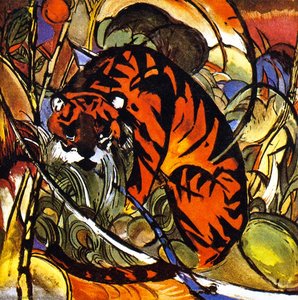
Marc's artistic development wasn’t solitary; it flourished within the dynamic context of early 20th-century Munich. He experimented with various artist groups, including the Neue Künstlervereinigung München, before co-founding *Der Blaue Reiter* (The Blue Rider) in 1911 alongside Wassily Kandinsky. This wasn’t merely a group or an exhibition series; it was a philosophical and artistic revolution. *Der Blaue Reiter* sought to move beyond mere representation, aiming instead to express inner spiritual truths through abstraction and symbolic color. The journal of the same name became a platform for disseminating these ideas, showcasing not only their own work but also that of other forward-thinking artists and exploring diverse cultural influences from folk art to primitive sculpture. Marc’s contributions during this period were pivotal. He moved away from depicting landscapes as static scenes, instead focusing on animals—horses, deer, foxes—as vessels of spiritual energy. These weren’t simply animal portraits; they were symbolic representations of innocence, harmony, and a connection to the natural world that he believed humanity had lost. The influence of Robert Delaunay’s exploration of abstract forms and vibrant colors further propelled Marc toward simplification and heightened emotional expression in his work. Paintings like *The Tiger* (1912) and *Red Deer* (1912) exemplify this shift, showcasing bold color choices and a growing focus on the inherent qualities of his subjects rather than realistic depiction.Symbolism, Color, and the Essence of Being
Marc’s artistic style is immediately recognizable for its distinctive use of color and form. He didn't employ color descriptively; instead, he imbued it with symbolic meaning. Blue represented spirituality and masculinity, yellow signified joy and femininity, and red embodied violence and materiality. These weren’t arbitrary choices but a carefully constructed system designed to convey specific emotional and philosophical ideas. His animals aren’t merely subjects; they are embodiments of these concepts. The simplification of forms—reducing figures to their essential shapes—further emphasized the underlying spiritual essence he sought to capture. *The Tower of Blue Horses* (1913), sadly lost during World War II, is perhaps the most iconic example of this approach, a powerful and evocative composition that encapsulates his artistic vision. He believed animals possessed an inherent purity and connection to nature that humans had forfeited through societal constraints and intellectualization. By portraying them with such reverence and symbolic weight, Marc sought to remind viewers of this lost harmony and inspire a deeper appreciation for the natural world. His work wasn’t about depicting *what* he saw but rather *how* he felt—a deeply personal and spiritual response to his surroundings.Influences and Development
Marc's artistic journey was shaped by a confluence of influences. Initially, his father’s landscape paintings instilled in him an appreciation for the beauty of nature. However, it was his exposure to Vincent van Gogh’s expressive brushwork and emotional intensity that truly transformed his approach. Van Gogh’s willingness to prioritize feeling over objective representation resonated deeply with Marc's own spiritual inclinations. Furthermore, his time in Paris exposed him to the innovations of Impressionism and Post-Impressionism, particularly the work of Paul Gauguin, who similarly sought to infuse symbolism into his art. The encounter with Wassily Kandinsky within *Der Blaue Reiter* proved crucial, fostering a shared belief in the power of abstraction to convey spiritual truths. Marc’s artistic style evolved over time, moving from a more academic style to one characterized by simplified forms, bold colors, and symbolic imagery. He experimented with various techniques, including cloisonné enameling, reflecting his interest in exploring new modes of expression.A Tragic End and Lasting Legacy
The outbreak of World War I in 1914 dramatically altered Marc’s life and artistic trajectory. Despite seeking exemption due to his status as an artist, he was drafted into the German army, serving as a cavalryman. The horrors of war deeply affected him, yet even amidst the chaos, he continued to paint, finding solace and meaning in his art. Tragically, Franz Marc died on March 4, 1916, at the Battle of Verdun, a devastating loss for the art world. His untimely death cut short a career brimming with potential, but it also cemented his place as a pivotal figure in modern art history. His work continues to resonate today, influencing generations of artists and captivating audiences with its emotional depth and spiritual resonance. Marc’s paintings are exhibited in major museums worldwide, including the Lenbachhaus in Munich, which holds an extensive collection of his work. He is remembered not only as a pioneer of German Expressionism but also as a visionary artist who dared to explore the profound connection between art, spirituality, and the natural world—a legacy that continues to inspire awe and contemplation. His artistic vision remains a testament to the power of art to transcend the material realm and touch upon something deeper within the human spirit.
Франц Марк
1880 - 1916 , Германия
Бързи факти
- Artistic Movement Or Style: Хуманизъм и израз
- Artists Or Movements Influenced By This Artist:
- Израз
- БлаUER Reiter
- Artists Who Influenced This Artist:
- Ван Гог
- Делаunay
- Date Of Birth: 8 февруари 1880 г.
- Date Of Death: 4 март 1916 г.
- Full Name: Франц Moritz Wilhelm Marc
- Nationality: Германец
- Notable Artworks:
- Тирол
- Флок на овце II
- Търпеливо животно
- Place Of Birth: Мюнхен, Германия
Свързани статии
The Raw Emotion of Expressionism: A Deep Dive into its History, Characteristics & Enduring Influence
Explore the raw emotion of Expressionism with OriginalUniqueArt. Discover its history, key artists like Kirchner & Munch, and lasting influence on modern art. Expert insights for collectors & enthusiasts.

Franz Marc: Expressionism, Spirituality & the Animal Symbolism of a Modern Master
Explore the profound world of Franz Marc's Expressionist paintings. Discover his spiritual connection to animals, innovative use of color, and lasting impact on modern art history. Learn more at OriginalUniqueArt.
Суровата емоция на експресионизма: Революция в изкуството от 20-ти век
Разгледайте революцията в изкуството от 20-ти век – експресионизма. Анализ на ключови художници, влияние и инвестиционен потенциал за колекционери.

Топ 10 шедьовъра на Германския Експресионизъм – Изкуство за Вашия Дом от OriginalUniqueArt
Разгледайте топ 10 шедьовъра на Германския Експресионизъм – Munch, Kirchner, Kandinsky и други. Открийте историите зад картините, техниките и емоциите им. Музейно качество репродукции за Вашия дом от OriginalUniqueArt.com! Разгледайте пълната колекция онлайн.
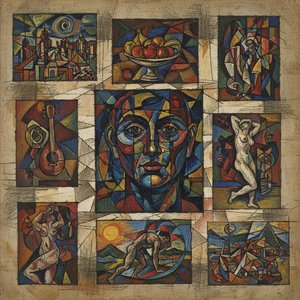
Топ 10 шедьовъра на Кубизма и Експресионизма – изкуство за вашия дом от OriginalUniqueArt
Разгледайте топ 10 шедьовъра на Кубизма и Експресионизма – Picasso, Braque, Kandinsky и други. Открийте историите зад тези емблематични картини и преобразете дома си с изкуство от OriginalUniqueArt.com! Разгледайте пълната колекция онлайн.