Преглед в реален мащаб
 Изпрати
 Сподели
 Детайли
 Ръководство

 Изтегляне
 Подобни артикули
 Рентгенова снимка
 Слайдшоу
 Въпроси и отговори
 Статистика
Mountain Goats

- 74.0 x 59.0 cm


 Прочети повече
Жикле / Художествен принт
Giclée печат или принт върху платно с музейно качество, бързо производство и гъвкави опции за завършен вид. ( Купете ръчно рисувана картина Превключване към дигитално изображение)




P118B €10

P118H €10

P118W €10

P438Z €10

P508JH €12

P508YH €12

P805H €10

P805Z €10

P919BZ €10

P919G €10

P919XJ €10

P959ZH €10

P968JZ €12

W106C €8

W218G €10

W218JH €8

W218Y €10

W307PJ €10

W316G €10

W316PJ €8

W316Y €10

W398PJ €8

W4111J €10

W500HY €15

W500JH €15

W692G €12

W849H €8

W940BG €15

W953PJ €8




Изберете от нашите предварително зададени размери, които съответстват на оригиналните пропорции на произведението.

Въведете необходимата ширина и височина, за да паснат на вашата рамка или стена. Принтовете могат само да се изрязват, но никога не могат да бъдат по-големи от оригиналната картина, така че при размер с различен формат част от изображението ще бъде загубена. Преди да започнем печат, ще ви изпратим дигитален мок업 за одобрение. Изображението, показано на тази страница, не показва реалното изрязване — само мок업ът го показва.
Доставка по целия свят () в рамките на 2 седмици вместо стандартните 4/5 седмици. (11 Ноември)

Безплатна експресна доставка по целия свят

Висококачествено ленено платно

Пълно застраховане на доставката

Гаранция за възстановяване на митнически такси

Гаранция за пълно съответствие на цветовете

Политика за връщане в рамките на 100 дни (само при дефекти)

100% Гаранция за връщане на сумата

Оферта за отстъпка при поръчка на повече бройки
 Опцията със стъкло е налична само за размери под 110 см

Mountain Goats
Жикле / Художествен принт
Размер на репродукцията
-


Обща цена
€ 73
A Symphony of Color and Spirit: The Essence of Franz Marc’s Mountain Goats
In the pantheon of German Expressionism, few works capture the raw, spiritual pulse of nature as intimately as Franz Marc’s "Mountain Goats." Painted in 1913, this masterpiece serves as a profound window into the artist's soul, moving far beyond a mere depiction of alpine life to offer a visionary experience. At its heart, the painting is an exploration of the primal forces that govern our world. Marc, a pioneer of the Der Blaue Reiter movement, sought to strip away the superficial layers of reality to reveal the vibrant, energetic essence beneath. Through a deliberate and bold palette dominated by earthy reds, luminous yellows, and deep, soulful blues, he creates a landscape that feels less like a physical place and more like a spiritual manifestation.
The technique employed in this work is nothing short of visceral. Marc utilizes a thick impasto, applying oil paint with such density that the canvas itself begins to pulsate with life. This tactile approach creates a textured surface where light and shadow dance across the ridges of the brushstrokes, lending an incredible sense of movement to the scene. His style aligns beautifully with Synaesthetic Expressionism, where color is not merely decorative but functions as a primary language of emotion. To witness this painting is to feel the weight and warmth of the pigment, making it an extraordinary centerpiece for any collection that values the physical presence of art.
Symbolism and the Mythic Landscape
Beyond its striking colors, "Mountain Goats" is steeped in a complex layer of mythological and symbolic meaning. The central figures—often interpreted through the lens of Marc’s fascination with the duality of existence—evoke a sense of the archetypal. The presence of figures that hint at winged or horned beings suggests a struggle between the earthly and the divine, or perhaps the tension between instinct and consciousness. This reflects the broader Expressionist preoccupation with confronting existential questions during the turbulent years leading up to World War I. Marc famously believed that animals possessed a purity and spiritual clarity that humanity had lost; thus, his depiction of these creatures is an act of reverence for a more innocent, uncorrupted state of being.
Every element within the composition, from the sharp, spiky mountain peaks to the subtle inclusion of symbolic objects like clocks or vessels, contributes to a narrative of cosmic interconnectedness. The painting invites the viewer to look past the literal and engage with the metaphorical. For the discerning collector or interior designer, this depth of meaning provides a continuous source of contemplation. It is a work that does not merely sit upon a wall but actively engages the room, offering a sense of profound mystery and intellectual stimulation.
An Invitation to Transform Your Space
For those looking to infuse their living or professional environments with inspiration, a high-quality reproduction of "Mountain Goats" offers an unparalleled opportunity. The painting’s dynamic energy and rich, saturated tones make it a versatile choice for sophisticated interiors, ranging from modern minimalist galleries to classic, richly textured studies. It serves as a focal point that commands attention while simultaneously providing a sense of grounded, natural beauty.
Owning a piece that captures the spirit of Franz Marc is an investment in emotional resonance. Whether you are drawn to its historical significance within the German Expressionist movement or simply captivated by its rhythmic use of color, this artwork promises to transform any space into a sanctuary of thought and feeling. It is more than a decoration; it is a window into a world where color and spirit are one.
Въпроси и отговори
Каква е темата на "Mountain Goats" и каква атмосфера предава?
„Mountain Goats“ на Франц Марк съчетава mythology, animal symbolism, religious imagery, color palette, horned figure, trumpet motif, symbolic composition с Mystical атмосфера.
В коя година и към кое художествено направление принадлежи "Mountain Goats"?
„Mountain Goats“ на Франц Марк е датирана със 1913 г. и принадлежи към German Expressionism.
В коя година е създадено „Mountain Goats“ на Франц Марк?
„Mountain Goats“ на Франц Марк е създадена през 1913.
Биография на художника
Ранен живот, семейство и обучение
Франц Марк е роден в Мюнхен, Германия, в семейство, в което визуалният език на пейзажа вече е напълно утвърден. Неговият баща, Вилхелм Марк, е работил като професионален пейзажист, осигурявайки му директно, макар и не напълно сигурно, въведение в механиката на изкуството. Тази фамилна връзка означаваше, че инструментите на занаята са били налични от самото начало, но пътят на Марк не е бил права линия от наследство към платно. Преди да се посвети на живота на живописец, той прекарва време в борба с теологията – период на духовно търсене, който по-късно ще диктува интензивността на неговото визуално творчество. Именно това напрежение между свещеното и материалното придава на по-късните му работи тяхната специфична, тежка тежест.
Неговото формално обучение започва през 1900 г., когато се записва в програмата по изкуствата в Людвиг-Максимилианс Университет в Мюнхен. Тази академична основа не е била просто формалност; тя осигурява техническата строгост, необходима за последващото раз dismantling на традиционното представително изкуство. След престоя си в Мюнхенския университет, той преминава към Академията по изкуства в Мюнхен. Тази последователност от обучения го превежда от общите академични принципи към специализирания, интензивен фокус, необходим за радикалните промени, които той по-късно ще оглави. Той не е продукт на случаен талант, а на съзнателно, структурирано потапяне в формалните традиции на Мюнхен.
Артистично развитие и влияния
Ранните творби на Франц Марк отразяват тежестта на академичната живопис и импресионизма. Тези традиционни основи осигуряват техническата структура, която той по-късно ще разгради. Престоят му във Франция, по-специално по време на посещенията в Париж през 1903 и 1907 г., действа като катализатор за това откъсване. Именно в Париж той се сблъсква с творчеството на Винсент ван Гог. Това среща предостави необходимата алтернатива на ригидните структури на неговото обучение, предлагайки начин за използване на цвета като директен инструмент за емоционално изразяване, а не просто като средство за описание.
Преходът към абстракция не е внезапен скок, а пресметнат отговор на еволюиращия визуален език на началото на XX век. Изследванията на Робер Делоне в областта на абстрактните форми и интензивните колоритни палитри предоставят модел за собственото движение на Марк към опростяване. Той се отдалечава от буквалното представяне на пейзажа, стремясь вместо това да разголи субектите до техните същностни форми. Този процес му позволява да премине отвъд повърхността на природния свят, за да достигне до по-субективен и наситено експресивен стил на изразяване.
Синият странник и експресионизмът
Преходът от обикновено представителство към търсене на духовната истина дефинира най-значимото приносно дело на Франц Марк към модернизма. Преди да установи собственото си движение, той експериментира с „Новата творческа организация на художниците в Мюнхен“ (Neue Künstlervereinigung München). Този период на проби и грешки е бил необходим, за да се освободи от академичните ограничения на времето си. Към 1911 г. Марк съосновава Der Blaue Reiter заедно с Василий Кандински. Това не е било просто социален клуб, а радикално отклонение от съществуващия статус-кво. Групата използва списанието Der Blaue Reiter, за да наложи специфична програма: използването на абстракция и символичен цвят за изразяване на вътрешните духовни реалности. Те се стремеха да преминат отвъд повърхността на физическия свят, за да достигнат до нещо по-същностно.
Това движение представляваше директен вызов на индустриалната, сива реалност на началото на 20-ти век. Марк и неговите колеги търсеха визуален език, който да може да общува с душата, а не само с окото. Те се насочиха към стил, в който цветът функционира като духовна честота. Тук не ставаше въпрос за изобразяване на това, което е видяно, а за улавяне на вътрешната същност на обекта. Фокусът се измести от външния пейзаж към ритмичната, символична интерпретация на живота. Този период бележи момента, в който немският експресионизъм откри своя най-мощен, нелитерален глас.
Техника и символичен стил
Визуалният език на Франц Марк се опира на строга и съзнателна система от цветови символи, която отхвърля описателната точност в полза на духовното измерение. Той не използва нюансите, за да имитира естествения свят, а за да очертае духовна йерархия. В неговата палитра синьото олицетворява мъжествеността и духовността, жълтото – женствеността и радостта, а червеното – материалността и насилието. Това не е просто случатеен естетичен избор, а структурирана опит за предаване на вътрешните истини чрез външния пигмент. Чрез премахването на буквалното представяне, той принуждава зрителя да се осъзнае с емоционалната тежест на самия цвят.
Техниката му се развива в посока на радикално опростяване на формата. Той превръща сложните биологични структури в съществени, ритмични форми. Този редукционизъм, съчетан с дръзки, ненатуралистични цветове, създава усещане за напрежение между субекта и неговата среда. Използвайки къси, прецизни мазки и техниката импасто, за да изгради текстура, той придава на своите композиции физическо присъствие, което контрастира с абстракцията на неговите образи. Резултатът е стил, в който животното вече не е просто същество от плът, а съд за специфична, кодирана енергия.
- Кулата от сини коне (1913)
- Коровата свят (1913)
- Лисиците (1913)
Ключови творби и предмет на изследване
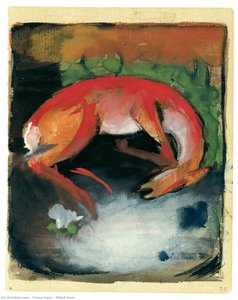
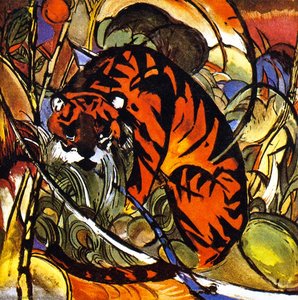
Зрялото творчество на Франц Марк е фокусирано върху животинския свят. Той се отдалечава от статичните пейзажи, за да се съсредоточи върху същества като коне, елени и лисици, които в неговите ръце не са просто обект на биологично изследване, а съсъдове за духовна енергия. През 1911 г. той създава Големите сини коне — произведение, което утвърждава неговата пристрастеност към не-натуралистичния цвят. Към 1912 г. неговите композиции стават по-агресивни и структурирани, което се наблюдава в картините Тигър и Червеният елени. Тези живописни шедьоври демонстрират прехода към улавянето на същинските качества на неговите субекти чрез опростени, ритмични форми.
Еволюцията на неговия стил разкрива ясна траектория към абстракцията. Творбата му от 1913 г. Лисиците отразява влиянието на френския кубизъм, използвайки кристална композиция за раздробяване на формата. Този подход достига своя връх в Коровата свят, писана през 1913 г., където субектът се превръща в символ на космическото съществуване. Изкуството на Франц Марк се опира на специфична цветна логика: синьото за мъжество и духовност, жълтото за женственост и радост, а червеното за насилие и материалност. Тази система превръща всеки портрет на животно във философско послание, а не в буквално изображение.
- Големите сини коне (1911)
- Тигър (1912)
- Червеният елени (1912)
- Лисиците (1913)
- Коровата свят (1913)
Потечането на неговата кариера беше рязко прекъснато от началото на Първата световна война през 1914 г. Въпреки статуса си на художник, той е призован в германската армия, където служи като кавалерист. Конфликтът налага болезнен преход от неговото търсене на духовна абстракция към мрачните реалности на военната служба. Дори сред хаоса на войната, той продължава да рисува, опитвайки се да открие смисъл чрез своята четка, докато светът около него се разпада на части.
Животът му завършва на 4 март 1916 г., по време на битката при Верд. Тази смърт настъпва две години след избухването на войната. Той е убит от шрапнел – насилствена гибел, която прекъсва кариера, дефинирана от търсенето на чистота. Внезапността на неговата смърт при Верд оставя празнота в развитието на немския експресионизъм, спирайки неговото движение към още по-радикална абстракция, преди той да успее да достигне нейното логическо завършване.
Наследство и влияние
Франц Марк остава централна фигура в историята на немския експресионизъм. Неговото влияние се измерва чрез това как неговият подход към цвета и формата измести фокуса на модерното изкуство от външното наблюдение към вътрешната духовна истина. Въпреки че кариерата му е прекъсната преждевременно, неговото влияние продължава да живее чрез постоянното присъствие на неговите произведения в големите музеи по целия свят. Способността му да дестилира същността на животните в символични, ненатуралистични форми промени траекторията на живописното изкуство в началото на 20-ти век.
Политическият пейзаж на 30-те години на миналия век се опита да изтрие този принос. Нацисткият режим класифицира Марк като „дегенеративен“ художник, като го включи в по-широка кампания за потискане на модернизма. Въпреки тази систематична кампания, по-голямата част от творчеството му оцеля през опустошенията на Втората световна война. Това оцеляване гарантира, че неговият визуален език остава достъпен за съвременната публика. Нените творби продължават да резонират, защото предлагат директен, емотивен отговор към природата, който избягва оковите на буквалното представяне.
- Лисиците (1913)
- Коровата свят (1913)
- Червеният елент (1912)
Къде могат да се видят произведенията днес
За да се докоснете до физическата реалност на визията на Франц Марк, трябва да потърсите специфични институционални колекции, които са съхранили неговото творчество през турбулентното време на 20-ти век. Музеят на Франц Марк в Кохел ам Зее, Германия, служи като основно място за неговото наследство, съхранявайки над 150 от неговите произведения. Тази колекция предлага директен поглед върху развитието на художника в контекста на баварския пейзаж. В Мюнхен Lenbachhaus поддържа обширна колекция, предлагаща концентриран поглед върху неговия принос към немския експресионизъм. Staatsgalerie Moderner Kunst в Мюнхен също притежава значими произведения, гарантирайки, че неговото присъствие остава централно за историята на изкуството на града.
Влиянието му се простира далеч извън границите на Германия, като големи международни музеи притежават негови платна. В Съединените щати Арт институтът в Чикаго притежава Зачарованата мелница. Тези разпръснати по света локации позволяват глобално разбиране за неговото въздействие върху модерната абстракция. Виждането на тези творби на живо разкрива истинската текстура на неговите мазки и специфичната интензивност на неговия цветови избор, които често губят своята тежест при дигиталните репродукции.
- Зачарованата мелница (1913)
- Кулата от сини коне (1913)
- Елен II (1912)
- Тигърът (1912)

Франц Марк
1880 - 1916 , Германия
Бърза информация
- Artistic Movement Or Style: Немски експресионизъм
- Artists Or Movements Influenced By This Artist: ['Немски експресионизъм']
- Artists Who Influenced This Artist:
- Винсент ван Гог
- Робер Делане
- Date Of Birth: 1880
- Date Of Death: 1916
- Full Name: Франц Мориц Вилхелм Марк
- Nationality: Германец
- Notable Artworks:
- Големите сини коне
- Тигър
- Червелен елен II
- Бикът-свят
- Place Of Birth: Мюнхен, Германия
Свързани статии

Franz Marc: Expressionism, Spirituality & the Animal Symbolism of a Modern Master
Explore the profound world of Franz Marc's Expressionist paintings. Discover his spiritual connection to animals, innovative use of color, and lasting impact on modern art history. Learn more at OriginalUniqueArt.
The Visceral Cry of a Nation: Exploring Emotion & Distortion in German Expressionism
Explore the powerful world of German Expressionism with OriginalUniqueArt. Discover Kirchner, Nolde & Die Brücke's emotive masterpieces. Learn about this pivotal art movement and its lasting impact on modern art.

Топ 10 шедьовъра на Германския Експресионизъм – Изкуство за Вашия Дом от OriginalUniqueArt
Разгледайте топ 10 шедьовъра на Германския Експресионизъм – Munch, Kirchner, Kandinsky и други. Открийте историите зад картините, техниките и емоциите им. Музейно качество репродукции за Вашия дом от OriginalUniqueArt.com! Разгледайте пълната колекция онлайн.

Unmasking Emotion: A Journey Through the Raw Power and Visceral Beauty of German Expressionism
Explore the raw emotional power of German Expressionism. From Kirchner to Die Brücke, discover how artists used distortion and vibrant color to unmask the human psyche. A deep dive into art history for the discerning collector and enthusiast.
Животински свят в изкуството: Вдъхновяващи форми за вашия дом
Открийте символиката на животните в изкуството и как да внесете хармония в дома си с животински мотиви. Експертни съвети и вдъхновение от историята на изкуството.