

 Преглед в реален мащаб
 Сподели
 Сподели
 Подробности
 Ръководство

 Изтегляне
 Подобни артикули
 Рентгенова снимка
 Слайдшоу
 Статистика
Zinc Yellow
 Oil On Canvas
- WallArt
- Abstract Expressionism
 1959
1959- Modern
 236.0 x 201.0 cm
 Chrysler Museum of Art
 Разгърни целия текст
Изкуството, представено на тази страница, е защитено от законите за авторско право, което означава, че не можем законно да създаваме или продаваме идентични репродукции. Тази защита се прилага съгласно международни споразумения като Бернска конвенция и от националното законодателство, включително разпоредбите на Закон за авторското право на САЩ – Раздел 17.
Този метод е напълно съвместим с законите за авторско право, тъй като не включва копиране или дублиране на защитеното произведение. Вместо това става въпрос за творческа реинтерпретация – нова картина, която е вдъхновена от оригинала, но не е идентична с него.
Жикле / Художествен принт
Giclée печат или принт върху платно с музейно качество, бързо производство и гъвкави опции за завършен вид. ( Поръчайте ръчно рисувано репродукция на този колекционерски предмет Превключване към дигитално изображение)




P118B €10

P118H €10

P118W €10

P438Z €10

P508JH €12

P508YH €12

P805H €10

P805Z €10

P919BZ €10

P919G €10

P919XJ €10

P959ZH €10

P968JZ €12

W106C €8

W218G €10

W218JH €8

W218Y €10

W307PJ €10

W316G €10

W316PJ €8

W316Y €10

W398PJ €8

W4111J €10

W500HY €15

W500JH €15

W692G €12

W849H €8

W940BG €15

W953PJ €8




Изберете от нашите предварително зададени размери, които съответстват на оригиналните пропорции на произведението.

Можете да въведете собствени размери, за да паснат на конкретна рамка или пространство. Ако избраният от Вас размер не съвпада с пропорциите на оригиналното изображение, ние ще изрежем произведението или ще разширим изображението с огледален или едноцветен ръб. Дигитален макет ще бъде изпратен за Ваше одобрение преди започването на производството.
Моля, имайте предвид, че предпрегледът на екрана не отразява реалното изрязване или разширяване. Само макетът ще покаже точно финалната композиция.
Въпреки че са налични персонализирани размери, препоръчваме да изберете размер от предварително дефинирания списък, за да запазите оригиналните пропорции.
Доставка по целия свят () в рамките на 2 седмици вместо стандартните 4/5 седмици. (13 Октомври)

Безплатна експресна доставка по целия свят

Висококачествено ленено платно

Пълно застраховане на доставката

Гаранция за възстановяване на митнически такси

Гаранция за пълно съответствие на цветовете

Политика за връщане в рамките на 100 дни (само при дефекти)

100% Гаранция за връщане на сумата

Отстъпка при поръчка на повече произведения
 Опцията със стъкло е налична само за размери под 110 см

Zinc Yellow
Жикле / Художествен принт
Размер на репродукцията
-


Крайна цена
€ 69
A Symphony of Contrast: The Raw Power of Zinc Yellow
In the pantheon of Abstract Expressionism, few works command the immediate, visceral attention of a room quite like Franz Kline’s Zinc Yellow. Completed in 1959, this monumental canvas serves as a breathtaking masterclass in reductive abstraction, where the boundaries between color and form dissolve into a singular, energetic event. At first glance, the viewer is met with an expansive, luminous field of yellow that seems to vibrate against the stark, structural interruptions of dark grey and black. It is not merely a painting; it is a physical presence. The work eschews traditional subject matter in favor of pure, unadulterated movement, inviting the observer to move beyond the search for recognizable figures and instead surrender to the rhythmic tension of the brushstrokes themselves.
The brilliance of this piece lies in its deceptive simplicity. While it may appear as a spontaneous outburst of emotion—a hallmark of the Action Painting movement—the composition is actually a result of profound, deliberate planning. Kline often utilized small oil studies to map out the architectural weight of his larger works, ensuring that each jagged stroke and heavy block of pigment achieved a perfect, precarious balance. This tension between spontaneity and control creates an intoxicating visual experience; the eye is pulled diagonally across the canvas, caught in a dance between the light-filled yellow expanse and the gravity-defying black forms that anchor the composition.
The Architecture of Emotion: Technique and Texture
To stand before a reproduction of Zinc Yellow is to witness the tactile legacy of the New York School. Kline was a master of impasto, applying oil paints with such density that the canvas transforms into a topographical map of artistic struggle. The thick, sculptural layers of pigment create palpable ridges and valleys, catching the light and casting minute shadows that change as one moves around the piece. This heavy application of paint lends the work a sense of permanence and weight, making it an ideal centerpiece for sophisticated interiors where texture is as vital as color.
The palette is intentionally restrained, yet its impact is maximalist. By limiting his vocabulary to the high-contrast relationship between yellow, black, and white, Kline achieves a clarity that transcends time. The white highlights do not merely sit atop the dark masses; they puncture them, acting as breaths of light that prevent the heavy blacks from becoming stagnant. For the collector or interior designer, this piece offers a unique versatility. Its bold, graphic nature allows it to anchor a minimalist modern space with authority, while its rich, painterly texture provides a necessary warmth and soul to more austere architectural settings.
A Legacy of Movement and Modernity
Historically, Zinc Yellow emerged from a period of intense artistic revolution. As part of the New York School, Kline worked alongside titans like Jackson Pollock and Willem de Kooning, yet he carved out a niche that was uniquely his own. While others sought total abstraction through drips and splatters, Kline utilized the language of structural geometry to convey emotional intensity. His work carries the echoes of the Old Masters—the dramatic chiaroscuro of Rembrandt and the commanding presence of Velázquez—reimagined for a mid-century world grappling with new forms of expression.
Ultimately, the enduring appeal of this masterpiece lies in its ability to evoke a sense of emotional release. There is a primal energy within these strokes that resonates with the human spirit, reflecting both the chaos and the underlying order of our existence. Whether viewed as a study in color theory or an exploration of gestural freedom, Zinc Yellow remains a profound statement of modern identity. It is a work that does not just decorate a wall; it transforms an environment, offering a window into the vigorous, searching heart of one of art history's most compelling visionaries.
Въпроси и отговори
Каква наситенност и интензивност притежава „Zinc Yellow“ на Франц Клайн?
Цветовете на „Zinc Yellow“ на Франц Клайн показват Clear Color Presence наситен цвят с Vivid интензивност.
Каква емоция предава произведението от Abstract Expressionism „Zinc Yellow“?
В рамките на движението Abstract Expressionism, „Zinc Yellow“ е запечатвано с Energetic тон.
В коя стая се препоръчва да бъде изложена "Zinc Yellow", като се вземе предвид нейната палитра?
Цветовете от Pastels палитрата на „Zinc Yellow“ на Франц Клайн се гарнират с препоръчаното пространство: Living Room.
Какъв национален произход стои зад Abstract Expressionism на "Zinc Yellow"?
"Zinc Yellow" е създадена от Франц Клайн, роден в Съединени Американски Щати, в рамките на движението Abstract Expressionism. Произходът на художника свързва произведението с Abstract Expressionism, в неговия вариант, практикуван от художници от Съединени Американски Щати.
Къде мога да видя предпрогледно изображение на "Zinc Yellow"?
Страницата за преглед Предварителен преглед на „Zinc Yellow“ ви позволява да разгледате произведението, преди да го поръчате.
Как е описано настроението на „Zinc Yellow“ на Франц Клайн?
"Zinc Yellow" има Bold атмосфера.
Как мога да разгледам „Zinc Yellow“ на Франц Клайн като слайдшоу?
Налична е галерия със снимки: страницата Слайдшоу на „Zinc Yellow“ на Франц Клайн.
Колко добре е известна творбата „Zinc Yellow“ на Франц Клайн?
Записният ниво на популярност за „Zinc Yellow“ на Франц Клайн е Iconic.
Биография на художника
Franz Kline (1910-1962): Pioneer of Abstract Expressionism
Franz Kline, a pivotal figure in the Abstract Expressionist movement, remains an artist whose work resonates with raw power and emotional depth. Born in Wilkes-Barre, Pennsylvania, in 1910, his life was marked by early hardship – the suicide of his father when he was just seven years old cast a long shadow, influencing a sensibility that would later find expression in the stark contrasts defining his art. This formative experience led to a nomadic youth and eventual enrollment at Girard College, Philadelphia, a boarding school for boys who had lost their fathers. It was here, amidst structured discipline, that Kline’s artistic inclinations began to surface, nurtured by traditional training in illustration and drafting. He continued his studies at Boston University and later honed his skills at the Heatherley School of Fine Art in London, immersing himself in the works of the Old Masters – Rembrandt, Velázquez, El Greco, Goya, Dürer – and absorbing the nuances of Japanese prints. These early influences, though seemingly distant from his eventual abstract style, laid a foundation for his understanding of composition, light, and the expressive potential of line.Early Life and Artistic Training
Kline’s childhood was profoundly shaped by tragedy; his father's untimely death instilled in him a sensitivity to loss and vulnerability that would permeate his artistic vision. Seeking refuge from this sorrow, he embarked on a restless journey across America, developing an independent spirit and honing his observational skills. Recognizing his burgeoning talent for drawing and painting, he enrolled at Girard College, where he received a rigorous education focused on technical proficiency—a crucial element in preparing him for the challenges of formal artistic training. Subsequent studies at Boston University solidified his grounding in Western art history, while his time at Heatherley School of Fine Art in London exposed him to the grandeur and stylistic diversity of European painting traditions. He particularly admired Rembrandt’s masterful use of chiaroscuro—the dramatic interplay of light and shadow—and Velázquez’s meticulous realism, recognizing their ability to convey profound emotion through subtle detail. Furthermore, his fascination with Japanese prints instilled in him an appreciation for simplicity, balance, and the expressive power of line – principles that would become central to his distinctive artistic style.From Representation to Simplification: The Emergence of Abstract Expressionism
Kline’s initial artistic endeavors centered on figurative painting—landscapes, cityscapes, portraits, and murals—demonstrating a meticulous attention to detail and capturing the essence of observed subjects. However, by the late 1930s and early 40s, he began experimenting with stylistic reductions, foreshadowing his groundbreaking embrace of abstraction. His “Hot Jazz” mural series commissioned for Greenwich Village tavern showcased this inclination toward simplification, utilizing bold forms and expressive brushstrokes to convey a sense of dynamism and energy. This pivotal project marked a decisive step away from traditional representational techniques—a move that would ultimately propel him into the forefront of Abstract Expressionism. Simultaneously, Kline’s encounter with Willem de Kooning in 1948 proved transformative; De Kooning encouraged him to explore a radically different approach – projecting one of Kline’s sketches onto a wall using a Bell-Opticon projector—an act that dramatically enlarged and transformed the image, reducing it to its essential strokes. This experience fundamentally altered Kline's artistic perspective, prompting him to abandon illusionistic rendering in favor of pure gesture and line.The Language of Black and White: Defining Kline’s Aesthetic
Kline’s mature style is instantly recognizable for its monochromatic palette—primarily black on white. This wasn’t merely a stylistic preference but a deliberate strategy rooted in profound artistic conviction. He believed that the absence of color heightened the expressive potential of line, allowing it to convey emotion and dynamism with unparalleled intensity. His brushstrokes were fluid, energetic, and applied with house-painting brushes on large canvases—a technique that immersed the viewer within his abstract world. Rejecting representationalism as a means of conveying meaning, Kline sought instead to capture the visceral experience of creation itself – mirroring the spontaneity and immediacy of Japanese calligraphy. He frequently titled his paintings after places from his childhood or industrial landscapes — “Lehighton,” “Mahoning” — offering subtle anchors to his personal history without dictating the interpretation of the abstract forms. These titles served as echoes rather than explanations, inviting viewers to engage with the work on their own terms and fostering contemplation about the relationship between art and memory.Legacy and Influence: A Lasting Impact on Modern Art
Franz Kline’s contribution to Abstract Expressionism solidified his place among the most influential artists of the mid-century—a movement that revolutionized American painting and profoundly impacted subsequent artistic developments. He exhibited extensively at prestigious galleries like Egan Gallery and Sidney Janis Gallery, garnering critical acclaim for his uncompromising vision and masterful execution. His participation in the Venice Biennale in 1960 earned him the Italian Ministry of Public Instruction Prize – a testament to his recognition as a leading figure within the international art community. Kline continued to teach at Black Mountain College and Pratt Institute, nurturing the artistic aspirations of younger generations and disseminating his distinctive aesthetic principles. Tragically, Kline’s life was cut short by rheumatic heart disease in 1962—a debilitating illness that ultimately claimed his vitality—leaving behind a legacy of enduring artistic significance. His unwavering commitment to gestural abstraction continues to inspire artists today, demonstrating the power of simplicity and expressive line to communicate profound emotion and intellectual contemplation. Kline’s paintings stand as monuments to an artist who dared to confront darkness with light, control with chaos, and ultimately achieved a sublime synthesis of form and feeling—a testament to a life forged in contrast and expressed through the indelible language of black and white.
Франц Клайн
1910 - 1962 , Съединени Американски Щати
Бързи факти
- Artistic Movement Or Style: Абстрактен експресионизъм
- Artists Or Movements Influenced By This Artist: ['Минимализъм']
- Artists Who Influenced This Artist:
- Рембрандт
- Веласкес
- Де Конинг
- Date Of Birth: Май 23, 1910
- Date Of Death: Май 13, 1962
- Full Name: Franz Kline
- Nationality: Американски
- Notable Artworks:
- Лехейтън
- Паладио
- Китцер
- Place Of Birth: Уильямсбъри, САЩ
Свързани статии

Топ 10 шедьовъра в черно: Изкуство и емоция от OriginalUniqueArt.com
Разгледайте топ 10 шедьовъра в черно – от Ван Гог до Мунк! Открийте историите зад картините, техниките и емоциите. Репродукции с музейно качество на OriginalUniqueArt.com. Разгледайте пълната колекция онлайн!

Топ 25 шедьоври на Василий Кандински: Абстрактно изкуство за вашия дом | OriginalUniqueArt.com
Разгледайте топ 25 шедьоври на Василий Кандински – пионер на абстрактното изкуство и експресионизма. Открийте историите зад цветните композиции, техниките и вдъхновението му. Купете висококачествени репродукции на картини Кандински за вашия дом на OriginalUniqueArt.com!

Топ 10 шедьовъра на абстрактния експресионизъм – изкуство за вашия дом от OriginalUniqueArt.com
Разгледайте топ 10 шедьовъра на абстрактния експресионизъм – Полък, Ротко, де Кунинг и други. Открийте историите зад тези емблематични картини и преобразете дома си с изкуство от OriginalUniqueArt.com! Разгледайте пълната колекция онлайн.
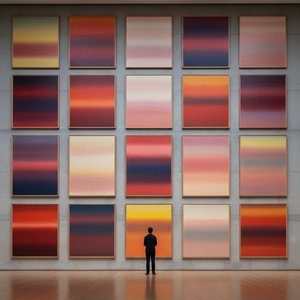
Топ 25 шедьовъра на Марк Ротко: Емоционални пейзажи за вашия дом | OriginalUniqueArt.com
Разгледайте топ 25 шедьовъра на Марк Ротко – емоционални абстрактни живописи, определящи експресионизма. Историята зад всяка картина, техники и цветове. Купете репродукции с музейно качество за вашия дом на OriginalUniqueArt.com!

Топ 10 шедьовъра на геометричната абстракция за Вашия дом | OriginalUniqueArt.com
Разгледайте топ 10 шедьовъра на геометричната абстракция – Кандински, Мондриан и други! Открийте историите зад тези емблематични картини и добавете елегантност към дома си с репродукции от OriginalUniqueArt.com. Разгледайте пълната колекция онлайн!

