

 Преглед в реален мащаб
 Сподели
 Сподели
 Подробности
 Ръководство

 Изтегляне
 Подобни артикули
 Рентгенова снимка
 Слайдшоу
 Статистика
Spring


 Разгърни целия текст
Закупете дигитално изображение с висока резолюция и подобрени характеристики, значително по-качествено от онлайн прегледа.
Всеки файл е щателно подготвен от нашите специалисти с помощта на съвременни инструменти и експертен ръчен ретуш. Гарантираме, че всяко изображение притежава изключителна яснота, прецизна цветова точност и фини детайли.
Окончателният файл се доставя по имейл в рамките на 72 часа, оптимизиран за незабавна употреба в професионални, редакционни и печатни среди. Това е същото качество, на което се доверяват водещи дизайнерски студия, издатели и галерии.
Дигитално изображение
Изтеглете файл с висока резолюция за лично съхранение, принтиране и творчески проекти. ( Избор на принт Поръчайте ръчно рисувано репродукция на този колекционерски предмет)
Включено във всяка поръчка за дигитални изображения
Експертна дигитална доставка, гарантирана
Избирайки OriginalUniqueArt.com, вие не получавате просто изображение – вие придобивате професионално обработена дигитална творба, създадена с прецизност и подкрепена от гаранция за удовлетворение. Ето какво автоматично е включено във вашата поръчка:

Бърза доставка по имейл
Вашето дигитално изображение с висока резолюция ще бъде изпратено по имейл в рамките на 72 часа от поръчката – готово за незабавно използване.

Дигитален файл с подобрено качество чрез ИИ
Вашата картина е професионално оптимизирана с помощта на усъвършенствани инструменти за изкуствен интелект и ръчна редакция, осигурявайки максимална детайлност, яснота и точност на цветовете.

Безплатна доживотна повторна доставка
Изгубили сте или сте изтрили файла си по погрешка? Не се притеснявайте – ще го изпратим отново на Вас по всяко време, безплатно.

Без митнически такси – завинаги
Насладете се на вашето произведение незабавно, без мита, данъци или такси за доставка – дигиталните изтегляния винаги са освободени от данъци.

Гаранция за точност на цветовете
Гарантираме, че вашето дигитално изображение отразява оригиналните цветове възможно най-точно, чрез използването на професионални инструменти и системи за управление на цветовете.

100-дневна гаранция за удовлетвореност
Ако не сте доволни от вашето дигитално изображение, ще го преработим или ще възстановим 100% от сумата в рамките на 100 дни – без излишни въпроси.

100% Гаранция за връщане на сумата
Не сте доволни? Получете пълен възврат на сумата в рамките на 100 дни от получаването на вашия цифров файл – без излишни въпроси.

Отстъпки за големи поръчки
Купете 3 изображения, спестете 10% - Купете 5, спестете 15% - Купете 10+, спестете 20%. Идеално за творчески проекти, галерии и агенства.
Ferdinand Hodler: Symbolism, Parallelism & The Quest for Universal Harmony
Ferdinand Hodler’s “Spring,” completed in 1901, stands as a cornerstone of Swiss Symbolist painting and embodies Hodler's singular artistic vision—a fusion of meticulous observation with profound psychological exploration. Exhibited simultaneously in Zurich’s Kunstverein and Vienna’s Secession, the artwork immediately captivated audiences and cemented Hodler’s reputation as a pioneer of ‘parallelism,’ a technique he championed to capture not merely visual appearances but also underlying emotional currents.
- Subject Matter: The painting depicts two women—a seated figure and one standing behind—within a vibrant meadow brimming with yellow wildflowers. This idyllic landscape serves as a backdrop for an intimate tableau of youthful affection.
- Style: “Spring” firmly establishes Hodler’s allegiance to Art Nouveau, characterized by flowing lines, organic forms, and a deliberate rejection of academic conventions. The artist eschewed rigid perspective in favor of a flattened plane that prioritizes expressive gesture over realistic representation.
- Technique: Hodler employed oil paint on canvas—a medium he favored throughout his career—applying it with remarkable precision and layering it to achieve subtle tonal gradations. His distinctive ‘parallelism’ technique involved juxtaposing two distinct planes of color, creating a visual dialogue that enhances the painting's emotional resonance.
- Historical Context: Created during Hodler’s formative years, “Spring” reflects the broader Symbolist movement’s preoccupation with exploring inner states and conveying spiritual truths through evocative imagery. It aligns with the Zeitgeist of Vienna Secession, where artists sought to liberate art from traditional restraints and embrace experimentation.
- Symbolism: The figures themselves are laden with symbolic significance. The standing woman—dressed in a simple necklace—represents idealized femininity, while her gaze directs towards the seated youth who embodies youthful vitality. The scattered wildflowers symbolize burgeoning life and renewal, mirroring the blossoming romance between the two subjects. Hodler’s masterful use of color contributes to the painting's emotional impact, conveying serenity and tenderness.
Hodler’s meticulous attention to detail—evident in the rendering of the flowers and the figures’ postures—underscores his commitment to capturing not just what is seen but also what is felt. “Spring” remains a testament to Hodler's ability to distill complex psychological ideas into visually arresting compositions, securing its place as an enduring emblem of Symbolist art.
Additional Research Links
Artist Information
Artist: Ferdinand Hodler
Birth Year: 1853
Death Year: 1918
Birth City: Bern
Birth Country: Switzerland
Biography: A Life Etched in Symbolism: The World of Ferdinand Hodler
Hodler’s early life was marked by profound loss—the untimely deaths of his father and two younger brothers instilled within him a deep contemplation of mortality. This formative experience profoundly shaped his artistic sensibility, propelling him toward formal training and fostering an unwavering fascination with the natural world.
Въпроси и отговори
Как е описана палитрата на „Spring“ на Фердинанд Ходлер?
Палитрата на „Spring“ на Фердинанд Ходлер е описана като Neutrals. Това е кратко описание на цветовете в произведението.
Колко наситени са цветовете на "Spring"?
Цветът на „Spring“ е с Subtle Color наситен и с Balanced интензивност.
Къде може да бъде видяно „Spring“ на Фердинанд Ходлер днес?
Оригиналът на „Spring“ може да бъде видян в Музей Фолкванг, Есен, Германия.
Биография на художника
A Life Etched in Symbolism: The World of Ferdinand Hodler
Ferdinand Hodler, a name inextricably linked to the landscape and evocative symbolism of Swiss painting, emerged from humble beginnings to become one of the most significant artists of the late 19th and early 20th centuries. Born in Bern, Switzerland, in 1853, his life was profoundly shaped by early loss – a recurring motif that would deeply inform his artistic vision. The untimely deaths of his father and two younger brothers before he reached adolescence instilled within him a contemplative awareness of mortality and the transient nature of existence. These experiences, interwoven with an acute sensitivity to the beauty and power of the natural world, formed the bedrock of his evolving oeuvre. Initially apprenticed to decorative painters, Hodler’s innate talent quickly transcended mere craftsmanship; he harbored a fervent desire for formal artistic training and exploration beyond the constraints of commercial work. This ambition led him to Geneva in 1871, where he immersed himself in study, attending science lectures alongside diligently copying masterpieces at the city's museum – a rigorous education that laid the foundation for his groundbreaking innovations.From Realism to ‘Parallelism’: Forging a Unique Vision
Hodler’s artistic journey was characterized by constant evolution and an unwavering pursuit of expressive power. His early works reflected the prevailing realist style prevalent at the time—portraits, landscapes, and genre scenes executed with meticulous detail. However, he soon found himself constrained by these conventions, seeking a means to convey deeper emotional truths and philosophical ideas. This quest led him towards Symbolism, a movement that deliberately rejected naturalistic representation in favor of subjective experience and evocative imagery. Yet Hodler didn’t simply adopt the tenets of Symbolism; instead, he meticulously crafted his own distinctive approach, which he termed “parallelism.” This unique style involved arranging figures and forms in rhythmic, almost geometric patterns—a visual manifestation of interconnectedness and a deliberate attempt to depict not just *what* he saw, but *how* he felt – the underlying emotional currents that connected all things. The Night, completed in 1890, stands as a pivotal work, marking his decisive turn towards symbolist imagery and sparking considerable debate amongst critics. Despite initial skepticism, the painting garnered significant attention in Paris, establishing Hodler’s reputation beyond Switzerland's borders and signaling the arrival of a truly original voice.Landmarks in Paint: Key Works and Their Significance
Throughout his prolific career, Hodler produced a remarkable body of work that continues to captivate audiences today. The Day, completed in 1893, stands as one of his most ambitious and celebrated achievements—a monumental historical painting showcasing his mastery of composition and symbolism. Housed at the Kunsthaus Zürich, this artwork is a powerful meditation on life, death, and renewal, rendered with an arresting blend of realism and visionary intensity. The sheer scale and emotional weight of The Day cemented Hodler’s position as a leading figure in European art. Other notable works include numerous depictions of the Swiss Alps, imbued with a sense of awe-inspiring grandeur—often capturing fleeting moments of light and shadow that evoke a profound connection to nature. Portraits, too, played a significant role in his oeuvre, revealing his remarkable ability to penetrate the inner lives of his subjects and convey their unique personalities through subtle gestures and expressions. He frequently revisited themes of loss and mourning, perhaps reflecting his own childhood traumas, but always imbued them with a sense of dignity and resilience—a testament to his artistic sensitivity. Works like Truth II (1897) demonstrate Hodler’s ability to seamlessly blend classical forms with modern sensibilities, creating images that are both timeless and strikingly contemporary – a reflection of his innovative spirit and willingness to challenge conventional artistic boundaries.A Lasting Legacy: Influence and Historical Context
Ferdinand Hodler's influence extended far beyond the borders of Switzerland. His innovative use of symbolism and his development of “parallelism” paved the way for Expressionism, with its emphasis on subjective emotion and distorted forms. Artists who followed in his footsteps recognized him as a precursor to their own explorations of inner experience. Hodler’s work also resonated with broader cultural currents of the late 19th and early 20th centuries—a period marked by rapid social change, scientific advancements, and a growing sense of existential anxiety. His paintings offered a visual language for grappling with these complex issues, providing solace and insight in an increasingly uncertain world. Hodler was deeply influenced by the writings of Nietzsche and the philosophical currents of his time, which informed his exploration of themes such as mortality, spirituality, and the search for meaning. Today, Hodler’s works are held in major museums across Europe and beyond, ensuring that his artistic vision continues to inspire and challenge generations of viewers. He remains a towering figure in Swiss art history, celebrated not only for his technical skill but also for his profound emotional depth and unwavering commitment to exploring the mysteries of the human condition.Exploring Hodler Further
- For an in-depth look at his life and work: Wikipedia - Ferdinand Hodler
- Discover more of his paintings at: OriginalUniqueArt - Ferdinand Hodler Collection
- View *The Day* (1893) here: OriginalUniqueArt - The Day
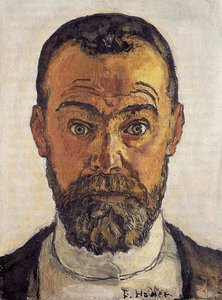
Фердинанд Ходлер
1853 - 1918 , Швейцария
Кратка информация
- Artistic Movement Or Style: Символизъм, Паралелизъм
- Artists Or Movements Influenced By This Artist: ['Експресионизъм']
- Artists Who Influenced This Artist: ['Густав Курбе']
- Date Of Birth: 1853 г.
- Date Of Death: 1918 г.
- Full Name: Фердинанд Ходлер
- Nationality: Швейцарец
- Notable Artworks:
- Нощ
- Ден
- Истина II
- Place Of Birth: Берн, Швейцария