Преглед в реален мащаб
 Изпрати
 Сподели
 Детайли
 Ръководство

 Изтегляне
 Подобни артикули
 Рентгенова снимка
 Слайдшоу
 Статистика
Апенцел
 Акрил върху платно
- Стени и декорация
- Swiss Landscape Tradition
 1895
1895 27.0 x 16.0 cm
 Национална галерия на Босна и Херцеговина
 Прочети повече
Ръчно изработена маслена репродукция
Ръчно рисувана маслена картина върху платно във вашия размер и рамка, изработена по поръчка от нашите художници. ( Превключване към принт Превключване към дигитално изображение)




P118B €10

P118H €10

P118W €10

P438Z €10

P508JH €12

P508YH €12

P805H €10

P805Z €10

P919BZ €10

P919G €10

P919XJ €10

P959ZH €10

P968JZ €12

W106C €8

W218G €10

W218JH €8

W218Y €10

W307PJ €10

W316G €10

W316PJ €8

W316Y €10

W398PJ €8

W4111J €10

W500HY €15

W500JH €15

W692G €12

W849H €8

W940BG €15

W953PJ €8




Изберете от нашите предварително зададени размери, които съответстват на оригиналните пропорции на произведението.

Въведете необходимата ширина и височина, за да паснат на вашата рамка или стена. Тъй като това е ръчна работа, при избор на размер с различен формат художникът може да нарисува малко повече около картината или да отреже малко от периферията — вие избирате. Преди да започне рисуването, ще ви изпратим дигитален мок업 за одобрение. Картината, показана на тази страница, не е реалният резултат — само мок업ът го показва.
След получаване на поръчка, екипът на OriginalUniqueArt.com ще изпрати имейл до клиента с инструкции и ще предостави примерен макет за преглед
Доставка по целия свят () в рамките на 3-4 седмици вместо стандартните 5 седмици. (28 Октомври). Без компромис с качеството.

Безплатна експресна доставка по целия свят

Висококачествено ленено платно

Пълно застраховане на доставката

Гаранция за възстановяване на митнически такси

Гаранция за пълно съответствие на цветовете

Политика за връщане в рамките на 100 дни (само при дефекти)

100% Гаранция за връщане на сумата

Оферта за отстъпка при поръчка на повече бройки
 Опцията със стъкло е налична само за размери под 110 см

Апенцел
Вид репродукция
Размер на репродукцията
-


Обща цена
€ 264
Appenzell - Ferdinand Hodler: A Landscape Steeped in Symbolism
Ferdinand Hodler’s “Appenzell,” painted in 1895, transcends mere depiction of a Swiss alpine vista; it embodies the core tenets of Symbolist art—a deliberate rejection of realism in favor of conveying emotion and spiritual significance. This striking monochrome drawing captures a solitary man standing on a windswept beach, an arresting juxtaposition that immediately draws the viewer into contemplation.
- Subject Matter: The scene portrays a rugged coastline dominated by towering cliffs and turbulent seas – quintessential elements of the Swiss landscape, meticulously rendered in stark black and white.
- Composition & Technique: Hodler’s masterful use of ‘parallelism,’ a technique pioneered by him and championed by Maurice Denis, involves layering textures and tonal variations to create an illusion of depth without resorting to traditional shading methods. The artist achieves this remarkable effect through subtle brushstrokes that capture the dynamism of the wind-swept beach.
- Historical Context: Hodler’s work emerged during a period of profound artistic experimentation in Europe, mirroring the broader Symbolist movement's preoccupation with psychological states and spiritual truths. Influenced by Nietzschean philosophy and Wagnerian opera, Hodler sought to express inner experience rather than objective observation.
Symbolism Beyond Representation
Hodler’s decision to abandon color—a conscious choice reflecting the Symbolists' belief that it obscures the essence of reality—allowed him to focus on conveying mood and emotion. The man in “Appenzell” is positioned centrally, his posture conveying resilience and quiet contemplation against the backdrop of formidable natural forces. This deliberate framing underscores the artist’s intention to explore themes of solitude, vulnerability, and the confrontation with mortality – concepts central to Symbolist thought.
- Symbolic Elements: The two birds perched atop the cliffs serve as potent symbols of aspiration and freedom, mirroring the man's stance. Their placement reinforces the overarching theme of overcoming obstacles and achieving spiritual enlightenment.
- Emotional Impact: “Appenzell” evokes a palpable sense of melancholy and grandeur simultaneously. Hodler’s masterful tonal palette—ranging from deepest blacks to delicate whites—captures the raw beauty of the alpine environment while subtly hinting at its inherent indifference to human existence.
A Legacy of Quiet Intensity
Hodler's “Appenzell” stands as a testament to his unwavering commitment to Symbolist principles and his profound sensitivity to the expressive potential of monochrome drawing. It exemplifies the movement’s desire to delve beneath surface appearances, accessing realms of psychological and spiritual experience inaccessible to conventional realism. Today, reproductions of this iconic artwork continue to inspire admiration for its understated elegance and enduring contemplation of the human condition.
- Provenance: Originally gifted to Besim Korkut in Sarajevo, Bosnia & Herzegovina, it now resides within the National Gallery of Bosnia and Herzegovina’s collection.
- Further Exploration: To delve deeper into Hodler's artistic journey and discover more masterpieces at OriginalUniqueArt, visit OriginalUniqueArt. Explore his biography on ArtistsDatabase and read an insightful article about Symbolism, Parallelism & the Quest for Universal Harmony at ArticlesDatabase.
Въпроси и отговори
Защо статусът на авторското право върху "Апенцел" е такъв?
Статусът на авторското право върху "Апенцел" - в обществено достояние – авторското право е изтекло - се определя от годината на смъртта на художника – 1918.
„Апенцел“ на Фердинанд Ходлер светла или тъмна творба?
За „Апенцел“ на Фердинанд Ходлер е записана яркост от блестящ при светлост на ниво Светъл баланс.
В кой музей се намира оригиналът на "Апенцел"?
Оригиналът на „Апенцел“ на Фердинанд Ходлер се съхранява в Национална галерия на Босна и Херцеговина, Сараево, Босна и Херцеговина. Репродукцията позволява произведението да бъде изложено у дома.
Биография на художника
A Life Etched in Symbolism: The World of Ferdinand Hodler
Ferdinand Hodler, a name inextricably linked to the landscape and evocative symbolism of Swiss painting, emerged from humble beginnings to become one of the most significant artists of the late 19th and early 20th centuries. Born in Bern, Switzerland, in 1853, his life was profoundly shaped by early loss – a recurring motif that would deeply inform his artistic vision. The untimely deaths of his father and two younger brothers before he reached adolescence instilled within him a contemplative awareness of mortality and the transient nature of existence. These experiences, interwoven with an acute sensitivity to the beauty and power of the natural world, formed the bedrock of his evolving oeuvre. Initially apprenticed to decorative painters, Hodler’s innate talent quickly transcended mere craftsmanship; he harbored a fervent desire for formal artistic training and exploration beyond the constraints of commercial work. This ambition led him to Geneva in 1871, where he immersed himself in study, attending science lectures alongside diligently copying masterpieces at the city's museum – a rigorous education that laid the foundation for his groundbreaking innovations.From Realism to ‘Parallelism’: Forging a Unique Vision
Hodler’s artistic journey was characterized by constant evolution and an unwavering pursuit of expressive power. His early works reflected the prevailing realist style prevalent at the time—portraits, landscapes, and genre scenes executed with meticulous detail. However, he soon found himself constrained by these conventions, seeking a means to convey deeper emotional truths and philosophical ideas. This quest led him towards Symbolism, a movement that deliberately rejected naturalistic representation in favor of subjective experience and evocative imagery. Yet Hodler didn’t simply adopt the tenets of Symbolism; instead, he meticulously crafted his own distinctive approach, which he termed “parallelism.” This unique style involved arranging figures and forms in rhythmic, almost geometric patterns—a visual manifestation of interconnectedness and a deliberate attempt to depict not just *what* he saw, but *how* he felt – the underlying emotional currents that connected all things. The Night, completed in 1890, stands as a pivotal work, marking his decisive turn towards symbolist imagery and sparking considerable debate amongst critics. Despite initial skepticism, the painting garnered significant attention in Paris, establishing Hodler’s reputation beyond Switzerland's borders and signaling the arrival of a truly original voice.Landmarks in Paint: Key Works and Their Significance
Throughout his prolific career, Hodler produced a remarkable body of work that continues to captivate audiences today. The Day, completed in 1893, stands as one of his most ambitious and celebrated achievements—a monumental historical painting showcasing his mastery of composition and symbolism. Housed at the Kunsthaus Zürich, this artwork is a powerful meditation on life, death, and renewal, rendered with an arresting blend of realism and visionary intensity. The sheer scale and emotional weight of The Day cemented Hodler’s position as a leading figure in European art. Other notable works include numerous depictions of the Swiss Alps, imbued with a sense of awe-inspiring grandeur—often capturing fleeting moments of light and shadow that evoke a profound connection to nature. Portraits, too, played a significant role in his oeuvre, revealing his remarkable ability to penetrate the inner lives of his subjects and convey their unique personalities through subtle gestures and expressions. He frequently revisited themes of loss and mourning, perhaps reflecting his own childhood traumas, but always imbued them with a sense of dignity and resilience—a testament to his artistic sensitivity. Works like Truth II (1897) demonstrate Hodler’s ability to seamlessly blend classical forms with modern sensibilities, creating images that are both timeless and strikingly contemporary – a reflection of his innovative spirit and willingness to challenge conventional artistic boundaries.A Lasting Legacy: Influence and Historical Context
Ferdinand Hodler's influence extended far beyond the borders of Switzerland. His innovative use of symbolism and his development of “parallelism” paved the way for Expressionism, with its emphasis on subjective emotion and distorted forms. Artists who followed in his footsteps recognized him as a precursor to their own explorations of inner experience. Hodler’s work also resonated with broader cultural currents of the late 19th and early 20th centuries—a period marked by rapid social change, scientific advancements, and a growing sense of existential anxiety. His paintings offered a visual language for grappling with these complex issues, providing solace and insight in an increasingly uncertain world. Hodler was deeply influenced by the writings of Nietzsche and the philosophical currents of his time, which informed his exploration of themes such as mortality, spirituality, and the search for meaning. Today, Hodler’s works are held in major museums across Europe and beyond, ensuring that his artistic vision continues to inspire and challenge generations of viewers. He remains a towering figure in Swiss art history, celebrated not only for his technical skill but also for his profound emotional depth and unwavering commitment to exploring the mysteries of the human condition.Exploring Hodler Further
- For an in-depth look at his life and work: Wikipedia - Ferdinand Hodler
- Discover more of his paintings at: OriginalUniqueArt - Ferdinand Hodler Collection
- View *The Day* (1893) here: OriginalUniqueArt - The Day
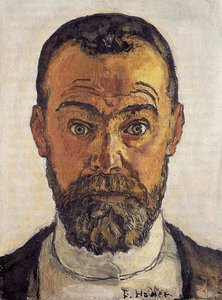
Фердинанд Ходлер
1853 - 1918 , Швейцария
Бърза информация
- Artistic Movement Or Style: Символизъм, Паралелизъм
- Artists Or Movements Influenced By This Artist: ['Експресионизъм']
- Artists Who Influenced This Artist: ['Густав Курбе']
- Date Of Birth: 1853 г.
- Date Of Death: 1918 г.
- Full Name: Фердинанд Ходлер
- Nationality: Швейцарец
- Notable Artworks:
- Нощ
- Ден
- Истина II
- Place Of Birth: Берн, Швейцария
Свързани статии

Топ 10 шедьовъра в черно: Изкуство и емоция от OriginalUniqueArt.com
Разгледайте топ 10 шедьовъра в черно – от Ван Гог до Мунк! Открийте историите зад картините, техниките и емоциите. Репродукции с музейно качество на OriginalUniqueArt.com. Разгледайте пълната колекция онлайн!

Ferdinand Hodler: Symbolism, Parallelism & the Quest for Universal Harmony
Explore the captivating world of Ferdinand Hodler, Swiss Symbolist painter renowned for his evocative landscapes & pioneering 'parallelism'. Discover his life, key works, and lasting influence on art history. Own a hand-painted reproduction today!

Топ 10 шедьовъра на Романтичния пейзаж: Изкуство за вашия дом от OriginalUniqueArt.com
Открийте 10 шедьовъра на Романтичния пейзаж – Фридрих, Търнър и други! Разгледайте историите зад картините, техниките и емоциите. Репродукции с музейно качество от OriginalUniqueArt.com. Вдъхновете се за вашия дом!

Топ 10 шедьовъра в бяло: Изкуство и елегантност за вашия дом | OriginalUniqueArt.com
Разгледайте Топ 10 шедьовъра в бяло – Моне, Ренуар и други велики художници! Открийте историите зад импресионизма, минимализма и красотата на бялата цветова палитра. Купете висококачествени репродукции на картини онлайн на OriginalUniqueArt.com.

Топ 25 шедьовъра на Джон Констабъл: Английски пейзажи за вашия дом | OriginalUniqueArt.com
Открийте топ 25 шедьовъра на Джон Констабъл – английски пейзажи, романтизъм и красотата на природата. Репродукции с музейно качество за вашия дом! Разгледайте пълната колекция онлайн на OriginalUniqueArt.com.