

 Преглед в реален мащаб
 Изпрати
 Сподели
 Детайли
 Ръководство

 Изтегляне
 Подобни артикули
 Рентгенова снимка
 Слайдшоу
 Статистика
Constanze Mozart


 Прочети повече
Жикле / Художествен принт
Giclée печат или принт върху платно с музейно качество, бързо производство и гъвкави опции за завършен вид. ( Купете ръчно рисувана картина Превключване към дигитално изображение)




P118B €10

P118H €10

P118W €10

P438Z €10

P508JH €12

P508YH €12

P805H €10

P805Z €10

P919BZ €10

P919G €10

P919XJ €10

P959ZH €10

P968JZ €12

W106C €8

W218G €10

W218JH €8

W218Y €10

W307PJ €10

W316G €10

W316PJ €8

W316Y €10

W398PJ €8

W4111J €10

W500HY €15

W500JH €15

W692G €12

W849H €8

W940BG €15

W953PJ €8




Изберете от нашите предварително зададени размери, които съответстват на оригиналните пропорции на произведението.

Въведете необходимата ширина и височина, за да паснат на вашата рамка или стена. Принтовете могат само да се изрязват, но никога не могат да бъдат по-големи от оригиналната картина, така че при размер с различен формат част от изображението ще бъде загубена. Преди да започнем печат, ще ви изпратим дигитален мок업 за одобрение. Изображението, показано на тази страница, не показва реалното изрязване — само мок업ът го показва.
Доставка по целия свят () в рамките на 2 седмици вместо стандартните 4/5 седмици. (28 Октомври)

Безплатна експресна доставка по целия свят

Висококачествено ленено платно

Пълно застраховане на доставката

Гаранция за възстановяване на митнически такси

Гаранция за пълно съответствие на цветовете

Политика за връщане в рамките на 100 дни (само при дефекти)

100% Гаранция за връщане на сумата

Оферта за отстъпка при поръчка на повече бройки
 Опцията със стъкло е налична само за размери под 110 см

Constanze Mozart
Жикле / Художествен принт
Размер на репродукцията
-


Обща цена
€ 70
The Enigmatic Figure: An Exploration of Emil Nolde’s “Constanze Mozart”
Emil Nolde's "Constanze Mozart," painted in 1902, isn’t merely a portrait; it’s a carefully constructed distillation of memory, emotion, and the lingering echoes of a bygone era. Nolde, a pivotal figure within the Die Brücke movement, eschewed photographic realism in favor of an intensely subjective approach to representation – a strategy that profoundly shaped his distinctive visual language. This particular work, housed within the Mozart-Museums of Salzburg, immediately draws the viewer into a world steeped in quiet contemplation and a subtle undercurrent of sadness. The subject herself, Constanze Mozart, is rendered with a remarkable degree of intimacy, her gaze direct yet veiled, suggesting both vulnerability and an inner strength.
Nolde’s technique here is immediately arresting. He employs a bold, almost aggressively applied palette dominated by deep blues and browns – colors that evoke the twilight hours, the shadows of memory, and perhaps even the melancholy associated with Mozart's own life. The brushstrokes are thick and impastoed, creating a tactile surface that invites close inspection. Notice how he utilizes broken color—small, distinct patches of hue rather than smooth transitions—to build up form and texture. This technique isn’t about replicating reality; it’s about conveying feeling – the weight of experience, the fragility of beauty, and the enduring power of a single, poignant image.
Echoes of Salzburg: Historical Context and Artistic Influences
To fully appreciate “Constanze Mozart,” one must consider the artistic climate in which it was created. Nolde’s early career was deeply influenced by the radical Expressionist group Die Brücke, a collective dedicated to rejecting academic conventions and exploring the raw emotions of modern life. This movement sought to capture not just what *was* seen, but what *felt* – a philosophy perfectly embodied in Nolde's work. His use of intense color and distorted forms can be traced back to his encounters with artists like Vincent van Gogh and Paul Gauguin, both of whom championed the expressive potential of color as a vehicle for conveying emotion. Furthermore, Nolde’s fascination with primitive art – particularly masks and carvings from various cultures – is evident in the painting's simplified forms and symbolic weight.
The portrait itself is rooted in a specific historical context: Salzburg during the late 19th century, a city inextricably linked to the legacy of Mozart. Constanze’s presence within this setting adds another layer of complexity to the work. She represents not only a real woman but also an idealized image of feminine grace and resilience – qualities that resonated deeply with Nolde's artistic sensibilities.
Symbolism and Emotional Resonance: A Portrait Beyond Representation
Beyond its formal elements, “Constanze Mozart” is rich in symbolic meaning. The book she holds isn’t simply a prop; it represents knowledge, contemplation, and perhaps even a yearning for understanding. Her direct gaze invites the viewer to engage with her inner world – to share in her thoughts and emotions. The muted lighting and somber color palette contribute to a sense of melancholy, suggesting that this portrait is not merely a likeness but an exploration of memory and loss. It’s a quiet meditation on beauty, fragility, and the enduring power of the past.
Nolde masterfully avoids sentimentality, instead offering a nuanced portrayal of a woman caught between worlds – between the idealized image of Mozart's wife and the complexities of her own life. “Constanze Mozart” is a testament to Nolde’s ability to transform a simple portrait into a profound statement about human experience, leaving the viewer with a lingering sense of both beauty and sadness.
Въпроси и отговори
Как мога да купя цифров файл на „Constanze Mozart“ на Емил Нолде?
За да получите цифров файл на „Constanze Mozart“ на Емил Нолде, поръчайте дигитално изтегляне на изображение с висока резолюция от неговата страница Дигитален образ.
Към кой период от кариерата на Емил Нолде принадлежи „Constanze Mozart“?
В рамките на кариерата на Емил Нолде, „Constanze Mozart“ принадлежи към периода Late Period. Тази фаза позволява да се направи сравнение с другите творби на художника.
Има ли информационен лист за „Constanze Mozart“ на Емил Нолде, предназначен за ученици?
Налична е страница с Информационен лист за „Constanze Mozart“ на Емил Нолде: предназначен за печат информационен лист за произведението, създаден за ученици и учебни цели.
Биография на художника
Early Life and Artistic Beginnings
Emil Nolde, a name synonymous with vibrant expressionism, was born Hans Emil Hansen on August 7th, 1867, in the small village of Nolde, nestled within the Schleswig-Holstein region of Germany. His origins were deeply rooted in rural life – his family’s livelihood intertwined with the rhythms of farming and a strong connection to their local community. Despite this grounding, young Hans harbored an intense yearning for something beyond the familiar, a desire that would ultimately lead him down the path of artistic creation. Initially, his parents envisioned a more conventional future for him, hoping he would pursue a career as a woodcarver or furniture maker – skills honed through early apprenticeships. However, from a remarkably young age, Hans demonstrated an unwavering passion for art, a burning desire to capture the world around him in color and form. He diligently pursued his artistic aspirations, often working late into the night, experimenting with charcoal and sketching landscapes and portraits. This dedication, coupled with a natural talent, eventually convinced his family that he should wholeheartedly dedicate himself to painting – a decision they ultimately embraced.Artistic Development and Influences
Nolde’s artistic journey was one of relentless self-education and profound exploration. He embarked on numerous travels throughout Europe, immersing himself in diverse cultures and absorbing the influences of various artistic movements. Early encounters with the works of Vincent van Gogh and Paul Gauguin proved particularly formative, sparking his interest in bold color palettes and emotionally charged brushwork. However, Nolde’s artistic sensibilities extended far beyond these Impressionistic masters. He was deeply captivated by the expressive power of primitive art – specifically, the masks and carvings found in tribal cultures. These objects, imbued with symbolic meaning and raw emotion, served as a powerful inspiration, shaping his approach to composition, color, and subject matter. The stark contrasts between light and shadow, the use of simplified forms, and the emphasis on conveying inner psychological states became hallmarks of his distinctive style. He wasn’t simply copying these styles; he was distilling their essence and integrating it into his own unique artistic language.Die Brücke and Expressionist Breakthrough
In 1905, a pivotal moment arrived in Nolde's career: he co-founded Die Brücke (The Bridge) – an influential group of German Expressionist artists based in Dresden. This collective represented a radical departure from the established artistic conventions of the time, seeking to break free from academic traditions and express inner emotions through bold experimentation. Die Brücke aimed to capture the anxieties and uncertainties of modern life, often depicting urban landscapes, distorted figures, and scenes of social unrest. Nolde’s contribution to Die Brücke was significant; his intense use of color, dynamic brushwork, and unsettling imagery pushed the boundaries of representation, solidifying the group's commitment to emotional expression. However, despite his vital role within the collective, Nolde maintained a somewhat independent artistic trajectory, frequently diverging in subject matter and stylistic approach. He wasn’t always aligned with the group’s more overtly political or social commentary, often focusing on themes of spirituality, mythology, and the beauty of nature.Key Themes and Artistic Style
Nolde's oeuvre is characterized by a remarkable consistency of recurring themes: religious scenes – particularly those depicting biblical narratives; evocative landscapes, often dominated by seascapes and brooding forests; portraits that capture both physical likeness and inner character; and, perhaps most famously, masks. He was profoundly fascinated by the symbolic power of masks – viewing them not merely as objects but as representations of primal emotions, hidden identities, and the duality of human nature. His artistic style is instantly recognizable: a vibrant palette dominated by intense blues, greens, reds, and yellows; distorted forms that emphasize emotional impact over realistic accuracy; and an impasto technique—a thick application of paint that creates texture and dynamism. Nolde’s paintings are not simply depictions of the world; they are visceral expressions of his own inner landscape – a reflection of his spiritual beliefs, his anxieties, and his profound connection to nature.Notable Works and Historical Significance
Throughout his prolific career, Emil Nolde created an astonishing body of work that continues to captivate audiences today. Some of his most celebrated paintings include *Masks* (1906-1907), a series exploring the symbolism of tribal masks; *The Mocking of Christ* (1909), a powerfully emotive depiction of Christ’s betrayal; *Autumn Sea* (1908), showcasing his mastery of landscape painting; and *Flower Garden (Girl and Washing)*, a vibrant scene filled with color and movement. His work gained considerable recognition during the early 20th century, but faced censorship and suppression under the Nazi regime in the 1930s. Despite this persecution, Nolde continued to paint, producing a remarkable collection of watercolor works that reveal his unwavering commitment to artistic expression. Today, Emil Nolde is recognized as one of the most important figures in German Expressionism – an artist who dared to break with tradition and forge his own unique path, leaving behind a legacy of vibrant color, emotional intensity, and enduring artistic vision.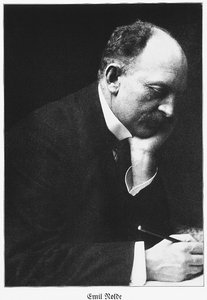
Емил Нолде
1867 - 1956 , Германия
Бърза информация
- Artistic Movement Or Style: Изразъм
- Artists Or Movements Influenced By This Artist: ['Die Brücke']
- Artists Who Influenced This Artist:
- Винсент ван Гог
- Паул Gauguin
- Date Of Birth: 7 август 1867 г.
- Date Of Death: 15 април 1956 г.
- Full Name: Emil Nolde / Hans Emil Hansen
- Nationality: Германец-Дънец
- Notable Artworks:
- Маски
- Срамът на Христос
- Есенно море
- Place Of Birth: Nolde, Германия
Свързани статии

Ephemeral Visions: Exploring the Artistic Legacy & Nuances of Watercolor Painting
Explore the captivating world of watercolor painting! Discover its rich history, essential techniques, influential artists & collecting tips from art experts. A comprehensive guide for enthusiasts.

Ephemeral Visions: Exploring the History & Emotional Resonance of Watercolor Painting
Explore the captivating history of watercolor painting, from ancient techniques to modern masters like Kandinsky & Blake. Discover essential artists, collecting tips & the emotional power of this luminous medium. Expert insights for art enthusiasts.

Ephemeral Visions: Exploring the Artistic Legacy & Contemporary Practice of Watercolor Painting
Explore the captivating world of watercolor painting! Discover its rich history, essential techniques, influential artists & collecting tips. A comprehensive guide for art enthusiasts from OriginalUniqueArt.

Топ 10 шедьоври на акварела, променили изкуството завинаги | OriginalUniqueArt.com
Разгледайте топ 10 шедьоври на акварела от Turner, Monet и Sargent! Открийте историите зад тези емблематични картини, техниките им и как промениха изкуството. Купете висококачествени репродукции за вашия дом в OriginalUniqueArt.com.

Очарованието на акварела: История, техники и съвременно изкуство
Открийте очарованието на акварела! История, техники, материали и съвременно изкуство – всичко за тази прекрасна техника от експерти. Вдъхновете се!

