
 Преглед в реален мащаб
 Изпрати
 Сподели
 Детайли
 Ръководство

 Изтегляне
 Подобни артикули
 Рентгенова снимка
 Слайдшоу
 Въпроси и отговори
 Статистика
St Lucy


 Прочети повече
Жикле / Художествен принт
Giclée печат или принт върху платно с музейно качество, бързо производство и гъвкави опции за завършен вид. ( Купете ръчно рисувана картина Превключване към дигитално изображение)




P118B €10

P118H €10

P118W €10

P438Z €10

P508JH €12

P508YH €12

P805H €10

P805Z €10

P919BZ €10

P919G €10

P919XJ €10

P959ZH €10

P968JZ €12

W106C €8

W218G €10

W218JH €8

W218Y €10

W307PJ €10

W316G €10

W316PJ €8

W316Y €10

W398PJ €8

W4111J €10

W500HY €15

W500JH €15

W692G €12

W849H €8

W940BG €15

W953PJ €8




Изберете от нашите предварително зададени размери, които съответстват на оригиналните пропорции на произведението.

Въведете необходимата ширина и височина, за да паснат на вашата рамка или стена. Принтовете могат само да се изрязват, но никога не могат да бъдат по-големи от оригиналната картина, така че при размер с различен формат част от изображението ще бъде загубена. Преди да започнем печат, ще ви изпратим дигитален мок업 за одобрение. Изображението, показано на тази страница, не показва реалното изрязване — само мок업ът го показва.
Доставка по целия свят () в рамките на 2 седмици вместо стандартните 4/5 седмици. (8 Ноември)

Безплатна експресна доставка по целия свят

Висококачествено ленено платно

Пълно застраховане на доставката

Гаранция за възстановяване на митнически такси

Гаранция за пълно съответствие на цветовете

Политика за връщане в рамките на 100 дни (само при дефекти)

100% Гаранция за връщане на сумата

Оферта за отстъпка при поръчка на повече бройки
 Опцията със стъкло е налична само за размери под 110 см

St Lucy
Жикле / Художествен принт
Размер на репродукцията
-


Обща цена
€ 72
A Portrait of Mystery: Unveiling Domenico Beccafumi’s *St Lucy*
Domenico di Pace Beccafumi's 1521 painting, *St Lucy*, is not merely a portrait; it’s an enigmatic encounter. This captivating work, depicting a woman with flowing hair and a serene gaze, immediately draws the viewer into a world of quiet contemplation. The subject, identified as Saint Lucy – a figure renowned for her martyrdom and association with light and vision – presents a compelling study in restrained elegance and burgeoning Mannerist sensibilities. Beccafumi’s approach, rooted in the traditions of Siena yet infused with a distinctly personal vision, reveals a pivotal moment in the evolution of Renaissance art, bridging the stylistic shifts between High Renaissance idealism and the increasingly complex explorations of emotion and form that would characterize the later years of the 16th century.
Technical Mastery and Sienese Roots
- Oil on Panel: Executed in oil paint on a wooden panel, a technique common at the time, allows for rich color saturation and subtle gradations of tone – hallmarks of Beccafumi’s skill.
- Detailed Rendering: The artist demonstrates meticulous attention to detail, particularly evident in the rendering of the woman's hair, fabric folds, and the delicate plate she holds. This precision reflects his training with Mechero, a local Sienese artist who instilled in him a strong foundation in traditional portraiture.
- Compositional Balance: The composition is carefully balanced, utilizing the black frame as a dramatic device that not only defines the subject but also creates a sense of depth and spatial recession. This technique was influenced by developments in perspective during this period.
Symbolism and Religious Context
The identification of the sitter as Saint Lucy is crucial to understanding the painting’s deeper meaning. Lucy, a martyr who famously refused to marry and sacrificed her eyes for her faith, became associated with light, vision, and protection from evil. The plate she holds – a recurring motif in depictions of the saint – symbolizes her severed eyes, serving as a potent reminder of her unwavering devotion. The woman’s direct gaze invites the viewer into a spiritual dialogue, prompting reflection on themes of sacrifice, faith, and the pursuit of enlightenment. The overall effect is one of solemn beauty and profound religious significance.
A Bridge Between Styles
*St Lucy* exemplifies Beccafumi’s transitional style. While retaining elements of High Renaissance clarity and grace – particularly in his rendering of the figure's anatomy and drapery – he introduces a subtle distortion of form, a hallmark of Mannerism. The elongated proportions of the woman’s hands, for example, and the slightly unsettling gaze contribute to an atmosphere of psychological intensity that anticipates the stylistic innovations of artists like Pontormo and Bronzino. This blending of traditional techniques with emerging artistic trends makes *St Lucy* a significant work in its own right, offering a valuable glimpse into the evolving landscape of Italian Renaissance art.
Capturing the Essence: A Hand-Painted Reproduction
OriginalUniqueArt offers meticulously crafted hand-painted reproductions of Domenico Beccafumi’s *St Lucy*, ensuring that you possess an authentic representation of this remarkable artwork. Our skilled artisans employ traditional techniques and archival materials to faithfully recreate every detail, color nuance, and textural element of the original painting. Whether for your private collection or interior design project, a OriginalUniqueArt reproduction of *St Lucy* will bring a touch of Renaissance elegance and profound artistic contemplation to any space.
Въпроси и отговори
Как е описано настроението на „St Lucy“ на Domenico Di Pace Beccafumi?
"St Lucy" има Elegant атмосфера.
Кой размер на репродукцията се препоръчва за „St Lucy“ на Domenico Di Pace Beccafumi?
За произведението „St Lucy“ се препоръчва печат с размер Large. Налични са и други размери със същите пропорции.
Може ли изображението на „St Lucy“ на Domenico Di Pace Beccafumi да се репродуцира свободно?
Статусът на авторското право за „St Lucy“ на Domenico Di Pace Beccafumi: произведението е в обществено достояние – авторското право е изтекло. Това определя дали могат да се правят свободно репродукции на изображението.
Биография на художника
Domenico Beccafumi (1486 – May 18, 1551): A Sienese Visionary
Domenico di Pace Beccafumi stands as a singular figure in the panorama of Italian Renaissance art—a painter who stubbornly clung to traditions while simultaneously propelling them toward uncharted expressive territories. Born around 1486 in Montaperto, a humble Tuscan village near Siena, his artistic journey unfolded with remarkable dynamism, culminating in a style that bridged the High Renaissance and the burgeoning complexities of Mannerism. More than merely mastering technique; Beccafumi possessed an unwavering conviction—a sensibility rooted in Sienese heritage yet boldly embracing innovation. His formative years were marked by familial simplicity: Giacomo di Pace, his father, was a peasant laborer, but Lorenzo Beccafumi, recognizing his prodigious talent for drawing, took him under wing and entrusted Mechero, a local Siena artist, with his initial artistic education. This early immersion in the Sienese school proved pivotal—a grounding that fostered an environment valuing emotional intensity and decorative embellishment, qualities which would become defining characteristics of Beccafumi’s distinctive style.From Humble Beginnings to Roman Exposure
Around 1509, Domenico embarked on a transformative voyage to Rome—a city pulsating with artistic fervor under the patronage of Pope Julius II and Michelangelo Buonarroti. This encounter exposed him to the groundbreaking achievements of Raphael and Michelangelo, absorbing their pioneering approaches to composition, anatomy, and dramatic expression. However, unlike many artists seeking direct emulation of these titans, Beccafumi synthesized Roman influences through his own singular perspective—a filter informed by Sienese aesthetic sensibilities. He didn’t simply replicate Roman style; he internalized it, transforming it into something profoundly personal. This process resulted in a stylistic divergence from the prevailing trends of Rome – one characterized by an unsettling juxtaposition of classical ideals and medieval impulses. The influence of masters like Raphael and Michelangelo is palpable, yet Beccafumi's vision remained resolutely independent, forging his own path toward expressive innovation.The Synthesis of Tradition and Innovation: Siena’s Influence
Returning to Siena after Rome, Beccafumi continued to refine his artistic style—a synthesis that solidified his reputation as a champion of Sienese tradition while simultaneously anticipating the stylistic upheavals of Mannerism. His paintings reflected this duality—embracing decorative detail and emotional fervor reminiscent of the Sienese school alongside techniques and compositional strategies indicative of the emerging Mannerist movement. This distinctive blend distinguished him from many of his contemporaries, who adhered more rigidly to classical conventions. Consider his monumental frescoes adorning churches throughout Siena—works imbued with a palpable sense of drama and psychological depth. These paintings exemplify Beccafumi’s ability to convey religious devotion with both grandeur and intimacy—a testament to his artistic prowess and unwavering commitment to stylistic experimentation.The Grand Undertaking: The Pavement of Duomo di Siena
Perhaps Beccafumi's most ambitious project was the design and execution of the pavement for Siena Cathedral between 1517 and 1544—a task that spanned over a century and a half. This undertaking demanded unparalleled artistic skill and organizational acumen, reflecting Beccafumi’s leadership qualities as well as his mastery of visual art. The pavement itself is an astonishing achievement—a vast expanse of marble engraved with intricate designs depicting biblical narratives—primarily the stories of Ahab and Elijah, Melchisedec, Abraham, and Moses. Beccafumi oversaw every aspect of this monumental endeavor, innovating techniques and pushing boundaries to create a masterpiece that continues to inspire awe and admiration. The meticulous craftsmanship involved in creating these scenes underscores Beccafumi’s dedication to artistic excellence—a commitment that cemented his place as one of Siena's most celebrated artists.A Legacy Beyond Technique: Mannerist Vision
Domenico di Pace Beccafumi died in Siena in 1551, marking a symbolic closure to the Sienese tradition of painting—though not to artistic innovation. He is rightfully recognized as the last significant representative of the Sienese school, preserving its distinctive aesthetic qualities while simultaneously foreshadowing the stylistic developments of Mannerism. His paintings stand apart from the harmonious balance championed by High Renaissance artists—embracing instead emotional tension, instability, and expressive distortion. This willingness to challenge established norms distinguishes Beccafumi’s oeuvre from many others of his time—demonstrating a profound understanding of artistic psychology and signaling a decisive break with classical ideals. His legacy extends beyond mere technical skill; it resides in his unwavering conviction—a visionary impulse that continues to resonate through the centuries, securing his place as an enduring icon of Italian Renaissance art.
Domenico Di Pace Beccafumi
1486 - 1551 , Италия
Бърза информация
- Artistic Movement Or Style: Mannerism
- Artists Or Movements Influenced By This Artist: ['High Renaissance']
- Artists Who Influenced This Artist:
- Raphael
- Michelangelo
- Date Of Birth: c. 1486
- Full Name: Domenico di Pace Beccafumi
- Nationality: Italian
- Notable Artworks:
- Trinity Triptych
- The Annunciation
- Place Of Birth: Montaperto, Italy
Свързани статии

The Enduring Legacy of Fine Art Prints: Technique, History & Aesthetic Impact
Explore the rich history & techniques of fine art prints. Discover investment potential, assess authenticity, and learn how to preserve your collection with expert guidance. Trusted insights for discerning collectors.
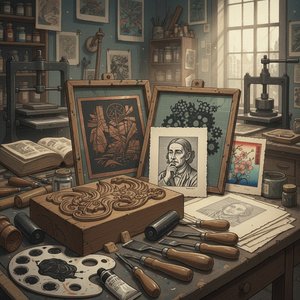
The Enduring Legacy of Printmaking: Techniques, Themes & Artistic Innovation Across Centuries
Explore the rich history of printmaking with OriginalUniqueArt. Discover techniques from intaglio to lithography, learn about collecting valuable prints & find museum-quality reproductions. Expert insights for art enthusiasts and collectors.

Golden Glow: How to Use Metallic Gold Artworks to Elevate Your Home Decor with Timeless Luxury
Discover how to elevate your home with the timeless elegance of metallic gold artworks. From sculptural metal pieces to gilded oil paintings, learn expert interior design tips for integrating luxurious gold accents into your space with sophistication and grace.

Giclée Prints: Archival Quality & Aesthetic Nuances for the Discerning Collector
Explore the world of giclée prints with OriginalUniqueArt. Learn about archival quality, aesthetic nuances & investment potential. Expert guidance for discerning art collectors seeking museum-quality reproductions and lasting value.

Echoes of Time: Exploring the Enduring Appeal & Historical Context of Vintage Art Prints
Explore the captivating world of vintage art prints! Discover their history, collecting tips & enduring appeal. Expert insights on chromolithography and building a legacy collection with OriginalUniqueArt.

