
 Преглед в реален мащаб
 Изпрати
 Сподели
 Детайли
 Ръководство

 Изтегляне
 Подобни артикули
 Рентгенова снимка
 Слайдшоу
 Въпроси и отговори
 Статистика
The twenty fourth


 Прочети повече
Получете файл, готов за печат, който предлага много по-високо качество от уеб прегледа. Всяко дигитално изображение, което предлагаме, е извлечено от висококачествен оригинал в нашата база данни — обикновено с ширина между 5 000 и 15 000 пиксела — така че със сигурност да можете да принтирате в голям формат, да кадрирате тесно или да възпроизведете фините детайли.
Нито един файл не напуска нашето студио без внимание. Дигитален експерт проверява цветовете спрямо оригиналната картина и ги коригира при необходимост, след което подобрява яснотата и детайлите с професионални инструменти за ретуш — винаги оставайки верен на мазките и стила на художника. Резултатът е изображение, което изглежда като самата картина, а не като сканиран образ с филтър.
Одобрявате преди финализиране: нашият експерт ще изпрати изображението по имейл в рамките на 72 часа за ваш преглед. Не сте доволни? Можете да поискате подобрения или корекции, или пълно възстановяване на сумата, ако качеството не отговаря на очакванията ви.
Това е качеството, на което разчитат издателства, дизайн студиа, галерии и печатници.
Дигитално изображение
Изтеглете файл с висока резолюция за лично съхранение, принтиране и творчески проекти. ( Превключване към принт Купете ръчно рисувана картина)
Включено във всяка поръчка за дигитални изображения
Гарантирана експертна дигитална доставка
Избирайки OriginalUniqueArt.com, вие не получавате просто изображение – вие придобивате професионално обработена дигитална творба, създадена с прецизност и подкрепена от гаранция за удовлетворение. Ето какво автоматично е включено във вашата поръчка:

Бърза доставка по имейл
Вашето дигитално изображение с висока резолюция ще бъде изпратено по имейл в рамките на 72 часа от поръчката – готово за незабавно използване.

Дигитален файл с подобрено качество чрез ИИ
Вашата картина е професионално оптимизирана чрез усъвършенствани инструменти с изкуствен интелект и ръчна редакция, което гарантира максимална детайлност, яснота и точност на цветовете.

Безплатна доживотна повторна доставка
Изгубили сте или сте изтрили файла си по погрешка? Не се притеснявайте – ще го изпратим отново на Вас по всяко време, безплатно.

Без митнически такси – завинаги
Насладете се на вашето произведение незабавно, без мита, такси или разходи за доставка – дигиталните изтегляния винаги са освободени от данъци.

Гаранция за цветово съответствие
Гарантираме, че вашето дигитално изображение отразява оригиналните цветове възможно най-точно чрез използването на професионални инструменти и системи за управление на цветовете.

100-дневна гаранция за удовлетвореност
Ако не сте доволни от вашето дигитално изображение, ще го преработим или ще възстановим 100% от сумата в рамките на 100 дни – без излишни въпроси.

100% Гаранция за връщане на сумата
Не сте доволни? Получете пълен възврат на сумата в рамките на 100 дни от получаването на вашия цифров файл – без излишни въпроси.

Отстъпки за големи поръчки
Купете 3 изображения, спестете 10% - Купете 5, спестете 15% - Купете 10+, спестете 20%. Идеално за творчески проекти, галерии и агенства.
The Twenty Fourth: A Symphony of Color and Reflection
David Hockney’s “The Twenty Fourth” is not merely a depiction of a vibrant scene; it's an immersive experience, a carefully constructed tableau brimming with light, color, and a palpable sense of leisure. The painting immediately captivates with its audacious palette – the dominant blues of the umbrellas and tents are brilliantly offset by the warm yellows of the structures, creating a dynamic tension that draws the eye across the composition. It’s a quintessential Hockney moment, capturing a fleeting slice of summer life with an almost obsessive attention to detail and a joyful disregard for traditional perspective.
Hockney's Approach: Observation and Illusion
Hockney’s technique is instantly recognizable – a masterful blend of direct observation and calculated illusion. He employs a layered approach, building up the image through multiple layers of paint, creating depth and texture that invites close inspection. Notice how he utilizes broken color to suggest form and movement; the blurred edges of the figures and tents contribute to the painting’s sense of immediacy and spontaneity. This technique, rooted in his early explorations with photography and drawing, allows him to capture not just a visual likeness but also an emotional resonance – the feeling of warmth, relaxation, and shared enjoyment that permeates the scene. The inclusion of the clock is particularly intriguing, adding another layer of temporal awareness to this snapshot of summer.
Historical Context: Pop Art and the British Landscape
“The Twenty Fourth” emerged during a pivotal moment in British art – the rise of Pop Art in the mid-1960s. Hockney, along with contemporaries like Peter Blake and R.B. Kitaj, challenged the established norms of representational painting, embracing everyday subjects and popular imagery. This work reflects a broader trend of artists engaging with the changing landscape of Britain, documenting its leisure activities and suburban developments. The scene itself – tents, umbrellas, people enjoying themselves – speaks to the burgeoning culture of outdoor recreation that was becoming increasingly prevalent in post-war Britain. It’s a fascinating intersection of artistic innovation and social change.
Symbolism and Emotional Impact: A Moment of Tranquility
Beyond its technical brilliance, “The Twenty Fourth” possesses a quiet emotional power. The scene evokes a sense of tranquility and carefree enjoyment – a moment suspended in time. The repetition of shapes and colors creates a hypnotic effect, inviting the viewer to lose themselves in the details. The arrangement of objects—the chair, table, bowl, and cup—suggests an impromptu gathering, a casual celebration of simple pleasures. It’s a painting that speaks to our desire for respite from the pressures of modern life, offering a glimpse into a world where time seems to slow down and connection is paramount. The deliberate inclusion of seemingly random elements – the clock, the varied objects – adds to the painting's enigmatic quality, prompting viewers to interpret its meaning through their own experiences and perspectives.
Въпроси и отговори
От коя епоха е „The twenty fourth“ на Дейвид Хънки?
„The twenty fourth“ на Дейвид Хънки датира от периода на Contemporary. Този период предоставя исторически контекст за произведението.
Откъде идват посетителите на „The twenty fourth“ на Дейвид Хънки?
Статистиката за „The twenty fourth“ на Дейвид Хънки се намира на страницата Статистика на произведението: месечни посещения на творбата, посещения на произведенията на художника, както и разпределение на последните посетители по държава и език.
С каква наситеност на цветовете се отличава „The twenty fourth“ на Дейвид Хънки?
„The twenty fourth“ на Дейвид Хънки е заснето с Clear Color Presence наситеност.
Биография на художника
The Life and Early Years of David Hockney
David Hockney arrived on July 9, 1937, in Bradford, West Yorkshire, England. He grew up in a household of five children, the fourth of the group. His father, Kenneth Hockney, worked as an accountant's clerk and had been a conscientious objector during the Second World War. His mother, Laura, was a Methodist and a strict vegetarian. These early years were spent in the industrial landscape of Yorkshire, a place of brick factories and bustling markets.
His schooling began at Wellington Primary School and continued at Bradford Grammar School. During this time, the surroundings of Bradford shaped his way of seeing. The grit of the industrial heartland and the specific light of the region provided a backdrop to his formative years. He was a child of a family that valued independent thought, influenced by his father's convictions during the war.
Artistic Training and Education in Britain
The foundation of his practice was built through years of looking closely at the world. From 1953 to 1957, he studied at the Bradford School of Art. This period focused on the mechanics of seeing. He spent his time practicing drawing from life and portraiture, honing the traditional skills of observation that would remain central to his work for decades. There was a heavy emphasis on the precision of the line and the way a subject sits in space.
Moving from the industrial landscape of Yorkshire to London, he entered the Royal College of Art. This was a time of intense technical development. He worked through the curriculum with a focus on the fundamentals of form and the nuances of light. By 1962, he graduated from the Royal College of Art with a Gold Medal distinction. This recognition marked the end of his formal education in Britain and the beginning of a career defined by a constant, restless curiosity about how to represent the things he saw.
The Pop Art Movement and Los Angeles
The 1960s saw Hockney becoming a central figure in the Pop Art movement. While others in the movement leaned into the commercial aesthetics of American mass culture, his approach remained personal. He moved from London to Los Angeles in 1964, a shift that changed the way he saw color and light. The intense Californian light became a constant presence in his work, stripping away the muted tones of his earlier years. He began to document the city's charm from the perspective of an outsider, focusing on the way light hits surfaces and the specific, saturated blues of a swimming pool.
This period is defined by his fascination with leisure and the geometry of suburban life. He spent much of his time looking at the way water moves and reflects, a challenge he met through his celebrated swimming pool series. These paintings captured the hedonistic stillness of poolside life with crisp lines. He moved away from the abstract trends of the time, choosing instead to paint people and recognizable objects. His work from this era often explored the quiet intimacy of relationships and the way space is perceived through a lens of bright, direct light.
- A Bigger Splash (1967)
- Beverly Hills Housewife (1966)
- Portrait of an Artist (Pool with Two Figures) (1972)
Technique and Evolving Visual Language
Hockney’s practice is a continuous movement between different ways of seeing. He has never stayed within the limits of a single medium, moving through painting, drawing, printmaking, and photography. His approach often begins with direct observation and drawing from life. He uses portraiture to study the way a face holds a likeness, but he also experiments with how space is structured. By using reverse perspective, he disrupts the traditional way we look at a scene, creating a sense of depth that feels different from a standard photograph. He has often used photography as a preparatory medium, using the camera to capture a moment before translating it into a painting.
The way he handles color and light has changed as his tools have changed. In his earlier years, he worked with acrylics to achieve saturated hues, particularly when depicting the movement of water in swimming pools. Later, he turned toward digital media. Using iPads, he began to reimagine landscapes, finding a new way to capture the shifting light and color of the natural world. This shift from physical paint to digital screens shows a persistent interest in how technology can change our perception of a place. His work is a record of these technical shifts, from the precise line of a drawing to the layered compositions of a digital landscape.
- A bigger splash (1967)
- Portrait of an Artist (Pool with Two Figures) (1972)
- The Arrival of Spring in Woldgate (undated)
Key Works and Iconic Paintings
The way light hits a surface often dictates the direction of a painting. In 1961, We Two Boys Together Clinging explored the intimacy of connection through a lens of symbolism and text. This early work shows a focus on the relationships between people and the marks left by their presence. Later, the shift toward the bright, saturated colors of California changed the way water was handled on canvas. A Bigger Splash, created in 1967, captures a moment of movement in a swimming pool, using crisp lines to define the way light and liquid interact.
The focus often shifts between the landscape and the people within it. In 1971, Mr and Mrs Clark and Percy brought together a sense of companionship and character. This approach to portraiture continued with Portrait of an Artist (Pool with Two Figures in 1972, where the use of photography as a preparatory medium helped define the spatial arrangement. These works show a persistent interest in how we see space and how people occupy it.
- We Two Boys Together Clinging (1961)
- A Bigger Splash (1967)
- Mr and Mrs Clark and Percy (1971)
- Portrait of an Artist (Pool with Two Figures) (1972)
Stage Design and Opera Commissions
The visual language Hockney developed on canvas often found a different rhythm within the theater. His work in stage design involved long periods of concentration, sometimes lasting more than a year for a single production. He moved from the flat surface of a painting to the three-dimensional space of the stage, creating sets for Mozart's The Magic Flute. This transition required a shift in how he handled light and movement, translating his interest in perspective into environments that could accommodate live performance.
His involvement with opera included the staging of Igor Stravinsky’s The Rake’s Progress in 1975. Later, in 1990, he created designs for Giacomo Puccini’s Turandot. These projects required him to think about how a character moves through a space and how a set can change as the music shifts. He also applied his eye for composition to fashion, designing the cover and pages for the December 1985 issue of the French edition of Vogue. In these instances, the focus remained on how a subject is framed and how color interacts with the viewer's eye.
Legacy and Global Recognition
The weight of a long career often settles in the honors bestowed by institutions. In 2000, the Laureate of the Praemium Imperiale for Painting was awarded to him. Later, in 2003, he was elected a Fellow of the Royal Society. These recognitions arrived alongside a steady presence in the public eye, moving from the early days of the Pop Art movement into a position as one of the most influential British artists of the 20th and 21st centuries.
His place in the cultural landscape was further marked in 2018 when he was appointed Order of the Companion of Honour. This recognition follows decades of work that moved from the grit of Yorkshire to the bright light of California, and eventually into the digital realm of iPad drawings. His influence is felt not only in the galleries but in the way he changed the way we look at space and perspective through his various mediums.
- A bigger splash (1967)
- American Collectors (Fred and Marcia Weisman) (1968)
- Portrait of an artist pool with two figures (1971)
- A bigger grand canyon (1998)
Where to See His Works Today
To see his work in person, one might travel to the 1853 Gallery at Salts Mill in Saltaire. This space holds many of his pieces, keeping a connection to the industrial landscape of his youth. The David Hockney Foundation also maintains a large group of his works, preserving much of his output for study and viewing.
His paintings and drawings are scattered through major institutions across different continents. In the United Kingdom, the Tate collection includes his pieces. Across the Atlantic, his presence is felt in the Metropolitan Museum of Art and the Museum of Modern Art. These collections hold various stages of his career, from his early figurative works to his later explorations of light and color.
- A bigger splash
- American Collectors (Fred and Marcia Weisman)
- Portrait of an artist pool with two figures
- A bigger grand canyon
- Place furstenberg, paris
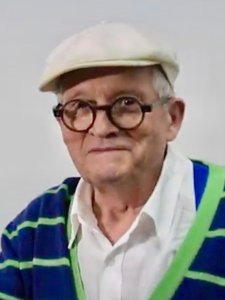
Дейвид Хънки
1937 - , Обединено кралство
Бърза справка
- Artists Who Influenced This Artist: ['Франк Лисъл']
- Date Of Birth: 1937
- Full Name: Дейвид Хънки
- Nationality: Британска
- Notable Artworks:
- По-голям плуг
- Американски колекционери
- Ние две момчета заедно се прилепнахме
- Портрет на артист
- Пристигането на пролетта в Уулдгейт
- Place Of Birth: Брадфорд, Обединено кралство