

 Представи си го
 Изпрати
 Сподели
 Детайли

 Изтегляне
 Подобни
 Рентгенова снимка
 Слайдшоу
 Статистика
The twelfth

 Прочетете повече
Ръчно изработена маслена репродукция
Ръчно рисувана маслена картина върху платно във вашия размер и рамка, изработена по поръчка от нашите художници. ( Превключване към принт Превключване към дигитално изображение)




P118B $10

P118H $10

P118W $10

P438Z $10

P508JH $12

P508YH $12

P805H $10

P805Z $10

P919BZ $10

P919G $10

P919XJ $10

P959ZH $10

P968JZ $12

W106C $8

W218G $10

W218JH $8

W218Y $10

W307PJ $10

W316G $10

W316PJ $8

W316Y $10

W398PJ $8

W4111J $10

W500HY $15

W500JH $15

W692G $12

W849H $8

W940BG $15

W953PJ $8




Изберете от предварително зададените размери, които съответстват на оригиналните пропорции на произведението.

Можете да въведете свои собствени размери, за да пасне на конкретна рамка или пространство. Ако избраният от вас размер не съответства на пропорциите на оригиналното изображение, ние ще изрежем произведението или ще удължим картината с допълнителни ръчно рисувани елементи. Дигитален макет ще бъде изпратен за ваше одобрение преди започване на производството.
Моля, обърнете внимание, че прегледът на екрана не отразява действителното изрязване или разширяване. Само макетът ще покаже точно финалния състав.
Въпреки че са налични персонализирани размери, препоръчваме да изберете размер от предварително дефинирания списък, за да запазите оригиналните пропорции.
След поръчка, екипът на OriginalUniqueArt.com ще изпрати имейл на клиента за инструкции и ще предостави преглед на макет.
Доставка по целия свят () в рамките на 3/4 седмици вместо стандартните 5 седмици. (10 Септември). Без компромис с качеството.

Безплатна експресна доставка по целия свят

Висококачествено ленено платно

Пълно застраховане при доставка

Гаранция за възстановяване на митнически такси

Гаранция за цветова точност

Политика за връщане в рамките на 100 дни (само при дефекти)

100% Гаранция за връщане на парите

Предложение за отстъпка при поръчка на едро
 Стъклото е налично само в размери под 110 см

The twelfth
Репродукционен метод
Размер на репродукцията
-


Обща цена
$ 300
A Celebration of Color and Observation: Exploring David Hockney's "The Twelfth"
David Hockney’s “The Twelfth,” painted in 1973, stands as a testament to his unwavering commitment to capturing the essence of place and experience through vibrant color palettes and simplified forms. More than just an aesthetically pleasing composition, it embodies a profound philosophical stance—a belief that art should strive for directness and immediacy, mirroring the way we perceive the world around us. This painting exemplifies Hockney’s signature style, which emerged from his formative years at Royal College of Art and solidified his position as one of Britain's most influential artists.The Style and Technique: Hockney's Approach to Abstraction
Hockney’s technique is characterized by a deliberate reduction of detail—a process he termed “joinery.” He meticulously observes the environment, often capturing scenes from Yorkshire landscapes or interiors bathed in sunlight. Rather than attempting to reproduce every nuance of reality, he isolates key elements and renders them with bold strokes of color and simplified geometric shapes. The resulting images possess an uncanny sense of presence, conveying not just what is seen but also how it feels—the warmth of the sun, the stillness of a garden vista. This approach contrasts sharply with academic painting traditions that prioritized meticulous realism, reflecting Hockney’s desire to liberate art from constraints imposed by illusionism.Historical Context: The Rise of British Pop Art
“The Twelfth” emerged during the burgeoning British Pop Art movement of the early 1970s—a reaction against the perceived elitism and intellectual seriousness of Abstract Expressionism. Artists like Hockney, Peter Blake, and Eduardo Paolozzi drew inspiration from popular culture—advertising billboards, comic books, and television—incorporating these visual languages into their artworks. This stylistic shift signaled a democratization of artistic expression, prioritizing accessibility and engaging with contemporary concerns. The painting’s celebration of color and its rejection of traditional representational conventions aligned perfectly with the movement's ethos, establishing Hockney as a pivotal figure in redefining British art for a new generation.Symbolism Within Simplicity: Circles and Light
Despite its apparent simplicity, “The Twelfth” is laden with symbolic significance. The prominent circles—one dominating the left side of the canvas and another positioned near the center—represent wholeness and unity—a visual metaphor for Hockney’s belief in capturing the totality of experience. They also evoke references to celestial bodies—the sun and moon—underscoring the painting's preoccupation with light and its transformative power. Light, as depicted in “The Twelfth,” isn’t merely illumination; it’s an active force that shapes perception and imbues objects with vibrancy. Hockney skillfully utilizes color gradients to convey this sense of luminosity, creating a captivating interplay between hues and textures.Emotional Impact: A Moment Frozen in Time
Ultimately, “The Twelfth” succeeds in conveying a profound emotional resonance—a feeling of serene contemplation and joyful appreciation for beauty. The painting captures a fleeting moment—perhaps the dappled sunlight filtering through leaves—transforming it into an enduring image of tranquility. Hockney’s masterful handling of color and form invites viewers to immerse themselves in the scene, fostering a connection with both the visual realm and the inner landscape. It serves as a reminder that art can transcend mere decoration, offering solace and inspiration—a testament to Hockney's enduring legacy as an artist who dared to embrace spontaneity and celebrate the transformative power of observation.Биография на художника
David Hockney: The Biography, 1937-1975
David Hockney, born July 9, 1937, in Bradford, Yorkshire, England, is more than simply a painter; he’s a visual polymath whose career has spanned painting, drawing, printmaking, stage design, and photography. His story begins amidst the grit and determination of Bradford, a landscape that instilled within him a keen observational eye, even as his father, Kenneth Hockney, fostered a spirit of independent thought through conscientious objection during World War II. This early environment shaped a young artist who would consistently challenge conventions and forge his own path—a trajectory that would ultimately redefine British art in the 20th century. Formal education at Wellington Primary School and Bradford Grammar School laid the foundation for a career that would propel him to international acclaim. He pursued his artistic ambitions with unwavering dedication, enrolling at Bradford College of Art in 1953 where he honed his skills in watercolor and drawing—techniques that would become hallmarks of his distinctive style. Subsequently, he continued his studies at the Royal College of Art in London in 1959–62, earning a gold medal in the graduate competition and cementing his position as one of Britain’s most promising young artists. It was during these formative years that Hockney began to articulate a unique artistic voice—a blend of Pop sensibilities with a distinctly British perspective—one that would soon captivate critics and audiences alike.The Rise of a Pop Icon and Beyond
The 1960s witnessed Hockney’s ascent as a pivotal figure within the burgeoning Pop Art movement. Unlike many contemporaries who wholeheartedly embraced American commercial culture, Hockney brought a uniquely British sensibility to the genre—a subtle irony and awareness of societal trends that distinguished his work from its more overtly celebratory counterparts. His breakthrough piece, A Bigger Splash (1966), exemplifies this approach perfectly: a seemingly simple depiction of a swimming pool transforms into a meditation on Californian leisure, artifice, and the very act of seeing—a deliberate rejection of traditional artistic conventions. Hockney’s masterful use of color and bold lines challenged viewers to reconsider their perceptions of reality, establishing him as an innovator within the movement. Simultaneously, he explored themes of homosexuality with remarkable honesty and vulnerability in works such as We Two Boys Together Clinging (1961), bravely confronting societal prejudices during a time when LGBTQ+ rights were severely limited—a courageous stance that underscored his commitment to artistic integrity.Experimentation, Innovation, and the Rescue of Painting
Throughout his prolific career, Hockney relentlessly pursued new artistic avenues—demonstrating an unparalleled curiosity and willingness to embrace unconventional techniques. From his early explorations of lithography and etching to his later experiments with photography—particularly his pioneering use of Polaroid composites in the 1980s—Hockney consistently pushed the boundaries of what art could achieve. He famously declared painting wasn’t dead but needed “rescuing” from its own limitations, inspiring him to develop innovative approaches like perspective distortions and fragmented viewpoints—a deliberate departure from academic traditions that signaled his unwavering belief in artistic evolution. This conviction fueled ambitious projects such as Pearblossom Hwy., 11–18th April 1986—a monumental photomontage comprised of fifty canvases arranged in a grid—challenging viewers to reconsider notions of space and representation and solidifying Hockney’s reputation as a visionary artist. His stage designs for operas, including sets for Mozart's The Magic Flute and Stravinsky's The Rake’s Progress, further showcased his versatility and ability to translate his visual language into another artistic medium—a testament to his multifaceted talent.Recognition, Legacy, and Enduring Influence
David Hockney’s contributions to the art world have been universally acknowledged throughout his illustrious career. He was awarded the Laureate of the Praemium Imperiale for Painting in 2000—recognizing his exceptional artistic achievement—and elected a Fellow of the Royal Society (FRS) in 2003—honoring his profound impact on scientific thought and cultural discourse. Prior to that, he achieved considerable success as a painter, garnering critical acclaim for iconic works such as Portrait of an Artist (1972), which captured the essence of artistic contemplation with remarkable subtlety. His enduring influence extends beyond the visual arts; Hockney has become a cultural icon—celebrated for his wit, intelligence, and unwavering dedication to artistic exploration—inspiring artists across disciplines and ensuring that his legacy continues to resonate for generations to come. He remains an active force in contemporary art, consistently challenging conventions and inspiring creativity—a testament to the enduring power of vision and innovation.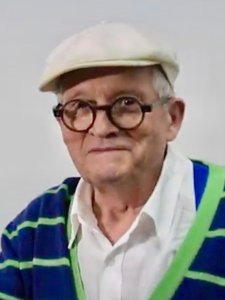
Дейвид Хънки
1937 - , Великобритания
Бързи факти
- Artistic Movement Or Style: Поп арт
- Artists Or Movements Influenced By Този Артист: ['Паулина Боти']
- Artists Who Influenced This Artist: ['Френк Лисли']
- Date Of Birth: 9 юли 1937 г.
- Full Name: David Hockney
- Nationality: Британски
- Notable Artworks:
- По-голям плуг
- Портрет на художник
- Двойни портрети
- Place Of Birth: Брадфорд, Великобритания
Всички статии

Serene Blue Backgrounds: Discover Soulful Art to Transform Your Space with Timeless Elegance
Transform your home with soulful blue art. From serene Monet impressions to modern textured sculptures, discover curated masterpieces designed to inspire calm. Explore expert art consultations and bespoke hand-painted reproductions to create your personal sanctuary.

Топ 25 шедьоври на Василий Кандински: Абстрактно изкуство за вашия дом | OriginalUniqueArt.com
Разгледайте топ 25 шедьоври на Василий Кандински – пионер на абстрактното изкуство и експресионизма. Открийте историите зад цветните композиции, техниките и вдъхновението му. Купете висококачествени репродукции на картини Кандински за вашия дом на OriginalUniqueArt.com!

Топ 10 шедьовъра на геометричната абстракция за Вашия дом | OriginalUniqueArt.com
Разгледайте топ 10 шедьовъра на геометричната абстракция – Кандински, Мондриан и други! Открийте историите зад тези емблематични картини и добавете елегантност към дома си с репродукции от OriginalUniqueArt.com. Разгледайте пълната колекция онлайн!

Топ 10 шедьовъра в нюансите на синьото: Изкуство за вашия дом от OriginalUniqueArt.com
Разгледайте топ 10 шедьовъра в нюансите на синьото – от Моне до Ван Гог! Открийте историите зад картините, техниките и значението им. Купете висококачествени репродукции на OriginalUniqueArt.com и превърнете дома си в галерия.

Топ 10 шедьовъра на абстрактния експресионизъм – изкуство за вашия дом от OriginalUniqueArt.com
Разгледайте топ 10 шедьовъра на абстрактния експресионизъм – Полък, Ротко, де Кунинг и други. Открийте историите зад тези емблематични картини и преобразете дома си с изкуство от OriginalUniqueArt.com! Разгледайте пълната колекция онлайн.


