

 Преглед в реален мащаб
 Сподели
 Сподели
 Подробности
 Ръководство

 Изтегляне
 Подобни артикули
 Рентгенова снимка
 Слайдшоу
 Статистика
Rainy night on bridlingtom promenade

 Разгърни целия текст
Закупете дигитално изображение с висока резолюция и подобрени характеристики, значително по-качествено от онлайн прегледа.
Всеки файл е щателно подготвен от нашите специалисти с помощта на съвременни инструменти и експертен ръчен ретуш. Гарантираме, че всяко изображение притежава изключителна яснота, прецизна цветова точност и фини детайли.
Окончателният файл се доставя по имейл в рамките на 72 часа, оптимизиран за незабавна употреба в професионални, редакционни и печатни среди. Това е същото качество, на което се доверяват водещи дизайнерски студия, издатели и галерии.
Дигитално изображение
Изтеглете файл с висока резолюция за лично съхранение, принтиране и творчески проекти. ( Избор на принт Поръчайте ръчно рисувано репродукция на този колекционерски предмет)
Включено във всяка поръчка за дигитални изображения
Експертна дигитална доставка, гарантирана
Избирайки OriginalUniqueArt.com, вие не получавате просто изображение – вие придобивате професионално обработена дигитална творба, създадена с прецизност и подкрепена от гаранция за удовлетворение. Ето какво автоматично е включено във вашата поръчка:

Бърза доставка по имейл
Вашето дигитално изображение с висока резолюция ще бъде изпратено по имейл в рамките на 72 часа от поръчката – готово за незабавно използване.

Дигитален файл с подобрено качество чрез ИИ
Вашата картина е професионално оптимизирана с помощта на усъвършенствани инструменти за изкуствен интелект и ръчна редакция, осигурявайки максимална детайлност, яснота и точност на цветовете.

Безплатна доживотна повторна доставка
Изгубили сте или сте изтрили файла си по погрешка? Не се притеснявайте – ще го изпратим отново на Вас по всяко време, безплатно.

Без митнически такси – завинаги
Насладете се на вашето произведение незабавно, без мита, данъци или такси за доставка – дигиталните изтегляния винаги са освободени от данъци.

Гаранция за точност на цветовете
Гарантираме, че вашето дигитално изображение отразява оригиналните цветове възможно най-точно, чрез използването на професионални инструменти и системи за управление на цветовете.

100-дневна гаранция за удовлетвореност
Ако не сте доволни от вашето дигитално изображение, ще го преработим или ще възстановим 100% от сумата в рамките на 100 дни – без излишни въпроси.

100% Гаранция за връщане на сумата
Не сте доволни? Получете пълен възврат на сумата в рамките на 100 дни от получаването на вашия цифров файл – без излишни въпроси.

Отстъпки за големи поръчки
Купете 3 изображения, спестете 10% - Купете 5, спестете 15% - Купете 10+, спестете 20%. Идеално за творчески проекти, галерии и агенства.
David Hockney: Bridlingtom Promenade Revisited
David Hockney’s “Rainy Night on Bridlingtom Promenade” isn't merely a depiction of London; it’s an embodiment of memory, perception, and the artist’s relentless pursuit of capturing fleeting moments in time. Painted in 1967 during Hockney’s formative years in Los Angeles – a period profoundly influenced by Californian light and color – this canvas transcends geographical boundaries to resonate with universal themes of solitude, contemplation, and the melancholic beauty inherent in urban decay. The painting itself is deceptively simple at first glance. A narrow promenade stretches across the composition, bathed in the muted hues of a rainy evening. The dominant palette leans heavily into blues and greens – shades that evoke not just meteorological conditions but also a deeper emotional resonance. These colors aren’t blended smoothly; instead, Hockney employs a technique he termed “joinery,” meticulously layering thin washes of pigment to create an illusion of depth and texture. This method, pioneered by Hockney alongside Frank Auerbach and Lucian Freud, prioritizes visual impact over photorealistic accuracy—a deliberate rejection of prevailing artistic conventions of the era. The promenade’s emptiness is punctuated by three strategically placed lamps – a luminous beacon against the gloom. These aren't rendered with meticulous detail; rather, they are treated as geometric shapes, radiating light and color that illuminate the surrounding area. Hockney’s use of acrylic paint—a relatively new medium at the time—allowed for unprecedented vibrancy and luminosity, pushing the boundaries of what was considered acceptable artistic expression. The lamps serve as a visual anchor, drawing the eye inward and inviting contemplation about the passage of time and the elusive nature of experience. Beyond its formal qualities, “Rainy Night on Bridlingtom Promenade” speaks to Hockney’s broader philosophical concerns. He famously stated that he wanted to paint "the world as it is seen," rejecting idealized representations in favor of capturing the raw immediacy of observation. The painting embodies this ethos—a testament to Hockney's belief that art should strive for truthfulness, even if that truthfulness resides in acknowledging imperfection and decay. It’s a poignant reminder that beauty can be found not only in grand vistas but also in the quiet corners of everyday life. The piece’s enduring appeal lies partly in its ability to evoke nostalgia—a longing for moments past that are forever lost to time. Hockney's masterful manipulation of color and texture transports viewers back to a specific place and moment, prompting reflection on memory and perception. It is a painting that invites us to slow down, observe carefully, and appreciate the subtle nuances of experience—a timeless contribution to British art history and a continuing source of inspiration for artists and collectors alike.Exploring Hockney's Technique: Joinery
David Hockney’s distinctive “joinery” technique represents a radical departure from traditional painting methods. Unlike blending colors seamlessly across surfaces, Hockney applies thin washes of pigment in successive layers—often up to 30—creating an illusion of depth and texture without resorting to glazing or scumbling. This painstaking process involves applying paint with a brush, allowing it to dry partially before adding another layer on top. The resulting surface resembles a jigsaw puzzle, where each fragment contributes to the overall visual effect. This method gained prominence during Hockney’s collaboration with fellow artists Auerbach and Freud in the mid-1960s—a period marked by experimentation and a desire to challenge artistic conventions. Joinery prioritizes visual impact over photographic realism, focusing on capturing the essence of form and color rather than striving for an accurate representation of reality. It's a technique that demands considerable patience and precision but yields extraordinary results—creating surfaces that shimmer with luminosity and conveying a palpable sense of atmosphere. Hockney himself described it as “painting with glue,” emphasizing the importance of layering and building up texture to achieve his artistic vision.Symbolism in Light and Darkness
The interplay between light and darkness within "Rainy Night on Bridlingtom Promenade" is laden with symbolic significance—reflecting Hockney’s broader engagement with philosophical ideas about perception and consciousness. The three lamps illuminate the promenade, representing not merely illumination but also a beacon of hope amidst the gloom—a visual metaphor for resilience and perseverance in the face of adversity. However, the darkness surrounding the lamps underscores the pervasive influence of melancholy and solitude—themes that recur throughout Hockney’s oeuvre. The muted blues and greens of the rainy night evoke feelings of introspection and contemplation, inviting viewers to consider the complexities of human experience. Hockney's deliberate use of color is carefully calibrated to convey emotional resonance—a testament to his belief that art should engage both intellect and emotion simultaneously. The emptiness of the promenade itself symbolizes isolation—a poignant reminder that even in bustling urban environments, individuals can experience profound feelings of loneliness. Yet, this solitude isn’t presented as bleak or despairing; rather, it serves as a catalyst for observation and reflection—encouraging viewers to appreciate the beauty inherent in stillness and simplicity. Hockney's masterful depiction captures the essence of these ideas—transforming a seemingly unremarkable scene into a powerful meditation on human existence.A Legacy of Innovation
“Rainy Night on Bridlingtom Promenade” stands as a cornerstone of David Hockney’s artistic legacy—a testament to his unwavering commitment to innovation and experimentation. By rejecting photographic realism and embracing a technique that prioritizes visual impact over meticulous detail, Hockney redefined British art in the 1960s—establishing himself as one of the most influential figures of his generation. His pioneering use of acrylic paint and his groundbreaking “joinery” method continue to inspire artists today—demonstrating the enduring power of artistic vision and the importance of challenging conventions. Hockney’s work remains a celebration of beauty, observation, and the transformative potential of art—a timeless contribution to British cultural heritage.Биография на художника
David Hockney: The Biography, 1937-1975
David Hockney, born July 9, 1937, in Bradford, Yorkshire, England, is more than simply a painter; he’s a visual polymath whose career has spanned painting, drawing, printmaking, stage design, and photography. His story begins amidst the grit and determination of Bradford, a landscape that instilled within him a keen observational eye, even as his father, Kenneth Hockney, fostered a spirit of independent thought through conscientious objection during World War II. This early environment shaped a young artist who would consistently challenge conventions and forge his own path—a trajectory that would ultimately redefine British art in the 20th century. Formal education at Wellington Primary School and Bradford Grammar School laid the foundation for a career that would propel him to international acclaim. He pursued his artistic ambitions with unwavering dedication, enrolling at Bradford College of Art in 1953 where he honed his skills in watercolor and drawing—techniques that would become hallmarks of his distinctive style. Subsequently, he continued his studies at the Royal College of Art in London in 1959–62, earning a gold medal in the graduate competition and cementing his position as one of Britain’s most promising young artists. It was during these formative years that Hockney began to articulate a unique artistic voice—a blend of Pop sensibilities with a distinctly British perspective—one that would soon captivate critics and audiences alike.The Rise of a Pop Icon and Beyond
The 1960s witnessed Hockney’s ascent as a pivotal figure within the burgeoning Pop Art movement. Unlike many contemporaries who wholeheartedly embraced American commercial culture, Hockney brought a uniquely British sensibility to the genre—a subtle irony and awareness of societal trends that distinguished his work from its more overtly celebratory counterparts. His breakthrough piece, A Bigger Splash (1966), exemplifies this approach perfectly: a seemingly simple depiction of a swimming pool transforms into a meditation on Californian leisure, artifice, and the very act of seeing—a deliberate rejection of traditional artistic conventions. Hockney’s masterful use of color and bold lines challenged viewers to reconsider their perceptions of reality, establishing him as an innovator within the movement. Simultaneously, he explored themes of homosexuality with remarkable honesty and vulnerability in works such as We Two Boys Together Clinging (1961), bravely confronting societal prejudices during a time when LGBTQ+ rights were severely limited—a courageous stance that underscored his commitment to artistic integrity.Experimentation, Innovation, and the Rescue of Painting
Throughout his prolific career, Hockney relentlessly pursued new artistic avenues—demonstrating an unparalleled curiosity and willingness to embrace unconventional techniques. From his early explorations of lithography and etching to his later experiments with photography—particularly his pioneering use of Polaroid composites in the 1980s—Hockney consistently pushed the boundaries of what art could achieve. He famously declared painting wasn’t dead but needed “rescuing” from its own limitations, inspiring him to develop innovative approaches like perspective distortions and fragmented viewpoints—a deliberate departure from academic traditions that signaled his unwavering belief in artistic evolution. This conviction fueled ambitious projects such as Pearblossom Hwy., 11–18th April 1986—a monumental photomontage comprised of fifty canvases arranged in a grid—challenging viewers to reconsider notions of space and representation and solidifying Hockney’s reputation as a visionary artist. His stage designs for operas, including sets for Mozart's The Magic Flute and Stravinsky's The Rake’s Progress, further showcased his versatility and ability to translate his visual language into another artistic medium—a testament to his multifaceted talent.Recognition, Legacy, and Enduring Influence
David Hockney’s contributions to the art world have been universally acknowledged throughout his illustrious career. He was awarded the Laureate of the Praemium Imperiale for Painting in 2000—recognizing his exceptional artistic achievement—and elected a Fellow of the Royal Society (FRS) in 2003—honoring his profound impact on scientific thought and cultural discourse. Prior to that, he achieved considerable success as a painter, garnering critical acclaim for iconic works such as Portrait of an Artist (1972), which captured the essence of artistic contemplation with remarkable subtlety. His enduring influence extends beyond the visual arts; Hockney has become a cultural icon—celebrated for his wit, intelligence, and unwavering dedication to artistic exploration—inspiring artists across disciplines and ensuring that his legacy continues to resonate for generations to come. He remains an active force in contemporary art, consistently challenging conventions and inspiring creativity—a testament to the enduring power of vision and innovation.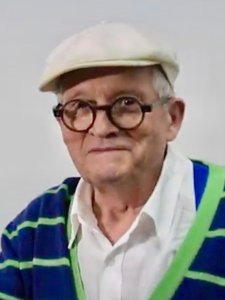
Дейвид Хънки
1937 - , Великобритания
Кратка информация
- Artistic Movement Or Style: Поп арт
- Artists Or Movements Influenced By Този Артист: ['Паулина Боти']
- Artists Who Influenced This Artist: ['Френк Лисли']
- Date Of Birth: 9 юли 1937 г.
- Full Name: David Hockney
- Nationality: Британски
- Notable Artworks:
- По-голям плуг
- Портрет на художник
- Двойни портрети
- Place Of Birth: Брадфорд, Великобритания