

 Преглед в реален мащаб
 Сподели
 Сподели
 Подробности
 Ръководство

 Изтегляне
 Подобни артикули
 Рентгенова снимка
 Слайдшоу
 Статистика
Clark percy

 Разгърни целия текст
Изкуството, представено на тази страница, е защитено от законите за авторско право, което означава, че не можем законно да създаваме или продаваме идентични репродукции. Тази защита се прилага съгласно международни споразумения като Бернска конвенция и от националното законодателство, включително разпоредбите на Закон за авторското право на САЩ – Раздел 17.
Този метод е напълно съвместим с законите за авторско право, тъй като не включва копиране или дублиране на защитеното произведение. Вместо това става въпрос за творческа реинтерпретация – нова картина, която е вдъхновена от оригинала, но не е идентична с него.
Жикле / Художествен принт
Giclée печат или принт върху платно с музейно качество, бързо производство и гъвкави опции за завършен вид. ( Поръчайте ръчно рисувано репродукция на този колекционерски предмет Превключване към дигитално изображение)




P118B €10

P118H €10

P118W €10

P438Z €10

P508JH €12

P508YH €12

P805H €10

P805Z €10

P919BZ €10

P919G €10

P919XJ €10

P959ZH €10

P968JZ €12

W106C €8

W218G €10

W218JH €8

W218Y €10

W307PJ €10

W316G €10

W316PJ €8

W316Y €10

W398PJ €8

W4111J €10

W500HY €15

W500JH €15

W692G €12

W849H €8

W940BG €15

W953PJ €8




Изберете от нашите предварително зададени размери, които съответстват на оригиналните пропорции на произведението.

Въведете необходимата ширина и височина, за да паснат на вашата рамка или стена. Принтовете могат само да се изрязват, но никога не могат да бъдат по-големи от оригиналната картина, така че при размер с различен формат част от изображението ще бъде загубена. Преди да започнем печат, ще ви изпратим дигитален мок업 за одобрение. Изображението, показано на тази страница, не показва реалното изрязване — само мок업ът го показва.
Доставка по целия свят () в рамките на 2 седмици вместо стандартните 4/5 седмици. (25 Октомври)

Безплатна експресна доставка по целия свят

Висококачествено ленено платно

Пълно застраховане на доставката

Гаранция за възстановяване на митнически такси

Гаранция за пълно съответствие на цветовете

Политика за връщане в рамките на 100 дни (само при дефекти)

100% Гаранция за връщане на сумата

Отстъпка при поръчка на повече произведения
 Опцията със стъкло е налична само за размери под 110 см

Clark percy
Жикле / Художествен принт
Размер на репродукцията
-


Крайна цена
€ 70
David Hockney’s ‘Clark Percy’: A Snapshot of Domestic Intimacy
David Hockney's “Clark Percy,” completed in 1970, stands as a quintessential example of Pop Art’s fascination with everyday life and its ability to elevate the mundane into art. More than just a portrait, it’s a carefully constructed tableau that captures a fleeting moment of connection between two figures—Clark Percy, Hockney's husband at the time—within the confines of their home.
- Subject Matter: The painting depicts Clark and Percy seated together in an armchair, engaged in what appears to be conversation. Their posture exudes a quiet confidence, suggesting a comfortable familiarity despite the inherent complexities of relationships.
- Style & Technique: Hockney employs a vibrant palette—primarily yellows and oranges—characteristic of Pop Art’s rejection of traditional tonal painting. The brushstrokes are loose and expressive, conveying movement and immediacy rather than meticulous detail. This technique prioritizes capturing the essence of the scene over photographic realism.
- Historical Context: “Clark Percy” emerged during a period of significant artistic experimentation following World War II. Pop Art challenged the dominance of Abstract Expressionism by embracing imagery from popular culture—advertising, comics, and television—reflecting the optimism and consumerism of the era. Hockney’s work aligns perfectly with this movement's ethos.
Symbolism Within Domestic Space
The room itself is laden with symbolic significance. The potted plant represents growth and vitality, mirroring the flourishing relationship depicted within the painting. The two vases hold white flowers—a classic symbol of purity and innocence—contrasting subtly with the warmth of the interior hues. Notably, a clock hangs prominently on the wall, emphasizing the passage of time and hinting at the importance of preserving memories.
Emotional Resonance: A Quiet Reflection
"Clark Percy" isn’t about grand gestures or dramatic narratives; it's profoundly evocative in its simplicity. Hockney skillfully captures the subtle nuances of human interaction—the gaze, the posture, the unspoken understanding—creating an image that invites contemplation. The painting speaks to the beauty found in ordinary moments and celebrates the intimacy of domestic life, resonating with viewers who appreciate understated elegance and psychological depth.
David Hockney’s Artistic Legacy
Completed during Hockney's prolific period, “Clark Percy” exemplifies his unwavering commitment to exploring human experience through innovative visual language. It serves as a cornerstone in understanding Hockney’s broader artistic vision—one that consistently seeks to transform familiar subjects into captivating works of art. Its enduring appeal lies in its ability to distill complex emotions into a single frame, cementing Hockney's place among the most influential artists of his generation.
Въпроси и отговори
Откъде идват посетителите на „Clark percy“ на Дейвид Хънки?
Статистиката за „Clark percy“ на Дейвид Хънки се намира на страницата Статистика на произведението: месечни посещения на произведението, посещения на творбите на художника, както и разпределение на последните посетители по държава и език.
Препоръчителният размер за печат на "Clark percy" е...?
За „Clark percy“ на Дейвид Хънки се препоръчва репродукция с размер Large. Размерът може да бъде променен, като се запазят пропорциите.
Кой е авторът на "Clark percy" и към кое художествено направление принадлежи?
"Clark percy" е създадена от Дейвид Хънки в стила на Pop Art. Художникът и художественото направление определят традицията на произведението.
Биография на художника
David Hockney: The Biography, 1937-1975
David Hockney, born July 9, 1937, in Bradford, Yorkshire, England, is more than simply a painter; he’s a visual polymath whose career has spanned painting, drawing, printmaking, stage design, and photography. His story begins amidst the grit and determination of Bradford, a landscape that instilled within him a keen observational eye, even as his father, Kenneth Hockney, fostered a spirit of independent thought through conscientious objection during World War II. This early environment shaped a young artist who would consistently challenge conventions and forge his own path—a trajectory that would ultimately redefine British art in the 20th century. Formal education at Wellington Primary School and Bradford Grammar School laid the foundation for a career that would propel him to international acclaim. He pursued his artistic ambitions with unwavering dedication, enrolling at Bradford College of Art in 1953 where he honed his skills in watercolor and drawing—techniques that would become hallmarks of his distinctive style. Subsequently, he continued his studies at the Royal College of Art in London in 1959–62, earning a gold medal in the graduate competition and cementing his position as one of Britain’s most promising young artists. It was during these formative years that Hockney began to articulate a unique artistic voice—a blend of Pop sensibilities with a distinctly British perspective—one that would soon captivate critics and audiences alike.The Rise of a Pop Icon and Beyond
The 1960s witnessed Hockney’s ascent as a pivotal figure within the burgeoning Pop Art movement. Unlike many contemporaries who wholeheartedly embraced American commercial culture, Hockney brought a uniquely British sensibility to the genre—a subtle irony and awareness of societal trends that distinguished his work from its more overtly celebratory counterparts. His breakthrough piece, A Bigger Splash (1966), exemplifies this approach perfectly: a seemingly simple depiction of a swimming pool transforms into a meditation on Californian leisure, artifice, and the very act of seeing—a deliberate rejection of traditional artistic conventions. Hockney’s masterful use of color and bold lines challenged viewers to reconsider their perceptions of reality, establishing him as an innovator within the movement. Simultaneously, he explored themes of homosexuality with remarkable honesty and vulnerability in works such as We Two Boys Together Clinging (1961), bravely confronting societal prejudices during a time when LGBTQ+ rights were severely limited—a courageous stance that underscored his commitment to artistic integrity.Experimentation, Innovation, and the Rescue of Painting
Throughout his prolific career, Hockney relentlessly pursued new artistic avenues—demonstrating an unparalleled curiosity and willingness to embrace unconventional techniques. From his early explorations of lithography and etching to his later experiments with photography—particularly his pioneering use of Polaroid composites in the 1980s—Hockney consistently pushed the boundaries of what art could achieve. He famously declared painting wasn’t dead but needed “rescuing” from its own limitations, inspiring him to develop innovative approaches like perspective distortions and fragmented viewpoints—a deliberate departure from academic traditions that signaled his unwavering belief in artistic evolution. This conviction fueled ambitious projects such as Pearblossom Hwy., 11–18th April 1986—a monumental photomontage comprised of fifty canvases arranged in a grid—challenging viewers to reconsider notions of space and representation and solidifying Hockney’s reputation as a visionary artist. His stage designs for operas, including sets for Mozart's The Magic Flute and Stravinsky's The Rake’s Progress, further showcased his versatility and ability to translate his visual language into another artistic medium—a testament to his multifaceted talent.Recognition, Legacy, and Enduring Influence
David Hockney’s contributions to the art world have been universally acknowledged throughout his illustrious career. He was awarded the Laureate of the Praemium Imperiale for Painting in 2000—recognizing his exceptional artistic achievement—and elected a Fellow of the Royal Society (FRS) in 2003—honoring his profound impact on scientific thought and cultural discourse. Prior to that, he achieved considerable success as a painter, garnering critical acclaim for iconic works such as Portrait of an Artist (1972), which captured the essence of artistic contemplation with remarkable subtlety. His enduring influence extends beyond the visual arts; Hockney has become a cultural icon—celebrated for his wit, intelligence, and unwavering dedication to artistic exploration—inspiring artists across disciplines and ensuring that his legacy continues to resonate for generations to come. He remains an active force in contemporary art, consistently challenging conventions and inspiring creativity—a testament to the enduring power of vision and innovation.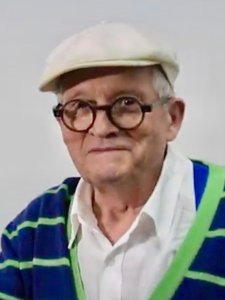
Дейвид Хънки
1937 - , Великобритания
Бързи факти
- Artistic Movement Or Style: Поп арт
- Artists Or Movements Influenced By Този Артист: ['Паулина Боти']
- Artists Who Influenced This Artist: ['Френк Лисли']
- Date Of Birth: 9 юли 1937 г.
- Full Name: David Hockney
- Nationality: Британски
- Notable Artworks:
- По-голям плуг
- Портрет на художник
- Двойни портрети
- Place Of Birth: Брадфорд, Великобритания
Свързани статии
David Bomberg: Reassessing the Pioneering Spirit of Early British Abstraction
Explore the groundbreaking work of David Bomberg, a pivotal figure in British abstraction. Discover his artistic evolution, influences, and lasting legacy through insightful analysis & expert commentary.
Топ 10 шедьовъра на Поп Арта: Художници, История и Декор с OriginalUniqueArt.com
Разгледайте топ 10 шедьовъра на Поп Арта с OriginalUniqueArt.com! От Анди Уорхол до Рой Лихтенщайн – истории, техники и вдъхновение за вашия дом. Купете висококачествени репродукции и декорирайте с изкуство!
Рой Лихтенщайн: 25 шедьовъра на поп арта за вашия дом | OriginalUniqueArt.com
Разгледайте 25 шедьовъра на Рой Лихтенщайн – икони на поп арта! Открийте историите зад картините, техниките и вдъхновението. Купете висококачествени репродукции за вашия дом на OriginalUniqueArt.com.
David Hockney: A Retrospective on Pop Art's Chronicler of Light, Space, and the Everyday
Explore the life & work of David Hockney, Pop Art's master chronicler. Discover his iconic paintings, Californian landscapes, and lasting influence on modern art. Expert analysis for collectors.
Challenging Conventions: Pop Art's Origins, Evolution & Enduring Legacy
Explore the fascinating history of Pop Art, from its rebellious origins to its enduring influence on contemporary artists. Discover key figures like Warhol & Lichtenstein and learn about collecting this iconic movement.


