

 Представи си го
 Изпрати
 Сподели
 Детайли

 Изтегляне
 Подобни
 Рентгенова снимка
 Слайдшоу
Sketch


 Прочетете повече
Жикле / Художествен принт
Giclée печат или принт върху платно с музейно качество, бързо производство и гъвкави опции за завършен вид. ( Купете ръчно рисувана картина Купете изображение)




P118B $10

P118H $10

P118W $10

P438Z $10

P508JH $12

P508YH $12

P805H $10

P805Z $10

P919BZ $10

P919G $10

P919XJ $10

P959ZH $10

P968JZ $12

W106C $8

W218G $10

W218JH $8

W218Y $10

W307PJ $10

W316G $10

W316PJ $8

W316Y $10

W398PJ $8

W4111J $10

W500HY $15

W500JH $15

W692G $12

W849H $8

W940BG $15

W953PJ $8




Изберете от предварително зададените размери, които съответстват на оригиналните пропорции на произведението.

Можете да въведете собствени размери, за да паснат на конкретна рамка или пространство. Ако избраният от Вас размер не съвпада с пропорциите на оригиналното изображение, ние ще изрежем произведението или ще разширим изображението с огледален или едноцветен ръб. Дигитален макет ще бъде изпратен за Ваше одобрение преди започването на производството.
Моля, имайте предвид, че предпрегледът на екрана не отразява реалното изрязване или разширяване. Само макетът ще покаже точно финалната композиция.
Въпреки че са налични персонализирани размери, препоръчваме да изберете размер от предварително дефинирания списък, за да запазите оригиналните пропорции.
Доставка по целия свят () в рамките на 2 седмици вместо стандартните 4/5 седмици. (25 Август)

Безплатна експресна доставка по целия свят

Висококачествено ленено платно

Пълно застраховане при доставка

Гаранция за възстановяване на митнически такси

Гаранция за цветова точност

60-Дневен период за връщане (Само при дефекти)

100% Гаранция за връщане на парите

Предложение за отстъпка при поръчка на едро
 Стъклото е налично само в размери под 110 см

Sketch
Жикле / Художествен принт
Размер на репродукцията
-


Обща цена
$ 80
Описание на колекционерския предмет
A Moment of Precision: Deconstructing the Elegance of Cristóbal Balenciaga’s “Sketch”
Cristóbal Balenciaga's "Sketch," a deceptively simple study in grayscale, transcends its humble origins as a fashion illustration to become a poignant meditation on form, proportion, and the very essence of haute couture. Created around 1950, this piece isn’t merely a depiction of two hats; it’s a distilled distillation of Balenciaga's revolutionary approach to design – one that prioritized structural integrity and sculptural beauty above all else. The work speaks volumes about his profound understanding of fabric, line, and the subtle interplay between shadow and light, offering a glimpse into the mind of a master who fundamentally reshaped the landscape of 20th-century fashion.
The composition itself is remarkably restrained. Two distinct hat designs, rendered with meticulous detail, occupy nearly equal visual space, suggesting an intellectual engagement with the subject matter rather than a purely decorative exercise. Each figure – representing women in hats – is presented in profile, facing left, creating a sense of quiet observation and inviting the viewer to contemplate their individual forms. The inclusion of the address “10 Avenue George V VIII” hints at the sketch’s purpose: documentation for a design studio, a record of ideas captured before they materialized into finished garments. This detail underscores Balenciaga's methodical approach – a commitment to precision that defined his entire career.
The Language of Line and Shadow
What immediately commands attention is the sheer dominance of line in this work. Executed with remarkable control, each stroke defines shape with unwavering clarity. Hatching and cross-hatching are employed not merely for tonal variation but as a sophisticated technique to build volume and suggest texture. The crispness of the lines speaks to Balenciaga’s preference for directness – he eschewed elaborate ornamentation in favor of revealing the inherent beauty of the materials themselves. The monochromatic palette, ranging from deep charcoal to pale grey, amplifies this effect, allowing the viewer to focus entirely on the interplay of line and shadow, creating a dynamic sense of depth and form.
Balenciaga’s mastery lies in his ability to imbue seemingly static forms with a remarkable sense of movement. The hats aren't simply flat shapes; they possess an implied volume, a suggestion of weight and drape. This is achieved through the careful manipulation of line density – areas of denser hatching create darker shadows, while lighter lines delineate edges and contours. The absence of any explicit light source further enhances this effect, forcing the viewer to actively engage with the image and interpret the tonal variations as evidence of form and volume.
A Legacy of Architectural Form
“Sketch” is a quintessential example of Balenciaga’s broader artistic philosophy – one that drew heavily from the principles of Cubism and Surrealism. His designs were often described as “architectural,” reflecting his belief that clothing should be constructed with the same rigor and precision as buildings. This influence is evident in the sketch's emphasis on geometric forms, sharp angles, and a deliberate rejection of traditional draping techniques. The study’s stark simplicity mirrors the reductive aesthetic of early 20th-century modernism, while simultaneously hinting at the luxuriousness and sophistication that would become hallmarks of his couture house.
Beyond its formal qualities, “Sketch” also conveys a subtle sense of elegance and refinement. The meticulous detail, the precise lines, and the restrained palette all contribute to an atmosphere of understated luxury. It’s a testament to Balenciaga's belief that true beauty lies in simplicity and restraint – a philosophy that continues to resonate with designers and collectors today. The piece serves as a powerful reminder of his genius, not just as a fashion designer, but as a visionary artist who fundamentally altered the course of style.
Биография на художника
Early Life and Artistic Beginnings
Cristóbal Balenciaga Eizaguirre, a name synonymous with revolutionary elegance in the world of haute couture, was born on January 21, 1895, in the small, windswept fishing village of Getaria, nestled along the rugged Basque coast of Spain. His early life was deeply intertwined with the rhythms of the sea and the traditions of his community – a heritage that would subtly inform his later designs. His mother, a skilled seamstress, provided Cristobal with his first exposure to the craft, teaching him the fundamentals of needlework and patternmaking from a remarkably young age. This practical training, combined with the influence of his father, a respected skipper, instilled in him an appreciation for precision, structure, and the inherent beauty of materials – qualities that would become hallmarks of his distinctive style. The family’s modest circumstances fostered a resourcefulness and a keen eye for detail, shaping his approach to design from its inception. He spent his formative years absorbing the artistry of local textiles and the meticulous construction techniques employed by his mother's clients, laying the groundwork for his future mastery.A Parisian Education and Early Influences
At the tender age of twelve, Cristobal’s talent caught the attention of the Marquesa de Casa Torres, a prominent figure in Getaria society. Recognizing his exceptional potential, she arranged for him to receive formal training in tailoring in Madrid, exposing him to the broader world of fashion and providing access to more advanced techniques. Subsequently, he continued his education in Bordeaux and Paris – the undisputed heart of the European fashion industry at the time. These experiences proved pivotal, immersing him in a vibrant artistic environment where he encountered the groundbreaking work of designers like Coco Chanel and Elsa Schiaparelli. He studied under Jacques Doucet, absorbing not only technical skills but also an understanding of historical silhouettes and the evolving tastes of Parisian society. The influence of Spanish Renaissance art, particularly the dramatic compositions of Diego Velázquez, is evident in his early designs – a subtle nod to his heritage that would continue to inform his aesthetic throughout his career.Revolutionizing Haute Couture
Cristóbal Balenciaga’s arrival in Paris in 1937 marked the beginning of a truly transformative era in fashion. He quickly established himself as a singular talent, defying conventional notions of couture and challenging the prevailing trends of the time. Unlike many of his contemporaries who relied on embellishment and ornamentation, Balenciaga favored simplicity, restraint, and an almost sculptural approach to design. His creations were characterized by their impeccable construction, flawless fit, and a remarkable ability to manipulate fabric into breathtakingly elegant forms. He was renowned for his mastery of draping and cutting, creating garments that seemed to flow effortlessly from the body – a departure from the rigid, structured styles favored by other couturiers. His designs were immediately embraced by an elite clientele, including royalty, socialites, and Hollywood stars, solidifying his reputation as “The Master” of haute couture.Key Innovations and Lasting Legacy
Balenciaga’s influence extended far beyond mere aesthetics; he fundamentally altered the way women dressed. He pioneered new silhouettes – the balloon jacket, the sack dress, the baby doll dress – each a bold statement that redefined the possibilities of fashion. His use of innovative materials, such as stiff silk gazar and unconventional color combinations (particularly black and brown), further distinguished his work. He was celebrated by fellow designers for his uncompromising perfectionism and his unwavering commitment to quality. Christian Dior famously declared him “the only couturier in the truest sense of the word,” acknowledging Balenciaga’s unparalleled technical skill and artistic vision. Despite facing challenges during World War II and ultimately closing his house in 1968, Cristóbal Balenciaga's legacy endures. His designs continue to be studied and admired by fashion students and designers worldwide, a testament to his enduring influence on the world of couture. He remains an icon – a visionary who dared to challenge convention and redefine beauty through impeccable craftsmanship and timeless elegance.
Кристобал Баленсия Еизагире
1895 - 1972 , Испания
Бързи факти
- Artistic Movement Or Style: Авангардизъм / Сюрреализъм
- Artists Or Movements Influenced By This Artist:
- Христиан Диор
- Коко Шанел
- Artists Who Influenced This Artist: ['Хуберт де Живенко']
- Date Of Birth: 21 януари 1895 г.
- Date Of Death: 23 март 1972 г.
- Full Name: Cristóbal Balenciaga Eizaguirre
- Nationality: Испанец
- Notable Artworks:
- Study to 'Song of Songs IV'
- Tree Roots
- Acrobat
- Place Of Birth: Гетария, Испания
Всички статии

Cristóbal Balenciaga: Deconstructing Haute Couture's Architectural Legacy
Explore the revolutionary world of Cristóbal Balenciaga, the 'couturier's couturier'. Discover his architectural designs, lasting influence on haute couture, and guide to collecting rare pieces. A connoisseur’s resource.
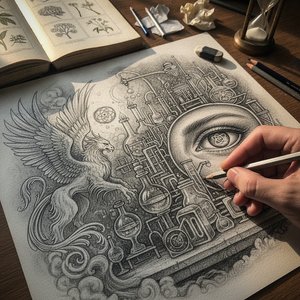
The Alchemy of Graphite: An Expert Guide to Mastering Detail and Depth in Pencil Sketching
Unlock the secrets of graphite sketching with our expert guide for art students. Learn to master pencil grades, create realistic depth, and capture intricate textures through professional techniques designed to elevate your observational drawing skills.
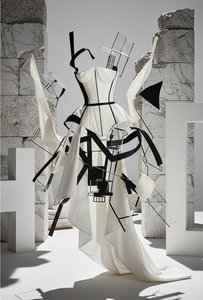
Gianfranco Ferré: Deconstructing Haute Couture – A Legacy of Architectural Form
Explore the revolutionary world of Gianfranco Ferré, 'the architect of fashion.' Discover his architectural approach to haute couture, iconic Dior designs, and lasting influence on luxury style. A deep dive for collectors & enthusiasts.

The Eloquent Line: Exploring the Artistic Significance of Sketches Across Movements and Media
Explore the profound artistic significance of sketches throughout history. From Renaissance masters to modern innovators like Van Gogh & Guston, discover how these foundational works reveal technique, emotion, and vision. Learn more at OriginalUniqueArt.
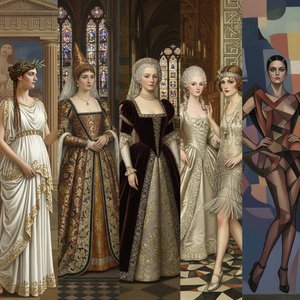
Style Through the Ages: Iconic Artworks That Defined the Evolution of Fashion Design
Explore the breathtaking intersection of fine art and high fashion. Discover how iconic masterpieces from Art Deco to Impressionism have shaped the world of luxury couture and timeless design in this curated visual journey.



