
 Изпрати
 Сподели
 Детайли
 Ръководство

 Изтегляне
 Подобни артикули
 Слайдшоу
 Въпроси и отговори
 Статистика
Ensemble


 Прочети повече
Изкуството, представено на тази страница, е защитено от законите за авторско право, което означава, че не можем законно да създаваме или продаваме идентични репродукции. Тази защита се прилага съгласно международни споразумения като Бернска конвенция и от националното законодателство, включително разпоредбите на Закон за авторското право на САЩ – Раздел 17.
Този метод е напълно съвместим с законите за авторско право, тъй като не включва копиране или дублиране на защитеното произведение. Вместо това става въпрос за творческа реинтерпретация – нова картина, която е вдъхновена от оригинала, но не е идентична с него.
Жикле / Художествен принт
Giclée печат или принт върху платно с музейно качество, бързо производство и гъвкави опции за завършен вид. ( Купете ръчно рисувана картина Превключване към дигитално изображение)




































Изберете от нашите предварително зададени размери, които съответстват на оригиналните пропорции на произведението.

Въведете необходимата ширина и височина, за да паснат на вашата рамка или стена. Принтовете могат само да се изрязват, но никога не могат да бъдат по-големи от оригиналната картина, така че при размер с различен формат част от изображението ще бъде загубена. Преди да започнем печат, ще ви изпратим дигитален мок업 за одобрение. Изображението, показано на тази страница, не показва реалното изрязване — само мок업ът го показва.
Доставка по целия свят () в рамките на 2 седмици вместо стандартните 4/5 седмици. (4 Ноември)

Безплатна експресна доставка по целия свят

Висококачествено ленено платно

Пълно застраховане на доставката

Гаранция за възстановяване на митнически такси

Гаранция за пълно съответствие на цветовете

Политика за връщане в рамките на 100 дни (само при дефекти)

100% Гаранция за връщане на сумата

Оферта за отстъпка при поръчка на повече бройки
 Опцията със стъкло е налична само за размери под 110 см

Ensemble
Жикле / Художествен принт
Размер на репродукцията
-


Обща цена
€ 72
The Architecture of a Silhouette
A monochrome photograph captures a mannequin draped in a checkered pattern. The garment carries the weight of a coat, structured and heavy. It sits against a plain wall, stripped of all distraction. Every line is deliberate. The fabric holds its shape with a geometric precision that suggests bone beneath cloth. A hat rests atop the head, adding a single point of height to the composition.
The texture of the dress speaks through the grain of the black and white film. It carries the spirit of Basque textiles, where tradition meets a sharp, modern edge. There is no excess here, only the careful placement of seams and the deliberate fold of pleats. The design relies on the strength of its own construction.
A Study in Restraint
The year 1960 brought a shift toward experimental forms, yet this ensemble remains anchored in simplicity. It rejects the theatrical for the structural. The checkered pattern provides a rhythmic visual language, grounding the piece in a sense of heritage. This is fashion as sculpture, where the material is transformed into a form that defies easy movement.
The placement of the hat and the coat-like structure of the dress create an image of quiet confidence. It does not demand attention through color or ornament. Instead, it commands the space through its stillness. The eye follows the clean edges and the stark contrast of the monochrome tones. A single, silent note.
Въпроси и отговори
На кой етап от кариерата на Кристобал Баленсия Еизагире съответства датата от 1960 на „Ensemble“?
Създадена през 1960, „Ensemble“ принадлежи към Mature Period на Кристобал Баленсия Еизагире.
Кой е създал "Ensemble" и в какъв стил е изработено?
Кристобал Баленсия Еизагире създава „Ensemble“ в рамките на движението Post-Impressionism.
Какво приложение и какво пространство се препоръчват за „Ensemble“ на Кристобал Баленсия Еизагире?
„Ensemble“ е предложена за Accent, а препоръчителното пространство е Living Room.
Биография на художника
Early Life and Artistic Beginnings
Cristóbal Balenciaga Eizaguirre, a name synonymous with revolutionary elegance in the world of haute couture, was born on January 21, 1895, in the small, windswept fishing village of Getaria, nestled along the rugged Basque coast of Spain. His early life was deeply intertwined with the rhythms of the sea and the traditions of his community – a heritage that would subtly inform his later designs. His mother, a skilled seamstress, provided Cristobal with his first exposure to the craft, teaching him the fundamentals of needlework and patternmaking from a remarkably young age. This practical training, combined with the influence of his father, a respected skipper, instilled in him an appreciation for precision, structure, and the inherent beauty of materials – qualities that would become hallmarks of his distinctive style. The family’s modest circumstances fostered a resourcefulness and a keen eye for detail, shaping his approach to design from its inception. He spent his formative years absorbing the artistry of local textiles and the meticulous construction techniques employed by his mother's clients, laying the groundwork for his future mastery.A Parisian Education and Early Influences
At the tender age of twelve, Cristobal’s talent caught the attention of the Marquesa de Casa Torres, a prominent figure in Getaria society. Recognizing his exceptional potential, she arranged for him to receive formal training in tailoring in Madrid, exposing him to the broader world of fashion and providing access to more advanced techniques. Subsequently, he continued his education in Bordeaux and Paris – the undisputed heart of the European fashion industry at the time. These experiences proved pivotal, immersing him in a vibrant artistic environment where he encountered the groundbreaking work of designers like Coco Chanel and Elsa Schiaparelli. He studied under Jacques Doucet, absorbing not only technical skills but also an understanding of historical silhouettes and the evolving tastes of Parisian society. The influence of Spanish Renaissance art, particularly the dramatic compositions of Diego Velázquez, is evident in his early designs – a subtle nod to his heritage that would continue to inform his aesthetic throughout his career.Revolutionizing Haute Couture
Cristóbal Balenciaga’s arrival in Paris in 1937 marked the beginning of a truly transformative era in fashion. He quickly established himself as a singular talent, defying conventional notions of couture and challenging the prevailing trends of the time. Unlike many of his contemporaries who relied on embellishment and ornamentation, Balenciaga favored simplicity, restraint, and an almost sculptural approach to design. His creations were characterized by their impeccable construction, flawless fit, and a remarkable ability to manipulate fabric into breathtakingly elegant forms. He was renowned for his mastery of draping and cutting, creating garments that seemed to flow effortlessly from the body – a departure from the rigid, structured styles favored by other couturiers. His designs were immediately embraced by an elite clientele, including royalty, socialites, and Hollywood stars, solidifying his reputation as “The Master” of haute couture.Key Innovations and Lasting Legacy
Balenciaga’s influence extended far beyond mere aesthetics; he fundamentally altered the way women dressed. He pioneered new silhouettes – the balloon jacket, the sack dress, the baby doll dress – each a bold statement that redefined the possibilities of fashion. His use of innovative materials, such as stiff silk gazar and unconventional color combinations (particularly black and brown), further distinguished his work. He was celebrated by fellow designers for his uncompromising perfectionism and his unwavering commitment to quality. Christian Dior famously declared him “the only couturier in the truest sense of the word,” acknowledging Balenciaga’s unparalleled technical skill and artistic vision. Despite facing challenges during World War II and ultimately closing his house in 1968, Cristóbal Balenciaga's legacy endures. His designs continue to be studied and admired by fashion students and designers worldwide, a testament to his enduring influence on the world of couture. He remains an icon – a visionary who dared to challenge convention and redefine beauty through impeccable craftsmanship and timeless elegance.
Кристобал Баленсия Еизагире
1895 - 1972 , Испания
Бърза информация
- Artistic Movement Or Style: Авангардизъм / Сюрреализъм
- Artists Or Movements Influenced By This Artist:
- Христиан Диор
- Коко Шанел
- Artists Who Influenced This Artist: ['Хуберт де Живенко']
- Date Of Birth: 21 януари 1895 г.
- Date Of Death: 23 март 1972 г.
- Full Name: Cristóbal Balenciaga Eizaguirre
- Nationality: Испанец
- Notable Artworks:
- Study to 'Song of Songs IV'
- Tree Roots
- Acrobat
- Place Of Birth: Гетария, Испания
Свързани статии
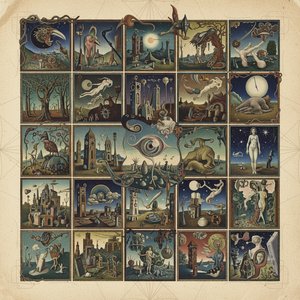
Топ 25 шедьовъра на Макс Ернст: Сюрреалистични пътешествия в изкуството и декора
Разгледайте топ 25 шедьовъра на Макс Ернст и се потопете в света на сюрреализма! Открийте историите зад картините, техниките и влиянието му върху модерното изкуство. Купете висококачествени репродукции за вашия дом на OriginalUniqueArt.com.
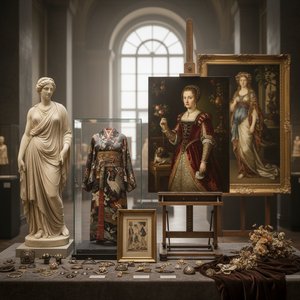
Draped Narratives: Fashion as Symbol & Subject in Historical Art
Explore the fascinating history of fashion as a symbol of power & status in art! Discover masterpieces from Gainsborough to Tissot and learn how clothing shaped societal narratives. Find museum-quality reproductions at OriginalUniqueArt.

Cristóbal Balenciaga: Deconstructing Haute Couture's Architectural Legacy
Explore the revolutionary world of Cristóbal Balenciaga, the 'couturier's couturier'. Discover his architectural designs, lasting influence on haute couture, and guide to collecting rare pieces. A connoisseur’s resource.
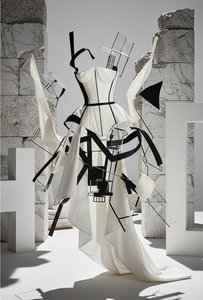
Gianfranco Ferré: Deconstructing Haute Couture – A Legacy of Architectural Form
Explore the revolutionary world of Gianfranco Ferré, 'the architect of fashion.' Discover his architectural approach to haute couture, iconic Dior designs, and lasting influence on luxury style. A deep dive for collectors & enthusiasts.
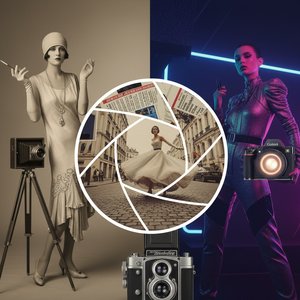
The Lens of Luxury: A Visual Journey Through the Evolution and Artistry of Fashion Photography
Embark on a visual journey through the evolution of fashion photography. Discover how masters like Gianfranco Ferré blended geometry, surrealism, and texture to redefine high-fashion art for collectors and connoisseurs of luxury imagery.


