
 Преглед в реален мащаб
 Изпрати
 Сподели
 Детайли
 Ръководство

 Изтегляне
 Подобни артикули
 Рентгенова снимка
 Слайдшоу
 Q&A
Q&A Статистика
Coat


 Прочети повече
Изкуството, представено на тази страница, е защитено от законите за авторско право, което означава, че не можем законно да създаваме или продаваме идентични репродукции. Тази защита се прилага съгласно международни споразумения като Бернска конвенция и от националното законодателство, включително разпоредбите на Закон за авторското право на САЩ – Раздел 17.
Този метод е напълно съвместим с законите за авторско право, тъй като не включва копиране или дублиране на защитеното произведение. Вместо това става въпрос за творческа реинтерпретация – нова картина, която е вдъхновена от оригинала, но не е идентична с него.
Жикле / Художествен принт
Giclée печат или принт върху платно с музейно качество, бързо производство и гъвкави опции за завършен вид. ( Купете ръчно рисувана картина Превключване към дигитално изображение)




P118B €10

P118H €10

P118W €10

P438Z €10

P508JH €12

P508YH €12

P805H €10

P805Z €10

P919BZ €10

P919G €10

P919XJ €10

P959ZH €10

P968JZ €12

W106C €8

W218G €10

W218JH €8

W218Y €10

W307PJ €10

W316G €10

W316PJ €8

W316Y €10

W398PJ €8

W4111J €10

W500HY €15

W500JH €15

W692G €12

W849H €8

W940BG €15

W953PJ €8




Изберете от нашите предварително зададени размери, които съответстват на оригиналните пропорции на произведението.

Въведете необходимата ширина и височина, за да паснат на вашата рамка или стена. Принтовете могат само да се изрязват, но никога не могат да бъдат по-големи от оригиналната картина, така че при размер с различен формат част от изображението ще бъде загубена. Преди да започнем печат, ще ви изпратим дигитален мок업 за одобрение. Изображението, показано на тази страница, не показва реалното изрязване — само мок업ът го показва.
Доставка по целия свят () в рамките на 2 седмици вместо стандартните 4/5 седмици. (31 Октомври)

Безплатна експресна доставка по целия свят

Висококачествено ленено платно

Пълно застраховане на доставката

Гаранция за възстановяване на митнически такси

Гаранция за пълно съответствие на цветовете

Политика за връщане в рамките на 100 дни (само при дефекти)

100% Гаранция за връщане на сумата

Оферта за отстъпка при поръчка на повече бройки
 Опцията със стъкло е налична само за размери под 110 см

Coat
Жикле / Художествен принт
Размер на репродукцията
-


Обща цена
€ 71
The Sculptural Silence of Cristóbal Balenciaga’s Cocoon Coat
Cristóbal Balenciaga, often hailed as “the master of us all,” possessed an almost preternatural ability to distill fashion into its purest essence – a quiet elegance that transcended mere trend. His designs weren't flamboyant displays of ornamentation; they were meticulously crafted sculptures, imbued with a profound understanding of form and the human body. The 1966 Cocoon Coat in Ivory Worsted Wool Doublefaced Gabardine, a piece now available as a stunning hand-painted reproduction, exemplifies this philosophy perfectly. It’s not simply a coat; it's an embodiment of understated luxury, a testament to Balenciaga’s revolutionary approach to silhouette and his mastery of luxurious materials.
The coat immediately commands attention not through ostentation, but through its sheer architectural integrity. The ivory wool, exquisitely double-faced for a subtle textural interplay, drapes with an almost liquid grace. Balenciaga eschewed the rigid constraints of traditional tailoring, opting instead for a fluid, cocooning shape that subtly embraces the wearer without restricting movement. This isn’t a coat meant to be worn; it's a garment designed to be *experienced*, to feel the luxurious weight and smooth texture against the skin.
A Revolutionary Cut: Deconstructing the Silhouette
Balenciaga’s genius lay in his ability to dismantle and reconstruct familiar forms. The Cocoon Coat is a prime example of this process. Rather than emphasizing the waist – a defining feature of mid-century fashion – Balenciaga creates an illusion of volume through the generous, enveloping cut. The coat's shoulders are subtly squared, lending it a powerful yet graceful stance. Crucially, the back panel is cut from a single piece of fabric, “à même,” creating a seamless expanse that defies conventional tailoring. This technique, combined with the kimono sleeves, results in a garment that appears to float effortlessly, defying gravity and challenging the established rules of dress.
This radical departure from traditional silhouettes was directly influenced by Balenciaga’s deep engagement with modern art movements. He drew inspiration from the work of artists like Ellsworth Kelly and Daniel Buren, whose explorations of geometric abstraction and minimalist forms resonated deeply within his creative process. The clean lines, planar surfaces, and reduction to essential elements in the Cocoon Coat mirror these artistic principles, elevating it beyond a mere functional garment into a statement of sophisticated design.
The Language of Minimalism: Color and Texture
The coat’s palette – a harmonious blend of ivory and subtle grey – further reinforces its minimalist aesthetic. The choice of ivory wool speaks to an enduring sense of timeless elegance, while the muted tones allow the garment's form to take center stage. The texture is equally important; the double-faced construction adds depth and richness, creating a tactile experience that invites touch. Subtle variations in sheen and nap contribute to the coat’s visual interest without resorting to overt embellishment.
Balenciaga’s use of color was always restrained, prioritizing form over flamboyant decoration. He understood that true luxury resided not in lavish ornamentation but in the impeccable quality of materials and the precision of execution. The Cocoon Coat is a testament to this philosophy – a study in quiet sophistication, where every detail contributes to an overall sense of understated elegance.
A Legacy of Innovation
The 1966 Cocoon Coat represents a pivotal moment in Balenciaga’s career, marking a shift towards greater abstraction and architectural experimentation. It's a garment that foreshadowed the minimalist trends of the late 20th century while simultaneously retaining an enduring sense of timeless elegance. As a hand-painted reproduction, this piece offers a remarkable opportunity to bring Balenciaga’s visionary design into your home or office – a tangible reminder of his unparalleled genius and his profound impact on the world of fashion.
Въпроси и отговори
Как „Coat“ на Кристобал Баленсия Еизагире свързва Tree Roots: Post-Impressionism с родината на художника?
"Coat" свързва изкуственото движение Tree Roots: Post-Impressionism с Испания чрез родното място на неговия създател.
Мога ли да видя „Coat“ на Кристобал Баленсия Еизагире под различно осветление?
Страницата Рентгенови лъчи на „Coat“ на Кристобал Баленсия Еизагире е интерактивен визуализатор, който ви позволява да разгледате единадесет оптични слоя на произведението, включително и рентгенов вид.
Към кое художествено течение принадлежи „Coat“ на Кристобал Баленсия Еизагире?
„Coat“ на Кристобал Баленсия Еизагире принадлежи към художественото направление Tree Roots: Post-Impressionism. Това движение определя стилистичния контекст на произведението.
Биография на художника
Early Life and Artistic Beginnings
Cristóbal Balenciaga Eizaguirre, a name synonymous with revolutionary elegance in the world of haute couture, was born on January 21, 1895, in the small, windswept fishing village of Getaria, nestled along the rugged Basque coast of Spain. His early life was deeply intertwined with the rhythms of the sea and the traditions of his community – a heritage that would subtly inform his later designs. His mother, a skilled seamstress, provided Cristobal with his first exposure to the craft, teaching him the fundamentals of needlework and patternmaking from a remarkably young age. This practical training, combined with the influence of his father, a respected skipper, instilled in him an appreciation for precision, structure, and the inherent beauty of materials – qualities that would become hallmarks of his distinctive style. The family’s modest circumstances fostered a resourcefulness and a keen eye for detail, shaping his approach to design from its inception. He spent his formative years absorbing the artistry of local textiles and the meticulous construction techniques employed by his mother's clients, laying the groundwork for his future mastery.A Parisian Education and Early Influences
At the tender age of twelve, Cristobal’s talent caught the attention of the Marquesa de Casa Torres, a prominent figure in Getaria society. Recognizing his exceptional potential, she arranged for him to receive formal training in tailoring in Madrid, exposing him to the broader world of fashion and providing access to more advanced techniques. Subsequently, he continued his education in Bordeaux and Paris – the undisputed heart of the European fashion industry at the time. These experiences proved pivotal, immersing him in a vibrant artistic environment where he encountered the groundbreaking work of designers like Coco Chanel and Elsa Schiaparelli. He studied under Jacques Doucet, absorbing not only technical skills but also an understanding of historical silhouettes and the evolving tastes of Parisian society. The influence of Spanish Renaissance art, particularly the dramatic compositions of Diego Velázquez, is evident in his early designs – a subtle nod to his heritage that would continue to inform his aesthetic throughout his career.Revolutionizing Haute Couture
Cristóbal Balenciaga’s arrival in Paris in 1937 marked the beginning of a truly transformative era in fashion. He quickly established himself as a singular talent, defying conventional notions of couture and challenging the prevailing trends of the time. Unlike many of his contemporaries who relied on embellishment and ornamentation, Balenciaga favored simplicity, restraint, and an almost sculptural approach to design. His creations were characterized by their impeccable construction, flawless fit, and a remarkable ability to manipulate fabric into breathtakingly elegant forms. He was renowned for his mastery of draping and cutting, creating garments that seemed to flow effortlessly from the body – a departure from the rigid, structured styles favored by other couturiers. His designs were immediately embraced by an elite clientele, including royalty, socialites, and Hollywood stars, solidifying his reputation as “The Master” of haute couture.Key Innovations and Lasting Legacy
Balenciaga’s influence extended far beyond mere aesthetics; he fundamentally altered the way women dressed. He pioneered new silhouettes – the balloon jacket, the sack dress, the baby doll dress – each a bold statement that redefined the possibilities of fashion. His use of innovative materials, such as stiff silk gazar and unconventional color combinations (particularly black and brown), further distinguished his work. He was celebrated by fellow designers for his uncompromising perfectionism and his unwavering commitment to quality. Christian Dior famously declared him “the only couturier in the truest sense of the word,” acknowledging Balenciaga’s unparalleled technical skill and artistic vision. Despite facing challenges during World War II and ultimately closing his house in 1968, Cristóbal Balenciaga's legacy endures. His designs continue to be studied and admired by fashion students and designers worldwide, a testament to his enduring influence on the world of couture. He remains an icon – a visionary who dared to challenge convention and redefine beauty through impeccable craftsmanship and timeless elegance.
Кристобал Баленсия Еизагире
1895 - 1972 , Испания
Бърза информация
- Artistic Movement Or Style: Авангардизъм / Сюрреализъм
- Artists Or Movements Influenced By This Artist:
- Христиан Диор
- Коко Шанел
- Artists Who Influenced This Artist: ['Хуберт де Живенко']
- Date Of Birth: 21 януари 1895 г.
- Date Of Death: 23 март 1972 г.
- Full Name: Cristóbal Balenciaga Eizaguirre
- Nationality: Испанец
- Notable Artworks:
- Study to 'Song of Songs IV'
- Tree Roots
- Acrobat
- Place Of Birth: Гетария, Испания
Свързани статии

Style on Canvas: The Timeless Allure of Fashion Illustration Artworks
Discover the exquisite world of fashion illustration art. From Art Deco elegance to bespoke oil reproductions, explore how timeless sartorial beauty transforms luxury interiors through masterfully crafted canvas works and curated historical masterpieces.
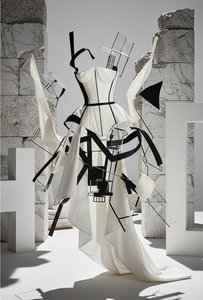
Gianfranco Ferré: Deconstructing Haute Couture – A Legacy of Architectural Form
Explore the revolutionary world of Gianfranco Ferré, 'the architect of fashion.' Discover his architectural approach to haute couture, iconic Dior designs, and lasting influence on luxury style. A deep dive for collectors & enthusiasts.

Cristóbal Balenciaga: Deconstructing Haute Couture's Architectural Legacy
Explore the revolutionary world of Cristóbal Balenciaga, the 'couturier's couturier'. Discover his architectural designs, lasting influence on haute couture, and guide to collecting rare pieces. A connoisseur’s resource.
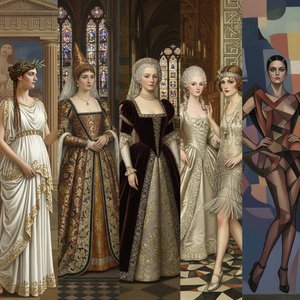
Style Through the Ages: Iconic Artworks That Defined the Evolution of Fashion Design
Explore the breathtaking intersection of fine art and high fashion. Discover how iconic masterpieces from Art Deco to Impressionism have shaped the world of luxury couture and timeless design in this curated visual journey.
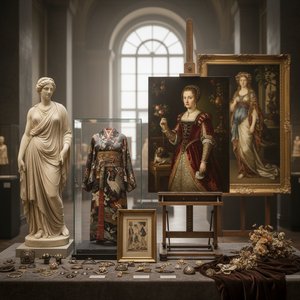
Draped Narratives: Fashion as Symbol & Subject in Historical Art
Explore the fascinating history of fashion as a symbol of power & status in art! Discover masterpieces from Gainsborough to Tissot and learn how clothing shaped societal narratives. Find museum-quality reproductions at OriginalUniqueArt.


