

 Преглед в реален мащаб
 Сподели
 Сподели
 Подробности
 Ръководство

 Изтегляне
 Подобни артикули
 Рентгенова снимка
 Слайдшоу
 Статистика
A Teacher and his Pupil
 Oil On Canvas
- WallArt
- Baroque
 1670
1670- Early Modern
 135.0 x 111.0 cm
 Лувър
Лувър
 Разгърни целия текст
Ръчно изработена маслена репродукция
Ръчно рисувана маслена картина върху платно във вашия размер и рамка, изработена по поръчка от нашите художници. ( Избор на принт Превключване към дигитално изображение)




P118B €10

P118H €10

P118W €10

P438Z €10

P508JH €12

P508YH €12

P805H €10

P805Z €10

P919BZ €10

P919G €10

P919XJ €10

P959ZH €10

P968JZ €12

W106C €8

W218G €10

W218JH €8

W218Y €10

W307PJ €10

W316G €10

W316PJ €8

W316Y €10

W398PJ €8

W4111J €10

W500HY €15

W500JH €15

W692G €12

W849H €8

W940BG €15

W953PJ €8




Изберете от нашите предварително зададени размери, които съответстват на оригиналните пропорции на произведението.

Въведете необходимата ширина и височина, за да паснат на вашата рамка или стена. Тъй като това е ръчна работа, при избор на размер с различен формат, художникът може да нарисува малко повече около картината или да отреже малко от периферията — вие избирате. Преди да започне рисуването, ще ви изпратим дигитален мок업 за одобрение. Картината, показана на тази страница, не е реалният резултат — само мок업ът го показва.
След получаване на поръчка, екипът на OriginalUniqueArt.com ще изпрати имейл до клиента с инструкции и ще предостави примерен макет за преглед.
Доставка по целия свят () в рамките на 3-4 седмици вместо стандартните 5 седмици. (27 Октомври). Без компромис с качеството.

Безплатна експресна доставка по целия свят

Висококачествено ленено платно

Пълно застраховане на доставката

Гаранция за възстановяване на митнически такси

Гаранция за пълно съответствие на цветовете

Политика за връщане в рамките на 100 дни (само при дефекти)

100% Гаранция за връщане на сумата

Отстъпка при поръчка на повече произведения
 Опцията със стъкло е налична само за размери под 110 см

A Teacher and his Pupil
Техника на репродукция
Размер на репродукцията
-


Крайна цена
€ 286
A Moment Frozen in Time: The Intimacy of Claude Lefebvre
In the quiet depths of the seventeenth century, amidst the grand flourishes of the Baroque era, there existed moments of profound, silent connection that transcended the mere recording of faces. Claude Lefebvre’s 1670 masterpiece, "A Teacher and his Pupil," captures such a moment with unparalleled emotional resonance. This is not merely a portrait of two individuals; it is an evocative window into the very essence of mentorship and the sacred transmission of knowledge. As the viewer gazters upon the illuminated faces of the distinguished gentleman and the attentive young boy, one feels transported to a private study where time itself seems to pause, held in suspense by the weight of intellectual discovery.
The painting serves as a breathtaking example of chiaroscuro, the dramatic interplay of light and shadow that defined the Baroque period. Lefebvre masterfully directs the light to fall upon the subjects' features, pulling them from an atmospheric, near-indistinct darkness into sharp, luminous relief. This technique does more than create depth; it focuses the viewer’s soul on the psychological exchange occurring between the figures. The teacher’s steady, guiding presence and the pupil’s eager, focused gaze form a triangular composition that provides a sense of structural harmony and stability, grounding the fleeting emotional intensity of the scene within a classical, balanced framework.
Mastery of Texture and the Baroque Spirit
Beyond its emotional depth, "A Teacher and his Pupil" is a triumph of technical virtuosity. Lefebvre’s use of oil on canvas allows for a rich, layered saturation of color that breathes life into every fold of fabric. One can almost feel the heavy weight of the teacher’s robes and the crispness of the boy’s waistcoat through the artist's meticulous brushwork. The subtle interplay of deep blacks, earthy browns, and muted grays creates a somber yet sophisticated palette, punctuated only by the brilliant whites of collars and cuffs that catch the light like sudden sparks of insight.
The artist employs atmospheric perspective with great skill, allowing the background to dissolve into a soft, mysterious obscurity. This lack of detail in the periphery ensures that nothing distracts from the central narrative of learning. For the discerning collector or interior designer, this painting offers a profound sense of gravitas. It possesses a quiet authority that can anchor a room, providing a focal point that invites contemplation rather than mere observation. The textures—from the smooth, porcelain-like skin tones to the tactile complexity of the drapery—demonstrate a level of realism that makes the scene feel tangibly present.
A Legacy of Knowledge and Light
Historically, this work reflects the humanist ideals flourishing in seventeenth-century Europe, where the pursuit of reason and the cultivation of the mind were held in high esteem. Commissioned by an aristocratic family, the painting speaks to the era's emphasis on lineage, education, and the importance of passing wisdom from one generation to the next. There is a subtle symbolism in the darkness surrounding the figures; it may represent the vast unknown or the challenges inherent in the pursuit of truth, which the light of education seeks to illuminate.
To possess a reproduction of this work is to bring more than just decoration into a space; it is to invite an atmosphere of intellectual curiosity and timeless elegance. Whether placed in a private library, a formal study, or a contemporary living space, "A Teacher and his Pupil" acts as a silent interlocutor, reminding all who behold it of the enduring beauty found in the pursuit of wisdom and the profound bonds formed through shared learning.
Въпроси и отговори
Цветовете на "A Teacher and his Pupil" изглеждат силни или нежни?
Цветовете в „A Teacher and his Pupil“ на Claude Lefebvre имат Monochromatic интензивност.
Налична ли е творбата "A Teacher and his Pupil" като художествено отпечатък?
"A Teacher and his Pupil" е достъпна като художествен принт върху памучно платно или архивен канвас хартия. Поръчките се правят на страницата за Художествен принт, в размер по ваш избор.
Каква емоция предава „A Teacher and his Pupil“ на Claude Lefebvre?
Емоционалният тон, отбелязан за „A Teacher and his Pupil“ на Claude Lefebvre, е Reflective. Той обобщава усещането, което произведението изразява.
Биография на художника
A Legacy of Light and Line
In the grand tapestry of the seventeenth century, few artists captured the quiet dignity of the French nobility with as much grace as Claude Lefebvre. Born in Fontainebleau, the son of the painter Jean Lefèbvre, his artistic journey was deeply rooted in the traditions of his lineage and the prestigious workshops of his era. His early training began within the workshop of Claude d'Hoey at Fontainebleau, providing him with a foundational mastery of form that would later define his career. As he moved toward Paris, his education expanded under the guidance of masters such as Eustache Le Sueur and, most significantly, the legendary Charles Le Brun. While working under Le Brun, Lefebvre likely contributed to the preparation of grand cartoons for the History of the King tapestry series at the Château of Versailles, a period that placed him at the very heart of French royal artistic ambition.
Despite his early exposure to large-scale historical compositions, Lefebvre’s path took a more intimate turn. While Le Brun recognized his talent, he famously encouraged the artist to specialize in portraiture, noting that his compositions for larger narratives were less suited to his particular strengths. This redirection proved transformative. Lefebvre emerged as a leading portraitist of his time, a skill that earned him admission as a member of the Académie Royale de peinture et de sculpture in 1663. His ability to capture the psychological depth and social standing of his subjects allowed him to secure prestigious commissions, including a long-term project for the portrait of Jean-Baptiste Colbert, which he eventually presented at the Château of Versailles.
The Mastery of the Baroque Portrait
Lefebvre’s work is characterized by a profound command of the chiaroscuro technique, using the dramatic interplay of light and shadow to breathe life into his subjects. His portraits are not merely records of faces but evocative windows into the soul, often utilizing a somber yet sophisticated palette of deep blacks, earthy browns, and muted grays. In masterpieces such as A Teacher and his Pupil, one can observe how he directs light to pull figures from an atmospheric darkness into sharp, luminous relief, creating a sense of profound, silent connection. This technical virtuosity extended to his rendering of textures; through meticulous brushwork, he could convey the heavy weight of velvet robes, the crispness of fine lace, and the delicate shimmer of pearls.
His artistic development was further enriched by his travels, particularly his time in England. During his stay in London, he was invited to paint at the court of King Charles II, and it is believed that his style absorbed the elegant influences of Anthony van Dyck. This fusion of French precision and English fluidity helped solidify his reputation as an artist capable of capturing both the regal authority and the refined elegance of the era. His influence also extended to the next generation of painters, as he served as an assistant professor at the Académie, mentoring students such as François de Troy and Jean Cotelle, le jeune.
Historical Significance and Enduring Presence
Though many of Lefebvre’s original paintings have been lost to time—with much of his surviving legacy known through the meticulous engravings of contemporaries like Gérard Edelinck and Pieter van Schuppen—his impact on French portraiture remains undeniable. His work represents a vital chapter in the transition of Baroque sensibilities, blending the grandeur of the French court with an intimate, psychological realism. Today, his contributions are preserved in some of the world's most esteemed institutions, including:
- The Louvre
- The National Portrait Gallery, London
- The Château of Versailles
Lefebvre remains a symbol of the refined artistry that defined the age of Louis XIV, an artist who turned the gaze inward to find the monumental within the personal.

Claude Lefebvre
1632 - 1675 , France
Бързи факти
- Artistic Movement Or Style: Baroque
- Artists Or Movements Influenced By This Artist:
- François de Troy
- Jean Cotelle, le jeune
- Artists Who Influenced This Artist:
- Claude d'Hoey
- Eustache Le Sueur
- Charles Le Brun
- Anthony van Dyck
- Full Name: Claude Lefèbvre
- Nationality: French
- Notable Artworks:
- A Teacher and his Pupil
- Portrait of Marie De Rabutin-chantals
- Portrait of a gentleman
- Portrait Of A Man
- Place Of Birth: Fontainebleau, France
- Date Of Birth: 1632
- Date Of Death: 1675
Свързани статии

Drama and Light: A Definitive Guide to the Italian Baroque Masterpieces and the Revolution of Chiaroscuro
Explore the dramatic world of Italian Baroque art. Discover how masters like Caravaggio used chiaroscuro and tenebrism to revolutionize painting through light, shadow, and profound realism. A definitive guide for history lovers and art collectors.

Chiaroscuro & Emotion: Capturing the Dramatic Soul of Baroque Art
Explore the profound drama of Baroque art. Discover how masters used chiaroscuro and intense emotion to capture the soul of the 17th century through light, shadow, and spiritual grandeur in this expert art history guide.
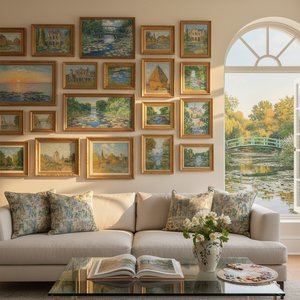
Топ 25 шедьовъра на Клод Моне: Вдъхновение за вашия дом | OriginalUniqueArt.bg
Разгледайте топ 25 шедьовъра на Клод Моне – импресионистични пейзажи, водни лилии и светлина в картините. Вдъхновете се за вашия декор с висококачествени репродукции на OriginalUniqueArt.bg! Открийте цялата колекция онлайн.

Drama & Light: The Captivating Power of Baroque Painting and the Mastery of Chiaroscuro
Explore the dramatic world of Baroque painting. Discover how masters used chiaroscuro and tenebrism to evoke profound emotion, from the Counter-Reformation to today's fine art collectors seeking breathtaking, hand-painted historical reproductions.

Топ 10 шедьоври на Барока: История, артисти и великолепие за вашия дом
Разгледайте 10 шедьовъра на Барока от Караваджо, Рембрандт и Рубенс! Открийте историите зад тези емблематични картини и скулптури. Вдъхновете се за вашия интериор с OriginalUniqueArt.com – луксозни репродукции и изкуство за дома.