
 Представи си го
 Изпрати
 Сподели
 Детайли

 Изтегляне
 Подобни
 Рентгенова снимка
 Слайдшоу
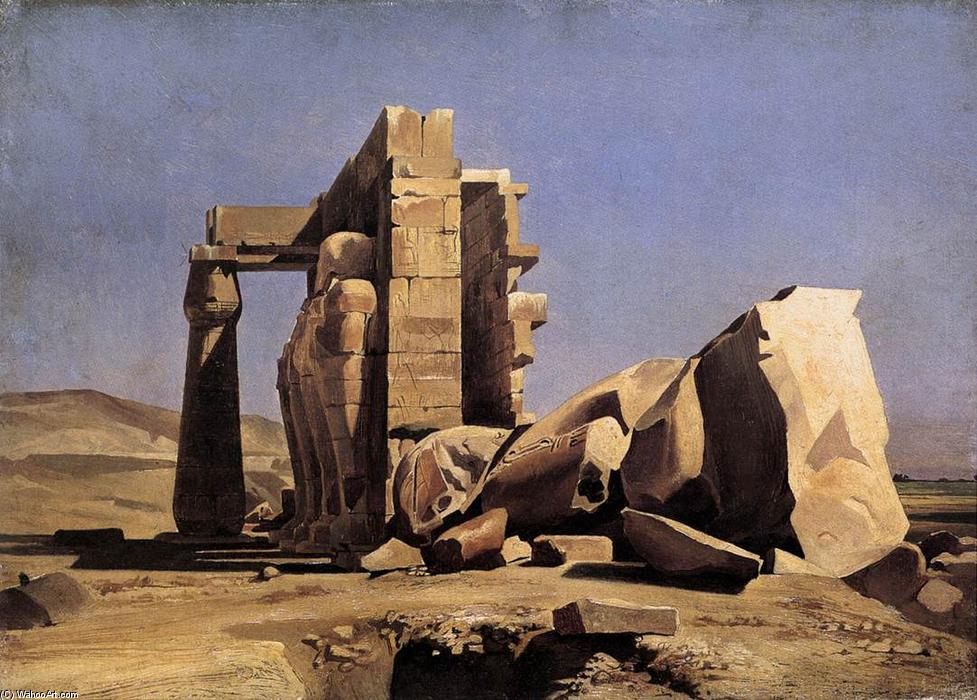
Egyptian Temple
 Oil On Canvas
- WallArt
- Academicism
 1840
1840 36.0 x 49.0 cm
 Musée cantonal des Beaux-Arts
 Прочетете повече
Ръчно изработена маслена репродукция
Ръчно рисувана маслена картина върху платно във вашия размер и рамка, изработена по поръчка от нашите художници. ( Купете принт Купете изображение)




P118B $10

P118H $10

P118W $10

P438Z $10

P508JH $12

P508YH $12

P805H $10

P805Z $10

P919BZ $10

P919G $10

P919XJ $10

P959ZH $10

P968JZ $12

W106C $8

W218G $10

W218JH $8

W218Y $10

W307PJ $10

W316G $10

W316PJ $8

W316Y $10

W398PJ $8

W4111J $10

W500HY $15

W500JH $15

W692G $12

W849H $8

W940BG $15

W953PJ $8




Изберете от предварително зададените размери, които съответстват на оригиналните пропорции на произведението.

Можете да въведете свои собствени размери, за да пасне на конкретна рамка или пространство. Ако избраният от вас размер не съответства на пропорциите на оригиналното изображение, ние ще изрежем произведението или ще удължим картината с допълнителни ръчно рисувани елементи. Дигитален макет ще бъде изпратен за ваше одобрение преди започване на производството.
Моля, обърнете внимание, че прегледът на екрана не отразява действителното изрязване или разширяване. Само макетът ще покаже точно финалния състав.
Въпреки че са налични персонализирани размери, препоръчваме да изберете размер от предварително дефинирания списък, за да запазите оригиналните пропорции.
След поръчка, екипът на OriginalUniqueArt.com ще изпрати имейл на клиента за инструкции и ще предостави преглед на макет.
Доставка по целия свят () в рамките на 3/4 седмици вместо стандартните 5 седмици. (20 Август). Без компромис с качеството.

Безплатна експресна доставка по целия свят

Висококачествено ленено платно

Пълно застраховане при доставка

Гаранция за възстановяване на митнически такси

Гаранция за цветова точност

60-Дневен период за връщане (Само при дефекти)

100% Гаранция за връщане на парите

Предложение за отстъпка при поръчка на едро
 Стъклото е налично само в размери под 110 см

Egyptian Temple
Репродукционен метод
Размер на репродукцията
-


Обща цена
$ 300
Описание на произведението
A Desert Echo: The Story of Charles Gabriel Gleyre’s “Egyptian Temple”
Charles Gabriel Gleyre's "Egyptian Temple," painted in 1840, isn’t merely a depiction of weathered stone; it’s a portal. A carefully constructed tableau that invites the viewer to step back millennia and contemplate the enduring power of ancient Egyptian civilization. The painting captures a moment suspended between decay and reverence – a temple, stripped of its vibrant glory, yet still radiating an aura of profound solemnity. Gleyre, a Swiss artist deeply influenced by the academic traditions of his time while simultaneously embracing Orientalist themes, masterfully blends realism with a subtle romanticism, creating an image that is both historically grounded and emotionally resonant.
The scene unfolds within a vast, open space dominated by colossal columns and walls, their surfaces etched with the passage of centuries. The palette is deliberately muted – ochres, browns, and sandy beiges dominate, mirroring the colors of sun-baked stone and desert earth. A pale blue sky, hinting at either dawn or dusk, casts a soft light upon the scene, emphasizing the textures and contours of the ancient structure. Noticeably absent are bright hues; Gleyre eschews dramatic contrasts in favor of a restrained elegance that speaks volumes about the enduring nature of time and the quiet dignity of ruins.
The Artist’s Hand: Technique and Realism
Gleyre's skill lies not just in his ability to capture a scene, but in his meticulous attention to detail. The artist demonstrates an extraordinary command of light and shadow, sculpting the stone surfaces with subtle gradations of tone. Each weathered crevice, each crumbling block, is rendered with painstaking accuracy – a testament to Gleyre’s commitment to realism. He employs a loose, expressive brushstroke that nonetheless maintains a sense of solidity and weight, conveying the immense scale and imposing presence of the temple.
The composition itself is carefully balanced, drawing the eye towards the central axis of the structure while simultaneously hinting at an expansive landscape beyond. The faint outlines of distant mountains in the background provide depth and context, anchoring the scene within its geographical setting. Gleyre’s use of atmospheric perspective – the subtle blurring of details with distance – further enhances the sense of space and creates a truly immersive experience for the viewer.
Symbolism and Ancient Echoes
More than just a record of a physical structure, “Egyptian Temple” is rich in symbolic meaning. The ruins themselves represent the cyclical nature of time, the impermanence of earthly power, and the enduring legacy of ancient civilizations. The temple’s weathered state serves as a poignant reminder of the rise and fall of empires, inviting contemplation on themes of mortality and remembrance.
Considering the historical context, the painting reflects the burgeoning interest in Egyptology during the 19th century. The rediscovery of ancient Egyptian artifacts and monuments fueled a wave of fascination with this mysterious culture, inspiring artists, archaeologists, and scholars alike. Gleyre’s work captures this spirit of exploration and discovery, offering a glimpse into a world long past.
A Timeless Masterpiece: Reproduction and Legacy
Gleyre's "Egyptian Temple" remains a captivating image, its quiet grandeur continuing to resonate with viewers today. Reproductions offer an accessible way to bring this evocative scene into your home or office, allowing you to experience the artist’s meticulous detail and emotional depth firsthand. Whether displayed as a statement piece in a contemporary setting or as a thoughtful addition to a collection of historical art, this painting serves as a timeless reminder of the beauty and mystery of ancient Egypt.
Биография на художника
A Life Bridging Tradition and Modernity
Marc Gabriel Charles Gleyre, a name perhaps less immediately recognizable than those of his celebrated pupils, occupies a pivotal position in the narrative of 19th-century French art. Born on May 2nd, 1806, in Chevilly near Lausanne, Switzerland, Gleyre’s journey was marked by both personal tragedy and artistic exploration. Orphaned at a young age, he found refuge and early guidance with an uncle in Lyon, France, who recognized the budding talent within him and enrolled him in the city's industrial school. This foundational training paved the way for his enrollment at the prestigious École des Beaux-Arts in Paris under Hersent, where he honed his skills amidst the rigorous academic standards of the time. However, Gleyre’s artistic development wasn’t confined to the studio; a thirst for experience and a desire to broaden his horizons led him to Italy, where he connected with influential figures like Horace Vernet and Louis Léopold Robert.Eastern Light and Academic Refinement
A defining chapter in Gleyre's life unfolded through his association with the American traveler John Lowell Jr. Between 1834 and 1835, he embarked on an expedition to the Eastern Mediterranean, a voyage that profoundly impacted his artistic vision. Traveling through Greece, Turkey, and Egypt, Gleyre immersed himself in the vibrant cultures and exotic landscapes of the region. This exposure ignited a fascination with Orientalism, which would become a recurring theme in his work. The light, colors, and textures of the East infused his canvases, lending them an evocative quality that distinguished him from many of his contemporaries. Upon his return to France, after battling illness contracted during his travels, Gleyre began exhibiting works like The Apocalyptic Vision of St John (1840) and Evening (1843), which garnered critical acclaim and established his reputation as a skilled academic painter. These pieces showcased not only his technical mastery but also his ability to imbue classical and biblical subjects with emotional depth and atmospheric nuance.A Studio of Innovation: The Legacy of a Teacher
In 1843, Gleyre assumed the studio of Paul Delaroche, a highly respected figure in French academic painting. This appointment marked a turning point not only in his career but also in the history of art education. Gleyre’s studio quickly became a hub for aspiring artists, attracting a remarkable cohort of young talents who would go on to shape the course of modern art. Among his students were names that resonate with artistic revolution: Claude Monet, Pierre-Auguste Renoir, James Abbott McNeill Whistler, Alfred Sisley, and Jean-Léon Gérôme. Unlike many traditional ateliers, Gleyre fostered a collaborative environment where students had a voice in the studio’s operation and were encouraged to explore their individual styles. He didn't impose strict doctrines but rather provided guidance and technical expertise, allowing his pupils to develop their unique artistic voices. This progressive approach played a crucial role in nurturing the seeds of Impressionism and other avant-garde movements that would challenge the conventions of 19th-century art.Themes and Techniques: A Synthesis of Influences
Gleyre’s oeuvre is characterized by a blend of academic precision, Orientalist sensibilities, and a subtle emotional undercurrent. His paintings often depict classical scenes, biblical narratives, and historical events, rendered with meticulous detail and a refined sense of composition. Works like Diana Leaving the Bath and The Battle of the Lemanus demonstrate his skill in capturing movement, form, and texture. However, it was his ability to convey emotion through his work that truly set him apart. The Prodigal Son, for example, is a poignant depiction of remorse and redemption, imbued with a sense of psychological depth. Gleyre’s technique involved careful layering of paint, creating luminous effects and subtle gradations of tone. He was also adept at using color to create atmosphere and evoke mood, drawing inspiration from both the Old Masters and his own experiences in the East.Enduring Significance
Charles Gabriel Gleyre passed away on May 5th, 1874, leaving behind a legacy that extends far beyond his own artistic creations. While he may not be as widely celebrated as some of his students, his influence on the development of modern art is undeniable. As a teacher, he nurtured a generation of artists who would challenge conventions and redefine the boundaries of artistic expression. His studio served as a breeding ground for innovation, fostering an environment where experimentation and individuality were valued. Today, Gleyre’s works can be found in prominent museums and collections around the world, including the Walters Art Museum and the National Gallery of Victoria, serving as a testament to his enduring contribution to the rich tapestry of art history. His paintings continue to captivate viewers with their beauty, technical brilliance, and emotional resonance, reminding us of the power of art to transcend time and culture.
Charles Gabriel Gleyre
1806 - 1874 , France
Бързи факти
- Artistic Movement Or Style: Academic, Orientalism
- Artists Or Movements Influenced By This Artist:
- Monet
- Renoir
- Whistler
- Impressionism
- Artists Who Influenced This Artist:
- Horace Vernet
- Louis Léopold Robert
- Date Of Birth: May 2, 1806
- Date Of Death: 1874
- Full Name: Charles Gabriel Gleyre
- Nationality: Swiss-French
- Notable Artworks:
- Diana leaving the bath
- Evening
- The Prodigal Son
- Egyptian Temple
- Tanz der Bacchantinnen
- Place Of Birth: Chévilly, France
Всички статии

Топ 25 шедьовъра на Данте Габриел Росети: Изкуство, символизъм и красота за вашия дом
Открийте 25 шедьовъра на Данте Габриел Росети! Потопете се в света на прерафаелитизма, символизма и викторианската красота. Висококачествени репродукции за вашия дом – купете картини онлайн на OriginalUniqueArt.com.

Golden Hour on the Nile: Symbolism & Artistic Legacy of Egyptian Sunsets
Explore the rich symbolism of Egyptian sunset paintings & their artistic legacy. Discover how color, ritual, and landscape shaped ancient beliefs – a guide for discerning collectors.
Paul Gabriël: A Study in Belle Époque Academic Painting & Parisian Salon Ambitions
Explore the life & work of Paul Gabriël, a key figure of the Hague School and Belle Époque painting. Discover his journey to Parisian Salon recognition and lasting influence on Dutch landscape art.

Charles-André van Loo: A Study in Rococo Portraiture & the French Court's Artistic Dynamics
Explore the elegant world of Charles-André van Loo, a master of Rococo portraiture at the French court. Discover his life, techniques, and enduring influence on 18th-century art. Hand-painted reproductions available.
Divine Messengers: A Curated Guide to the Iconography of Angel Gabriel in Art History
Explore the profound beauty of Angel Gabriel in art history. From Renaissance masterpieces to Baroque splendor, our expert guide delves into the sacred iconography and timeless techniques of these divine messengers for the discerning art enthusiast.

