

 Представи си го
 Изпрати
 Сподели
 Детайли

 Изтегляне
 Подобни
 Рентгенова снимка
 Слайдшоу
 Статистика
Poor Artist's Cupboard
 Oil
Oil- WallArt
 1815
1815- 19th Century
 95.0 x 90.0 cm
 Прочетете повече
Жикле / Художествен принт
Giclée печат или принт върху платно с музейно качество, бързо производство и гъвкави опции за завършен вид. ( Купете ръчно рисувана картина Превключване към дигитално изображение)




































Изберете от предварително зададените размери, които съответстват на оригиналните пропорции на произведението.

Можете да въведете собствени размери, за да паснат на конкретна рамка или пространство. Ако избраният от Вас размер не съвпада с пропорциите на оригиналното изображение, ние ще изрежем произведението или ще разширим изображението с огледален или едноцветен ръб. Дигитален макет ще бъде изпратен за Ваше одобрение преди започването на производството.
Моля, имайте предвид, че предпрегледът на екрана не отразява реалното изрязване или разширяване. Само макетът ще покаже точно финалната композиция.
Въпреки че са налични персонализирани размери, препоръчваме да изберете размер от предварително дефинирания списък, за да запазите оригиналните пропорции.
Доставка по целия свят () в рамките на 2 седмици вместо стандартните 4/5 седмици. (16 Септември)

Безплатна експресна доставка по целия свят

Висококачествено ленено платно

Пълно застраховане при доставка

Гаранция за възстановяване на митнически такси

Гаранция за цветова точност

Политика за връщане в рамките на 100 дни (само при дефекти)

100% Гаранция за връщане на парите

Предложение за отстъпка при поръчка на едро
 Стъклото е налично само в размери под 110 см

Poor Artist's Cupboard
Жикле / Художествен принт
Размер на репродукцията
-


Обща цена
$ 80
A Poignant Still Life of Penury and Perseverance
In the quiet, shadowed alcove of Charles Bird King’s 1815 masterpiece, Poor Artist's Cupboard, we are invited into a deeply intimate and melancholic corner of a creative life. This nearly square still life is far more than a mere collection of objects; it is a profound narrative of struggle, intellectual hunger, and the heavy weight of financial instability. At first glance, the viewer encounters a cluttered niche, an arched space crammed with the remnants of a life lived on the edge of necessity. A crusty piece of bread sits alongside a short glass of water, symbols of the most basic sustenance, yet they are surrounded by a dense, almost overwhelming accumulation of books and papers that suggest a mind far richer than the hands that hold them.
The composition is masterfully arranged to guide the eye through a labyrinth of symbolic details. King utilizes a tight, claustrophobic arrangement to evoke the feeling of being trapped by circumstance. To the right, a red portfolio holds a sheaf of loose papers beneath the heavy weight of Lives of the Painters, a title that serves as a poignant reminder of the artist's own vocation and perhaps his precarious standing within it. The light catches the edges of a pink conch shell and the gold lettering on various spines, creating small flickers of beauty amidst the gloom. There is a tactile quality to the work; one can almost feel the rough texture of the bread, the cold smoothness of the glass, and the brittle, aging parchment of the many books that line the back of the alcove.
The Language of Symbolism and Hidden Narratives
Every object within this cupboard acts as a silent protagonist in a drama of survival. King employs a sophisticated layer of literary and social symbolism to communicate the artist's internal state. The titles found on the book spines are particularly devastating: Miseries of Life, Calamities of Author, and Unpaid Bills whisper of a reality where debt is as constant as the hunger for knowledge. Even more heartbreaking is the sight of a book titled Pleasures of Hope, where the very word "hope" has been physically ripped through by a torn page, suggesting a loss of optimism or the fragility of such a sentiment in the face of poverty.
The inclusion of calling cards addressed to "Palette," mentioning a debt of five dollars, grounds the painting in a specific, relatable human struggle. This is not an idealized, classical still life of abundance; it is a gritty, autobiographical reflection on the cost of an artistic life. The presence of a protractor and various instructional texts suggests that despite the lack of material wealth, there remains a rigorous commitment to the craft and the pursuit of technical mastery. It is this tension between the physical deprivation of the body and the intellectual expansion of the spirit that gives the painting its enduring emotional resonance.
A Timeless Addition for Discerning Collectors
For the art lover or interior designer, Poor Artist's Cupboard offers a unique opportunity to introduce a piece of profound historical depth into a contemporary space. The muted palette of browns, deep reds, and soft greens, punctuated by the rosy glow of the conch shell, provides a sophisticated tonal anchor for a room. As a high-quality reproduction, this work serves as a conversation starter, inviting guests to lean in closer and decipher the many layers of meaning hidden within its shadows.
Whether placed in a study, a library, or a curated gallery wall, this painting brings with it an atmosphere of contemplative quietude. It celebrates the resilience of the human spirit and the enduring power of art to find beauty within the most humble of circumstances. Owning a reproduction of this work is not merely about decorating a wall; it is about preserving a moment of historical empathy and honoring the complex, often difficult journey of the creative soul.
Биография на художника
Charles Bird King (1785–1862): A Life Etched in Portraiture
Charles Bird King, born in Newport, Rhode Island, in 1785, stands as a pivotal figure in the evolution of American portraiture during an era defined by profound national transformation. His life story is a compelling tapestry woven with threads of personal hardship and unwavering artistic ambition—a journey that ultimately immortalized not only the nation’s political elite but also its Native American leaders, a demographic often overlooked within the artistic landscape of his time. The early years of King's existence were marked by tragedy; at just four years old, he endured the loss of his father, Captain Zebulon King, a veteran of the Revolutionary War, who fell victim to an attack near Marietta, Ohio. This devastating event prompted a return with his mother to Newport, where the seeds of his artistic calling would begin to sprout and take root.Early Influences and Artistic Training
King’s formal artistic training commenced at the age of fifteen under the tutelage of Edward Savage in New York City—a foundational experience that ignited within him a passionate dedication to portraiture. Savage, himself a prominent sculptor and artist influenced by Romantic ideals, instilled in King a deep appreciation for expressive form and dramatic composition. However, it was his subsequent seven-year sojourn at the Royal Academy in London, studying alongside Benjamin West, that truly defined his artistic sensibilities and shaped his evolving style. This immersive period within European art traditions—particularly those of the Dutch and Northern Renaissance masters—would become a defining characteristic woven into the very fabric of his work. He absorbed the techniques of Rembrandt and Rubens, mastering chiaroscuro and capturing psychological nuance with remarkable precision. The Academy’s emphasis on classical ideals further solidified King's commitment to artistic excellence.Return to America and Establishing His Career
Upon returning to the United States amidst the tumult of the War of 1812, King navigated a shifting landscape, briefly establishing himself in Philadelphia, Baltimore, and Richmond before ultimately settling in Washington, D.C. This strategic move proved decisive; the burgeoning capital offered both economic opportunity and access to a powerful network of potential patrons—politicians eager to commemorate their achievements and solidify their legacies. It was here that King established his studio and gallery, cultivating relationships with influential figures who recognized his talent and supported his artistic endeavors. He quickly gained renown for his ability to capture not only physical likeness but also the inner character of his subjects—a skill honed through meticulous observation and a profound understanding of human psychology. His portraits weren't merely representations; they were statements about character and statusA Masterpiece of Style: The Dutch Influence
King’s artistic style is characterized by a meticulous attention to detail, a refined sense of composition, and a subtle yet compelling psychological depth. He embraced the principles of Northern Renaissance painting—particularly the use of chiaroscuro—creating dramatic contrasts between light and shadow that heightened the expressive power of his canvases. Like Rembrandt and Rubens before him, King sought to convey emotion through carefully rendered surfaces and textures, capturing the subtleties of human expression with unparalleled sensitivity. Scholars have noted that King’s penchant for Dutch prints provided a source of valued composition, demonstrating an awareness of artistic precedents and a commitment to mastering established techniques. This stylistic influence extended beyond mere imitation; it informed King's approach to portraiture, shaping his visual language and elevating his work to the highest levels of artistic achievement. His portraits weren’t simply representations; they were statements about character and statusLegacy Among Native American Leaders
Perhaps King’s most enduring contribution lies in his remarkable series of portraits depicting Native American leaders and tribesmen. Commissioned by Thomas L. McKenney, the Superintendent of Indian Trade, these paintings served as a vital record of diplomatic missions to Washington D.C., documenting the diverse cultures and individuals encountered during negotiations with the U.S. government. These works are not merely historical records; they are powerful statements about cultural exchange, political negotiation, and the complex relationship between the United States and Native American tribes. Portraits such as those of Kee-shes-wa (a Fox chief), Jack-o-pa (a Chippewa chief), and Teh-ro-hon (an Ioway warrior) stand as testaments to King’s skill in capturing not only physical likeness but also the dignity, strength, and cultural identity of his subjects. These paintings served as both artistic achievements and diplomatic tools ## Further Information- McKenney-Hall prints (Thomas Loraine McKenney and James Hall) are original hand-colored lithograph from the 1868 royal octave edition of Thomas McKenney and James Hall's “History of the Indian Tribes of North America.” The majority of the portraits in this series were painted by Charles Bird King for the War Department under commission from McKenney superintendent of Indian Affairs.
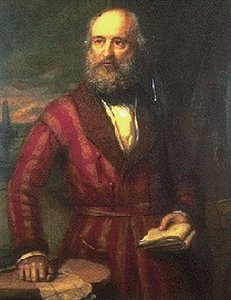
Чарлз Бърд Кинг
1785 - 1862 , Съединени американски щати
Бързи факти
- Artistic Movement Or Style: Dutch influence, realism
- Artists Who Influenced This Artist:
- Edward Savage
- Benjamin West
- Date Of Birth: 1785
- Date Of Death: 1862
- Full Name: Charles Bird King
- Nationality: American
- Notable Artworks:
- Stephen Decatur
- Hayne Hudjihini
- Itinerant Artist
- Place Of Birth: Newport, USA
Всички статии

Charles Bird King: Capturing Native American Dignity Through Portraiture & Cultural Exchange
Explore the captivating portraits of Charles Bird King, renowned for his depictions of Native American leaders. Discover the historical context, artistic techniques, and collecting value of these significant 19th-century artworks.
Clyfford Still's Abstract Expressionism: A Study of Color, Form & the Existential Landscape
Explore the profound world of Clyfford Still's Abstract Expressionism with OriginalUniqueArt. Discover his unique style, existential themes & investment potential. Expert analysis for discerning collectors.

Silent Narratives: Exploring the Enduring Appeal of Still Life Painting Across Centuries
Explore the rich history of still life painting with OriginalUniqueArt. Discover Dutch Masters, decode vanitas symbolism & learn about collecting timeless art. Expert insights and museum-quality reproductions.
От Класическите Натюрморти до Съвременното Абстрактно Изкуство: Повишаване на Естетиката на Вилите Чрез Майсторски Репродукции
Открийте изискани репродукции на картини и абстрактно изкуство за вашата вила! OriginalUniqueArt.com предлага ръчно рисувани шедьоври, персонализирани размери и професионални консултации. Подобрете естетиката си с висококачествени произведения на изкуството.
The Enduring Appeal of Still Life: A Historical & Contemporary Exploration
Explore the rich history & symbolism of still life painting with OriginalUniqueArt. Discover masterpieces from the Dutch Golden Age, learn about vanitas art, and find expert guidance for collecting timeless artworks.