

 Преглед в реален мащаб
 Сподели
 Сподели
 Подробности
 Ръководство

 Изтегляне
 Подобни артикули
 Рентгенова снимка
 Слайдшоу
 Статистика
Sita and Sarita


 Разгърни целия текст
Жикле / Художествен принт
Giclée печат или принт върху платно с музейно качество, бързо производство и гъвкави опции за завършен вид. ( Поръчайте ръчно рисувано репродукция на този колекционерски предмет Превключване към дигитално изображение)




P118B $10

P118H $10

P118W $10

P438Z $10

P508JH $12

P508YH $12

P805H $10

P805Z $10

P919BZ $10

P919G $10

P919XJ $10

P959ZH $10

P968JZ $12

W106C $8

W218G $10

W218JH $8

W218Y $10

W307PJ $10

W316G $10

W316PJ $8

W316Y $10

W398PJ $8

W4111J $10

W500HY $15

W500JH $15

W692G $12

W849H $8

W940BG $15

W953PJ $8




Изберете от нашите предварително зададени размери, които съответстват на оригиналните пропорции на произведението.

Можете да въведете собствени размери, за да паснат на конкретна рамка или пространство. Ако избраният от Вас размер не съвпада с пропорциите на оригиналното изображение, ние ще изрежем произведението или ще разширим изображението с огледален или едноцветен ръб. Дигитален макет ще бъде изпратен за Ваше одобрение преди започването на производството.
Моля, имайте предвид, че предпрегледът на екрана не отразява реалното изрязване или разширяване. Само макетът ще покаже точно финалната композиция.
Въпреки че са налични персонализирани размери, препоръчваме да изберете размер от предварително дефинирания списък, за да запазите оригиналните пропорции.
Доставка по целия свят () в рамките на 2 седмици вместо стандартните 4/5 седмици. (25 Септември)

Безплатна експресна доставка по целия свят

Висококачествено ленено платно

Пълно застраховане на доставката

Гаранция за възстановяване на митнически такси

Гаранция за пълно съответствие на цветовете

Политика за връщане в рамките на 100 дни (само при дефекти)

100% Гаранция за връщане на сумата

Отстъпка при поръчка на повече произведения
 Опцията със стъкло е налична само за размери под 110 см

Sita and Sarita
Жикле / Художествен принт
Размер на репродукцията
-


Крайна цена
$ 80
A Vision of Gilded Age Grace
In the quiet, luminous realm of Cecilia Beaux’s 1893 masterpiece, Sita and Sarita, we encounter more than just a portrait; we step into a moment of profound, whispered elegance. As a cornerstone of American portraiture during the opulent Gilded Age, Beaux possessed a rare ability to capture the psychological depth of her subjects through a lens of Impressionistic refinement. This particular work, currently held in the esteemed collection of the Musée d'Orsay, serves as a breathtaking testament to her technical mastery and her sensitivity to the fleeting nuances of human character. The painting invites the viewer into an intimate space, where the boundaries between the sitter and the observer seem to dissolve into a soft, atmospheric glow.
The subject of this captivating piece is Sarah Allibone Leavitt, the artist’s cousin, whose presence in the frame embodies the dignified grace and serene composure prized in late Victorian society. Yet, Beaux transcends the mere recording of a likeness. Through subtle gestures—the way Leavitt holds her hair or the contemplative tilt of her gaze—the artist imbues the portrait with an inner life that feels both mysterious and deeply personal. There is an undeniable magnetism in her expression, a quiet intelligence that suggests a story unfolding just beyond the viewer's reach, making the piece an irresistible focal point for any collection centered on soulful, character-driven art.
Symbolism and the Impressionistic Touch
Beyond the human element, Sita and Sarita is rich with deliberate artistic allusions that elevate it from a family portrait to a sophisticated dialogue with art history. Perched delicately upon Leavitt’s shoulder is Sita, a black cat whose presence adds a layer of enigmatic symbolism. This inclusion is a masterful nod to Édouard Manet’s iconic Olympia, signaling Beaux’s deep engagement with the contemporary French movements of her time. The feline companion introduces a touch of the "mysterious and witchy," as some critics have noted, providing a sharp, dark contrast to the luminous palette of the rest of the composition.
Technically, the painting is a triumph of light and color. Beaux employs an Impressionistic approach, utilizing oil on canvas to create a sense of ephemeral beauty. Her palette is a sophisticated arrangement of muted tones—ivory, peach, and rose—which work in harmony to evoke a sense of warmth and soft light. The brushstrokes are fluid and expressive, capturing the texture of Leavitt’s white dress and the soft atmosphere of the room without sacrificing the structural integrity of the portrait. For the interior designer or collector, this technique offers a versatile aesthetic; the painting possesses enough tonal subtlety to integrate seamlessly into a classical setting, yet enough painterly energy to breathe life into a modern, minimalist space.
An Enduring Legacy for the Discerning Collector
To possess a reproduction of Sita and Sarita is to bring a piece of American art history into one's personal sanctuary. The emotional impact of the work lies in its ability to evoke nostalgia and tranquility simultaneously. It is a painting that does not demand attention through loud colors or jarring compositions, but rather earns it through a persistent, quiet beauty that rewards long periods of contemplation.
For those seeking to curate an environment of sophistication and intellectual depth, this work offers unparalleled inspiration. Whether placed in a sunlit study or a grand salon, the painting acts as a window into the Gilded Age—a period of immense transformation and aesthetic splendor. It remains a definitive example of how Cecilia Beaux bridged the gap between academic precision and the emotive freedom of Impressionism, leaving behind a legacy that continues to captivate the modern eye.
Биография на художника
A Life Illuminated: The World of Cecilia Beaux
Cecilia Beaux, born Eliza Cecilia Beaux on May 1st, 1855, in Philadelphia, emerged as a pivotal figure in American portraiture during the Gilded Age. Her story is one woven with threads of personal tragedy, determined self-reliance, and an unwavering commitment to artistic excellence. The shadow of early loss fell upon her life when her mother succumbed to puerperal fever just twelve days after Beaux’s birth, leaving a void that would subtly shape her perspective. Raised by her maternal grandmother and aunts in Philadelphia, she experienced a childhood marked by both stability and the quiet absence of parental guidance. Her father, unable to cope with his grief, returned to France for extended periods, creating a somewhat detached familial dynamic. Yet, within this framework, Beaux’s artistic inclinations were nurtured, initially through lessons with her relative Catherine Ann Drinker, an accomplished artist who served as an early role model and mentor. These formative years instilled in her not only technical skills but also a profound understanding of the dedication required to pursue a life devoted to art.Forging a Path: Education and Early Influences
Beaux’s artistic education continued under Francis Adolf van der Wielen, where she honed her skills in perspective and drawing from casts. However, the societal constraints of the Victorian era presented significant obstacles for aspiring female artists; direct study of anatomy was largely denied to women until much later in her career. Undeterred, Beaux persevered, securing a place at the prestigious Pennsylvania Academy of the Fine Arts in 1876. While she maintained a degree of independence from the fervent followers of Thomas Eakins, his progressive teaching philosophy undeniably influenced her approach to art. It was during this period that Beaux began to establish herself as a skilled portraitist, winning several Mary Smith Prizes at the Pennsylvania Academy exhibitions between 1885 and 1892 – accolades that signaled her rising talent and recognition within the artistic community. A crucial turning point came with her decision to study in Paris in 1888, immersing herself in the European art scene and absorbing influences from academic masters like Tony Robert-Fleury and William-Adolphe Bouguereau, as well as the burgeoning Impressionist movement exemplified by artists such as Édouard Manet and Edgar Degas. This exposure broadened her artistic horizons and refined her technique, laying the foundation for her distinctive style. Beaux’s early works often reflected a delicate realism, influenced by the meticulous detail of academic portraiture, but she quickly developed a unique ability to capture subtle nuances of expression and personality.A Master of Society Portraiture
Upon returning to Philadelphia, Cecilia Beaux quickly ascended to prominence as a sought-after portraitist, capturing the essence of America’s social and intellectual elite with remarkable sensitivity and skill. Her portraits weren't merely likenesses; they were insightful studies of character, imbued with psychological depth and an elegant aesthetic sensibility. She possessed an extraordinary ability to convey not only the physical appearance but also the inner lives of her subjects. Her most celebrated works, such as *Portrait of Harriet Sears Amory* (1892), exemplify this mastery. Executed with bravura brushstrokes and a heavy impasto reminiscent of Impressionism, it showcases Beaux’s technical prowess and her ability to capture both the grandeur and vulnerability of her sitter. Along with John Singer Sargent and William Merritt Chase, Beaux became one of the leading portraitists in the United States at the turn of the twentieth century. Chase himself famously declared her “not only the greatest living woman painter, but the best that has ever lived,” a testament to the high regard she held within artistic circles. Her clientele included prominent figures such as First Lady Edith Roosevelt, Admiral Sir David Beatty, and Georges Clemenceau, solidifying her reputation as a chronicler of the Gilded Age. Beaux’s portraits were characterized by their intimate atmosphere, often depicting subjects in relaxed poses and informal settings, reflecting a departure from the stiff formality of traditional portraiture.Breaking Barriers and Lasting Influence
Cecilia Beaux's career was marked by both professional success and personal challenges. Despite facing discrimination as a woman artist, she persevered through sheer determination and talent. She became the first woman to teach at the Pennsylvania Academy of the Fine Arts in 1895, opening doors for future generations of female artists and demonstrating her commitment to nurturing artistic talent. Beaux’s influence extended beyond her own work; she was a respected mentor and teacher, shaping the careers of numerous aspiring painters. Her dedication to her craft earned her numerous accolades, including a gold medal from the National Institute of Arts and Letters and recognition from Eleanor Roosevelt as “the American woman who had made the greatest contribution to the culture of the world.” Her works are now held in esteemed collections such as The Westmoreland Museum of American Art and the Pennsylvania Academy of the Fine Arts, ensuring her legacy endures for generations to come. Beaux’s art continues to resonate with viewers today, offering a glimpse into a bygone era while simultaneously celebrating the enduring power of human connection and artistic expression.Beyond Portraiture: A Diverse Artistic Palette
While primarily known for her portraits, Cecilia Beaux demonstrated versatility in her artistic practice. Her landscapes, such as *Landscape with Farm Building* (1888), reveal an Impressionistic sensibility, characterized by loose brushwork, vibrant colors, and a focus on capturing the fleeting effects of light and atmosphere. These works offer a contrasting perspective to her meticulously rendered portraits, showcasing Beaux’s ability to adapt her style to different subjects and genres. Her exploration of rural American life in these landscapes highlights her interest in depicting the beauty and tranquility of the natural world, further enriching her artistic repertoire. Beaux's willingness to experiment with various styles and mediums underscores her creative spirit and her commitment to continuous growth as an artist.A Final Note
Cecilia Beaux’s legacy is one of innovation, resilience, and artistic excellence. She defied societal expectations and established herself as a leading portraitist during a period when women faced significant barriers in the art world. Her captivating portraits continue to captivate audiences today, offering a window into the lives and personalities of America's most prominent figures. Beaux’s work stands as a testament to her exceptional talent and her enduring contribution to American art history.
Цецилия Бейкс
1855 - 1942 , Съединени американски щати
Бързи факти
- Artistic Movement Or Style: Импресионизъм, Портрети
- Artists Or Movements Influenced By This Artist: ['Импресионизъм']
- Artists Who Influenced This Artist:
- Томас Ейкънс
- Джон Сингър Сърджент
- Date Of Birth: 1 май 1855
- Date Of Death: 17 септ 1942
- Full Name: Cecilia Beaux
- Nationality: Американка
- Notable Artworks:
- Херитат Сейърс Амори
- Жорж Клемансо
- Мъж с котка
- Place Of Birth: Филаделфия, САЩ
Свързани статии
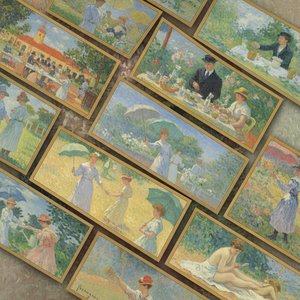
Топ 25 шедьовъра на Ренуар: Красота, светлина и импресионизъм за вашия дом
Разгледайте топ 25 шедьовъра на Ренуар – импресионизъм, светлина и красота във всяка картина! Историята зад творбите, техниките и емоциите. Купете висококачествени репродукции на картини от Ренуар за вашия дом в OriginalUniqueArt.com.

Impressionistic Realism's Finest: 10 Masterpieces for Your Home | OriginalUniqueArt
Journey through Impressionistic Realism with 10 iconic masterpieces by Monet, Renoir & Van Gogh. Explore art history, techniques & find museum-quality reproductions for your home at OriginalUniqueArt.com. Discover all masterpieces online!

Топ 10 шедьовъра на импресионизма: Пейзажи, променили изкуството | OriginalUniqueArt.bg
Разгледайте топ 10 шедьовъра на импресионизма – Моне, Реноар и други! Открийте историите зад известните пейзажи и техния принос към изкуството. Купете висококачествени репродукции на картини за вашия дом в OriginalUniqueArt.bg

Топ 10 шедьоври на импресионизма: Пейзажи, променили изкуството | OriginalUniqueArt.com
Разгледайте топ 10 шедьоври на импресионизма и открийте красотата на пейзажите от Моне, Реноар и други известни художници. Вдъхновете се за вашия дом с репродукции на картини в OriginalUniqueArt.com! Разгледайте пълната колекция онлайн.

Capturing Light: A Masterclass in the Ethereal Beauty of Impressionistic Landscapes
Explore the ethereal beauty of Impressionist landscapes. Discover how masters like Monet captured fleeting light through color and texture, and learn to curate these timeless, luminous masterpieces for your home collection.
