
 Преглед в реален мащаб
 Сподели
 Сподели
 Подробности
 Ръководство

 Изтегляне
 Подобни артикули
 Рентгенова снимка
 Слайдшоу
 Статистика
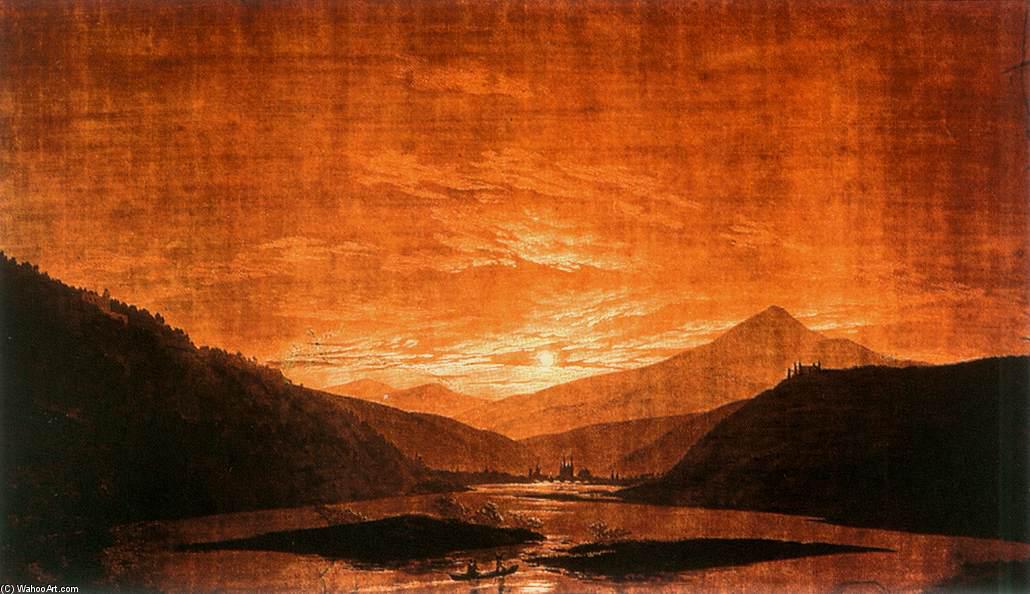
Mountainous River Landscape (Night Version)
 Acrylic On Canvas
- WallArt
- Romantic Landscape
 1830
1830 77.0 x 127.0 cm
 Държавни музеи Касел
 Разгърни целия текст
Закупете дигитално изображение с висока резолюция и подобрени характеристики, значително по-качествено от онлайн прегледа.
Всеки файл е щателно подготвен от нашите специалисти с помощта на съвременни инструменти и експертен ръчен ретуш. Гарантираме, че всяко изображение притежава изключителна яснота, прецизна цветова точност и фини детайли.
Окончателният файл се доставя по имейл в рамките на 72 часа, оптимизиран за незабавна употреба в професионални, редакционни и печатни среди. Това е същото качество, на което се доверяват водещи дизайнерски студия, издатели и галерии.
Дигитално изображение
Изтеглете файл с висока резолюция за лично съхранение, принтиране и творчески проекти. ( Избор на принт Поръчайте ръчно рисувано репродукция на този колекционерски предмет)
Включено във всяка поръчка за дигитални изображения
Експертна дигитална доставка, гарантирана
Избирайки OriginalUniqueArt.com, вие не получавате просто изображение – вие придобивате професионално обработена дигитална творба, създадена с прецизност и подкрепена от гаранция за удовлетворение. Ето какво автоматично е включено във вашата поръчка:

Бърза доставка по имейл
Вашето дигитално изображение с висока резолюция ще бъде изпратено по имейл в рамките на 72 часа от поръчката – готово за незабавно използване.

Дигитален файл с подобрено качество чрез ИИ
Вашата картина е професионално оптимизирана с помощта на усъвършенствани инструменти за изкуствен интелект и ръчна редакция, осигурявайки максимална детайлност, яснота и точност на цветовете.

Безплатна доживотна повторна доставка
Изгубили сте или сте изтрили файла си по погрешка? Не се притеснявайте – ще го изпратим отново на Вас по всяко време, безплатно.

Без митнически такси – завинаги
Насладете се на вашето произведение незабавно, без мита, данъци или такси за доставка – дигиталните изтегляния винаги са освободени от данъци.

Гаранция за точност на цветовете
Гарантираме, че вашето дигитално изображение отразява оригиналните цветове възможно най-точно, чрез използването на професионални инструменти и системи за управление на цветовете.

100-дневна гаранция за удовлетвореност
Ако не сте доволни от вашето дигитално изображение, ще го преработим или ще възстановим 100% от сумата в рамките на 100 дни – без излишни въпроси.

100% Гаранция за връщане на сумата
Не сте доволни? Получете пълен възврат на сумата в рамките на 100 дни от получаването на вашия цифров файл – без излишни въпроси.

Отстъпки за големи поръчки
Купете 3 изображения, спестете 10% - Купете 5, спестете 15% - Купете 10+, спестете 20%. Идеално за творчески проекти, галерии и агенства.
A Meditation on Sublime Beauty: Exploring Caspar David Friedrich’s Mountainous River Landscape (Night Version)
Caspar David Friedrich's *Mountainous River Landscape (Night Version)* transcends mere depiction; it embodies a profound philosophical statement about humanity’s relationship with the natural world and the sublime. Painted in 1830, this monumental canvas—measuring 77 x 127 cm—holds its place within the Staatliche Museen in Kassel as a cornerstone of Romantic landscape painting, cementing Friedrich's legacy as one of Germany’s most influential artists.Composition and Atmosphere: Capturing Twilight’s Embrace
The artwork immediately draws the viewer into a scene bathed in the ethereal glow of twilight. Friedrich meticulously crafted a panorama dominated by towering mountains silhouetted against a bruised orange sky—the fading embers of sunset casting long shadows across the tranquil river below. Two boats, positioned strategically on the water's surface, punctuate the expanse, offering glimpses of human presence amidst the grandeur of nature. Scattered figures – indistinct yet palpable – suggest contemplation and appreciation for the sublime vista. This deliberate arrangement isn’t simply aesthetically pleasing; it’s designed to evoke a feeling of awe and solitude—a core characteristic of Romantic artistic ideals.Technique: Mastering Light and Shadow - Friedrich's Signature Style
Friedrich’s mastery lies in his masterful manipulation of light and shadow, techniques honed through extensive study and experimentation. He employed a sophisticated chiaroscuro method – dramatic contrasts between illuminated areas and deep darkness – to heighten the sense of depth and volume. The sfumato technique—characterized by subtle gradations of tone—further softens edges and creates an atmospheric haze, blurring distinctions between mountains and sky, fostering an illusion of infinite space. Furthermore, Friedrich skillfully utilized tenebrism, a darker form of chiaroscuro where intense darkness dominates, emphasizing the spiritual significance of the scene. These techniques weren’t merely technical exercises; they served as conduits for conveying Friedrich's deeply held belief in nature’s capacity to inspire contemplation and elevate the human spirit.Symbolism: Echoes of Spirituality and Transcendence
Beyond its visual splendor, *Mountainous River Landscape (Night Version)* resonates with profound symbolic meaning. The mountains represent permanence and stability—a counterpoint to the fleeting nature of earthly existence. The river symbolizes life’s journey, flowing onward towards an unknown destination, mirroring humanity's quest for spiritual understanding. The twilight sky embodies both beauty and melancholy – a reminder of mortality but also hinting at divine grace. Friedrich deliberately positioned the boats as symbols of human endeavor amidst this overwhelming landscape, suggesting that even in confronting the sublime, individuals retain a connection to something greater than themselves.Legacy and Emotional Impact: An Enduring Vision
Friedrich’s *Mountainous River Landscape (Night Version)* continues to inspire artists and viewers alike. It exemplifies the Romantic movement's preoccupation with emotion and imagination—a reaction against Enlightenment rationalism—and solidified Friedrich’s position as a prophet of the sublime, a concept championed by Edmund Burke that posits beauty can simultaneously provoke terror and awe. The painting’s quiet grandeur invites contemplation on themes of spirituality, solitude, and the interconnectedness between humanity and nature. Reproductions offer an opportunity to experience this timeless masterpiece, transporting viewers into Friedrich's visionary world and fostering a deeper appreciation for the profound power of landscape art.Въпроси и отговори
Какви са размерите на оригиналната творба "Mountainous River Landscape (Night Version)"?
Записаните размери на „Mountainous River Landscape (Night Version)“ на Каспар Давид Фридрих са 77 x 127 cm. Репродукции могат да бъдат поръчани в други размери, като се запазват същите пропорции.
За какъв размер се препоръчва "Mountainous River Landscape (Night Version)" за Living Room?
За Living Room препоръчителният размер на печат за „Mountainous River Landscape (Night Version)“ на Каспар Давид Фридрих е Large.
Има ли наръчник за „Mountainous River Landscape (Night Version)“ на Каспар Давид Фридрих?
Налична е страница с Ръководство за „Mountainous River Landscape (Night Version)“ на Каспар Давид Фридрих: предназначен за печат информация за произведението, създадена за ученици и учебни цели.
Биография на художника
A Solitary Vision: The Life and Art of Caspar David Friedrich
Born in the Baltic port city of Greifswald in 1774, Caspar David Friedrich’s life was steeped in a melancholic atmosphere that would profoundly shape his artistic vision. His early years were marked by loss – the deaths of his mother and siblings cast a long shadow, fostering a sensitivity to mortality and transience that became central themes in his work. Initially educated by his older brother Christian in drawing, Friedrich’s formal training began at the University of Leipzig, where he pursued both art and theology, though neither degree was completed. This dual interest – a fascination with the visual world alongside a deep spiritual questioning – would prove crucial to his development as an artist. He sought not merely to depict landscapes but to convey inner emotional states through their evocative beauty—a radical departure from prevailing artistic conventions of his time.Early Influences and Artistic Training
Friedrich’s formative years were shaped by exposure to the intellectual currents of Leipzig, where he encountered thinkers like Kant who championed subjective experience as a path to understanding reality. This philosophical engagement would inform his artistic approach, encouraging him to prioritize emotion over mere representation. His brother Christian provided invaluable support in honing his drawing skills, recognizing Friedrich's innate talent and nurturing his passion for art. Further studies in Copenhagen broadened his technical repertoire, introducing him to the traditions of Dutch landscape painting—particularly the works of Jacob van Ruisdael—which emphasized atmospheric perspective and a contemplative gaze. However, Friedrich resisted imitation, striving instead to forge his own distinctive style rooted in profound psychological insight.The Romantic Landscape: A New Aesthetic
Friedrich’s artistic breakthrough occurred during the early 1800s when he embraced the tenets of Romanticism—a movement characterized by an emphasis on imagination, emotion, and individualism. Rejecting the rational idealism of the Enlightenment, Romantics sought inspiration in nature as a source of spiritual renewal and sublime beauty. Friedrich's canvases are imbued with *Rückenfiguren*, figures seen from behind, which invite viewers to step into the scene and share in the contemplative experience—a technique that became his signature element. He skillfully manipulated light and shadow, creating dramatic compositions that conveyed a sense of grandeur and mystery. Recurring motifs included ancient trees, towering mountains, swirling fog, and crumbling ruins—symbols representing life’s cycles, spiritual longing, and the weight of history.Iconic Paintings and Symbolic Significance
Friedrich produced several masterpieces that exemplify his artistic vision and cemented his place in art history. “The Abbey in the Oakwood” (1809-1810), a haunting depiction of a ruined churchyard bathed in twilight, powerfully communicates themes of decay and remembrance—a poignant meditation on mortality. Perhaps his most celebrated work, “Wanderer Above the Sea of Fog” (c. 1818), embodies the Romantic ideal of confronting the sublime—the awe-inspiring grandeur of nature that dwarfs human insignificance. The solitary figure gazing out over a misty landscape symbolizes both aspiration and humility. Similarly, “Chalk Cliffs on Rügen” (1818) captures the beauty of the Baltic coast while subtly conveying a sense of German national identity—a burgeoning concern during a period of political upheaval. And finally, “The Sea of Ice” (1824), a chilling portrayal of an Arctic wilderness, underscores nature’s indifference to human concerns and evokes feelings of terror and wonder.Legacy and Influence
Friedrich's artistic innovations profoundly impacted subsequent generations of artists—particularly Symbolists and Surrealists who sought to express inner emotions through evocative imagery. His emphasis on subjective experience and psychological depth paved the way for explorations into the subconscious mind and challenged conventional notions of representation. He remains a pivotal figure whose work continues to resonate with audiences today, reminding us of the enduring connection between humanity and the natural world—a connection that Friedrich championed as a pathway to spiritual understanding. His legacy extends beyond his own paintings; he established a tradition of landscape painting that prioritized emotional resonance over mere visual accuracy—a legacy that continues to inspire artists worldwide.
Каспар Давид Фридрих
1774 - 1840 , Германия
Кратка информация
- Artistic Movement Or Style: Романтизъм
- Artists Or Movements Influenced By This Artist: ['Символизъм']
- Artists Who Influenced This Artist: ['Никога не е посочен']
- Date Of Birth: 5 септември 1774 г.
- Date Of Death: 7 май 1840 г.
- Full Name: Caspar David Friedrich
- Nationality: Германец
- Notable Artworks:
- Абатството в дъб
- Ходещ през мъгла
- Place Of Birth: Греифсвальд, Германия