

 Преглед в реален мащаб
 Изпрати
 Сподели
 Детайли
 Ръководство

 Изтегляне
 Подобни артикули
 Рентгенова снимка
 Слайдшоу
 Статистика
James Watt

 Прочети повече
Получете файл, готов за печат, който надхвърля възможностите на уеб прегледа. Всяко дигитално изображение, което предлагаме, е извлечено от висококачествен оригинал в нашата база данни — обикновено с ширина между 5 000 и 15 000 пиксела — така че да можете със сигурност да принтирате в голям формат, да кадрирате тесно или да възпроизведете фините детайли.
Нито един файл не напуска нашето студио без внимание. Дигитален експерт проверява цветовете спрямо оригиналната картина и ги коригира при необходимост, след което подобрява яснотата и детайлите с професионални инструменти за ретуш — винаги оставайки верен на мазките и стила на художника. Резултатът е изображение, което изглежда като самата картина, а не като сканиран образ с филтър.
Вие одобрявате преди финализиране: нашият експерт изпраща изображението по имейл в рамките на 72 часа за ваш преглед. Не сте доволни? Поискайте подобрения или корекции, или поискайте възстановяване на сумата, ако качеството не отговаря на очакванията ви.
Това е качеството, на което разчитат издателства, дизайн студиа, галерии и печатници.
Дигитално изображение
Изтеглете файл с висока резолюция за лично съхранение, принтиране и творчески проекти. ( Превключване към принт Купете ръчно рисувана картина)
Включено във всяка поръчка за дигитални изображения
Гарантирана експертна дигитална доставка
Избирайки OriginalUniqueArt.com, вие не получавате просто изображение – вие придобивате професионално обработена дигитална творба, създадена с прецизност и подкрепена от гаранция за удовлетворение. Ето какво автоматично е включено във вашата поръчка:

Бърза доставка по имейл
Вашето дигитално изображение с висока резолюция ще бъде изпратено по имейл в рамките на 72 часа от поръчката – готово за незабавно използване.

Дигитален файл с подобрено качество чрез ИИ
Вашата картина е професионално оптимизирана чрез усъвършенствани инструменти с изкуствен интелект и ръчна редакция, което гарантира максимална детайлност, яснота и точност на цветовете.

Безплатна доживотна повторна доставка
Изгубили сте или сте изтрили файла си по погрешка? Не се притеснявайте – ще го изпратим отново на Вас по всяко време, безплатно.

Без митнически такси – завинаги
Насладете се на вашето произведение незабавно, без мита, такси или разходи за доставка – дигиталните изтегляния винаги са освободени от данъци.

Гаранция за цветово съответствие
Гарантираме, че вашето дигитално изображение отразява оригиналните цветове възможно най-точно чрез използването на професионални инструменти и системи за управление на цветовете.

100-дневна гаранция за удовлетвореност
Ако не сте доволни от вашето дигитално изображение, ще го преработим или ще възстановим 100% от сумата в рамките на 100 дни – без излишни въпроси.

100% Гаранция за връщане на сумата
Не сте доволни? Получете пълен възврат на сумата в рамките на 100 дни от получаването на вашия цифров файл – без излишни въпроси.

Отстъпки за големи поръчки
Купете 3 изображения, спестете 10% - Купете 5, спестете 15% - Купете 10+, спестете 20%. Идеално за творчески проекти, галерии и агенства.
The Artist and His Style
Carl Fredrik Von Breda was a Swedish painter who was known for his portraits of prominent figures of the time. His style was characterized by simplicity, elegance, and attention to detail. In the James Watt portrait, Von Breda's use of light and shadow creates a sense of depth and dimensionality, drawing the viewer's eye to the subject's face.The Painting's Significance
The James Watt portrait is not only a masterpiece of Neoclassical art but also an important historical document. It provides a glimpse into the life and work of one of the most influential figures of the Industrial Revolution. The painting shows James Watt seated at a table, surrounded by books and papers, with a look of contemplation on his face. This image conveys the idea of Watt as a thoughtful and introspective person, deeply engaged in his work.- The painting is made with oil on canvas, which was a common medium for artists during the Neoclassical period.
- The use of chiaroscuro creates a sense of volume and depth in the painting, drawing the viewer's eye to the subject's face.
- The National Portrait Gallery has an extensive collection of portraits, including works by Carl Fredrik Von Breda and other notable artists.
The James Watt portrait by Carl Fredrik Von Breda is a significant work of art that provides a glimpse into the life and work of one of the most influential figures of the Industrial Revolution. Its beauty, historical significance, and cultural importance make it a must-see for anyone interested in art, history, or science.
Въпроси и отговори
Мога ли да видя „James Watt“ на Carl Fredrik von Breda под различно осветление?
X-Ray изгледът на „James Watt“ на Carl Fredrik von Breda може да бъде открит на страницата Рентгенови лъчи за произведението: интерактивно разглеждане на изображението чрез единадесет оптични слоя.
Къде мога да купя ръчно рисувана репродукция на „James Watt“ на Carl Fredrik von Breda?
„James Watt“ е достъпна като ръчно рисувана маслена репродукция върху ленен холст. Можете да направите поръчка на нейната страница Ръчно рисувана репродукция, като изберете предпочитания размер.
Има ли информационен лист за „James Watt“ на Carl Fredrik von Breda, предназначен за ученици?
Наръчникът за „James Watt“ е страницата Информационен лист на произведението – предназначен за принтиране информационен лист, който представя творбата заедно с нейното описание, авторство и таблица с данни (художник, дати, техника, оригинален размер, колекция).
Биография на художника
Carl Frederik von Breda: A Swedish Master Bridging Tradition and Innovation
Carl Frederik von Breda, a name synonymous with elegance and insight in 18th-century portraiture, stands as a uniquely compelling figure – a Swedish artist profoundly shaped by his time in London. Born in Stockholm in 1759, his artistic journey wasn’t confined to the familiar landscapes of his homeland; instead, it unfolded through an intricate dance between established Swedish traditions and the revolutionary spirit of British art, ultimately earning him the enduring title “the Van Dyck of Sweden.” His lineage played a crucial role: descended from Pieter von Breda, a Dutch emigrant who settled in Sweden around 1670, and inheriting artistic talent from his grandfather Lucas – a painter himself – and father Lucas the younger, an art collector and arbitrator, Carl was immersed in a world of aesthetics from his earliest years. This rich heritage instilled within him not just technical skill but also a cosmopolitan sensibility, a willingness to embrace new influences and forge his own distinctive style.The Seeds of Change: Early Training and Royal Recognition
Breda’s artistic development began at the Royal Swedish Academy of Arts in Stockholm, where he studied under Lorens Pasch the Younger, absorbing the classical techniques and historical subjects that were hallmarks of Swedish portraiture. He quickly demonstrated a remarkable aptitude, winning prizes and securing commissions for prominent figures within the Swedish court – including Duchess Hedvig Elisabeth Charlotte, Crown Prince Gustavus Adolphus, and most notably, King Gustavus III himself. These early works reveal a solid foundation in established styles, characterized by careful detail and a restrained elegance. However, beneath this surface lay an ambition that yearned to transcend national boundaries. The portraits of the royal family showcased a growing confidence and technical skill, but also hinted at a desire for something more – a willingness to experiment with light, composition, and expression.London Calling: The Profound Influence of Joshua Reynolds
A pivotal moment in Breda’s artistic trajectory arrived in 1786 when he made the bold decision to relocate to London with his family. This move proved transformative, catapulting him into a vibrant artistic environment teeming with innovation and intellectual ferment. He sought out tutelage under Sir Joshua Reynolds, arguably the most influential portraitist of his time. While Reynolds’s instruction wasn't particularly intensive, its impact was profound. Breda absorbed Reynolds’s emphasis on capturing character, utilizing dramatic lighting to sculpt form, and employing a looser, more expressive brushstroke – a departure from the rigid formality of earlier styles. This exposure fundamentally altered Breda’s approach, injecting a dynamism and psychological depth into his portraits that distinguished him from his Swedish contemporaries.The Lunar Society and the Dawn of Romanticism
London became a crucible for artistic experimentation, and Breda found himself immersed in a circle of intellectuals known as the Lunar Society – a group of scientists, engineers, and philosophers who gathered regularly to discuss ideas and pursue knowledge. It was during this period that he painted portraits of James Watt, Matthew Boulton, and William Withering – figures at the forefront of the Industrial Revolution and scientific inquiry. These weren’t merely commissions; they were engagements with some of the most forward-thinking minds of the era, reflecting a growing interest in portraying not just outward appearances but also intellectual prowess and social influence. The portraits of Watt and Boulton, in particular, demonstrate a shift towards a more dramatic and psychologically complex style – foreshadowing the emerging Romantic movement. His work during this time began to incorporate elements of Romanticism: heightened emotion, an emphasis on individual experience, and a fascination with the sublime.A Return to Sweden and Enduring Legacy
In 1796, Breda returned to Stockholm, accepting a prestigious professorship at the Academy of Arts. This marked a new phase in his career, one characterized by artistic maturity and a distinctive style honed during his years in England. He was immediately inundated with portrait commissions, quickly becoming a leading figure in the Swedish art scene. His brushwork became bolder and more spirited, reflecting the energy and dynamism he had absorbed in London. Notable portraits from this period include those of his father Lucas, two of his nephews, the scholar Nils von Rosenstein, and most celebrated of all, Teresa Vandoni, a renowned Italian opera singer performing at the Royal Swedish Opera. The portrait of Vandoni is particularly striking, capturing her dramatic presence and vocal artistry with remarkable sensitivity – a testament to Breda’s ability to convey both physical beauty and inner emotion.A Lasting Impression: “The Van Dyck of Sweden”
Carl Frederik von Breda's impact on Swedish art extended far beyond his own prolific output. His exposure to British artistic trends—particularly the influence of Reynolds—helped modernize portraiture in Sweden, inspiring subsequent generations of artists to embrace new techniques and stylistic approaches. He wasn’t simply a painter of faces; he was a chronicler of his time, creating a visual record of some of the leading scientific, intellectual, and cultural figures of the late 18th and early 19th centuries. His portraits of members of the Lunar Society, for example, offer invaluable insights into this influential group of innovators. The artistic legacy continued within his family; his son, Johan Fredrik von Breda, followed in his father’s footsteps, receiving tutelage from him and continuing the family tradition. While some critics noted a perceived decline in consistency in his later works—a tendency towards monotony—Breda remained an important figure in Swedish art history until his death in Stockholm in 1818. He is remembered today as “the Van Dyck of Sweden,” a testament to his skill, elegance, and enduring contribution to the world of portraiture – a master who seamlessly blended classical training with the spirit of innovation.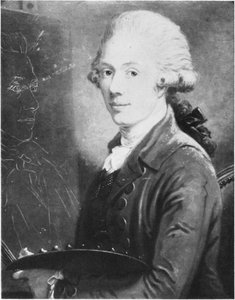
Carl Fredrik von Breda
1759 - 1818 , Швеция
Бърза справка
- Artistic Movement Or Style: Портретна живопис, Романтизъм
- Artists Or Movements Influenced By This Artist: ['Шведски портретисти']
- Artists Who Influenced This Artist:
- Лоренс Паш по-младший
- Джошуа Рейнолдс
- Date Of Birth: 1759
- Date Of Death: 1818
- Full Name: Carl Frederik von Breda
- Nationality: Шведски
- Notable Artworks:
- Портрет на Рейнолдс
- Тереза Вандони
- Джеймс Уат
- Майкъл Болтон
- Place Of Birth: Стокхолм, Швеция