Fauvism · 1911
Vegetable fields (Аугуст Макке, 1911)
Аугуст Макке (1887–1914) създаде Vegetable fields. Датира от 1911. Това произведение принадлежи към движението Fauvism. Изdelano е от Oil On Canvas. Експонира се в Kunstmuseum Bonn в Бон, Германия. Размерите са 47 × 64 cm.
- 1911
- Oil On Canvas
- 47 × 64 cm
- Kunstmuseum Bonn, Бон

 Преглед в реален мащаб

 Ръчно изработена маслена картина
 Изпрати
 Сподели
 Информационен лист


 Изтегляне
 Подобни артикули
 Рентгенова снимка
 Слайдшоу
 Въпроси и отговори

 Статистика
Vegetable fields накратко
- Заглавие
- Vegetable fields
- Художник
- Аугуст Макке (1887–1914)
- Роден в
- Мешеде, Германия
- Дата
- 1911
- Техника
- Oil On Canvas
- Размери
- 47 × 64 cm
- Къде може да се види
- Kunstmuseum Bonn, Бон, Германия
- Движение
- Fauvism
- Предмет
- rural landscape, haystacks, blue flowers, path, roads, color field
Какво е изобразено в Vegetable fields?
August Macke’s ‘Vegetable Fields’: A Fauvist Echo of Rural Melancholy
This captivating oil painting, “Vegetable Fields,” created in 1911 by August Macke, offers a potent glimpse into the burgeoning world of German Expressionism. Measuring 47 x 64 cm, this work transcends a simple depiction of a rural landscape; it’s an intensely felt experience rendered through bold color and simplified forms – hallmarks of the Fauvist movement. Macke, tragically cut short by the First World War at just 27, was already producing art that resonated with a raw emotionality, anticipating the full force of Expressionism while still retaining traces of Impressionist influence.
- Subject Matter: The scene unfolds in a stylized countryside, dominated by haystacks, fields ablaze with blue flowers, and a prominent pathway leading the viewer’s eye into the distance. This isn't a meticulous rendering of reality; rather, it’s an interpretation filtered through Macke’s emotional lens.
- Style & Technique: The painting firmly embraces Fauvist principles – prioritizing color over precise representation. Thick impasto brushstrokes build texture and physicality onto the canvas, creating a vibrant, almost tactile surface. Lines are deliberately expressive, guiding the viewer's gaze and contributing to the overall sense of movement.
Decoding the Emotional Landscape
Macke’s use of color is particularly striking. The dominant blues and greens evoke a feeling of tranquility, yet they’re punctuated by jarring yellows and reds, creating an underlying tension. This deliberate dissonance reflects the anxieties and uncertainties of the era – a world on the cusp of profound change. The flattened perspective, prioritizing emotional impact over realistic spatial illusion, further intensifies this effect. It's as if Macke is inviting us to step into his subjective experience, rather than simply observing a landscape.
- Symbolism: The diverging paths in the distance are rich with symbolic potential, representing choices, journeys, or perhaps the fragmented nature of modern life. The isolated setting contributes to a sense of melancholy, hinting at themes of loneliness and contemplation.
- Historical Context: Created in 1911, “Vegetable Fields” sits squarely within the period of experimentation that preceded the full flowering of German Expressionism. Macke’s work foreshadowed the movement's emphasis on subjective emotion and distorted form, while still retaining a connection to earlier artistic traditions.
A Masterclass in Texture and Light
The painting’s technical brilliance lies not just in its color palette but also in Macke’s masterful manipulation of light and texture. The diffuse lighting suggests an overcast day, eliminating harsh shadows and contributing to the overall mood of quiet contemplation. The thick impasto technique – applying paint thickly to create a textured surface – is particularly evident in the haystacks and fields, adding a remarkable physicality to the composition. This deliberate roughness further emphasizes the emotional intensity of the work.
Collecting this Powerful Image
A hand-painted reproduction of “Vegetable Fields” offers an exceptional opportunity to bring this evocative artwork into your home or office. OriginalUniqueArt’s meticulous reproductions capture the essence of Macke's vision, faithfully recreating the painting’s vibrant colors and expressive brushwork. This piece is more than just a decoration; it’s a window into the soul of a brilliant artist and a poignant reflection on the human condition.
В кой музей се намира Vegetable fields?
Kunstmuseum Bonn
Бон, Германия
Прибежище на експресията: Душата на Kunstmuseum Bonn Разположен в историческото сърце на Бон — град, в чийто въздух все още се носят ехото от композициите на Бетховен — се намира Kunstmuseum Bonn — дълбоко прибежище за тези, които търсят суровата и емоционална сила на модернизма. Да стъпиш в тази институция означава да се отправиш на пътешествие през буйната, но прекрасна психика на двадесети век. Роден от необходимостта не само да се възстановят стени, но и културна идентичност по време на трансформативната ера на следвоен преструктуриране, музеят оттогава се е превърнал в глобален фар за Ренската експресия .

Изображения с висока резолюция на Vegetable fields

Обществено достояние: художникът е починал през 1914 г.
Други размери, кадриране и цитиране →Аугуст Макке, Vegetable fields (1911), Kunstmuseum Bonn. Обществено достояние
Отговори на въпроси относно Vegetable fields
Къде може да бъде видяно „Vegetable fields“ на Аугуст Макке днес?
Оригиналът на „Vegetable fields“ може да бъде видян в Kunstmuseum Bonn, Бон, Германия.
В коя година е създадено „Vegetable fields“ на Аугуст Макке?
"Vegetable fields" датира от 1911. Тази дата поставя произведението в контекста на кариерата на Аугуст Макке и неговата епоха.
С каква техника е изпълнено „Vegetable fields“ на Аугуст Макке?
Техниката на „Vegetable fields“ на Аугуст Макке е Oil On Canvas. Репродукциите са предназначени да предадат визуалния ефект на тази техника.
Какви са реалните размери на „Vegetable fields“ на Аугуст Макке?
Размерите на оригиналната творба „Vegetable fields“ на Аугуст Макке са 47 x 64 cm.
Какво изобразява „Vegetable fields“ на Аугуст Макке?
„Vegetable fields“ на Аугуст Макке изобразява: rural landscape, haystacks, blue flowers, path, roads, color field, expressionism, geometric forms.
Свободен ли е от авторско право "Vegetable fields"?
Що се отнася до авторското право, „Vegetable fields“ е в в обществено достояние – авторското право е изтекло.
На кой художник се приписва "Vegetable fields"?
Художникът зад "Vegetable fields" е Аугуст Макке. Произведението е каталогизирано под името на Аугуст Макке.
Към кое художествено течение принадлежи „Vegetable fields“ на Аугуст Макке?
„Vegetable fields“ е произведение от Fauvism. Това направление определя художествената традиция, към която принадлежи творбата.
Коя е фазата от творческия път на Аугуст Макке, която представлява „Vegetable fields“?
„Vegetable fields“ принадлежи към Mature Period от кариерата на Аугуст Макке. Тази класификация свързва творбата с развитието на художника.
За художника Аугуст Макке
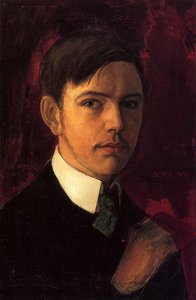
1887–1914, Германия
Аугуст Макке
Ранен живот, семейство и обучение Историята на Аугуст Макке започва в германския град Мешеде, където той е роден на 3 януари 1887 г. Той е единственият син на Август Фридрих Херман Макке, строителен предприемач и аматьорски художник, и Мария Флорентин. Детството му е оформено от променящите се съдби на компанията на баща му, което пренася семейството в Кьолн, а по-късно и в Бон. Дори като малко момче, привличането към визуалното изразно е било очевидно; той прекарва ранните си години в скициране и проектиране на декорации за училищни пиеси, намирайки начин да пренесе обкръжението си върху хартия много преди да е стъпил в официална академия.
Други творби на Аугуст Макке
 Жената в зелен жилет1913
 Басейни с момичета и град на заден план1913
 Хат Шоп1913
 Portrait of the Artist's Wife with Hat1909

Есеи по темата Vegetable fields
 August Macke: Expressionist Visions of Harmony & Modern LifeExplore the vibrant Expressionist paintings of August Macke (1887-1914). Discover his key role in Der Blaue Reiter, Fauvist influences, and…
 Топ 10 шедьоври на Експресионизма: Изкуство, което разтърсва душата | OriginalUniqueArt.comРазкрийте емоцията и силата на Експресионизма с Топ 10 шедьоври! От Munch до Кандински – истории, техники и вдъхновение. Купете висококачес…
 Brushes of Anguish: The Psychological Landscape of Emotional Distress in Post-Impressionist ArtExplore the profound psychological depth of Post-Impressionist masters. Discover how color and form mirror human emotion.