

 Преглед в реален мащаб
 Сподели
 Сподели
 Подробности
 Ръководство

 Изтегляне
 Подобни артикули
 Рентгенова снимка
 Слайдшоу
 Статистика
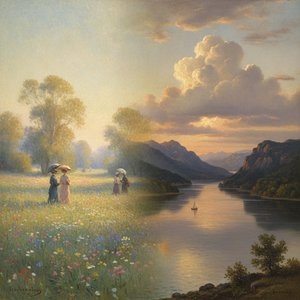
Golden summer, Eaglemont
 Oil On Canvas
- WallArt
- Australian Impressionism
 1889
1889- 19th Century
 526.0 x 813.0 cm
 Национална галерия в Австралия
 Разгърни целия текст
Жикле / Художествен принт
Giclée печат или принт върху платно с музейно качество, бързо производство и гъвкави опции за завършен вид. ( Поръчайте ръчно рисувано репродукция на този колекционерски предмет Превключване към дигитално изображение)




P118B $10

P118H $10

P118W $10

P438Z $10

P508JH $12

P508YH $12

P805H $10

P805Z $10

P919BZ $10

P919G $10

P919XJ $10

P959ZH $10

P968JZ $12

W106C $8

W218G $10

W218JH $8

W218Y $10

W307PJ $10

W316G $10

W316PJ $8

W316Y $10

W398PJ $8

W4111J $10

W500HY $15

W500JH $15

W692G $12

W849H $8

W940BG $15

W953PJ $8




Изберете от нашите предварително зададени размери, които съответстват на оригиналните пропорции на произведението.

Можете да въведете собствени размери, за да паснат на конкретна рамка или пространство. Ако избраният от Вас размер не съвпада с пропорциите на оригиналното изображение, ние ще изрежем произведението или ще разширим изображението с огледален или едноцветен ръб. Дигитален макет ще бъде изпратен за Ваше одобрение преди започването на производството.
Моля, имайте предвид, че предпрегледът на екрана не отразява реалното изрязване или разширяване. Само макетът ще покаже точно финалната композиция.
Въпреки че са налични персонализирани размери, препоръчваме да изберете размер от предварително дефинирания списък, за да запазите оригиналните пропорции.
Доставка по целия свят () в рамките на 2 седмици вместо стандартните 4/5 седмици. (27 Септември)

Безплатна експресна доставка по целия свят

Висококачествено ленено платно

Пълно застраховане на доставката

Гаранция за възстановяване на митнически такси

Гаранция за пълно съответствие на цветовете

Политика за връщане в рамките на 100 дни (само при дефекти)

100% Гаранция за връщане на сумата

Отстъпка при поръчка на повече произведения
 Опцията със стъкло е налична само за размери под 110 см

Golden summer, Eaglemont
Жикле / Художествен принт
Размер на репродукцията
-


Крайна цена
$ 80
Биография на художника
A Pioneer of the Australian Light: The Life and Art of Arthur Streeton
Arthur Ernest Streeton, affectionately known as “Smike” to his contemporaries, stands as a monumental figure in Australian art history. Born on April 8, 1867, at Mount Duneed, Victoria, his life was inextricably linked to the evolving identity of a nation finding its voice through landscape painting. From humble beginnings – his parents were English migrants who met during their voyage to Australia – Streeton’s artistic journey began with studies at the National Gallery School in Melbourne from 1882 to 1887, laying the groundwork for a career that would define Australian Impressionism and the Heidelberg School. These early years weren't merely about technical skill; they were about discovering a way to capture the unique quality of light and atmosphere that characterized the Australian bush – a light unlike anything seen in Europe, and a challenge that captivated Streeton throughout his life. He supplemented his formal training with apprenticeships as a lithographer, experiences which undoubtedly informed his understanding of composition and tonal values.The Heidelberg School and the Eaglemont Camp
Streeton’s artistic maturation coincided with the burgeoning of the Heidelberg School, a group of artists determined to forge an authentically Australian style. His friendships with Tom Roberts and Frederick McCubbin were pivotal; together they embarked on *plein air* painting excursions, seeking to represent the landscape directly from nature. This commitment to working outdoors, inspired by French Impressionism but adapted to the distinctly Australian context, became a hallmark of their work. The establishment of the Eaglemont Camp in 1888 marked a turning point. Sharing a farmhouse on the outskirts of Melbourne with fellow artists, Streeton entered a period of intense creativity. It was here that he produced some of his most iconic works, including *Golden Summer, Eaglemont* (1889) and *Still glides the stream, and shall for ever glide* (1890). These paintings weren’t simply depictions of scenery; they were evocations of a feeling – the heat haze shimmering over golden fields, the stillness of a summer afternoon. The camp fostered an environment of shared experimentation and mutual encouragement, solidifying the Heidelberg School's reputation as a force to be reckoned with in the Australian art world. The group’s bold approach culminated in the controversial “9 by 5 Impression Exhibition” in 1889, showcasing small, rapidly executed paintings that challenged conventional artistic norms.Seeking Recognition and Returning Home
Driven by ambition and a desire for wider recognition, Streeton sailed for London on the *Polynesien* in 1897. While he achieved some success exhibiting at the Royal Academy, including representation in 1900, he found it difficult to replicate the acclaim he had enjoyed in Australia. The European art scene was crowded and competitive, and his distinctly Australian vision didn’t always resonate with established tastes. He continued to paint, exploring different subjects – Venetian scenes like *Palazzo Labia, Venice* (1908) demonstrate a shift in focus but retain his characteristic sensitivity to light and color. The outbreak of World War I saw Streeton attempting to contribute through service as an orderly with the Royal Army Medical Corps, later becoming an official war artist in 1918. His wartime paintings, while documenting the devastation of the Western Front, often focused on the landscape itself, reflecting his enduring fascination with the natural world. He returned to Australia in 1923 a celebrated figure, knighted in 1937 for his contributions to art.Legacy and Lasting Influence
Arthur Streeton’s legacy extends far beyond his individual paintings. He played a crucial role in establishing a uniquely Australian artistic identity, one that celebrated the beauty and vastness of the continent. His work helped to define how Australians saw themselves and their land. His influence can be seen in generations of landscape painters who followed, inspired by his ability to capture the essence of the Australian light and atmosphere. He was a prolific writer and art critic, further shaping the discourse around Australian art. Though he experienced periods of frustration and self-doubt, Streeton remained committed to his artistic vision until his death on September 1, 1943, at Olinda, Victoria. His paintings continue to captivate audiences today, offering a timeless glimpse into the heart and soul of Australia.Key Works & Themes
- Golden Summer, Eaglemont (1889): Perhaps his most famous work, embodying the heat and light of an Australian summer.
- Still glides the stream, and shall for ever glide (1890): A lyrical depiction of the Yarra River, showcasing his mastery of atmospheric perspective.
- Fire’s on (1891): A powerful representation of the Australian bushfire landscape, capturing both its beauty and danger.
- Palazzo Labia, Venice (1908): Demonstrates his ability to adapt his Impressionistic style to European subjects.
- Egyptian Drink Vendor (1897): A vibrant scene reflecting his travels and exploration of different cultures.

Артур Стрийтън
1867 - 1943 , Австралия
Бързи факти
- Artistic Movement Or Style: Импресионизъм, Heidelberg School
- Artists Or Movements Influenced By This Artist: ['Australian Impressionism']
- Artists Who Influenced This Artist:
- Louis Buvelot
- Turner
- Date Of Birth: 8 април 1867
- Date Of Death: 1 септ 1943
- Full Name: Arthur Ernest Streeton
- Nationality: Австралиец
- Notable Artworks:
- Golden Summer, Eaglemont
- Still glides the stream
- Palazzo Labia, Venice
- Place Of Birth: Монт Данед, Австралия
Свързани статии

Топ 25 шедьовъра на Пол Сезан: Открийте вечния гений в изкуството и декора
Открийте 25 шедьовъра на Пол Сезан – импресионизъм, постимпресионизъм и революционен стил! Разгледайте историите зад картините, техниките и вдъхновението. Купете висококачествени репродукции за вашия дом на OriginalUniqueArt.com.

Топ 10 шедьоври на импресионизма: История, артисти и красота за вашия дом
Потопете се в света на импресионизма с нашия списък от 10 шедьовъра! От Моне до Реноар, разкрийте историите зад най-емблематичните картини. Вдъхновете дома си с изкуство – купете репродукции на високо качество на OriginalUniqueArt.com

Sun-Drenched Masterpieces: Capturing the Golden Glow of Summer in Fine Art
Embark on a visual journey through the golden glow of summer fine art. Discover how masters captured sunlight through Impressionism and landscape painting. Explore premium hand-painted reproductions and expert curation for your collection.
Capturing the Light: A Journey Through the Soul of American Impressionism and the Hudson River School
Explore the luminous beauty of American Impressionism and the Hudson River School. Discover a curated journey through light, landscape, and history, celebrating the enduring legacy of masters through exquisite, hand-painted oil reproductions for the discerning art lover.

The Hague School: Realism, Atmosphere & the Dawn of Dutch Impressionism
Explore the Hague School's pivotal role in Dutch art history. Discover realism, atmospheric landscapes & its influence on Impressionism. Learn about key artists like Mauve & Maris with OriginalUniqueArt.

