

 Сподели
 Сподели
 Подробности
 Ръководство

 Изтегляне
 Подобни артикули
 Слайдшоу
 Статистика
Five Pieces for Orchestra, op. 16/5 – First written copy
 Giclée Print
- Digital
- Expressionist Atonality
Expressionist Atonality
 1909
1909 36.0 x 28.0 cm
 Arnold Schönberg Center
 Разгърни целия текст
Жикле / Художествен принт
Giclée печат или принт върху платно с музейно качество, бързо производство и гъвкави опции за завършен вид. ( Поръчайте ръчно рисувано репродукция на този колекционерски предмет Превключване към дигитално изображение)




































Изберете от нашите предварително зададени размери, които съответстват на оригиналните пропорции на произведението.

Можете да въведете собствени размери, за да паснат на конкретна рамка или пространство. Ако избраният от Вас размер не съвпада с пропорциите на оригиналното изображение, ние ще изрежем произведението или ще разширим изображението с огледален или едноцветен ръб. Дигитален макет ще бъде изпратен за Ваше одобрение преди започването на производството.
Моля, имайте предвид, че предпрегледът на екрана не отразява реалното изрязване или разширяване. Само макетът ще покаже точно финалната композиция.
Въпреки че са налични персонализирани размери, препоръчваме да изберете размер от предварително дефинирания списък, за да запазите оригиналните пропорции.
Доставка по целия свят () в рамките на 2 седмици вместо стандартните 4/5 седмици. (27 Септември)

Безплатна експресна доставка по целия свят

Висококачествено ленено платно

Пълно застраховане на доставката

Гаранция за възстановяване на митнически такси

Гаранция за пълно съответствие на цветовете

Политика за връщане в рамките на 100 дни (само при дефекти)

100% Гаранция за връщане на сумата

Отстъпка при поръчка на повече произведения
 Опцията със стъкло е налична само за размери под 110 см

Five Pieces for Orchestra, op. 16/5 – First written copy
Жикле / Художествен принт
Размер на репродукцията
-


Крайна цена
$ 80
A Window into Schoenberg's Revolutionary Soundscape
This meticulously crafted hand-painted reproduction offers an intimate glimpse into the genesis of Arnold Schoenberg’s groundbreaking “Five Pieces for Orchestra, op. 16/5,” a composition born from a summer of intense creative exploration in 1909. The original score, painstakingly preserved and now faithfully recreated, is not merely musical notation; it's a tangible artifact of a pivotal moment in the history of Western music – a testament to Schoenberg’s radical departure from traditional tonal harmony and his pioneering embrace of atonality.
- The Context: Steinakirchen 1909 The summer of 1909 found Schoenberg, alongside fellow modernist giants Zemlinsky, Berg, Webern, and Oppenheimer, sequestered in the idyllic Austrian village of Steinakirchen. This period proved extraordinarily productive, yielding not only the “Five Pieces” but also the Piano Piece op. 11 and the unsettling monodrama, *Erwartung* (Waiting), foreshadowing his later explorations into expressionism.
- Strauss’s Vision Schoenberg's correspondence with Richard Strauss reveals a deliberate intention to create music that eschewed grand symphonic structures. He envisioned “short orchestra pieces” – fleeting moments of color and mood, prioritizing emotional impact over architectural form. This directive shaped the very essence of *Five Pieces*.
- “Musical Prose” The score’s syntax is deliberately unconventional: atextonic melodies, thematic absence, and an emphasis on dynamic variation. Schoenberg termed this approach “musical prose,” describing it as music unlike anything heard before – a bold proclamation of new tonal beauty, seeking out unexpected accents and contrasts, and exploring previously uncharted emotional territories.
Decoding the Score: Technique and Style
The hand-painted reproduction faithfully captures the intricate details of Schoenberg’s original score. The delicate lines representing individual notes, the precise placement of rests, and the nuanced markings indicating dynamics and tempo are rendered with exceptional care. The artist has skillfully recreated the characteristic handwriting style prevalent in early 20th-century musical scores, adding to the piece's historical authenticity. Note the use of clefs and staves – fundamental elements of musical notation that define the structure and organization of the composition.
- Material & Technique The reproduction utilizes archival quality paper mimicking the texture of period manuscripts, and traditional hand-painting techniques to achieve a level of detail and nuance that digital reproductions simply cannot replicate.
- Color Palette While a black and white photograph represents the original score, this reproduction employs a subtle tonal palette – primarily grays and browns – evocative of aged parchment, further enhancing its historical feel.
Symbolism and Emotional Resonance
More than just a musical score, this piece embodies Schoenberg’s revolutionary spirit. The “Five Pieces” represent a deliberate rejection of established conventions, a fearless exploration of dissonance and atonality, and an attempt to capture the raw essence of human emotion without the constraints of traditional harmony. The emphasis on "speaking music," as Schoenberg himself described it, suggests a desire for direct communication – a musical language that transcends words and speaks directly to the listener’s soul.
- Atonality's Impact The piece exemplifies atonality, a compositional technique where no single note is inherently "correct" or establishes a tonal center. This creates a sense of instability and ambiguity, reflecting the anxieties and uncertainties of the modern age.
- Emotional Intensity Despite its unconventional structure, the score conveys a profound emotional intensity – a blend of melancholy, longing, and perhaps even a hint of unease. The carefully crafted dynamics and melodic contours contribute to this powerful effect.
Dimensions & Acquisition
This hand-painted reproduction measures 36 x 28 cm (14 x 11 inches), making it suitable for display in a variety of settings – from private study to art gallery. It’s an ideal addition to any collection of modern art, musical memorabilia, or simply as a conversation starter.
Биография на художника
ранен живот и музикални начала
арнолд Шонберг, австро-американският композитор, е роден на 13 септември 1874 г. във Виена, Австрия. Ранният му живот е белязан от скромно начало, тъй като баща му е бил собственик на обувна been. Въпреки това, вродената страст на Шонберг към музиката го води до голяма степен към самообразование в тази област.музикална еволюция и забележителни произведения
Ранните творби на Шонберг, като Verklärte Nacht (1899), демонстрират синтез между стиловете на Брамс и Вагнер. С развитието си той се превръща в централна фигура на Втората виенска школа, заедно с Антон Веберн и Албан Берг. Неговите композиции, включително Струнно квартетно № 2 (1907–1908), Erwartung (1909) и Pierrot Lunaire (1912), въплъщават неговия иновативен подход към атоналостта.преподаване, емиграция и по-късен живот
Шонберг подава оставка от Пруската академия по изкуствата през 1933 г. поради възхода на нацистите, които определят музиката му като „дегенеративна“. След това той преподава в САЩ, включително в Калифорнийския университет в Лос Анджелис (1936–1944), където някои сгради са кръстени с неговото име. [https://OriginalUniqueArt.com/@/arnold-sunchberg](открийте повече за живота и творбите на Шонберг в OriginalUniqueArt).- Шонберг изследва филмовата музика и пише по-тонална музика, завършвайки своята Камерна симфония № 2 през 1939 г.
- Той сатиризира фашистките тирани в Ода на Наполеон (1942), вдъхновена от Байрон.
- Следвоенска Виена му предлага почетно гражданство, но той е болен, което е отразено в неговото струнно трио (1946).
наследство и влияние
Докато светът научава за Холокоста, Шонберг увековечава неговите жертви в A Survivor from Warsaw (1947). Израелската консерватория и академия по музика го избират за почетен президент през 1951 г. [https://OriginalUniqueArt.com/@@/a@d3bqc7-the-museum-destroyed-by-fire-(united-states)](научете повече за въздействието на неговата работа в OriginalUniqueArt). Ключови моменти:- Иновативната музика на Шонберг е сред най-влиятелните и спорни в класическата музика на 20-ти век.
- Поне три поколения композитори разширяват нейните формални принципи.
- Неговите естетически и музико-исторически възгледи повлияят на музиколозите Теодор Адорно и Карл Далхаус.

Арнолд Шьонберг
1874 - 1951 , Австрия
Бързи факти
- Artistic Movement Or Style: Дванадесеттонова техника; Експресионизъм
- Artists Or Movements Influenced By This Artist:
- Антон Веберн
- Албан Берг
- Artists Who Influenced This Artist:
- Йоханес Брамс
- Рихард Вагнер
- Date Of Birth: 13 септември 1874 г.
- Date Of Death: 1951 г.
- Full Name: Арнолд Шьонберг
- Nationality: Австро-американска
- Notable Artworks:
- Сюита, op. 29
- Музикална пишеща машина
- Staffliner
- Place Of Birth: Виена, Австрия
Свързани статии

The Enduring Legacy of Fine Art Prints: Technique, History & Aesthetic Impact
Explore the rich history & techniques of fine art prints. Discover investment potential, assess authenticity, and learn how to preserve your collection with expert guidance. Trusted insights for discerning collectors.
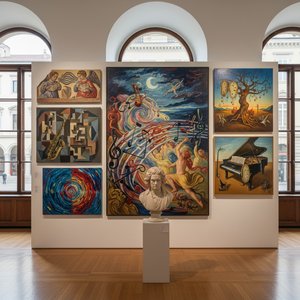
Harmonies on Canvas: Exploring the Visual Representation of Music in Art History
Explore the fascinating history of music's visual representation in art! From ancient symbolism to modern abstraction, discover how artists have captured sound and emotion on canvas. Expert insights & stunning examples.
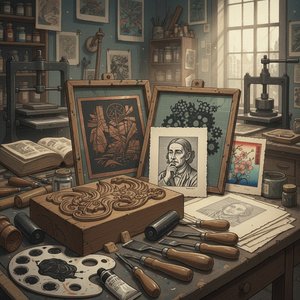
The Enduring Legacy of Printmaking: Techniques, Themes & Artistic Innovation Across Centuries
Explore the rich history of printmaking with OriginalUniqueArt. Discover techniques from intaglio to lithography, learn about collecting valuable prints & find museum-quality reproductions. Expert insights for art enthusiasts and collectors.

Giclée Prints: Archival Quality & Aesthetic Nuances for the Discerning Collector
Explore the world of giclée prints with OriginalUniqueArt. Learn about archival quality, aesthetic nuances & investment potential. Expert guidance for discerning art collectors seeking museum-quality reproductions and lasting value.

Echoes of Time: Exploring the Enduring Appeal & Historical Context of Vintage Art Prints
Explore the captivating world of vintage art prints! Discover their history, collecting tips & enduring appeal. Expert insights on chromolithography and building a legacy collection with OriginalUniqueArt.


