

 Преглед в реален мащаб
 Сподели
 Сподели
 Подробности
 Ръководство

 Изтегляне
 Подобни артикули
 Рентгенова снимка
 Слайдшоу
 Статистика
Sleeping Diana Watched by Two Fauns
 Acrylic On Canvas
- WallArt
- Symbolist Painting
 1877
1877 50.0 x 774.0 cm
 Kunstpalast
 Разгърни целия текст
Жикле / Художествен принт
Giclée печат или принт върху платно с музейно качество, бързо производство и гъвкави опции за завършен вид. ( Поръчайте ръчно рисувано репродукция на този колекционерски предмет Превключване към дигитално изображение)




P118B $10

P118H $10

P118W $10

P438Z $10

P508JH $12

P508YH $12

P805H $10

P805Z $10

P919BZ $10

P919G $10

P919XJ $10

P959ZH $10

P968JZ $12

W106C $8

W218G $10

W218JH $8

W218Y $10

W307PJ $10

W316G $10

W316PJ $8

W316Y $10

W398PJ $8

W4111J $10

W500HY $15

W500JH $15

W692G $12

W849H $8

W940BG $15

W953PJ $8




Изберете от нашите предварително зададени размери, които съответстват на оригиналните пропорции на произведението.

Можете да въведете собствени размери, за да паснат на конкретна рамка или пространство. Ако избраният от Вас размер не съвпада с пропорциите на оригиналното изображение, ние ще изрежем произведението или ще разширим изображението с огледален или едноцветен ръб. Дигитален макет ще бъде изпратен за Ваше одобрение преди започването на производството.
Моля, имайте предвид, че предпрегледът на екрана не отразява реалното изрязване или разширяване. Само макетът ще покаже точно финалната композиция.
Въпреки че са налични персонализирани размери, препоръчваме да изберете размер от предварително дефинирания списък, за да запазите оригиналните пропорции.
Доставка по целия свят () в рамките на 2 седмици вместо стандартните 4/5 седмици. (26 Септември)

Безплатна експресна доставка по целия свят

Висококачествено ленено платно

Пълно застраховане на доставката

Гаранция за възстановяване на митнически такси

Гаранция за пълно съответствие на цветовете

Политика за връщане в рамките на 100 дни (само при дефекти)

100% Гаранция за връщане на сумата

Отстъпка при поръчка на повече произведения
 Опцията със стъкло е налична само за размери под 110 см

Sleeping Diana Watched by Two Fauns
Жикле / Художествен принт
Размер на репродукцията
-


Крайна цена
$ 80
The Enigmatic Realm of Arnold Böcklin’s “Sleeping Diana”
Arnold Böcklin's "Sleeping Diana Watched by Two Fauns," painted in 1877-85, is not merely a depiction of a serene woodland scene; it’s an immersion into a realm of potent symbolism and haunting beauty. This tempera on panel masterpiece, currently residing in the Museum Kunstpalast in Düsseldorf, immediately draws the viewer into a world where classical mythology intertwines with unsettling introspection. The painting's power lies not just in its exquisite detail – the dappled sunlight filtering through ancient trees, the delicate folds of Diana’s gown – but in the palpable tension between innocence and primal instinct, restraint and desire.
Böcklin, a key figure in the Symbolist movement, rejected the naturalism prevalent in earlier art. Instead, he sought to evoke emotions and ideas through suggestive imagery, often drawing upon folklore, mythology, and the darker aspects of human experience. His work frequently explores themes of death, decay, and the subconscious—elements subtly woven into this particular composition. The painting’s genesis is rooted in a fascination with the ancient world, particularly Roman art and literature, combined with a deeply personal exploration of mortality and the fleeting nature of beauty.
A Dance of Contrasts: Goddess and Creatures
At the heart of “Sleeping Diana” lies a captivating interplay of figures. The goddess Diana, depicted in a state of languid repose upon a moss-covered rock, embodies purity, chastity, and the hunt—attributes traditionally associated with her role as protector of young women. Her serene expression and graceful posture suggest both vulnerability and an underlying strength. However, this idealized image is dramatically contrasted by the two fauns flanking her. These creatures, rendered with a touch of unsettling realism, possess a distinctly animalistic quality, their hands almost touching in a gesture that hints at a suppressed, perhaps even forbidden, attraction.
The positioning of the fauns—one reaching out tentatively towards Diana, the other holding back—creates a dynamic tension. It’s not a violent confrontation, but rather a delicate negotiation between opposing forces: the divine and the earthly, the rational and the instinctual, the controlled and the wild. The subtle shift in their postures suggests a moment suspended in time, a fleeting glimpse into a primal drama.
Technique and Atmosphere – A Palette of Twilight
Böcklin’s masterful technique contributes significantly to the painting's evocative atmosphere. He employed a rich, layered application of tempera paint, creating a sense of depth and texture that captures the dappled light filtering through the trees. The color palette is dominated by muted greens, browns, and blues—tones reminiscent of twilight or early morning—which imbue the scene with a melancholic beauty. Böcklin’s use of chiaroscuro – the dramatic contrast between light and shadow – further enhances the painting's emotional impact, drawing attention to Diana’s form while simultaneously shrouding the surrounding landscape in mystery.
Notably, Böcklin was influenced by the Italian Renaissance color palettes, particularly those favored during the Early Renaissance. This influence is evident in the warm, earthy tones and the overall sense of harmony and balance within the composition. The meticulous detail in rendering the foliage and the subtle nuances of light and shadow demonstrate Böcklin’s exceptional skill as a landscape painter.
Symbolism and Enduring Resonance
“Sleeping Diana Watched by Two Fauns” is replete with symbolic meaning, inviting multiple interpretations. The painting can be read as an allegory for the tension between desire and restraint, innocence and experience, or perhaps even the struggle to maintain control over one’s impulses. The fauns themselves are often interpreted as representing the darker aspects of human nature—the primal instincts that lie beneath the surface of civilized society. Diana's sleep can be seen as a state of vulnerability, while the watchful fauns embody the constant threat of temptation and transgression.
Despite its somewhat unsettling undertones, “Sleeping Diana” remains a profoundly beautiful and captivating work of art. It’s a testament to Böcklin’s ability to capture not just visual beauty but also the complex emotions and psychological states that lie beneath the surface of human experience. Reproductions of this iconic painting continue to resonate with viewers today, offering a glimpse into a world where myth, symbolism, and timeless beauty converge.
Биография на художника
Arnold Böcklin – A Visionary of Death and Dreams
Arnold Böcklin (1827-1901) stands as a singular figure in the annals of late 19th-century art, an artist whose oeuvre transcends mere representation to embody profound philosophical contemplation. Born in Basel, Switzerland, he descended from an old family steeped in tradition and engaged in the silk trade—a heritage that would subtly permeate his artistic sensibilities. From a young age, Böcklin demonstrated exceptional talent for drawing, nurtured by Ludwig Adam Kelterborn at Zeichenschule Basel, establishing him on a path toward mastering visual expression. His formative years coincided with the burgeoning influence of Schirmer’s Düsseldorf School of Painting, where he befriended Anselm Feuerbach—a connection that fostered intellectual curiosity and broadened his artistic horizons.Early Artistic Influences and Training
Schirmer's guidance instilled in Böcklin a deep appreciation for classical landscapes and compositional rigor, mirroring the stylistic ethos of Friedrich Richter and Wilhelm Leibl. This foundational training propelled him to Antwerp and Brussels, where he diligently copied masterpieces by Rubens and Rembrandt—exercises that honed his technical skills and cemented his understanding of artistic history. Simultaneously, he pursued studies at the Paris atelier of Gustave Boulanger, absorbing the grandeur and theatricality characteristic of Romantic painting. Böcklin’s fascination with the sublime extended beyond mere imitation; it fueled a desire to explore themes of mortality and transcendence—a preoccupation that would define much of his subsequent work.The Symbolist Movement and Major Works
Böcklin's artistic trajectory culminated in his embrace of Symbolism, a movement that prioritized emotional resonance over literal depiction. Influenced by Nietzsche’s philosophy and fueled by anxieties surrounding the fin de siècle, Böcklin sought to convey inner states—fear, longing, grief—through evocative imagery rooted in mythology and dreamlike landscapes. His magnum opus, *The Isle of the Dead* (1880-1886), arguably encapsulates this artistic vision. Inspired by the English Cemetery in Florence—where his daughter was buried—the series depicts a desolate landscape populated by enigmatic figures, inviting viewers to confront existential questions about life and death. Böcklin’s meticulous attention to detail—particularly in capturing atmospheric effects—elevated his paintings beyond mere visual spectacle; they functioned as conduits for psychological exploration.Notable Paintings and Artistic Legacy
Among Böcklin's most celebrated works are *Nymph and Satyr* (1858) and *Sappho* (1859), which exemplify the Symbolist preoccupation with mythological narratives imbued with sensual yearning and melancholy. His portrait of himself, featuring Death playing the violin (1872), is a haunting meditation on mortality—a testament to Böcklin’s ability to distill complex emotions into striking visual form. Furthermore, Böcklin's influence extended beyond his immediate contemporaries; Hans Thoma and Edvard Munch recognized in him a kindred spirit—an artist who dared to confront darkness with unwavering conviction. Clement Greenberg famously lauded Böcklin’s work as “one of the most consummate expressions” of its time, acknowledging its enduring power to unsettle and inspire. Böcklin's stylistic innovations—particularly his masterful manipulation of light and shadow—established him as a pivotal figure in the transition from Romanticism to Modern Art, securing his place within the canon of European Symbolist painting. ## Museums and Collections Böcklin’s artistic legacy continues to resonate today, evidenced by its presence in prominent museums worldwide:- Öffentliche Kunstsammlung Basel (Basel, Switzerland)
- Kunstmuseum Basel (Switzerland)
- Museum Kunsthaus Zürich (Zürich, Switzerland)
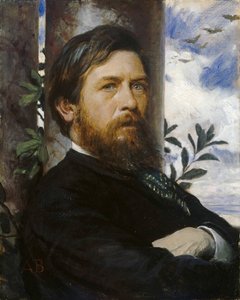
Арнолд Бьоклин
1827 - 1901 , Швейцария
Бързи факти
- Artistic Movement Or Style: Символизъм
- Artists Or Movements Influenced By This Artist:
- Ханс Тома
- Предрафаелити
- Artists Who Influenced This Artist:
- Шмирн
- Фюербах
- Date Of Birth: 16 октомври 1827
- Date Of Death: 16 януари 1901
- Full Name: Arnold Böcklin
- Nationality: Швейцарец
- Notable Artworks:
- Остров на мъртвите
- Нимфа и сатир
- Сафо
- Портрет на себе си
- Place Of Birth: Базел, Швейцария
Свързани статии

Timeless Legends: The Eternal Allure of Mythological Figures in Masterpiece Art
Explore the profound beauty of mythological figures through the lens of art history. From Renaissance masterpieces to custom oil reproductions, discover how legendary tales of heroism and divinity are immortalized in fine art for discerning collectors.
Echoes of Olympus: Mythological Narratives in Western Art Through the Ages
Explore the captivating history of mythological narratives in Western art! From ancient Greece to modern masterpieces, discover iconic artworks & symbolism. Expert analysis and high-quality reproductions at OriginalUniqueArt.
Timeless Legends: A Curated Guide to the Eternal Allure of Mythological Masterpieces
Embark on a sophisticated journey through the eternal allure of mythological art. Discover how master painters breathe life into ancient legends, from Greek deities to Baroque masterpieces, and learn to curate these timeless narratives within your own exquisite art collection.
Franz von Stuck: Symbolism, Decadence & the Pursuit of Ideal Beauty
Explore the captivating world of Franz von Stuck, a leading Symbolist painter. Discover his mythological masterpieces, decadent themes, & investment potential. Expert analysis for discerning collectors.
Лични Митологии в Масло и Символизъм: Превръщането на Житейски Истории в Художествени Шедьоври
Разкрийте дълбочината на символизма в изкуството! Експертен анализ на творчеството на велики художници, инвестиционни съвети и уникални произведения за колекционери. Отвъд видимото – емоции и истории в масло.
