

 Преглед в реален мащаб
 Сподели
 Сподели
 Подробности
 Ръководство

 Изтегляне
 Подобни артикули
 Рентгенова снимка
 Слайдшоу
 Статистика
Shield with Gorgon


 Разгърни целия текст
Ръчно изработена маслена репродукция
Ръчно рисувана маслена картина върху платно във вашия размер и рамка, изработена по поръчка от нашите художници. ( Избор на принт Превключване към дигитално изображение)




P118B €10

P118H €10

P118W €10

P438Z €10

P508JH €12

P508YH €12

P805H €10

P805Z €10

P919BZ €10

P919G €10

P919XJ €10

P959ZH €10

P968JZ €12

W106C €8

W218G €10

W218JH €8

W218Y €10

W307PJ €10

W316G €10

W316PJ €8

W316Y €10

W398PJ €8

W4111J €10

W500HY €15

W500JH €15

W692G €12

W849H €8

W940BG €15

W953PJ €8




Изберете от нашите предварително зададени размери, които съответстват на оригиналните пропорции на произведението.

Въведете необходимата ширина и височина, за да паснат на вашата рамка или стена. Тъй като това е ръчна работа, при избор на размер с различен формат, художникът може да нарисува малко повече около картината или да отреже малко от периферията — вие избирате. Преди да започне рисуването, ще ви изпратим дигитален мок업 за одобрение. Картината, показана на тази страница, не е реалният резултат — само мок업ът го показва.
След получаване на поръчка, екипът на OriginalUniqueArt.com ще изпрати имейл до клиента с инструкции и ще предостави примерен макет за преглед.
Доставка по целия свят () в рамките на 3-4 седмици вместо стандартните 5 седмици. (22 Октомври). Без компромис с качеството.

Безплатна експресна доставка по целия свят

Висококачествено ленено платно

Пълно застраховане на доставката

Гаранция за възстановяване на митнически такси

Гаранция за пълно съответствие на цветовете

Политика за връщане в рамките на 100 дни (само при дефекти)

100% Гаранция за връщане на сумата

Отстъпка при поръчка на повече произведения
 Опцията със стъкло е налична само за размери под 110 см

Shield with Gorgon
Техника на репродукция
Размер на репродукцията
-


Крайна цена
€ 263
Shield with Gorgon – A Meditation on Mortality and Ancient Myth
The sculpture “Shield with Gorgon’s Head,” created by Arnold Böcklin in 1897, stands as a haunting testament to the artist's fascination with Greco-Roman mythology and his profound contemplation of death. Exhibited prominently at the Musée d’Orsay in Paris, this piece transcends mere representation; it invites viewers into a realm of psychological exploration where beauty intertwines with unsettling truths. Böcklin, deeply influenced by Nietzschean philosophy – specifically the concept of eternal recurrence – sought to capture not just an image but an experience, mirroring the cyclical nature of existence and confronting us with our inevitable demise.Style and Technique: Symbolist Precision
Böcklin’s style aligns perfectly with the tenets of Symbolism, a movement that rejected realism in favor of conveying emotions and ideas through suggestive imagery rather than literal depiction. Unlike Impressionists who aimed to capture fleeting moments of light and color, Böcklin meticulously crafted his sculpture using a technique rooted in meticulous observation and symbolic distillation. The artist employed a combination of modeling clay and bronze casting – a process demanding considerable skill and patience – to achieve an astonishing level of detail. Notice the subtle gradations of tone within the Gorgon’s head; these aren't merely aesthetic choices but deliberate efforts to convey texture and depth, mirroring the complexities of human emotion. The smooth surface contrasts sharply with the rough contours of the snake’s coils, creating a visual dialogue that underscores the sculpture’s thematic concerns.Historical Context: Nietzschean Echoes and Late Romantic Sentiment
Böcklin's artistic output flourished during the waning years of the Romantic era, a period characterized by an obsession with emotion, imagination, and the sublime—experiences perceived as exceeding human comprehension yet simultaneously elevating the soul. However, Böcklin’s vision extended beyond traditional Romantic tropes; he actively engaged with the burgeoning intellectual currents of his time, particularly Nietzsche's proclamation that “God is dead.” This existential crisis fueled Böcklin’s exploration of themes like nihilism and mortality—concepts central to both Nietzschean thought and Symbolist art. The sculpture reflects a broader cultural preoccupation with confronting death not as an end but as a transformative stage in the cosmic cycle, mirroring Nietzsche's assertion that life itself is an affirmation of eternal recurrence.Symbolism Unleashed: Gorgon’s Head – Terror and Transformation
The Gorgon Medusa represents more than just monstrous horror; she embodies the terrifying power of transformation—a concept inextricably linked to Böcklin’s Symbolist worldview. According to Greek mythology, Medusa possessed snakes for hair that turned anyone who gazed upon them into stone. This image served as a potent symbol of inescapable fate and the destructive force of repressed emotions. The sculptor skillfully captures this duality: the Gorgon's gaze exudes palpable terror, yet simultaneously hints at an underlying process of metamorphosis—a suggestion that confronting death can lead to profound spiritual renewal. Böcklin’s deliberate use of serpentine coils reinforces this symbolism, representing both constriction and liberation – mirroring the artist’s own preoccupation with reconciling beauty and darkness.Emotional Impact: A Confrontation With Eternity
Ultimately, “Shield with Gorgon’s Head” compels viewers to confront their own mortality—to grapple with the inescapable reality that life is finite yet perpetually reborn. The sculpture's unsettling stillness invites contemplation, prompting us to consider our place within the grand scheme of cosmic time. Böcklin doesn’t offer comfort or reassurance; instead, he presents a stark portrait of existence stripped bare – confronting us with the beauty and terror inherent in accepting death as an inevitable component of life’s eternal dance. It is precisely this unflinching gaze—this refusal to shy away from uncomfortable truths—that secures “Shield with Gorgon’s Head”'s enduring power as a masterpiece of Symbolist art and a timeless meditation on the human condition.Въпроси и отговори
Какво разположение е подходящо за формата на „Shield with Gorgon“ на Арнолд Бьоклин?
Форматът Square на произведението „Shield with Gorgon“ на Арнолд Бьоклин е препоръчителен за Living Room. Форматът и пространството заедно служат като ориентир при поставянето на репродукцията.
Как се свързва сюжетът на „Shield with Gorgon“ с обичайните теми на Арнолд Бьоклин?
Сред закрепените теми на Арнолд Бьоклин – greek mythology, symbolism, death, mortality themes, romantic idealism vision, classical forms beauty, medieval gothic style – „Shield with Gorgon“ привнося собствен фокус върху mythology, gorgon, snake, sculpture, classical, death, symbolism, medieval.
С каква техника е създадено "Shield with Gorgon"?
Арнолд Бьоклин е използвал/а техниката Acrylic On Canvas за „Shield with Gorgon“. Тази техника определя материалната природа на оригиналното произведение.
Биография на художника
Arnold Böcklin – A Visionary of Death and Dreams
Arnold Böcklin (1827-1901) stands as a singular figure in the annals of late 19th-century art, an artist whose oeuvre transcends mere representation to embody profound philosophical contemplation. Born in Basel, Switzerland, he descended from an old family steeped in tradition and engaged in the silk trade—a heritage that would subtly permeate his artistic sensibilities. From a young age, Böcklin demonstrated exceptional talent for drawing, nurtured by Ludwig Adam Kelterborn at Zeichenschule Basel, establishing him on a path toward mastering visual expression. His formative years coincided with the burgeoning influence of Schirmer’s Düsseldorf School of Painting, where he befriended Anselm Feuerbach—a connection that fostered intellectual curiosity and broadened his artistic horizons.Early Artistic Influences and Training
Schirmer's guidance instilled in Böcklin a deep appreciation for classical landscapes and compositional rigor, mirroring the stylistic ethos of Friedrich Richter and Wilhelm Leibl. This foundational training propelled him to Antwerp and Brussels, where he diligently copied masterpieces by Rubens and Rembrandt—exercises that honed his technical skills and cemented his understanding of artistic history. Simultaneously, he pursued studies at the Paris atelier of Gustave Boulanger, absorbing the grandeur and theatricality characteristic of Romantic painting. Böcklin’s fascination with the sublime extended beyond mere imitation; it fueled a desire to explore themes of mortality and transcendence—a preoccupation that would define much of his subsequent work.The Symbolist Movement and Major Works
Böcklin's artistic trajectory culminated in his embrace of Symbolism, a movement that prioritized emotional resonance over literal depiction. Influenced by Nietzsche’s philosophy and fueled by anxieties surrounding the fin de siècle, Böcklin sought to convey inner states—fear, longing, grief—through evocative imagery rooted in mythology and dreamlike landscapes. His magnum opus, *The Isle of the Dead* (1880-1886), arguably encapsulates this artistic vision. Inspired by the English Cemetery in Florence—where his daughter was buried—the series depicts a desolate landscape populated by enigmatic figures, inviting viewers to confront existential questions about life and death. Böcklin’s meticulous attention to detail—particularly in capturing atmospheric effects—elevated his paintings beyond mere visual spectacle; they functioned as conduits for psychological exploration.Notable Paintings and Artistic Legacy
Among Böcklin's most celebrated works are *Nymph and Satyr* (1858) and *Sappho* (1859), which exemplify the Symbolist preoccupation with mythological narratives imbued with sensual yearning and melancholy. His portrait of himself, featuring Death playing the violin (1872), is a haunting meditation on mortality—a testament to Böcklin’s ability to distill complex emotions into striking visual form. Furthermore, Böcklin's influence extended beyond his immediate contemporaries; Hans Thoma and Edvard Munch recognized in him a kindred spirit—an artist who dared to confront darkness with unwavering conviction. Clement Greenberg famously lauded Böcklin’s work as “one of the most consummate expressions” of its time, acknowledging its enduring power to unsettle and inspire. Böcklin's stylistic innovations—particularly his masterful manipulation of light and shadow—established him as a pivotal figure in the transition from Romanticism to Modern Art, securing his place within the canon of European Symbolist painting. ## Museums and Collections Böcklin’s artistic legacy continues to resonate today, evidenced by its presence in prominent museums worldwide:- Öffentliche Kunstsammlung Basel (Basel, Switzerland)
- Kunstmuseum Basel (Switzerland)
- Museum Kunsthaus Zürich (Zürich, Switzerland)
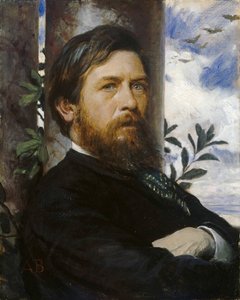
Арнолд Бьоклин
1827 - 1901 , Швейцария
Бързи факти
- Artistic Movement Or Style: Символизъм
- Artists Or Movements Influenced By This Artist:
- Ханс Тома
- Предрафаелити
- Artists Who Influenced This Artist:
- Шмирн
- Фюербах
- Date Of Birth: 16 октомври 1827
- Date Of Death: 16 януари 1901
- Full Name: Arnold Böcklin
- Nationality: Швейцарец
- Notable Artworks:
- Остров на мъртвите
- Нимфа и сатир
- Сафо
- Портрет на себе си
- Place Of Birth: Базел, Швейцария
Свързани статии

Theatricality & Triumph: Baroque Drama in Painting & Sculpture
Explore the dramatic world of Baroque art! Discover its history, defining characteristics, & lasting influence on painting & sculpture. Expert insights into Caravaggio, Zurbarán, and Bernini – plus high-quality reproductions at OriginalUniqueArt.

The Enduring Form: Exploring Themes & Techniques in Sculpture Across Historical Periods
Explore the rich history of sculpture from ancient masterpieces to contemporary innovations. Discover key techniques, influential artists & investment potential for discerning art collectors.

Топ 10 Бронзови Скулптури, Променили Изкуството завинаги | OriginalUniqueArt.bg
Разгледайте топ 10 легендарни бронзови скулптури, променили изкуството! От Роден до Микеланджело – истории на гении и вечни шедьоври. Вдъхновете се за вашия дом с OriginalUniqueArt.bg. Разгледайте пълната колекция онлайн!

The Enduring Form: Sculpture Across History, Technique & Emotional Resonance
Explore the rich history of sculpture with OriginalUniqueArt. Discover key techniques, influential artists & investment potential for discerning collectors. Expert insights into valuing and collecting timeless masterpieces.

Топ 10 легендарни бронзови шедьоври, променили изкуството завинаги | OriginalUniqueArt.com
Разгледайте топ 10 легендарни бронзови шедьоври, променили изкуството! От скулптурите на Роден до Микеланджело – историите зад вечните произведения. Висококачествени репродукции и идеи за интериор в OriginalUniqueArt.com.
